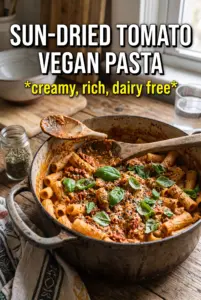
Silky, savory, and packed with the kind of tomato depth that clings to every ridge of rigatoni, this sun-dried tomato vegan pasta earns a permanent spot in the weeknight rotation. The sauce turns glossy and rich without dairy, and the spinach folds in at the end so it stays fresh instead of disappearing into the pan. It’s the sort of bowl that feels comforting without being heavy.
The trick is building the sauce in layers. Garlic and sun-dried tomatoes go into the oil first, which gives the whole dish a deep, concentrated base before the coconut cream ever hits the pan. Tomato paste cooks for a minute on its own, which takes off the raw edge and pushes the flavor toward something rounder and more savory. Pasta water matters here too, because its starch helps the sauce cling instead of sliding off the noodles.
Below, I’ve included the ingredient details that matter most, plus the one point in the process where this dish goes from good to the kind of pasta you start craving again the next day.
The sauce coated the rigatoni beautifully, and the pasta water made it turn silky instead of thick and clumpy. My husband went back for seconds before I even sat down.
Save this sun-dried tomato vegan pasta for the nights when you want a creamy, dairy-free sauce that coats every bite.
The Reason This Sauce Stays Creamy Without Dairy
Most vegan pasta sauces fall into one of two traps: they’re thin and bland, or they get heavy and separate before the noodles are coated. This one avoids both because it starts with fat, tomato, and starch working together. The sun-dried tomato oil carries flavor through the pan, the tomato paste adds body, and the pasta water gives the sauce just enough looseness to turn silky instead of pasty.
The other thing that helps is the coconut cream. You want full-fat coconut cream, not light coconut milk, because this sauce needs richness to stand up to the tomato paste and nutritional yeast. If the heat runs too high after the coconut cream goes in, the sauce can look greasy or split around the edges. Keep it at a gentle simmer and let it thicken slowly.
What Each Ingredient Is Actually Doing Here
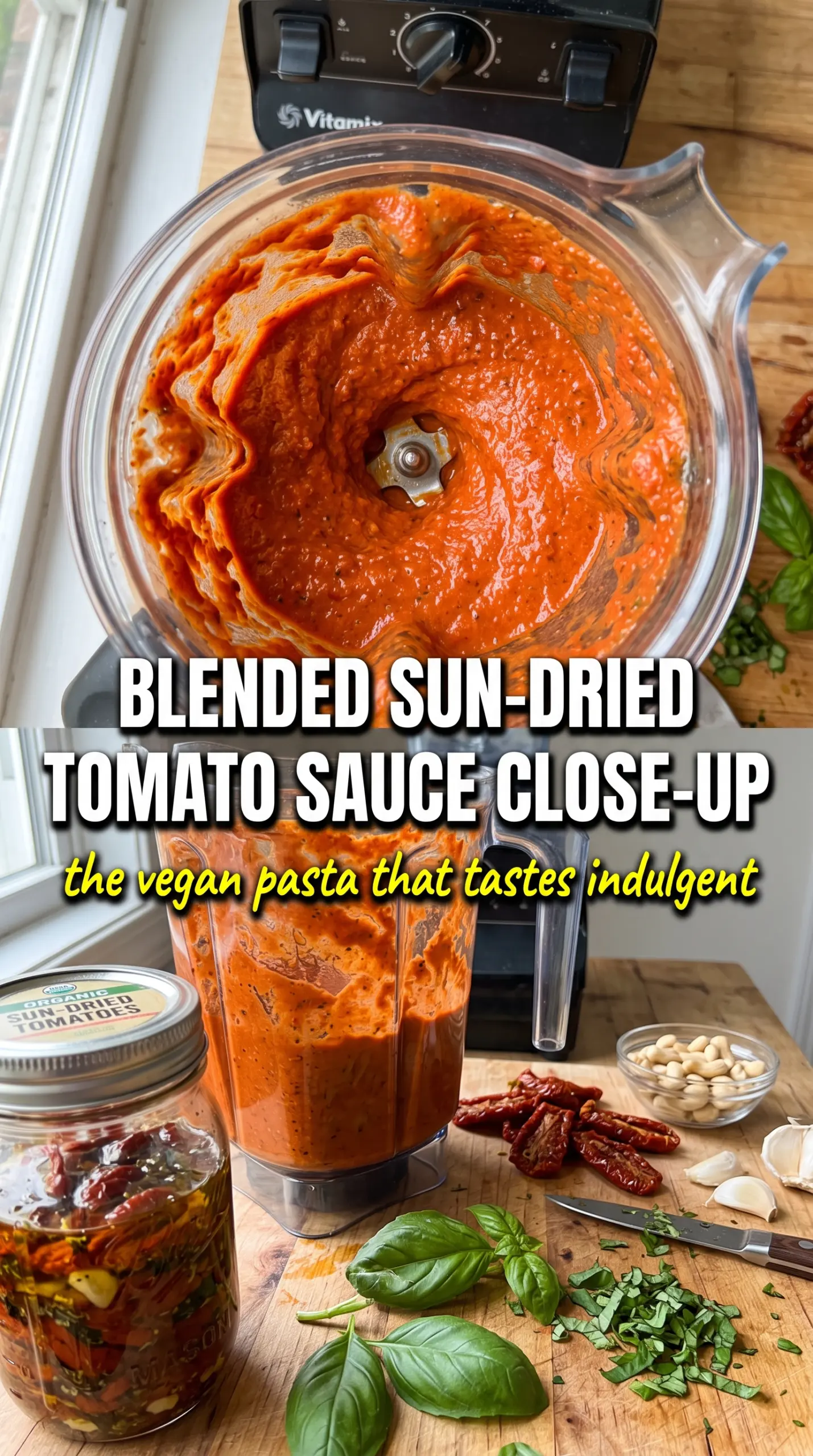
- Sun-dried tomatoes in oil — These do more than add tomato flavor; they bring a concentrated, almost jammy sweetness and the oil gives the sauce a head start. If yours are packed dry, rehydrate them first, but the oil-packed version is better here because that oil becomes part of the sauce.
- Sun-dried tomato oil — This is one of the smartest shortcuts in the dish. It carries the tomato flavor through the sauté and helps the garlic and paste bloom without burning.
- Full-fat coconut cream — This is the body of the sauce. Coconut milk is thinner and won’t give the same cling, so stick with cream if you want that lush finish. The coconut flavor stays in the background once the tomato, garlic, and nutritional yeast take over.
- Nutritional yeast — This brings the savory, cheesy note that makes the sauce taste complete. It can’t be swapped 1:1 with actual parmesan if you need the recipe to stay vegan, but if you’re not avoiding dairy, a small shower of finely grated parmesan at the end gives the same salty finish.
- Tomato paste — Don’t skip the minute of cooking here. That short sauté takes away the raw taste and gives the sauce a deeper, cooked tomato flavor that sun-dried tomatoes alone can’t provide.
- Rigatoni or penne — Short pasta with ridges grabs the sauce in all the right places. Long noodles work in a pinch, but they won’t catch the bits of tomato and spinach as well.
Building the Sauce So It Clings to the Pasta
Wake Up the Garlic and Tomatoes First
Start by warming the sun-dried tomato oil, then add the garlic and chopped tomatoes. You want the garlic fragrant and just turning golden at the edges, not browned, because browned garlic turns bitter fast and throws off the whole pan. The tomatoes should soften a little and glisten in the oil. That’s your cue that the base is ready for the tomato paste.
Cook the Tomato Paste Before the Cream
When the paste goes in, stir it through the hot oil and tomatoes for about a minute. It should darken slightly and smell richer, almost like cooked pizza sauce. This short step is what gives the finished dish depth instead of a flat, canned-tasting tomato note. If you add the cream too soon, the paste never gets the chance to mellow.
Simmer Gently, Then Loosen With Pasta Water
Once the coconut cream, seasoning, red pepper flakes, and nutritional yeast are in, keep the heat low enough that the sauce barely bubbles. A hard boil can make coconut cream split and turn grainy. When the pasta goes in, add reserved pasta water a splash at a time until the sauce turns glossy and coats the noodles instead of pooling underneath them. Fold in the spinach at the very end so it wilts without going dull or mushy.
How to Adapt This for a Bigger Bowl, a Lighter Bowl, or a Different Pantry
Make It Gluten-Free
Use a sturdy gluten-free penne or rigatoni so the sauce has something to cling to. Cook it just to al dente and keep a close eye on the timing, because gluten-free pasta can go soft fast once it hits the hot sauce. The sauce itself already works without any changes.
Swap the Coconut Cream if You Taste Coconut Too Strongly
If the coconut flavor bothers you, use a plain, unsweetened cashew cream instead. It gives the sauce a softer, more neutral finish, though it won’t be quite as rich as coconut cream. Blend soaked cashews with hot water until completely smooth, then use the same way you would the coconut cream.
Add Protein Without Changing the Sauce
White beans, chickpeas, or pan-seared tofu all fit here without fighting the tomato sauce. Stir them in when you add the pasta so they warm through and pick up the seasoning. The dish stays vegan, but it eats like a fuller dinner.
Use Kale Instead of Spinach
Kale works if that’s what you have, but it needs a little more time. Strip the stems, chop it finely, and let it simmer in the sauce for a few extra minutes so it softens properly. Spinach disappears almost instantly; kale gives the pasta a heartier bite.
Storage and Reheating
- Refrigerator: Store leftovers in an airtight container for up to 4 days. The pasta will absorb some sauce as it sits, so it thickens a bit overnight.
- Freezer: It freezes, but the pasta texture softens after thawing. If you want to freeze it, keep the sauce separate from the pasta for the best result.
- Reheating: Warm it gently on the stove or in the microwave with a splash of water to loosen the sauce. The biggest mistake is blasting it on high heat, which can make the coconut cream break and turn the pasta dry.
Questions I Get Asked About This Recipe
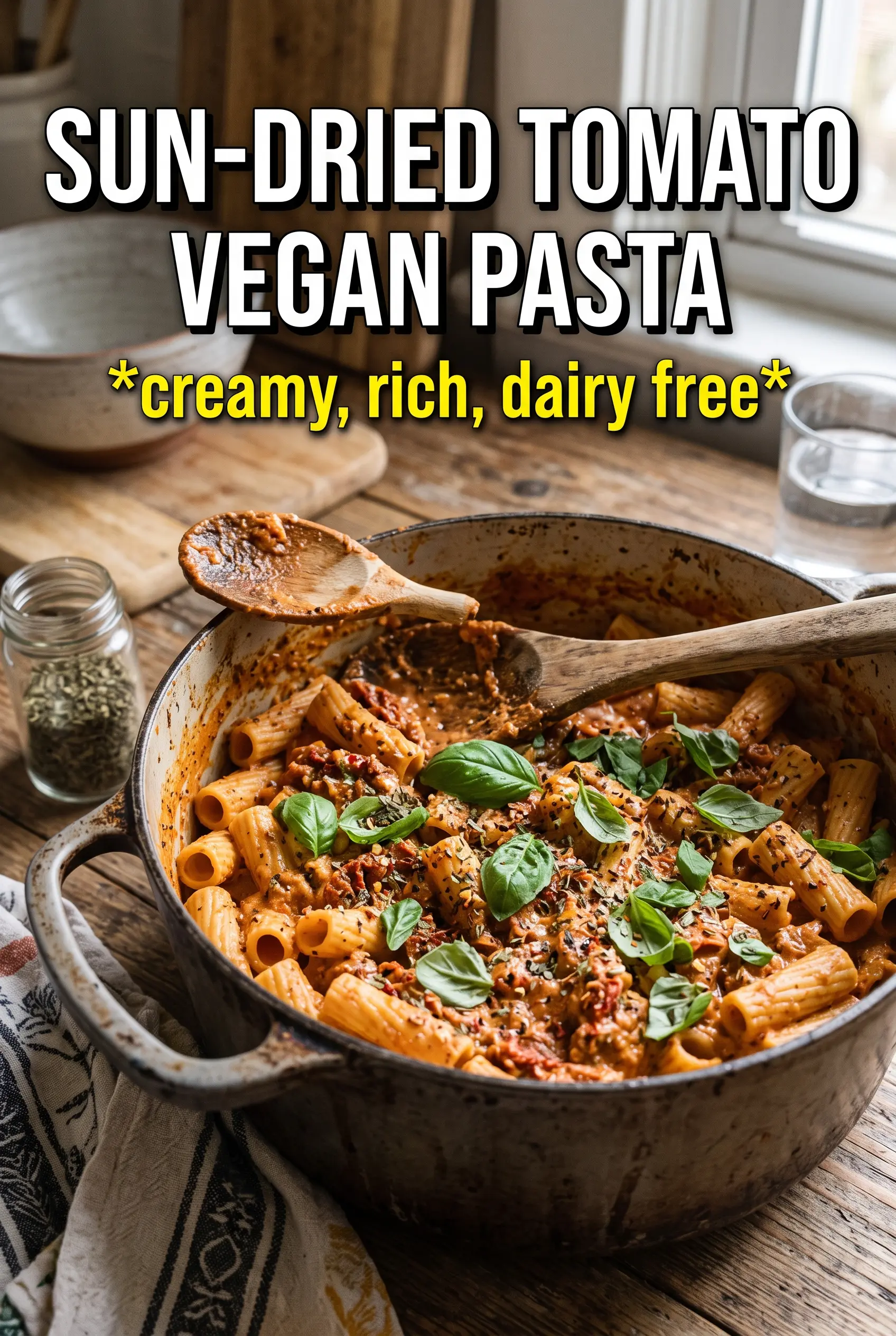
Sun-Dried Tomato Vegan Pasta
Ingredients
Equipment
Method
- Bring a large pot of water to a boil and cook the rigatoni or penne until al dente, stirring occasionally so it stays separated. Reserve 1 cup pasta water before draining.
- Heat the sun-dried tomato oil in a skillet over medium heat until shimmering, then add the minced garlic and chopped sun-dried tomatoes. Sauté for 2 minutes until fragrant and slightly softened.
- Add the tomato paste and cook for 1 minute, stirring constantly to darken slightly and reduce any raw taste.
- Pour in the full-fat coconut cream and stir until smooth, then add Italian seasoning, red pepper flakes, and nutritional yeast. Simmer for 5 minutes, stirring occasionally, until the sauce looks creamy and cohesive.
- Add the drained pasta to the skillet and toss to coat, loosening with reserved pasta water as needed to help the sauce cling. Add the baby spinach and toss until wilted.
- Season with salt and pepper to taste and top with fresh basil and additional nutritional yeast if using, so the pasta is finished with bright herb and a parmesan-style sprinkle.