Silky butternut squash pasta sauce coats rigatoni with a velvety, golden-orange finish that clings to every ridge instead of sliding off the pasta. It tastes rich and comforting without leaning heavy, and the sweet squash plays beautifully against parmesan, sage, and a little heat from red pepper flakes. The result is the kind of sauce that makes a plain bowl of pasta feel like a proper dinner.
What makes this version work is the way the squash is softened directly in broth with onion, garlic, and sage before blending. That gives the sauce body without needing flour, and it also keeps the flavor from tasting flat or one-note. Once it’s smooth, the cream and parmesan go in at the end, which keeps the sauce glossy instead of grainy.
Below, I’ll walk you through the part that matters most: how to get the squash tender enough to blend into a truly smooth sauce, plus the small finishing moves that make it cling to the pasta instead of pooling at the bottom of the bowl.
The sauce turned out so silky, and the squash blended completely smooth after simmering. I added a splash of pasta water at the end and it coated the rigatoni like a restaurant dish.
Save this butternut squash pasta sauce for the nights when you want a creamy rigatoni dinner with a smooth, cozy sauce.
The Trick Is Getting the Squash Soft Enough to Disappear
The biggest mistake with squash-based pasta sauces is stopping the simmer too early. If the squash still feels even a little firm, the blender will leave tiny bits behind, and those bits make the sauce feel grainy instead of plush. You want the cubes to give up the fight completely when you press them with a spoon.
Cooking the onion, garlic, and sage first builds a savory base so the sauce doesn’t taste like sweet puree. The broth does more than loosen the squash; it carries the flavor through the whole pot and gives you enough liquid to blend without adding extra water that would thin the sauce down. If the sauce looks too loose right after blending, don’t panic. The cream and parmesan tighten it back up during the final simmer.
What Each Ingredient Is Actually Doing in This Sauce
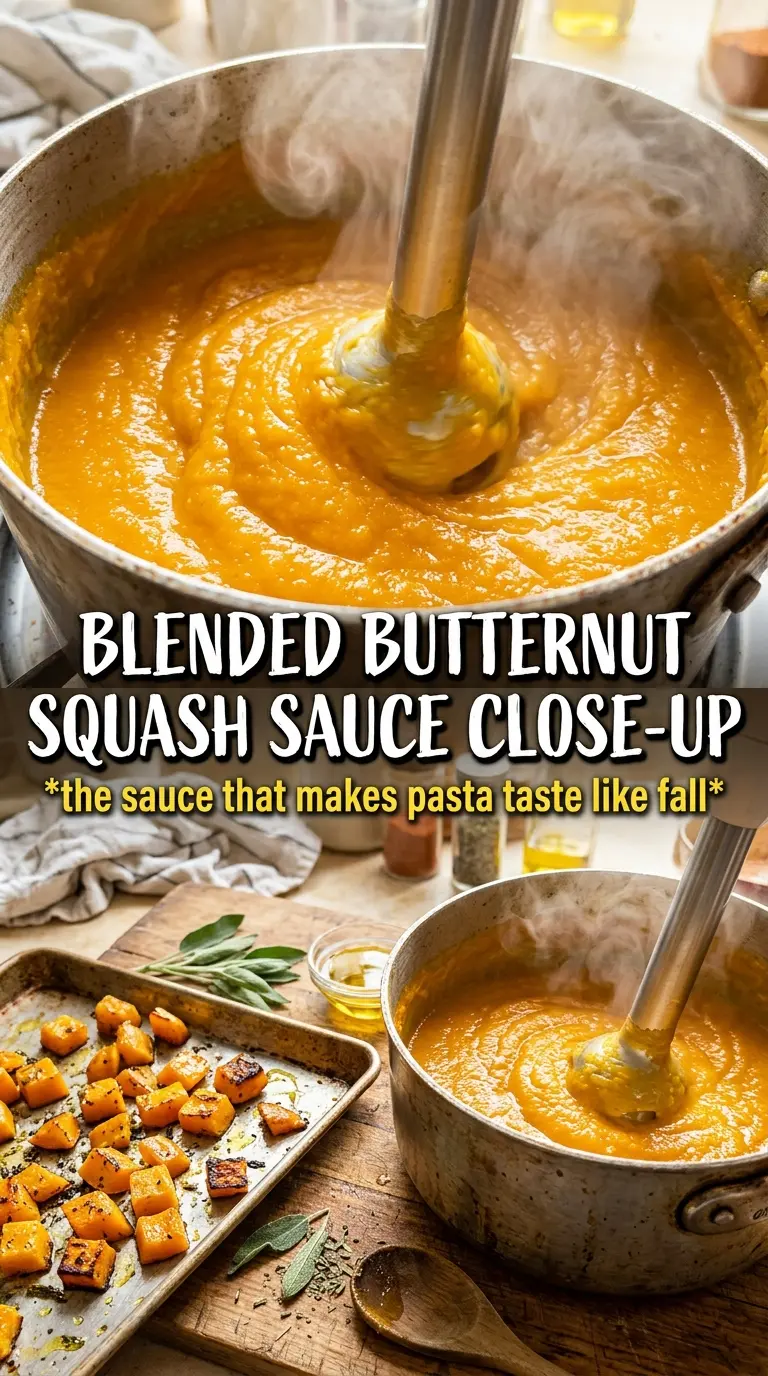
- Butternut squash — This is the body of the sauce, so fresh squash works better than canned puree here. Cubing it small matters because it needs to break down fully in the simmer; large chunks can cook unevenly and leave you chasing texture later.
- Onion and garlic — They keep the sauce from tasting one-dimensional. The onion gives sweetness after it softens, and the garlic should be cooked just until fragrant so it doesn’t turn bitter before the broth goes in.
- Fresh sage — Sage is the part that makes the sauce taste intentional instead of just sweet and creamy. Fresh is worth using here because dried sage can turn dusty fast; if you only have dried, use a small pinch and cook it briefly in the oil.
- Vegetable or chicken broth — Broth adds seasoning and depth at the same time. Use a good broth if you can, because watery broth gives you a thin, pale sauce that needs extra reduction to taste complete.
- Heavy cream and parmesan — These give the sauce its final silkiness and help it cling to the pasta. Add them after blending and keep the heat gentle; high heat can make the cheese turn gritty instead of melting into the sauce.
- Pasta water — This is the finishing tool that makes the sauce coat rigatoni or penne evenly. The starch in the water helps the sauce emulsify, so add it a splash at a time until the sauce turns glossy and loose enough to move around the pasta.
Building the Sauce Without Breaking the Texture
Softening the Aromatics
Heat the olive oil in a large pot and cook the onion until it turns translucent and sweet, about five minutes. Then add the garlic and sage and cook just until fragrant. If the garlic starts to brown, pull the pot off the heat for a moment; browned garlic can make the whole sauce taste harsh before the squash even goes in.
Cooking the Squash All the Way Through
Add the cubed squash and broth, bring everything to a boil, then drop it to a steady simmer. The squash should become very tender after about 20 minutes and almost fall apart when pressed. If there’s still resistance in the center of the cubes, keep cooking; undercooked squash is the main reason this sauce turns lumpy when blended.
Blending Until It’s Completely Smooth
Blend the soup mixture with an immersion blender until the texture looks velvety and uniform. Move the blender around the pot and stay low enough to catch any hidden chunks near the bottom. If you’re using a regular blender, work in batches and vent the lid slightly so steam doesn’t build up and splash back.
Finishing With Cream, Parmesan, and Pasta
Stir in the cream, parmesan, nutmeg, and red pepper flakes, then simmer for about five minutes so the sauce thickens and the flavors settle together. Toss with cooked rigatoni or penne and add pasta water a little at a time until every piece is coated. The sauce should look glossy and clingy, not soupy. Season with salt and pepper at the end, since the parmesan and broth already bring plenty of salt to the pan.
How to Change This Sauce for Different Dinners
Make It Dairy-Free
Swap the heavy cream for full-fat coconut milk or an unsweetened oat cream, then use a dairy-free parmesan-style topping if you want that salty finish. Coconut milk makes the sauce a little richer and slightly sweeter, while oat cream keeps the flavor closer to the original.
Make It Gluten-Free
Serve the sauce over your favorite gluten-free pasta and keep a close eye on the texture of the noodles, since they can go soft fast. The sauce itself is naturally gluten-free as written, and the starch from the pasta water still helps it cling if you reserve a little from the pot.
Make It Lighter
Use half-and-half instead of heavy cream if you want a less rich sauce, but don’t expect the same luxurious finish. The sauce will still taste good, just a touch thinner and less clingy, so extra pasta water may not be needed.
Add More Protein
Toss in cooked chicken, Italian sausage, or white beans at the end so they warm through without muddying the sauce. Beans keep the dish vegetarian, while sausage gives it a deeper savory edge that plays well with the squash and sage.
Storage and Reheating
- Refrigerator: Store the sauce and pasta together for up to 4 days. It thickens as it chills, so expect the noodles to absorb some of the sauce.
- Freezer: The sauce freezes well on its own for up to 2 months. Freeze it without the pasta for the best texture, since noodles get soft and break down after thawing.
- Reheating: Warm gently on the stove over low heat with a splash of broth, milk, or water. Don’t blast it in a hot pan, or the sauce can turn tight and sticky before it loosens back up.
Questions I Get Asked About This Recipe
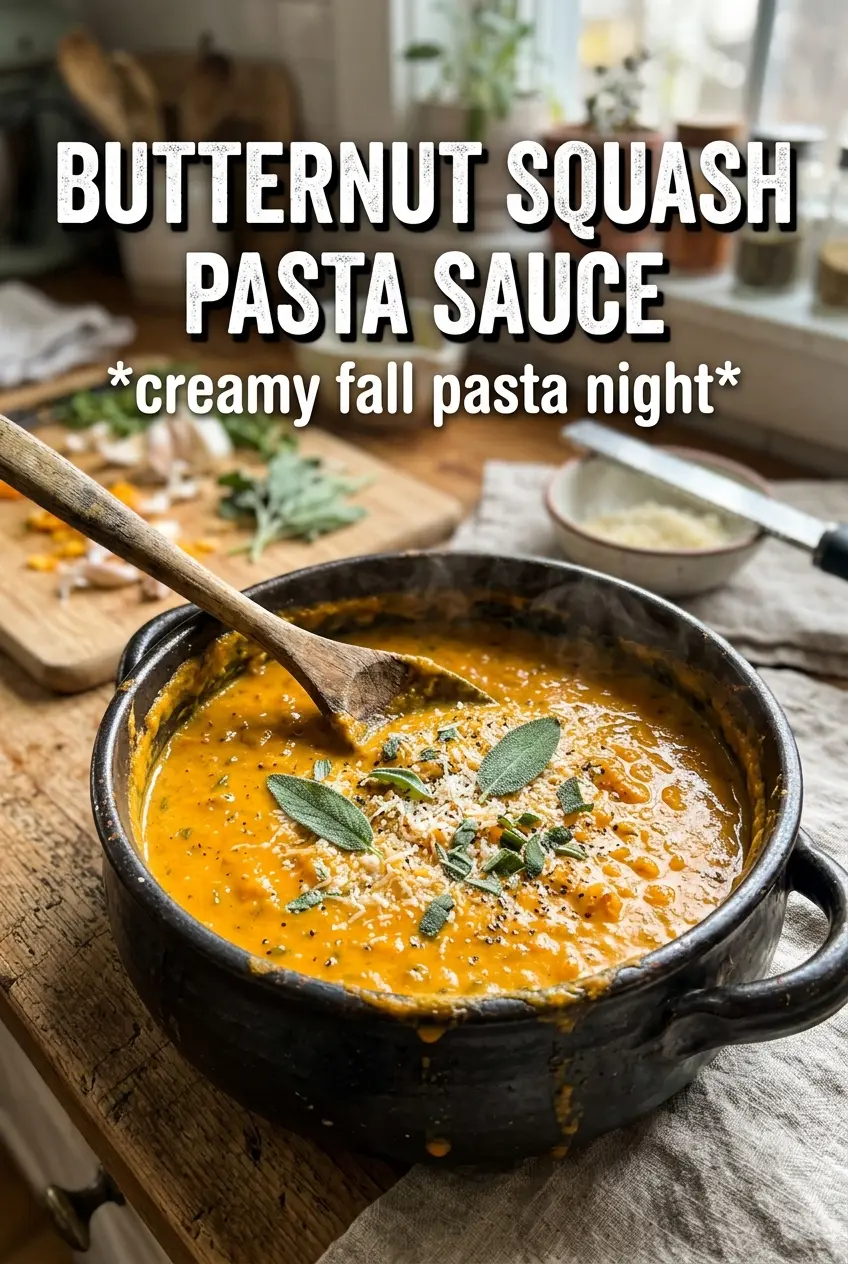
Butternut Squash Pasta Sauce
Ingredients
Equipment
Method
- Heat 2 tablespoons olive oil in a large pot over medium heat. Sauté 1 diced onion for 5 minutes until softened, then add 4 minced garlic cloves and 1 tablespoon chopped sage and cook for 2 minutes.
- Add 1 small peeled and cubed butternut squash and 3 cups vegetable or chicken broth to the pot. Bring to a boil, then simmer for 20 minutes until the squash is very tender with no hard centers.
- Blend the soup mixture completely smooth using an immersion blender. Blend until the texture is silky and uniform, without visible squash bits.
- Stir in 1/2 cup heavy cream, 1/2 cup grated parmesan, 1/4 teaspoon nutmeg, and 1/4 teaspoon red pepper flakes. Simmer for 5 minutes to meld flavors and slightly thicken the sauce.
- Cook 1 lb rigatoni or penne according to package directions until al dente, then drain. Toss the pasta with the sauce and add 1/2 cup pasta water as needed to loosen and coat evenly.
- Season with salt and pepper to taste. Stir well and serve hot so the sauce clings to the pasta.