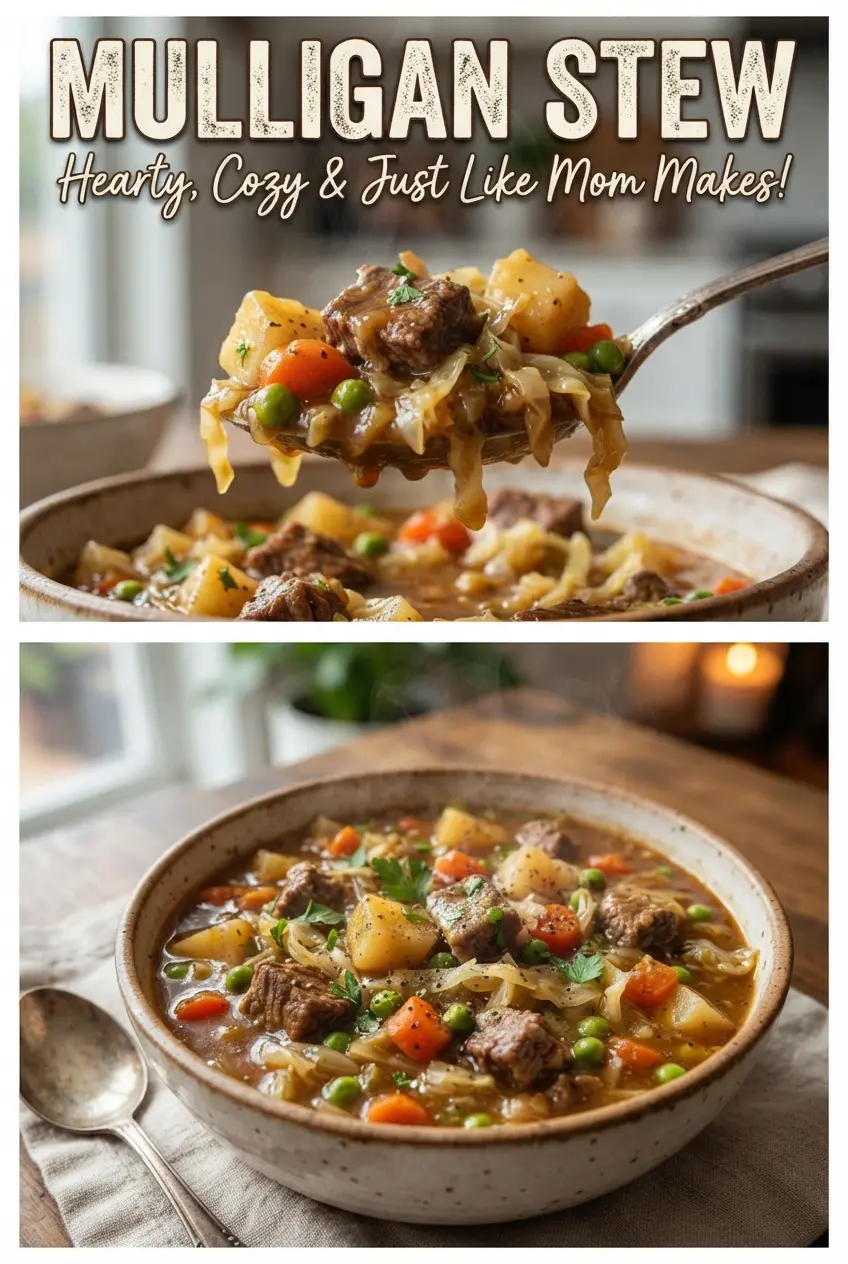
Mulligan stew is the kind of pot that gets better the longer it sits on the stove. The broth turns savory and full-bodied, the beef softens into spoon-tender pieces, and the vegetables hold onto just enough bite to keep every bowl interesting. It’s hearty without feeling heavy, and it has that old-fashioned, one-pot comfort that makes people come back for seconds before the first bowl is finished.
What makes this version work is the layering. The beef and smoked sausage brown first, which builds flavor right at the bottom of the pot. Then the onions, garlic, tomatoes, broth, and Worcestershire sauce pull all those browned bits back into the stew instead of letting them go to waste. The potatoes, carrots, cabbage, corn, and beans go in at the right time so nothing turns to mush before the stew is ready.
Below, I’ll walk through the spots where this stew can go wrong if you rush it, plus the small choices that make the broth deeper and the vegetables taste like they actually belong there.
The beef got melt-in-your-mouth tender and the broth picked up so much flavor from the sausage and Worcestershire. I loved that the potatoes held their shape instead of turning grainy.
Save this hearty Mulligan Stew for the nights when you want beef, sausage, potatoes, and cabbage all simmered into one rich, rustic pot.
The Browning Step That Gives This Stew Its Backbone
The biggest mistake with a stew like this is crowding the meat and skipping the browning. Beef chuck needs space and a little patience so it can form a deep crust before the liquid goes in. That browned surface is what gives the broth its real depth; if the meat steams, the stew tastes flatter and you lose that old-fashioned, cooked-all-day character.
Smoke from the sausage helps, too. Brown it lightly with the beef, then pull everything out before you cook the onions. Those little stuck-on bits in the pot are not a problem. They’re the flavor base, and the tomatoes and broth will loosen them right up.
What Each Ingredient Is Actually Doing In This Pot

- Beef chuck — This is the cut that gives you tender, substantial pieces after a long simmer. Leaner beef won’t give you the same rich texture. If you need a swap, use stew meat, but chuck still gives the best result.
- Smoked sausage — This adds salt, smoke, and a little fat to carry the broth. Kielbasa works well here if that’s what you have. Use a sausage with a firm texture so it stays intact in the pot.
- Diced tomatoes — They brighten the stew and keep it from tasting one-note. Tomato paste would make it thicker and deeper, but not as balanced, so don’t replace the tomatoes with only paste unless you add extra broth.
- Potatoes, carrots, cabbage, corn, and beans — These build the bulk of the stew and give it that true mulligan feel. Add them in stages so the potatoes turn tender, not crumbly, and the cabbage softens without disappearing.
- Worcestershire sauce — A small amount goes a long way toward making the broth taste rounded and savory. There isn’t a perfect substitute, but soy sauce plus a splash of vinegar can cover part of the same ground if needed.
Building The Pot In The Right Order
Browning The Meat First
Heat the oil until it shimmers, then brown the beef and sausage in batches if needed. The meat should pick up color on the edges instead of sitting in gray juices. If the pot looks crowded, stop and work in two rounds. That extra step is what keeps the stew tasting rich instead of boiled.
Cooking The Aromatics Until They Sweeten
Once the meat comes out, add the onion and cook it until it turns soft and a little translucent, about 4 minutes. The garlic goes in only for the last 30 seconds so it stays fragrant instead of bitter. Stir often and scrape the bottom well. That’s where the best flavor is hiding.
Letting The Stew Simmer Without Rushing It
Add the tomatoes, broth, Worcestershire sauce, thyme, beef, and sausage, then cover and let the pot simmer low and steady. You want a gentle bubble, not a hard boil, because aggressive heat tightens the meat and muddies the broth. After about 1 1/4 hours, the beef should be close to tender enough to cut with a spoon.
Adding The Vegetables In The Final Stretch
Potatoes, carrots, and cabbage need the last 30 minutes so they can cook through without falling apart. When they go in, the stew will look crowded for a minute, then settle as the cabbage wilts and the potatoes soften. Stir gently so the potatoes don’t break apart before they’ve had time to finish cooking.
Finishing With Corn And Beans
Corn and kidney beans only need the last 10 minutes. The corn stays sweeter that way, and the beans warm through without splitting. Taste before serving, because this is when you’ll know whether the broth needs a final pinch of salt or another grind of pepper.
How To Adjust This Stew Without Losing Its Character
Make It Gluten-Free Without Changing The Texture
This stew is naturally gluten-free as written as long as your broth and Worcestershire sauce are certified gluten-free. Check those labels first, because those two ingredients are where hidden gluten usually sneaks in. The body and thickness come from the potatoes and the long simmer, not from flour.
Swap The Sausage For A Lighter Pot
If you want a less smoky stew, leave out the sausage and add an extra half pound of beef chuck. The broth will taste cleaner and more beef-forward, but you’ll lose some of the savory depth that the sausage brings. A small spoonful of tomato paste can help fill that gap if you miss the richness.
Use What’s In The Vegetable Drawer
Turnips, green beans, or celery all fit here if you need to use what you have. Add harder vegetables with the potatoes and softer ones closer to the end so they don’t turn mushy. The stew is flexible, but the order still matters.
Storage and Reheating
- Refrigerator: Store in an airtight container for up to 4 days. The broth thickens as it chills, so it may look a little denser the next day.
- Freezer: This freezes well for up to 3 months. Cool it completely first, then freeze in portioned containers. The potatoes soften a bit after thawing, but the flavor holds up well.
- Reheating: Warm it gently on the stove over medium-low heat until steaming, adding a splash of broth or water if needed. Don’t boil it hard or the potatoes will break down and the meat can get tough around the edges.
Answers To The Questions Worth Asking About Mulligan Stew
Mulligan Stew
Ingredients
Equipment
Method
- Season the beef chuck with salt and black pepper, then add it to a Dutch oven with the vegetable oil. Brown over medium-high heat until browned on all sides, then add the sliced smoked sausage and cook briefly so it picks up color; set the meat and sausage aside.
- In the same Dutch oven, cook the diced onion for 4 minutes over medium heat, stirring until softened. Add the minced garlic and cook for 30 seconds, stirring until fragrant.
- Add the diced tomatoes, beef broth, Worcestershire sauce, and dried thyme, then stir to combine. Return the set-aside beef and sausage, cover, and simmer until the flavors meld, about 1 1/4 hours, until the beef is tender.
- Add the cubed potatoes, sliced carrots, and chopped cabbage to the pot. Cover and simmer for 30 minutes, stirring once or twice, until the potatoes are tender when pierced.
- Stir in the corn kernels and drained kidney beans. Simmer uncovered for 10 minutes more so the stew thickens slightly and the vegetables stay hearty.
- Taste the stew and season to taste with additional salt and black pepper if needed. Serve hot with bread, with visible chunks of beef, potatoes, and cabbage throughout.