Deep, wine-braised beef stew earns its place when the meat turns fork-tender and the sauce clings to every bite with a dark, glossy finish. This version has the kind of old-school French backbone that makes a pot feel bigger than the sum of its parts: browned beef, slowly softened onions, and a sauce that tastes like it spent the afternoon becoming itself. The carrots hold their shape, the wine cooks down into something round and savory, and the whole pot lands with the kind of comfort that still feels a little sharp and grown-up.
The trick is in the layering. The beef gets a hard sear first, which builds the flavor that the onions and wine later pick up from the bottom of the pot. The flour goes in after the meat returns, not at the beginning, so it coats the juices and helps the stew thicken without tasting dusty. Burgundy gives the broth a deep, dry edge, but any good, not-too-fruity red wine will still give you the same slow-cooked depth.
Below, I’ve included the exact spots where this stew can go wrong if you rush it, plus the swaps that still keep the sauce rich and the beef tender. If you’ve ever ended up with stringy meat or a thin broth, the notes here will save you the trouble next time.
The beef got that deep browned edge and the sauce tightened up into this glossy, winey gravy after the full simmer. I served it with crusty bread and my husband went back for a second bowl before I sat down.
Save this Burgundy-braised beef stew for the nights when you want a dark, glossy sauce and spoon-tender beef without a lot of fuss.
The Browned Bits at the Bottom Are the Real Sauce
What separates a rich stew from a flat one is what happens in the first pot. The beef needs a deep, honest sear in very hot oil, and it has to happen in batches so the meat browns instead of steaming. If the pot looks crowded, the temperature drops and you lose the dark crust that gives the broth its backbone.
The onions then go into the same pot, right through those browned bits. That’s not just cleanup. It’s the flavor base. When the wine goes in, it lifts everything stuck to the pan and turns it into the beginning of the sauce instead of a scorched residue. The flour works here too, but only after the meat has gone back in and had a minute to toast with the juices. That keeps the stew from tasting pasty.
What Each Ingredient Is Actually Doing in This Stew
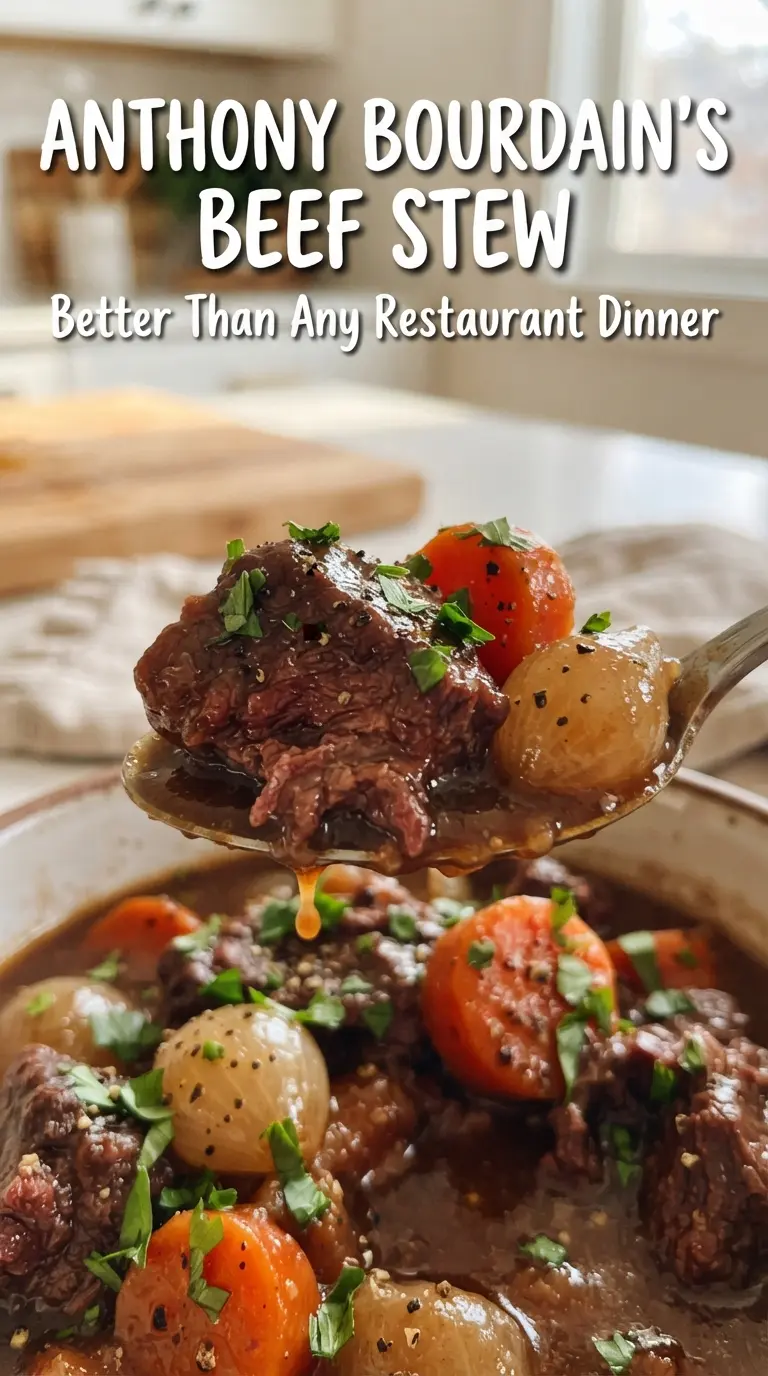
- Beef chuck — This is the cut that turns silky after a long simmer because it has enough connective tissue to soften without drying out. Don’t swap in lean stew meat if you want the same texture; it tends to go stringy before it gets tender.
- Red Burgundy wine — The wine gives the stew its deep, slightly sharp edge and helps deglaze the pot into a proper sauce. Use a dry red you’d actually drink. A jammy, sweet wine will throw the balance off.
- Onions — Thin-sliced onions melt down and give the broth its body. They’re not just background. They help thicken the stew from the inside out, especially once they’ve picked up the browned bits from the pot.
- Flour — This is the quiet thickener. Sprinkling it over the meat and stirring it for a few minutes keeps the final sauce from feeling raw or chalky. If you need a gluten-free version, use a cornstarch slurry at the end instead, but the texture will be a little cleaner and less rustic.
- Bouquet garni — Thyme, parsley stems, and bay leaf bring the herbal note that keeps the stew from tasting heavy. Tie it tightly so you can pull it out cleanly after simmering; loose herbs will leave you fishing through the pot.
- Carrots — These give the stew sweetness and something sturdy to bite into. Cut them larger than you think. Small pieces will collapse before the beef is tender.
Building the Stew So the Beef Stays Tender
Hard Sear, Small Batches
Season the beef first, then get the oil hot enough that it shimmers before the meat goes in. The cubes should sizzle the second they touch the pot. If they release too much liquid or sit pale and gray, the pan isn’t hot enough or the batch is too crowded. Browning takes time, but it’s worth it here because this crust is what gives the stew its depth later.
Cooking the Onions in the Same Pot
After the beef comes out, the onions go into the same pot and cook until they’re soft, sweet, and golden at the edges. They should pick up some color but not burn. If they start to stick hard, lower the heat and stir in a splash of wine or stock. Those stuck-on bits belong in the stew, not on the bottom of the pot as burnt flavor.
Simmering Until the Sauce Clings
Once the wine, stock, carrots, garlic, and bouquet garni go in, bring everything to a gentle simmer and then hold it there, partly covered. A hard boil will tighten the meat before it softens and can make the sauce oily instead of silky. You’re looking for a lazy bubble and beef that gives easily when pressed with a spoon. By the end, the liquid should coat the back of a spoon and look glossy, not watery.
How to Adapt This Pot for Different Kitchens and Different Needs
Gluten-Free Stew with a Clean Finish
Skip the all-purpose flour and thicken the stew at the end with a cornstarch slurry. Stir it into the hot liquid after the beef is tender, then simmer just until the sauce turns lightly glossy. You lose a little of the old-school rustic body, but you keep the same deep wine flavor.
No Burgundy on Hand
Use another dry red with good structure, like Côtes du Rhône, Cabernet Sauvignon, or a basic Merlot that isn’t too sweet. What matters is acidity and depth, not the label. Avoid anything overly fruity, because the stew needs restraint rather than jamminess.
Make It a Day Ahead
This stew gets even better after a night in the refrigerator because the beef and sauce settle into each other. Cool it fully before covering and chilling, then reheat it slowly the next day. The sauce may look thicker after resting, and that’s a good sign.
Storage and Reheating
- Refrigerator: Store covered for up to 4 days. The sauce will thicken as it chills, and the flavor usually gets deeper by the next day.
- Freezer: It freezes well for up to 3 months. Cool completely, portion into airtight containers, and leave a little space for expansion.
- Reheating: Reheat gently over low heat on the stove with a splash of stock or water if needed. Don’t boil it hard, or the beef can tighten up and the sauce can separate.
Answers to the Questions Worth Asking
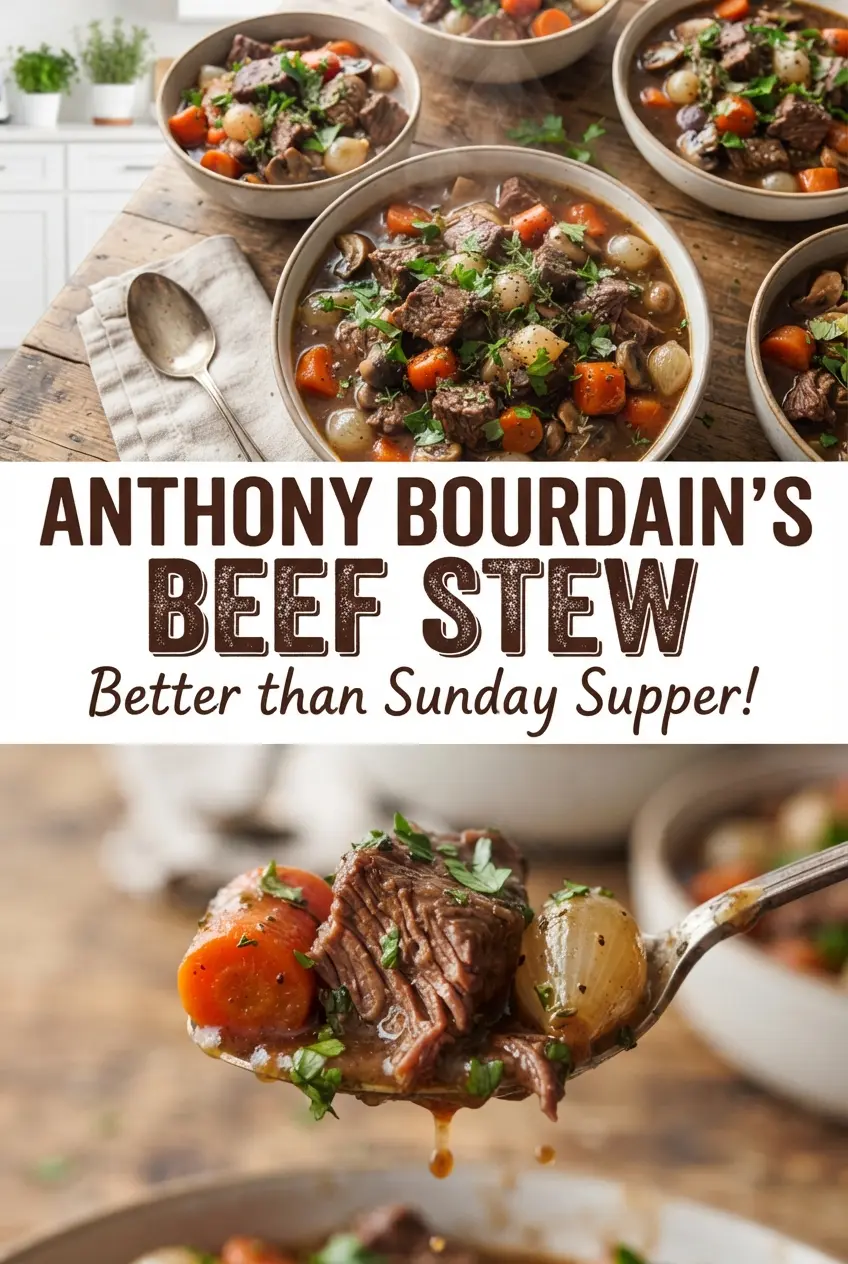
Anthony Bourdain’s Beef Stew
Ingredients
Equipment
Method
- Season the beef cubes with salt and black pepper, then sear in very hot olive oil in batches until deeply browned and caramel-colored, about 6-8 minutes total per batch. Transfer the browned beef to a plate or bowl and set aside while you cook the onions.
- In the same Dutch oven, cook the sliced onions for 10 minutes until soft and golden, stirring occasionally so they don’t scorch. Keep the heat high enough to drive browning without burning.
- Return the beef to the pot and sprinkle all-purpose flour over the meat, stirring to coat. Cook for 3-4 minutes, until the flour is browned and the beef is lightly crusted.
- Pour in the red Burgundy wine and scrape the bottom of the pot to lift all the browned bits, then bring to a simmer. Add the carrots, garlic clove, bouquet garni, and enough water or beef stock to just cover the beef.
- Simmer gently, partly covered, for 2 hours, until the beef is very tender and the sauce thickened to a glossy consistency. Check occasionally to maintain a gentle simmer and add a splash of water/stock only if it looks dry.
- Remove the bouquet garni, then finish the stew with chopped fresh parsley. Stir and serve hot, with the sauce coating the beef and vegetables.