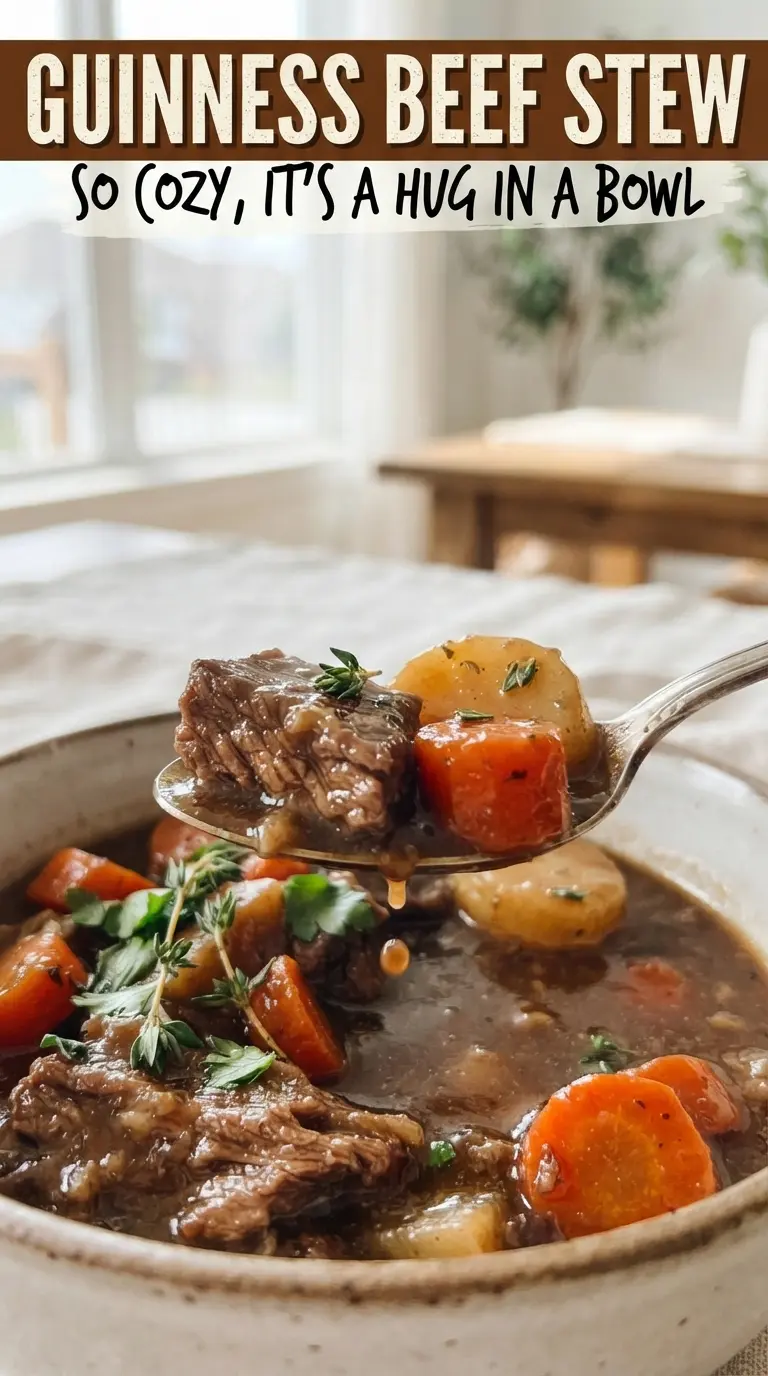
Guinness beef stew earns its place at the table because the broth turns dark, glossy, and deeply savory while the beef cooks down until it pulls apart with almost no resistance. The vegetables keep their shape, the potatoes soak up the stout-rich broth, and every spoonful lands with that slow-cooked, pub-style comfort people remember. It tastes like it took all day for a reason.
The key is building flavor in layers instead of dumping everything into the pot at once. Browning the beef in batches gives you the base for the sauce, and that little bit of flour helps the broth settle into a light, velvety body instead of staying thin. Guinness adds bitterness and roasted depth, but the tomato paste, brown sugar, and Worcestershire keep it balanced so the stew tastes rounded, not sharp.
Below, I’ll show you where the stew gets its richest flavor, how to avoid a watery pot, and what to do if you want to make it ahead. The timing matters here, but none of it is fussy once you know what to watch for.
The broth turned silky and the beef was fall-apart tender after the full simmer. I loved that the potatoes held their shape and the Guinness flavor stayed rich without tasting bitter.
Save this Guinness beef stew for a slow-simmer dinner with tender beef, dark stout gravy, and hearty vegetables.
The Brown Bits at the Bottom Are the Real Secret
Most stew goes flat because the meat gets crowded and steamed instead of browned. That leaves you with gray beef and a broth that tastes like it was boiled, not built. Here, the flour-dusted cubes need space in the pot so the surface can caramelize; those browned bits are what give the Guinness its deep, roasted edge.
The other common mistake is rushing the simmer. Once the liquid goes in, the stew should barely move. A hard boil tightens the beef and makes the broth muddy. Gentle heat keeps the chuck tender while the stout, broth, and tomato paste slowly cook into one cohesive sauce.
- Chuck roast — This cut has enough connective tissue to turn spoon-tender during the long simmer. Leaner beef will dry out before the sauce finishes.
- Guinness stout — The stout brings roasted bitterness and color. It’s worth using the real thing here because lighter beer won’t give the same depth.
- Flour — It lightly coats the beef and helps thicken the stew as it cooks. If you need gluten-free, use a 1:1 gluten-free flour blend and brown the meat the same way.
- Parsnips and potatoes — Parsnips add sweetness that balances the stout, while potatoes make the stew feel hearty. Add them late so they hold their shape instead of melting into the broth.
What Each Ingredient Is Actually Doing in This Recipe
- Primary ingredient (the star) — Quality matters most. Choose the best you can find.
- Cooking medium (oil, butter, or broth) — This carries flavors and prevents dryness.
- Seasonings (salt, pepper, spices, herbs) — Layer flavors so nothing overpowers. Build depth gradually.
- Aromatics (garlic, onion, herbs) — Cook with fat to bloom flavors. Become the foundation.
- Supporting ingredients — Complement the main ingredient without overpowering it.
- Sauce or liquid (if applicable) — Brings flavors together. Balance richness with acid.
- Acid (lemon, vinegar, wine, or other) — Brightens and prevents flat-tasting results.
- Final finish (garnish, glaze, or sauce) — Prevents one-dimensional taste and adds visual appeal.
Building the Stout Base Without Losing the Beef
Season the beef first, then toss it with flour so every piece gets a thin, even coating. Brown it in batches over medium-high heat until you see a deep crust on the outside and the pan has dark residue on the bottom. Don’t stir constantly; let the beef sit long enough to color, or you’ll miss the flavor that makes the sauce taste finished.
Cook the onions until they soften and turn translucent, then add the garlic and tomato paste for just a minute. That short cooking time takes the raw edge off the paste and wakes up the garlic without burning either one. When the Guinness goes in, scrape the bottom of the pot well. If those browned bits stay stuck, you leave the best flavor behind.
After the broth, Worcestershire, brown sugar, thyme, and bay leaves go in, the liquid should look dark and aromatic, not thin and sharp. Return the beef, cover the pot, and let it barely simmer for about two hours. If you see active bubbling, lower the heat; a rolling simmer will toughen the meat before it softens.
Brown the Beef in Real Batches
Heat the oil until it shimmers, then add the beef in a single layer. Each piece should sizzle immediately. If the pan gets crowded, the temperature drops and the meat releases moisture instead of browning. Work in batches and transfer the beef to a plate as soon as the crust forms.
Cook the Aromatics and Paste Together
The onions need time to soften before the garlic goes in. Once the garlic hits the pan, keep it moving so it doesn’t scorch. Stir in the tomato paste and let it darken slightly; that extra minute deepens the base and keeps the finished stew from tasting thin.
Let the Stout Do the Deglazing
Pour in the Guinness slowly and scrape every browned spot from the bottom of the pot. The liquid should smell malty and roasted within seconds. Add the broth and seasonings after the bottom is clean, because that’s what turns the fond into the sauce instead of leaving burnt bits behind.
Finish with the Root Vegetables
Carrots, parsnips, and potatoes go in after the beef has already softened. If they go in too early, they’ll collapse and turn the stew starchy. Add them for the final 45 to 60 minutes until the potatoes are tender at the center and the carrots give cleanly when pierced with a fork.
Make It Gluten-Free Without Losing the Body
Use a good 1:1 gluten-free flour blend on the beef instead of all-purpose flour. The stew won’t be quite as naturally velvety, but the texture still lands well if you brown the meat properly and keep the simmer gentle.
Use Lamb for a More Traditional Irish Feel
Swap the beef chuck for lamb shoulder if you want a deeper, gamier stew. The method stays the same, but the flavor gets more rustic and earthy, which works especially well with the stout and thyme.
Skip the Alcohol and Keep the Roasted Depth
Replace the Guinness with extra beef broth plus 1 tablespoon balsamic vinegar or a splash of brewed coffee. You won’t get the same stout bitterness, but you’ll still have a dark, savory stew with enough acidity to keep the broth from tasting heavy.
Storage and Reheating
- Refrigerator: Store covered for up to 4 days. The flavor gets even better overnight, and the broth thickens as it chills.
- Freezer: This freezes well for up to 3 months. Cool it completely first, then portion it into freezer containers and leave a little room for expansion.
- Reheating: Warm it slowly on the stove over low heat with a splash of broth if needed. Don’t boil it hard or the beef can tighten up and the potatoes can break apart.
Answers to the Questions Worth Asking

Guinness Beef Stew
Ingredients
Equipment
Method
- Season the beef chuck cubes with salt and black pepper, then toss with the all-purpose flour until coated (dry flour should lightly cling). Heat the vegetable oil in a Dutch oven over medium-high heat until shimmering, then brown the beef in batches for 3–5 minutes per side (work in batches so the surface browns, not steams).
- Transfer the browned beef to a plate while you finish the remaining batches, keeping the Dutch oven hot.
- Add the chopped onions to the Dutch oven and cook for 5 minutes, scraping up browned bits as they release. Stir in the minced garlic and tomato paste and cook for 1 minute until fragrant and darker in color (about 1 minute).
- Pour in the Guinness stout and scrape the bottom of the pot thoroughly, bringing up any stuck fond (mixture will look nearly black). Add the beef broth, Worcestershire sauce, brown sugar, dried thyme, and bay leaves, then stir to combine.
- Return the browned beef to the pot, cover, and simmer gently at 180°C/350°F for 2 hours, checking occasionally to keep a steady gentle bubble (not a hard boil).
- Add the sliced-thick carrots, sliced-thick parsnips, and cubed potatoes, then simmer uncovered gently at 180°C/350°F for 45–60 minutes until the vegetables are tender and the beef is fork-tender.
- Remove the bay leaves and discard them. Sprinkle with the chopped fresh parsley and serve hot, letting the stew rest 5 minutes so it thickens slightly (visually glossy and thick).