French onion pot roast turns a tough chuck roast into something spoon-tender, with onions cooked down until they melt into the broth and give every bite that deep, savory sweetness. The broth picks up the browned fond from the sear, the wine lifts the flavor of the onions, and the Gruyere on top finishes it with that classic French onion soup pull of melted cheese and toasted bread.
What makes this version work is patience in the right places. The onions need enough time to go from sharp and squeaky to jammy and bronze, and the roast needs a hard sear before it ever goes into the oven. That combination builds a braising liquid that tastes layered instead of flat, which matters when the whole dish only has a handful of ingredients.
Below, I’ll show you how to get the onions properly caramelized without rushing them, when the wine matters most, and how to finish the dish so the baguette stays crisp enough to hold the cheese instead of turning soggy on contact.
The onions turned sweet and jammy, and the roast shredded apart right in the Dutch oven after 3 1/2 hours. I loved that the Gruyere stayed gooey on the toasted baguette instead of disappearing into the broth.
Save this French Onion Pot Roast for the night you want fall-apart beef, caramelized onions, and bubbling Gruyere in one Dutch oven.
The Part Most Pot Roasts Miss: Proper Onion Caramelization
The onions are not a background ingredient here. They are the sauce. If you rush them and stop when they’re just soft, the finished braise tastes thin and a little sharp instead of rich and round. Cook them low and slow until they collapse, turn deep golden, and pick up a sticky edge in the pan.
The other mistake is adding the wine too early or too fast. Once the onions are caramelized, the wine goes in to loosen the browned bits and concentrate all that sweetness into the broth. That’s where the French onion flavor starts to taste like more than just beef in onion gravy.
What Each Ingredient Is Doing in the Dutch Oven
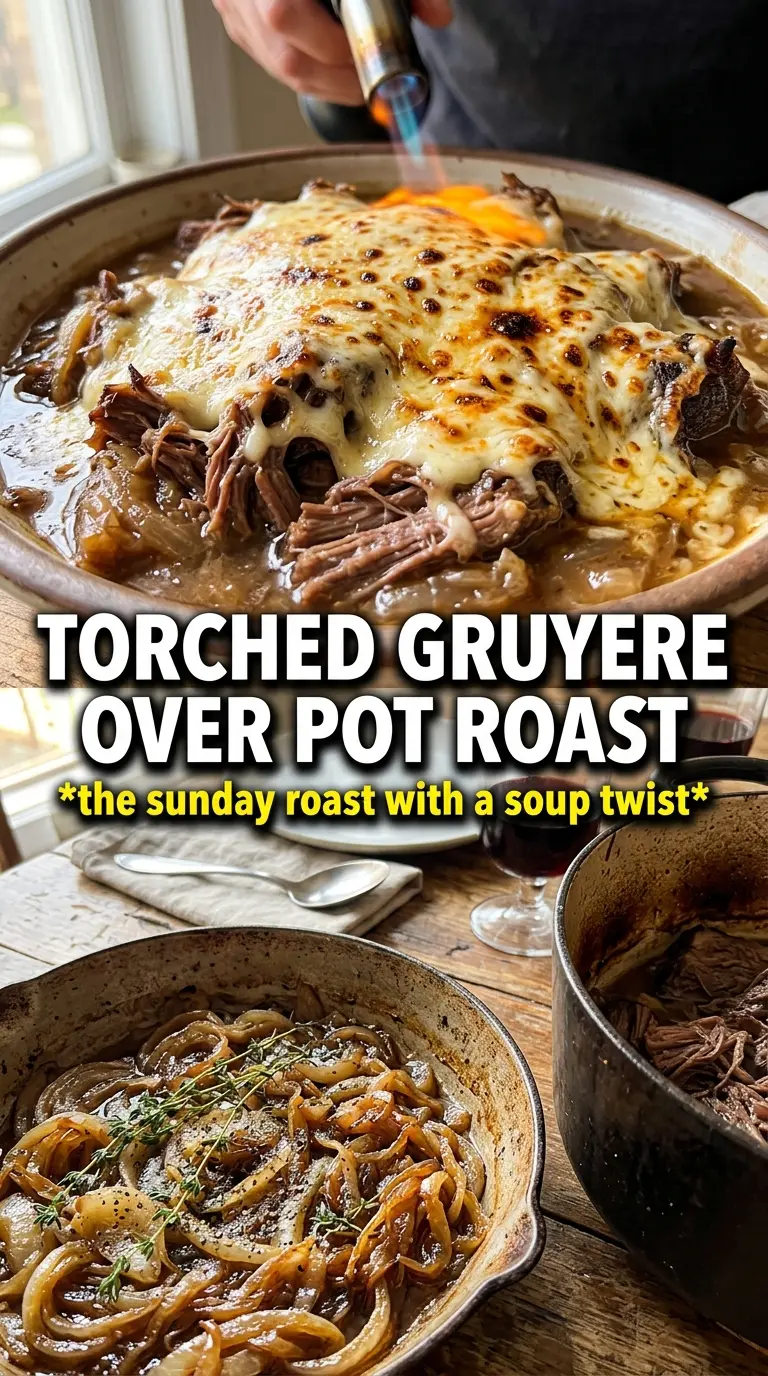
- Beef chuck roast — This is the cut that breaks down into tender strands after a long braise. A leaner roast won’t give you the same shredded texture, and it can dry out before the onions finish their work.
- Onions — Use large yellow onions if you can. They soften into a sweet, silky base that tastes like classic French onion soup. This is the ingredient that needs patience most; there’s no shortcut that gives the same depth.
- Dry white wine or beef broth — Wine adds brightness and helps lift the browned bits from the pan. If you don’t want to use wine, beef broth works, but the flavor will be a little less sharp and a little more straightforward.
- Gruyere — Gruyere is worth it here because it melts smoothly and gives you that nutty, savory finish. Swiss cheese can work in a pinch, but it won’t taste quite as deep or slice as cleanly under the broiler.
- Baguette — Toast it first so it can hold its shape under the cheese. If you skip toasting, the bread softens too fast and disappears into the broth instead of acting like a top layer.
Building the Braise So the Beef Stays Tender
Sear the Roast First
Start with a well-seasoned chuck roast and let it sear until the surface is deeply browned on all sides. That crust gives the braise its base flavor, and it also leaves behind fond for the onions to scrape up later. If the meat sticks a little at first, leave it alone; it will release when the crust is ready. Pull it out once it has real color, not just a pale tan.
Cook the Onions Until They Collapse
Use medium-low heat and give the onions time to soften, then turn golden, then finally turn deep amber and jammy. Stir often enough to keep the edges from burning, but not so often that they never gain color. If the pan starts looking dry, a small splash of broth or wine keeps the sugars from scorching. This is the stage that decides whether the sauce tastes mellow and rich or just vaguely oniony.
Braise Low and Slow
Once the liquid goes in, the roast should be mostly submerged but not drowned. Cover the Dutch oven and let the oven do the work until the beef pulls apart easily with a fork. If you check it too early, the meat can still feel tight in the center even when the outside looks done. Keep going until the connective tissue has fully broken down and the broth tastes like it has been simmering for hours, because it has.
Finish With Bread and Cheese
Shred the beef back into the broth, then ladle it into bowls with toasted baguette on top. Add the Gruyere and broil just until it bubbles and browns in spots. Watch it closely at this point; cheese goes from melted to scorched fast under the broiler. You want a golden, stretchy top, not a dark crust.
How to Adapt This for Different Tables and Different Cooks
Dairy-Free Finish
Skip the Gruyere and serve the pot roast over toasted baguette with a spoonful of the oniony broth. You lose the classic broiled-cheese top, but the braise itself still has the deep French onion flavor, and the dish stays rich from the onions and beef alone.
Gluten-Free Version
Use gluten-free broth and swap the baguette for toasted gluten-free bread or roasted potatoes. The braise itself is naturally close to gluten-free, so this is mostly about the topping and checking your Worcestershire sauce label.
No Wine, Still Deep Flavor
Use beef broth instead of white wine and add it slowly to deglaze the pan. You’ll get a slightly softer flavor without the bright edge wine brings, but the onions and browned beef still do most of the heavy lifting.
Storage and Reheating
- Refrigerator: Store the beef and broth for up to 4 days. The flavor deepens overnight, and the onions soften even more.
- Freezer: This freezes well without the bread and cheese. Cool completely, portion into airtight containers, and freeze for up to 3 months.
- Reheating: Reheat gently on the stove or in a covered baking dish at 300F until hot. Don’t boil it hard, or the beef can tighten up and the broth can taste dull.
Answers to the Questions Worth Asking
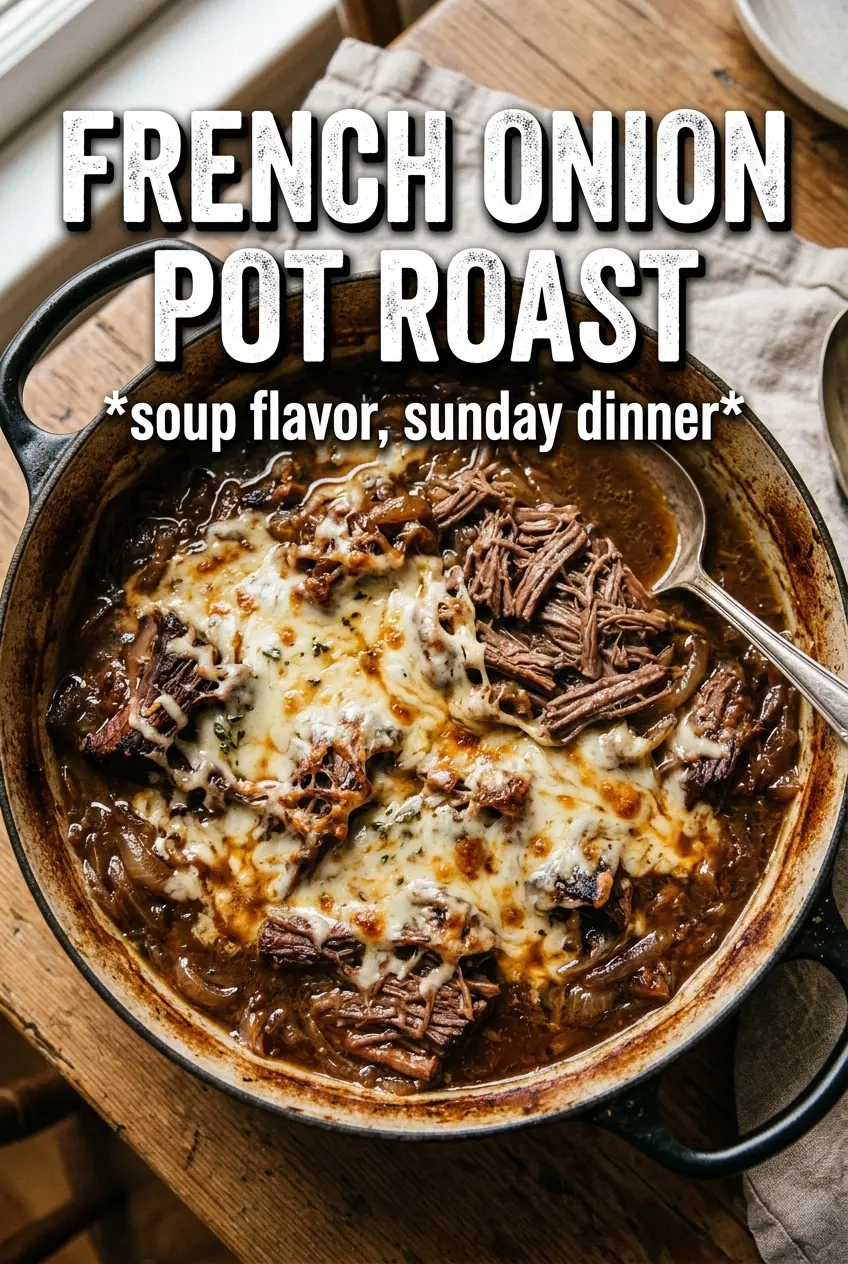
French Onion Pot Roast
Ingredients
Equipment
Method
- Preheat oven to 325F, and heat olive oil in a Dutch oven until shimmering. Sear chuck roast until deeply browned on all sides, then remove it to a plate.
- Melt unsalted butter in the Dutch oven over medium-low heat. Add onions and cook 30-35 minutes, stirring occasionally, until deeply caramelized.
- Add minced garlic and cook 30 seconds until fragrant. Deglaze with white wine or beef broth, scraping up browned bits from the bottom of the pot.
- Stir in beef broth, Worcestershire sauce, fresh thyme, and bay leaves. Return the chuck roast to the pot, cover, and braise 3 to 3-1/2 hours until fall-apart tender.
- Remove bay leaves from the braising liquid. Shred the beef in the broth until evenly distributed.
- Ladle the pot roast into bowls, and float toasted baguette on top. Sprinkle shredded Gruyere over the bowls.
- Broil 3-4 minutes until the cheese is golden and bubbly, then serve hot.