Egg roll soup brings everything people love about the filling into a bowl: savory pork, tender cabbage, sweet carrots, and that ginger-soy broth that tastes like it simmered all afternoon even though it comes together fast. The best part is the texture contrast. You get soft vegetables, juicy meat, and a crisp finish from the wonton strips on top, which makes each spoonful feel complete instead of one-note.
This version works because the broth is built around the same flavor base you’d expect in a good egg roll, but the ingredients are handled in a way that keeps the soup clean and bright. Browning the pork first gives the broth a deeper, rounder taste. Adding the cabbage and carrots later keeps them tender with a little bite instead of cooking them into mush. A small splash of rice vinegar at the end matters more than it looks on paper; it keeps the soup from tasting flat once the soy and sesame oil go in.
Below you’ll find the one broth mistake that makes this soup taste heavy, plus a few easy ways to adjust it if you want it milder, spicier, or a little lighter on the carbs.
The broth had that classic egg roll taste, and the cabbage stayed tender without turning watery. I topped mine with the wonton strips right before serving and they stayed crunchy just long enough for dinner.
Save this Egg Roll Soup for the nights when you want all the egg roll flavor in a fast, cozy bowl with crispy wonton strips on top.
The Broth Needs Acid at the End, Not More Salt
Egg roll soup can taste dull fast if you keep reaching for soy sauce. The fix is usually acid, not salt. Rice vinegar wakes up the cabbage, lifts the pork, and keeps the broth tasting clean after the vegetables go in. If you add too much soy early, the soup turns muddy and the cabbage tastes heavy instead of fresh.
The other common failure is overcooking the vegetables. Shredded cabbage softens quickly, and once it goes past tender it starts to lose the texture that makes this soup worth making in the first place. Keep the simmer gentle. You want the cabbage wilted and the carrots tender with a little structure, not completely collapsed.
What Each Ingredient Is Actually Doing in This Bowl
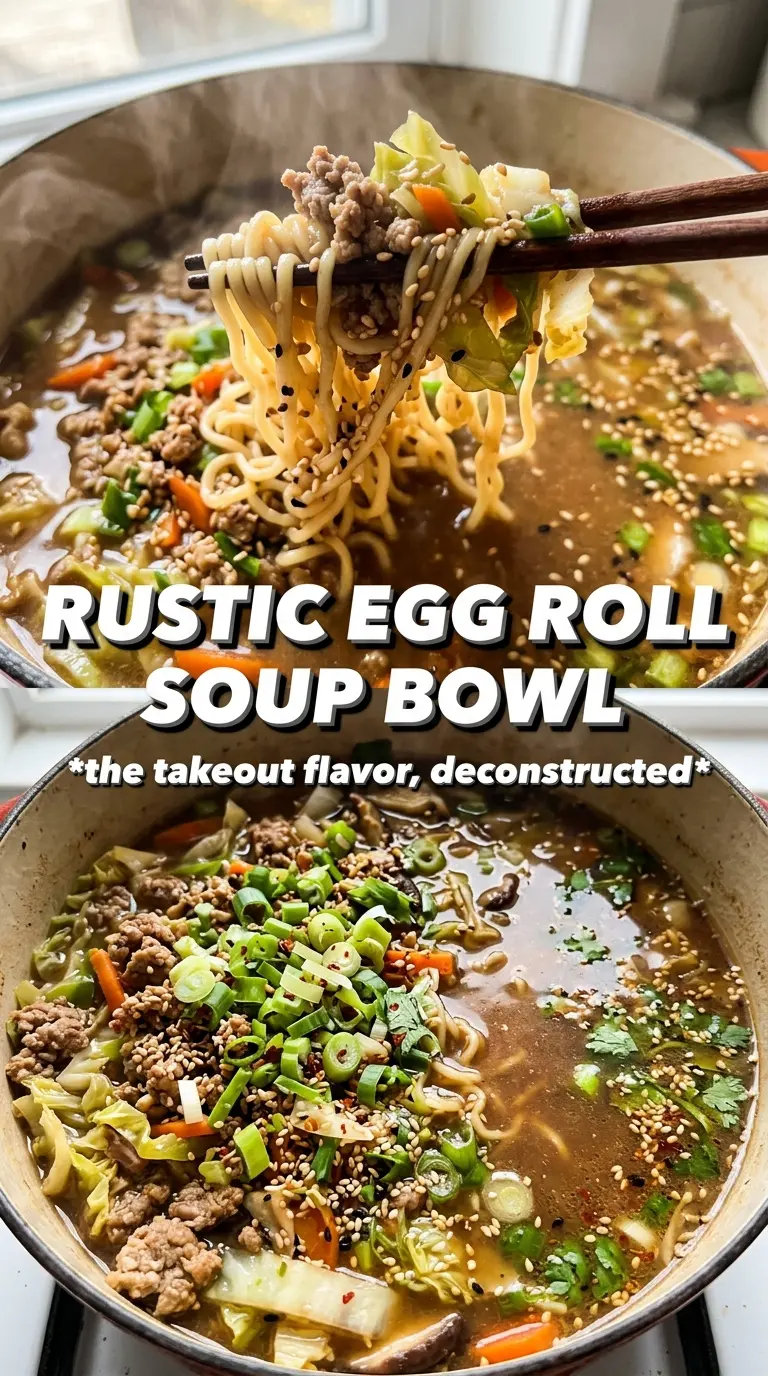
- Ground pork or chicken — Pork gives the soup the most authentic egg roll flavor because it brings a little richness to the broth. Ground chicken works well if you want something lighter, but it needs the sesame oil and ginger to carry more of the flavor. If you use chicken, don’t overcook it before the broth goes in.
- Cabbage — This is the backbone of the soup, so shred it thin. Thick pieces take longer to soften and can throw off the balance of the bowl. Green cabbage stays firm enough to hold up in the broth, which is exactly what you want.
- Carrots — Carrots add sweetness and color, and shredding or julienning them helps them cook in the same window as the cabbage. Slicing them thick makes them lag behind the rest of the soup. If you only have a box grater, that works fine.
- Ginger and garlic — Fresh is worth it here. These two ingredients build the flavor that makes the soup taste like more than pork in broth. Jarred garlic can work in a pinch, but fresh ginger matters more because it gives the broth its clean, sharp edge.
- Soy sauce, sesame oil, and rice vinegar — This trio does the heavy lifting. Soy brings salt and depth, sesame oil gives the soup that familiar takeout aroma, and rice vinegar keeps everything from tasting flat. If you skip the vinegar, the broth will feel heavier than it should.
Building the Bowl So the Vegetables Stay Tender
Brown the Meat First
Start with the ground pork or chicken in a large pot over medium-high heat and break it up as it cooks. You want real browning on the meat, not just gray crumbles, because those browned bits give the broth more backbone. If the pan looks greasy, drain the excess fat before moving on. Leave a little behind for flavor, but not enough to make the soup slick.
Wake Up the Ginger and Garlic
Add the garlic and ginger after the meat is cooked and let them cook just until fragrant, about a minute or two. If they sit too long, garlic turns bitter and the whole pot starts to taste harsh. You’re looking for a strong, warm smell that tells you the aromatics are blooming, not burning.
Simmer, Then Add the Greens
Pour in the broth, soy sauce, sesame oil, rice vinegar, and sriracha, then bring everything to a boil before lowering it to a steady simmer. Add the cabbage and carrots once the broth is seasoned, not before, so they can soften without soaking too long and going bland. Cook until the vegetables are tender but still have shape, then stir in the green onions at the end so they stay bright.
Three Ways to Make This Work for Your Kitchen
Make It Gluten-Free
Use a gluten-free soy sauce or tamari and swap the wonton strips for crispy rice noodles, toasted sesame seeds, or chopped green onions. The soup itself still tastes rich and savory, but you’ll lose the fried wonton crunch unless you replace it with another crisp topping.
Make It Lighter
Use ground chicken instead of pork and add a little extra sesame oil at the end for depth. You’ll get a cleaner broth with less richness, which works well if you want the soup to feel more broth-forward. Don’t skip the ginger in this version, because it replaces some of the flavor that pork would normally bring.
Turn Up the Heat
Increase the sriracha or add a pinch of red pepper flakes with the broth. This gives the soup more bite without changing the base flavor. If you go too far, the heat can overpower the sesame and vinegar, so add it in small amounts and taste after the cabbage softens.
Storage and Reheating
- Refrigerator: Store in an airtight container for up to 4 days. The cabbage softens a little more as it sits, but the flavor gets better by the next day.
- Freezer: This soup freezes well without the wonton strips. Freeze it in portions for up to 2 months, then thaw overnight in the refrigerator before reheating.
- Reheating: Warm it gently on the stovetop over medium-low heat until hot. Don’t boil it hard or the cabbage will turn limp and the broth can taste overly salty after reducing.
Answers to the Questions Worth Asking

Egg Roll Soup
Ingredients
Equipment
Method
- Heat a large pot over medium-high heat and add 2 tablespoons vegetable oil. Brown the ground pork (or chicken), breaking it up, until no longer pink, then drain excess fat.
- Add the minced garlic and grated ginger to the pot. Cook for 1-2 minutes until fragrant.
- Pour in the chicken broth, soy sauce, sesame oil, rice vinegar, and sriracha. Bring the mixture to a boil.
- Add the shredded cabbage and carrots. Simmer for 8-10 minutes, stirring occasionally, until the vegetables are tender.
- Stir in the sliced green onions and season with salt and pepper to taste.
- Ladle the soup into bowls and top each serving with crispy wonton strips, sesame seeds, and extra green onions.