Dumpling ramen bowls hit that sweet spot between cozy and fast: a rich soy-miso broth, springy noodles, tender dumplings, and a soft-boiled egg with a yolk that runs straight into the bowl. The first spoonful tastes layered and comforting, but the whole thing still comes together in the time it takes to boil water and heat broth.
What makes this version work is restraint. The miso goes into warm broth, not a hard boil, so it stays clean and savory instead of muddy. Cooking the noodles separately keeps the broth from turning starchy, and adding the dumplings straight to the simmering broth means they finish tender without falling apart. The toppings do the rest: bok choy for a little green bite, corn for sweetness, nori for that ocean note, and chili oil if you want heat.
Below you’ll find the small details that matter most, from keeping the broth balanced to building bowls that still look good when dinner hits the table fast.
The broth tasted balanced and the dumplings stayed intact instead of going mushy. I loved that the noodles were cooked separately — the bowls were still clear and brothy instead of thick and gummy.
Save this dumpling ramen bowl for the nights when you want a miso broth, tender dumplings, and glossy ramen noodles in one pot.
The Miso Broth Needs Gentle Heat, Not a Hard Boil
The broth is the backbone here, and the biggest mistake is treating miso like a seasoning that can take any amount of heat. Once it goes into a rolling boil, the flavor gets flatter and the finish can turn a little harsh. A steady simmer keeps the broth rounded and savory, which matters because there isn’t a long ingredient list hiding mistakes.
Cooking the dumplings in that broth pulls out some flavor from the filling without turning the soup cloudy. Keeping the noodles separate protects the broth from starch, which is the difference between a clean bowl and one that turns heavy halfway through dinner. If your broth tastes thin, the fix is usually more miso or a touch more soy sauce, not a longer boil.
What Each Ingredient Is Actually Doing In This Bowl
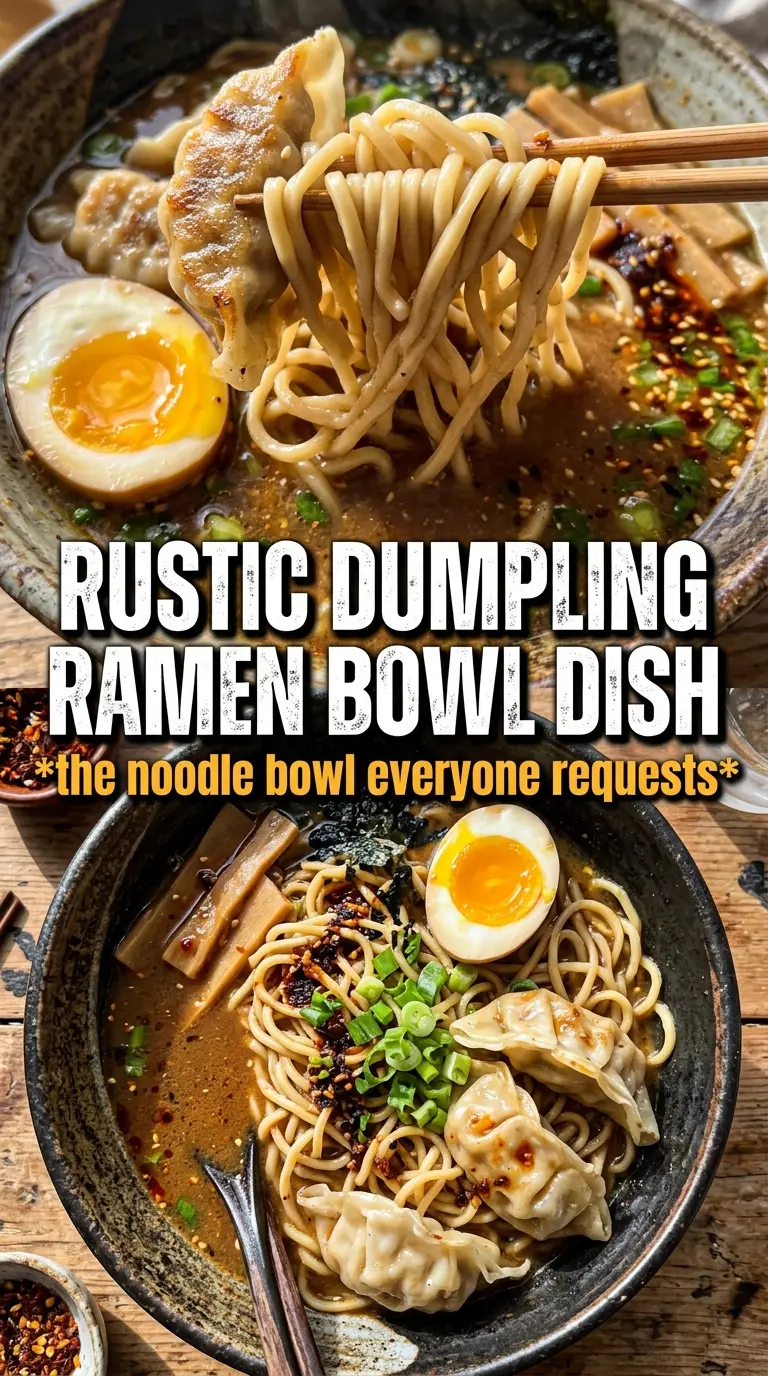
- Frozen dumplings — These carry the heart of the meal, and frozen is exactly right here. Pork gives a richer bowl, while chicken stays a little lighter. Don’t thaw them first; they hold together better when they go straight into the simmering broth.
- White miso paste — This is where the broth gets its deep, savory base. White miso is milder and slightly sweeter than darker types, which fits this quick ramen bowl better. Whisk it into warm broth so it dissolves fully instead of clumping at the bottom of the pot.
- Fresh ramen noodles — Fresh noodles give the bowl its springy, bouncy texture. Dried noodles work in a pinch, but they won’t have the same chew. Cook them separately so they don’t soak up the broth and thicken everything into porridge.
- Soft-boiled eggs — The runny yolk gives the broth a richer, silkier finish once it breaks open. Seven minutes is the sweet spot for a set white and jammy center. Peel them under cool running water if the shells stick.
- Bok choy and corn — Bok choy brings a clean green bite, and corn adds sweetness that keeps the bowl from tasting one-note. Baby bok choy wilts fast, so cut it in halves or quarters and add it near the end. Frozen corn is fine here.
Building the Bowl So the Noodles Stay Springy
Start With the Broth Base
Bring the chicken broth to a steady simmer, then whisk in the miso, soy sauce, mirin, and sesame oil. The broth should look smooth and smell savory before anything else goes in. If the miso looks speckled or sinks to the bottom, the heat is too low for it to dissolve well; if it boils hard, pull it back immediately.
Cook the Dumplings Until They Float and Set
Add the frozen dumplings straight to the simmering broth and cook them until they’re hot all the way through and the wrappers look supple, about 5 to 7 minutes. You want them tender, not swollen or splitting open. If the pot is overcrowded, the temperature drops and the dumplings can get gummy, so use a pot that leaves them room to move.
Wilt the Bok Choy at the Very End
Add the bok choy only after the dumplings are cooked. It needs just a couple of minutes, enough for the stems to soften and the leaves to turn bright green. Overcooked bok choy goes dull and limp, and this dish loses the fresh contrast that keeps every bite interesting.
Assemble So Every Bowl Eats Cleanly
Cook the ramen noodles separately, drain them well, and divide them between bowls. Ladle the broth and dumplings over the top, then finish with egg, corn, green onions, nori, sesame seeds, and chili oil. If you skip draining the noodles well, they carry extra water into the bowl and dilute the broth right when you want it most concentrated.
How to Adapt This Bowl for Different Needs and Pantry Days
Make It Gluten-Free
Use gluten-free dumplings and swap the ramen noodles for rice noodles or gluten-free ramen. Replace the soy sauce with tamari so the broth keeps the same savory depth. The bowl still eats like ramen, but the noodles will be a little softer and less springy than fresh wheat ramen.
Make It Dairy-Free Without Changing a Thing
This recipe is already dairy-free as written, which makes it an easy bowl to serve to a mixed crowd. Keep the sesame oil and chili oil in the finish so the broth still feels full-bodied. The richness comes from miso, dumplings, and egg yolk, not cream.
Use Veggie Dumplings Instead
Vegetable dumplings work well if you want a meatless bowl, but choose ones with a sturdy wrapper so they don’t fall apart in the broth. The result is a little lighter and less rich, so the corn and sesame toppings matter even more. If you want extra depth, add a splash more soy sauce or a pinch of mushroom powder to the broth.
Storage and Reheating
- Refrigerator: Store broth, dumplings, and toppings separately for up to 3 days. The noodles will keep, but they soften fast once they sit in liquid.
- Freezer: Freeze the broth and dumplings together, but freeze noodles separately only if you must. Fresh ramen noodles lose their best texture after freezing, so make a fresh batch if possible.
- Reheating: Warm the broth and dumplings gently on the stovetop until steaming, then add freshly cooked or briefly rewarmed noodles to the bowls. Don’t boil the soup hard during reheating or the dumplings can burst and the broth can taste flat.
The Questions That Come Up Before the First Bowl Is Gone
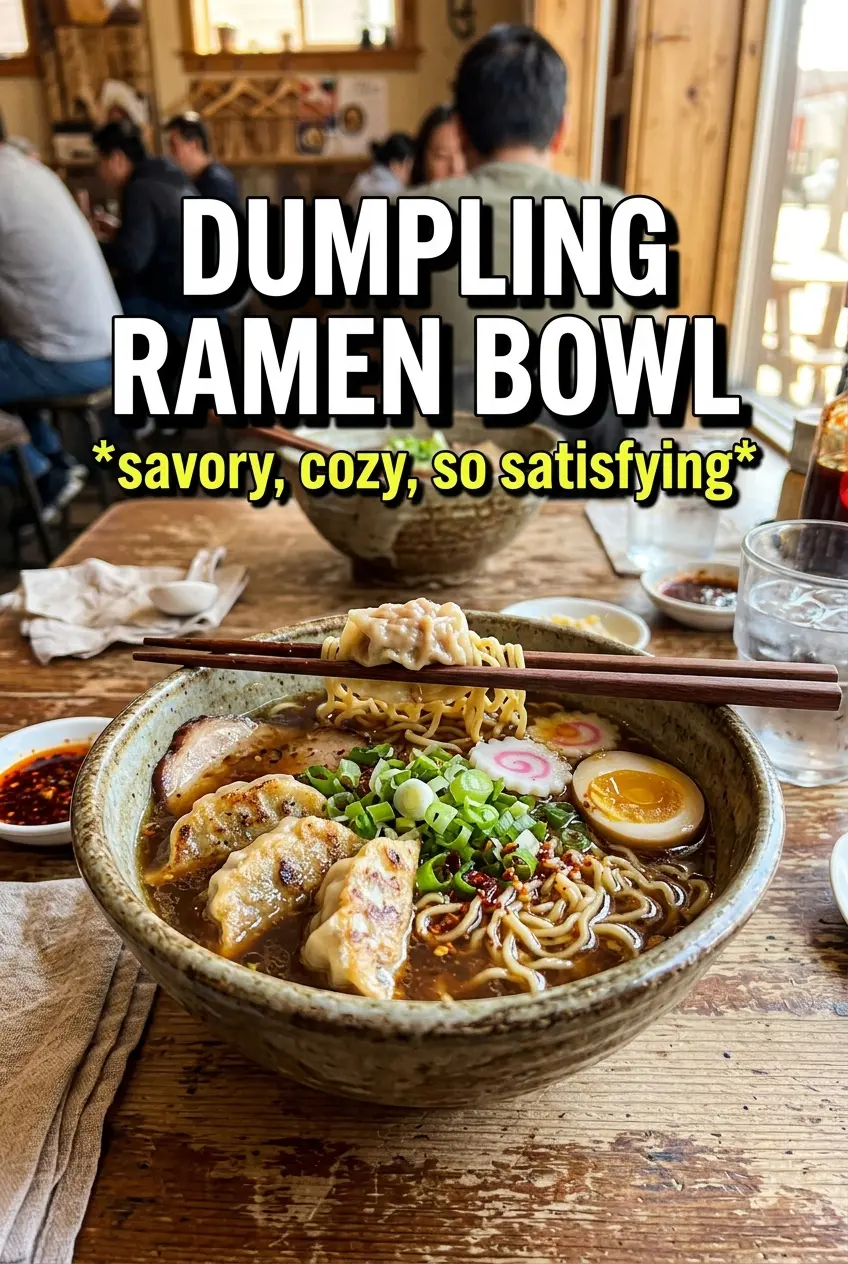
Dumpling Ramen Bowl
Ingredients
Equipment
Method
- Bring 4 cups chicken broth to a simmer in a Dutch oven, then whisk in 2 tablespoons white miso paste, 2 tablespoons soy sauce, 1 tablespoon mirin, and 1 tablespoon sesame oil until smooth.
- Add 16–20 frozen pork or chicken dumplings to the simmering broth and cook for 5–7 minutes, until cooked through.
- Add halved bok choy and cook for 2–3 minutes, until wilted and bright green.
- Cook 8 oz fresh ramen noodles separately according to package instructions, then drain well.
- Divide the drained ramen noodles between 4 bowls, then ladle the broth with dumplings over the noodles.
- Top each bowl with halved soft-boiled eggs, corn, sliced green onions, nori, sesame seeds, and chili oil; add salt to taste.