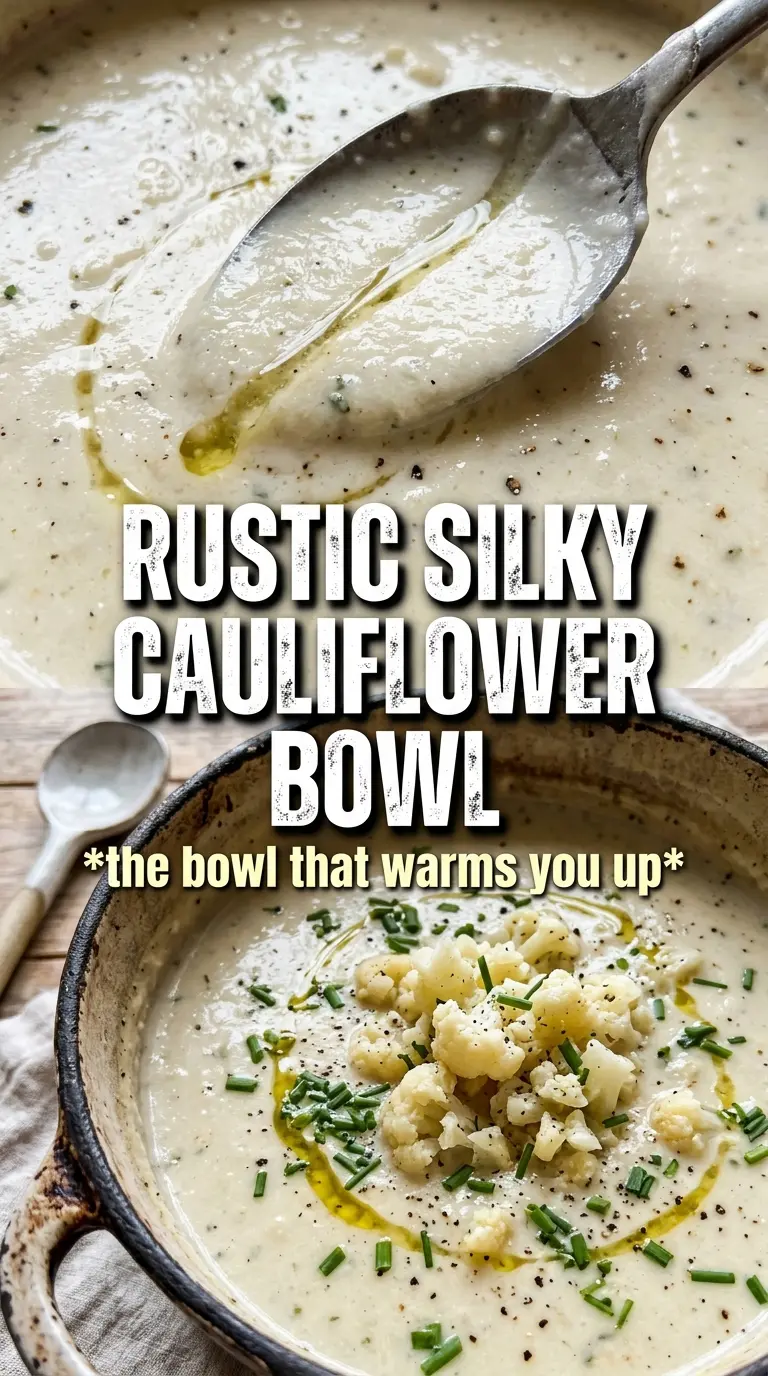
Silky, pale ivory cauliflower soup has a way of tasting far richer than the ingredient list suggests. The body comes from cauliflower itself, not flour, so the texture stays clean and velvety instead of heavy or pasty. When the roasted cauliflower garnish goes on top with a little truffle oil and chives, the bowl gets that contrast of creamy base, crisp edges, and a sharp finishing note that keeps each spoonful interesting.
This version works because it leans on two kinds of cauliflower treatment. The simmered florets turn soft enough to blend completely smooth, while the reserved florets roast until browned and a little nutty. That split is what gives the soup depth. A small amount of nutmeg rounds out the cream, and white pepper keeps the color pale without giving up a bit of gentle heat.
Below, I’ve included the part that matters most: how to get the soup velvety instead of grainy, how to roast the garnish so it actually tastes like something, and the swaps that still keep the soup balanced if you need to adjust it.
The soup blended into the smoothest texture, and roasting half the cauliflower first made the garnish taste almost buttery. I loved that the truffle oil was just a finishing touch instead of taking over.
Save this creamy cauliflower soup for the nights when you want a silky blended soup with a crispy roasted cauliflower finish.
The Trick to a Soup That Stays Velvety, Not Grainy
The biggest mistake with cauliflower soup is rushing the blend. If the florets aren’t fully tender, the soup turns gritty no matter how much cream you add. The cauliflower should fall apart when pressed with a spoon, and the broth should taste concentrated, not watery, before you even reach for the blender.
Heat matters too. Once the cream goes in, keep the soup on low. A hard boil can make dairy taste flat and can change the texture from smooth to slightly broken. If you want the soup extra luxurious, blend longer than you think you need to; the final texture should look glossy and pour in a thick ribbon from the ladle.
What Each Ingredient Is Actually Doing in This Soup
- Cauliflower — This is the base and the thickener. Fresh florets blend smoother than frozen here, and reserving a portion for roasting gives you a garnish with real texture instead of just a soft top.
- Onion and garlic — They build the savory backbone. The onion needs the full five minutes so it softens and sweetens; if it stays raw, the soup can taste sharp even after blending.
- Vegetable or chicken broth — Use a broth you’d actually sip. A bland broth gives you a flat soup, and since this recipe doesn’t rely on a long list of seasonings, the broth matters more than usual.
- Heavy cream — This gives the soup its plush finish. Half-and-half will work in a pinch, but the soup won’t have the same body or coating texture.
- Nutmeg and white pepper — Nutmeg makes the cauliflower taste rounder and warmer. White pepper keeps the soup pale while adding a gentle bite that black pepper would visibly interrupt.
- Truffle oil, chives, and roasted cauliflower — These are the finishing layer. The truffle oil should stay subtle; a few drops are enough, and the chives brighten the bowl so it doesn’t eat heavy.
Building the Flavor Before the Blender Does the Work
Roasting the Garnish First
Start with the reserved cauliflower florets so they have time to brown while the soup simmers. Spread them in a single layer and roast until the edges are deep golden and the stems have a little bite left. If they crowd the pan, they’ll steam instead of caramelize, and you’ll lose the nutty flavor that makes the garnish worth serving.
Softening the Onion and Garlic
Melt the butter with the olive oil and cook the onion until it looks translucent and smells sweet. Add the garlic only for the last minute so it turns fragrant instead of bitter. If the garlic browns, the whole pot can pick up a sharp edge, and that’s hard to hide later.
Cooking the Cauliflower Until It Collapses
Add the cauliflower and broth, bring the pot to a boil, then lower it to a steady simmer. You want the florets to become very tender, almost falling apart at the touch. If they still hold their shape firmly, the blended soup can end up a little sandy instead of silky.
Blending and Finishing the Texture
Blend until completely smooth with an immersion blender, moving the head around the pot so you don’t leave small chunks behind. Stir in the cream, nutmeg, and white pepper after the soup is smooth. If you add the dairy before blending, the soup can splash and the texture won’t be as even.
Dairy-Free Cauliflower Soup
Swap the heavy cream for full-fat coconut milk or an unsweetened oat cream. Coconut milk gives the soup a slightly sweeter finish, while oat cream keeps the flavor closer to the original. Use a neutral broth if you want the cauliflower to stay front and center.
No Truffle Oil Needed
Skip the truffle oil and finish with a little extra olive oil or a drizzle of browned butter. You lose the earthy perfume, but the soup still lands as rich and elegant because the roasted cauliflower and cream are doing most of the work.
Thicker, More Filling Bowl
For a heartier soup, simmer one peeled potato with the cauliflower. It adds starch, which makes the texture thicker and a little more chowder-like, but it softens the pure cauliflower flavor. This is a good move when you want the soup to eat like a main dish.
Storage and Reheating
- Refrigerator: Store in an airtight container for up to 4 days. The soup may thicken as it chills, which is normal.
- Freezer: It freezes well, though the cream can separate a little. For the best texture, freeze before adding the cream, then stir the cream in after reheating.
- Reheating: Warm it slowly over low heat and stir often. Don’t boil it, or the dairy can turn grainy and the flavor can flatten.
Questions I Get Asked About This Recipe
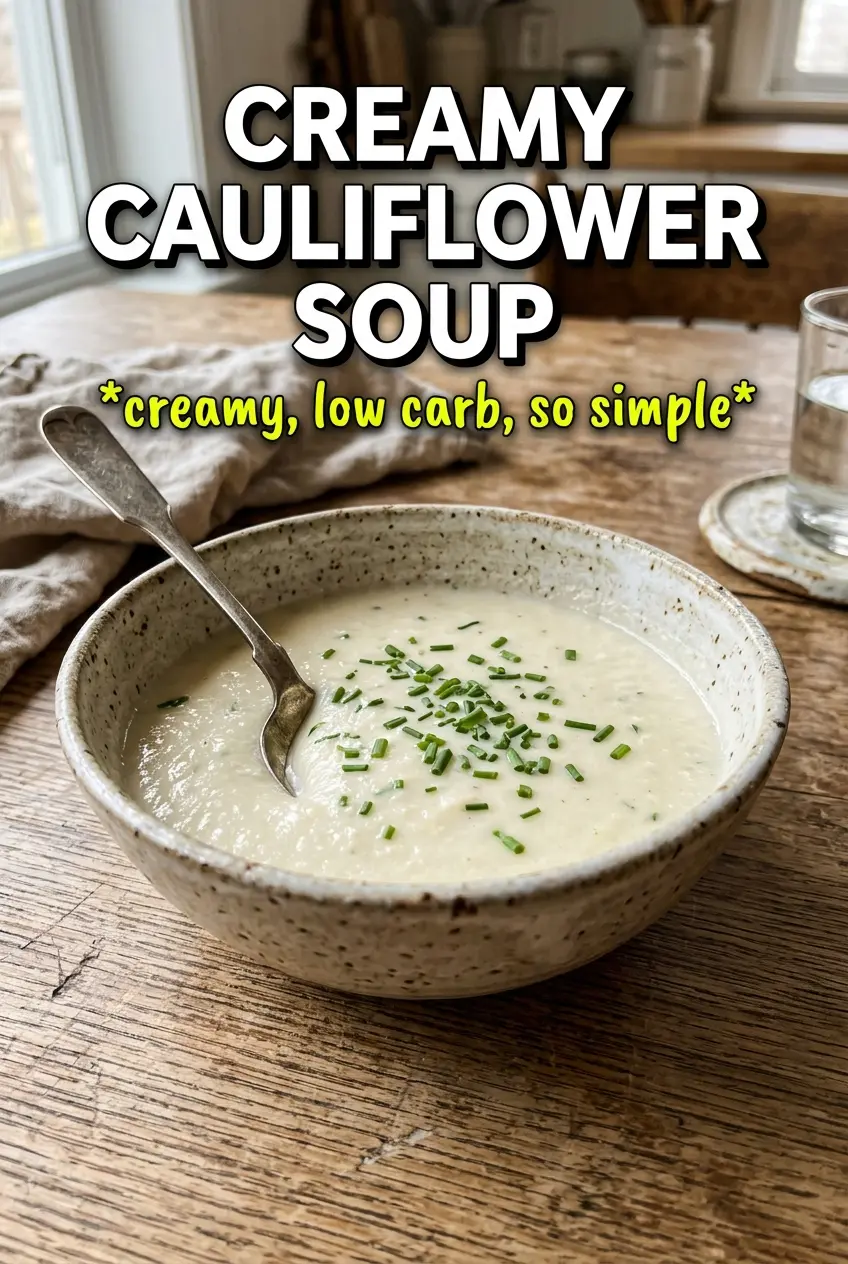
Creamy Cauliflower Soup
Ingredients
Equipment
Method
- Toss the reserved cauliflower florets with olive oil, then roast at 425F for 20-25 minutes until golden and caramelized. Set aside for garnish.
- Melt the butter in a large pot, then sauté the diced onion for 5 minutes until softened. Add the minced garlic and cook for 1 minute, stirring so it doesn’t brown.
- Add the remaining cauliflower and broth to the pot, bring to a boil, then simmer for 20 minutes until very tender. Keep the surface at a steady simmer for even cooking.
- Blend the soup completely smooth with an immersion blender until the texture is silky. Stir in the heavy cream, nutmeg, and white pepper.
- Season with salt to taste, then serve hot with the roasted crispy cauliflower garnish, a truffle oil drizzle, and chives. Aim for a fresh garnish so it stays crisp.