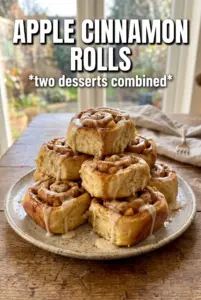
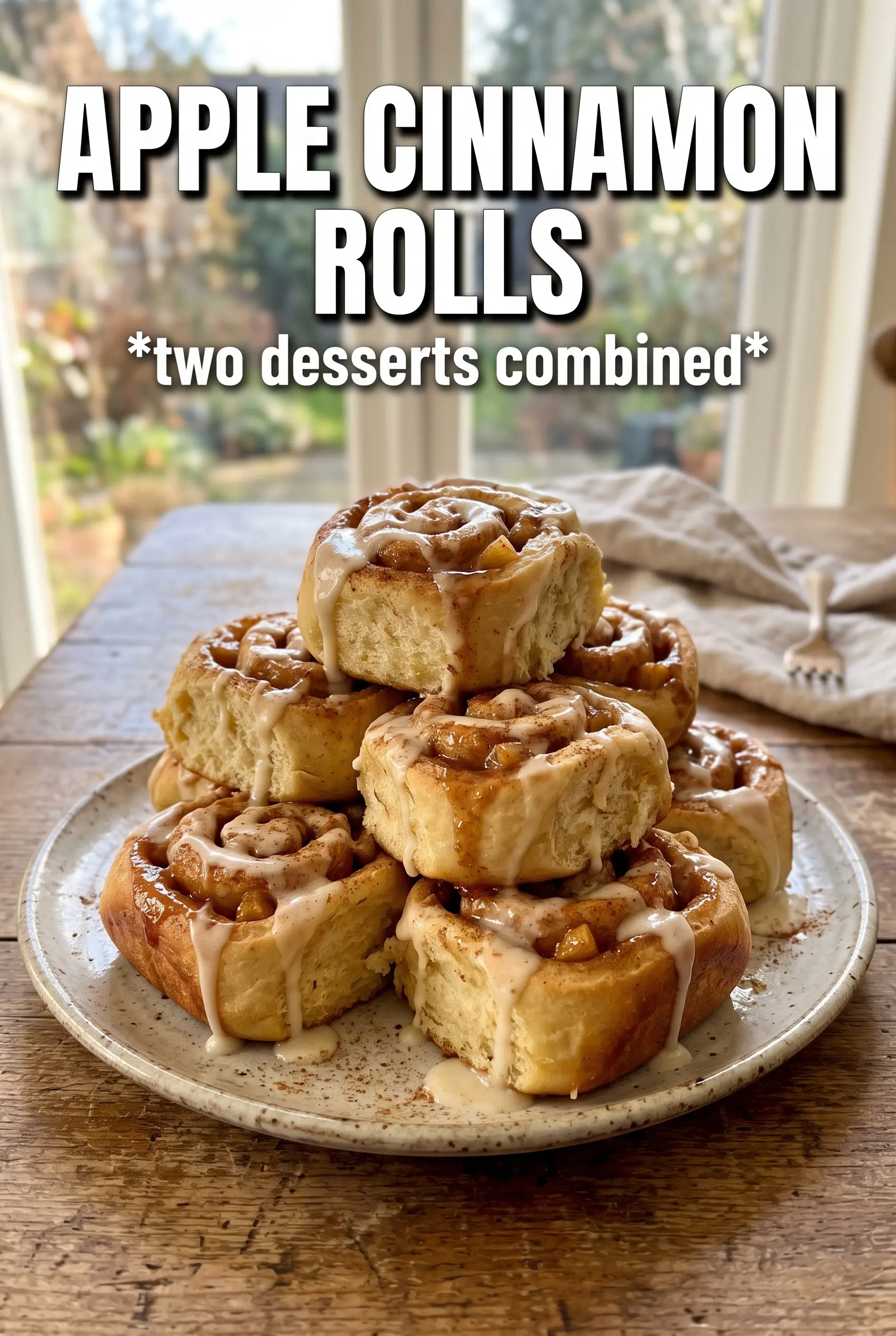
Soft, pillowy apple cinnamon rolls have a way of disappearing before the coffee gets cold. The dough bakes up tender and light, the apple filling turns jammy and spiced, and the cream cheese glaze melts into every swirl so each bite tastes like the best parts of a bakery roll with a little more character. The apples keep the filling from tasting flat, and the cinnamon sugar turns sticky at the edges instead of just sitting inside the spiral.
What makes this version work is the balance: the dough is enriched enough to stay soft, but not so heavy that it turns bready; the apples are cooked before they go into the rolls, so they don’t dump extra moisture into the pan; and the glaze is thin enough to sink into the warm rolls without sliding right off. That cooked apple step matters. Raw apples release too much liquid in the oven and leave you with soggy centers instead of neat spirals.
Below you’ll find the small details that keep the rolls fluffy, the filling concentrated, and the glaze just right. If you’ve ever had cinnamon rolls unravel, bake up dense, or go wet in the middle, the notes here will help.
The apples cooked down into this thick filling instead of leaking all over the pan, and the rolls stayed fluffy all the way through the center. My husband kept sneaking pieces while I was glazing them.
Save these apple cinnamon rolls for the morning when you want soft dough, caramelized apples, and a cream cheese glaze that melts into every swirl.
The Step That Keeps Apple Cinnamon Rolls from Turning Wet in the Middle
The biggest mistake with apple cinnamon rolls is treating the fruit like the filling will somehow cook itself in the oven. Apples release juice as they bake, and raw diced apples tucked into dough can turn the center gummy and make the spirals slide apart. Cooking the apples first concentrates the flavor and leaves you with a filling that spreads cleanly and stays put.
The other thing that matters is the roll itself. A tight spiral helps, but overfilling will still force the dough open from the inside. Spread the apple mixture in an even layer and stop short of the far edge so the seam has a chance to seal. If the filling is hot when it goes on the dough, it can soften the butter in the dough and make rolling messy, so let it cool until it’s warm, not steaming.
What Each Ingredient Is Doing in These Rolls
- Warm milk — The milk wakes up the yeast and gives the dough a softer crumb than water would. Keep it around 110°F; hotter liquid can kill the yeast, and cooler liquid slows the rise enough to make the dough feel sluggish.
- Active dry yeast — This is what gives the rolls lift and that light, airy pull when you tear one apart. If it doesn’t foam in the warm milk, start over before you waste the rest of the ingredients.
- Eggs and butter — These enrich the dough and keep it tender. Melted butter mixes in easily, while the eggs add structure so the rolls rise high without tasting dry.
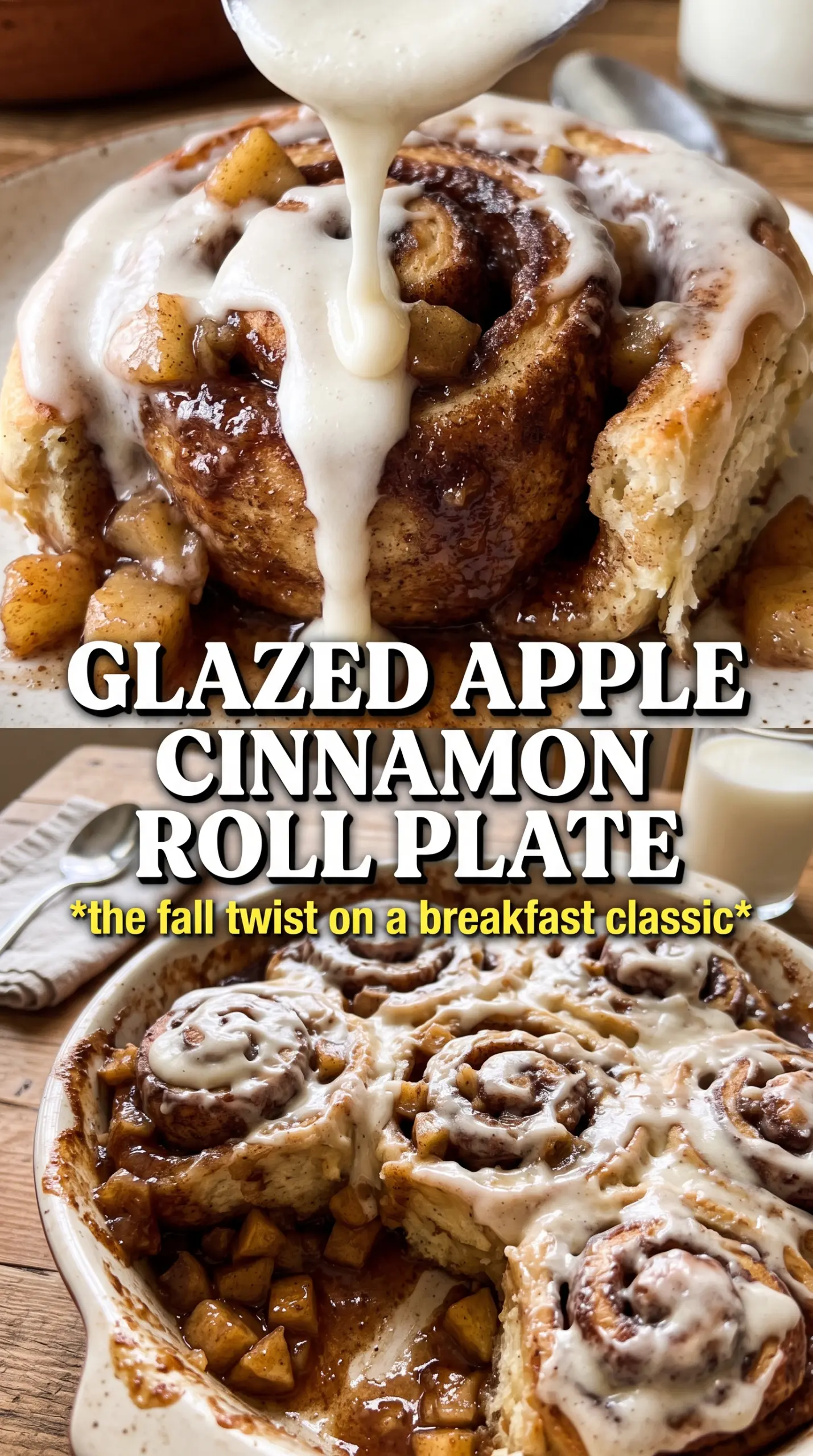
- Apples — Use a firm baking apple if you can. Softer apples can collapse into mush before the filling even hits the oven, while a firmer apple keeps some texture and gives each bite a little chew.
- Brown sugar, cinnamon, and nutmeg — The brown sugar turns the apple mixture glossy and sticky, and the nutmeg adds a little depth without taking over. This is the point where the filling stops tasting like plain apples and starts tasting like cinnamon rolls.
- Cream cheese — Softened cream cheese gives the glaze body and tang. If it’s cold, you’ll get lumps no matter how long you whisk, so let it come fully to room temperature first.
How to Build the Dough and Filling So the Rolls Bake Evenly
Waking Up the Yeast
Stir the warm milk, yeast, and a tablespoon of sugar together, then leave it alone for about 5 minutes. You want a foamy surface and a yeasty smell, not silence; if nothing happens, the yeast is dead or the milk was too hot. That first proof is the easiest place to catch a problem before it ruins the whole batch.
Making the Soft Dough
Add the remaining sugar, melted butter, eggs, and vanilla, then mix in the flour and salt until a soft dough forms. It should be slightly tacky but not batter-like, and it will smooth out as you knead. Eight minutes of kneading is enough to build structure here; if you stop too soon, the rolls bake up dense and uneven.
Cooking Down the Apples
Cook the diced apples with butter, brown sugar, cinnamon, and nutmeg until the mixture looks glossy and the juices thicken, about 5 to 7 minutes. The pieces should hold their shape but look coated and jammy. Spread them out on a plate to cool so they don’t melt the dough when you assemble the rolls.
Rolling, Cutting, and Proofing
Roll the dough into a 12-by-18-inch rectangle and spread the cooled filling all the way across, leaving a small clean border on one long edge. Roll it tightly from the opposite side so the spiral stays compact, then cut into 12 even pieces with a sharp knife or unflavored dental floss. Arrange them in the baking dish with a little space between each one, then let them rise until puffy; if they don’t look noticeably bigger, they aren’t ready for the oven.
Baking and Glazing
Bake at 375°F until the tops are golden and the centers are set, usually 22 to 25 minutes. The rolls should spring back lightly when touched, and the filling should be bubbling around the edges without spilling over. Beat the glaze ingredients until smooth, then drizzle it over the rolls while they’re warm so it melts into the swirls instead of sitting in a thick cap on top.
How to Adapt Apple Cinnamon Rolls Without Losing the Good Parts
Dairy-Free Version
Swap the milk for an unsweetened non-dairy milk and use plant-based butter in both the dough and filling. The rolls will still rise and bake up soft, though the glaze won’t have quite the same tang unless you use a dairy-free cream cheese with a thick, neutral flavor.
Make-Ahead Morning Rolls
Assemble the rolls the night before, cover the pan tightly, and refrigerate after shaping. In the morning, let them sit at room temperature until puffy before baking; cold dough straight from the fridge needs extra time and can bake up under-proofed in the center.
Extra Apple, Less Sweet
You can push the apple filling a little heavier if you want a fruit-forward roll, but keep the total layer thin and even. Too much filling makes the dough slip and the centers collapse, so the better move is to add a handful more apples and cook them down until the moisture evaporates.
Freezer-Friendly Bake Later
Freeze the shaped, unbaked rolls on a tray, then move them to a freezer bag once solid. Thaw overnight in the pan, let them finish rising, and bake as directed. This keeps the dough texture better than freezing baked rolls, which can dry out around the edges.
Storage and Reheating
- Refrigerator: Store covered for up to 4 days. The rolls soften a little as they sit, but the flavor stays good.
- Freezer: Freeze baked rolls without glaze for up to 2 months. Wrap them well so they don’t pick up freezer odors, then thaw before reheating.
- Reheating: Warm individual rolls in the microwave for 20 to 30 seconds, or cover the whole pan with foil and heat in a 300°F oven. Don’t blast them too long or the dough turns dry before the center is warm.
Answers to the Questions Worth Asking
Apple Cinnamon Rolls
Ingredients
Equipment
Method
- Combine warm milk, yeast, and 1 tablespoon of the granulated sugar, then rest 5 minutes until foamy. You should see bubbles across the surface, indicating active yeast.
- Add the remaining granulated sugar, melted unsalted butter, eggs, and vanilla extract, then mix until smooth. Keep going until the mixture is uniform with no streaks.
- Stir in all-purpose flour and salt to form a soft dough. The dough should pull together and feel tacky but not runny.
- Knead for 8 minutes until smooth. Visual cue: it should look elastic and slightly satiny.
- Place the dough in a greased bowl, cover, and rise for 1 hour until doubled. It should puff up noticeably and spring back slowly when pressed.
- Cook the diced apples with unsalted butter, brown sugar, cinnamon, and nutmeg for 5-7 minutes until caramelized. The apples should soften and look glossy with syrupy edges.
- Cool the apple filling completely before assembling the rolls. Make sure it’s no longer warm to prevent the dough from becoming greasy.
- Roll the dough into a 12x18 inch rectangle. Aim for even thickness so the rolls bake uniformly.
- Spread the apple filling evenly over the dough. Leave a thin border at the far edge so it seals when rolled.
- Roll tightly into a log. Keep the roll snug so the swirls stay intact when cut.
- Cut the log into 12 rolls and arrange them in a greased 9x13 dish. Place cut sides up and leave some space for expansion.
- Cover and rise for 45 minutes. The rolls should look puffed and feel airy when gently touched.
- Bake at 375F for 22-25 minutes until golden. Visual cue: the tops should be browned with set, springy centers.
- Beat the cream cheese, powdered sugar, milk, and vanilla extract, then drizzle over warm rolls. The glaze should melt slightly and settle into the swirls.