Thin, crisp-edged zucchini scarpaccia is the kind of savory bake that disappears fast because every piece gives you something different: a bronzed, almost crackerlike edge, a tender middle, and little pockets of zucchini that stay sweet instead of turning watery. The trick is keeping it thin and making the zucchini work for you instead of against you. When it’s done right, the whole pan tastes like caramelized onion, Parmesan, olive oil, and summer squash in the best possible balance.
This version starts with a long salt-and-squeeze on the zucchini, and that step matters more here than in most vegetable bakes. If you skip it, the batter turns loose and the scarpaccia steams instead of browning. A small amount of semolina helps the edges set with a little grit and crunch, while the Parmesan adds salt and depth so the flatbread tastes finished even before you add the flaky salt on top.
Below you’ll find the exact resting time that gives the batter enough structure, plus a few smart swaps if you need to work with what’s already in your pantry. The whole thing bakes on a sheet pan, so the main job is getting it spread thin enough to crisp.
The zucchini got perfectly tender without making the middle soggy, and those crisp browned edges were the first thing gone. I was nervous about squeezing the zucchini, but it made all the difference.
Zucchini scarpaccia with crisp, caramelized edges is worth saving for the days you want a simple Italian appetizer that eats like a snackable flatbread.
The Squeeze That Keeps Zucchini Scarpaccia Crisp Instead of Watery
Zucchini holds a lot of water, and in a thin bake like this that moisture has nowhere to hide. The salt draws it out first, then the squeezing finishes the job so the batter can brown instead of steam. That’s the difference between a scarpaccia with a crackly bottom and one that stays soft in the middle.
The other thing that matters is thickness. Spread the batter no more than 1/4 inch thick and resist the urge to mound it up in the center. A thin layer gives the flour, semolina, and egg enough structure to set quickly, which is what creates those lacey browned edges.
What Each Ingredient Is Actually Doing in This Zucchini Scarpaccia
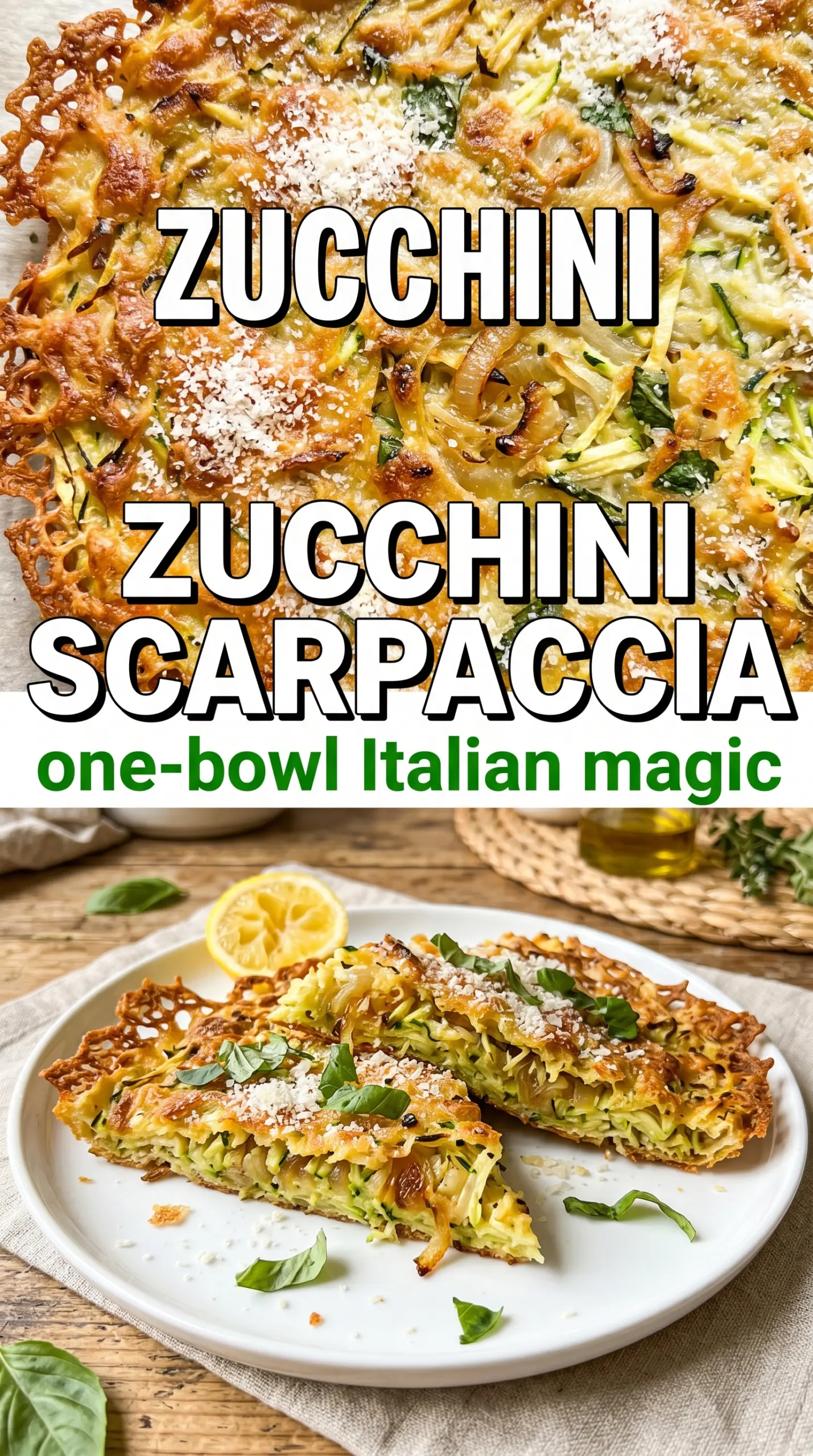
- Zucchini — Slice it paper-thin so it cooks through in the short bake time. A mandoline makes the texture consistent, which helps the scarpaccia hold together. If you cut it thicker, the slices stay bulky and release more water.
- Semolina — This adds a little bite and helps the bottom brown with a subtle crunch. If you don’t have it, all-purpose flour works, but the finished texture will be softer and a little less rustic.
- Parmesan — Use finely grated cheese so it disappears into the batter and seasons every bite. The saltiness matters here, especially because the zucchini is mild after squeezing. Pre-grated works in a pinch, but freshly grated melts and distributes better.
- Eggs — They bind the batter just enough to hold the zucchini together in a thin layer. Two eggs is enough for this amount of flour and vegetables; more would push it toward a custardy cake instead of a flatbread.
- Olive oil — This is part flavor, part texture. Generous oil on the pan is what gives the underside that fried, crisp edge. If you cut it too much, the scarpaccia bakes up pale and dry.
- Onion and thyme — The onion softens as it bakes and gives the scarpaccia a little sweetness against the zucchini. Thyme is a quiet background note, but it makes the whole pan taste more complete.
The 20 Minutes Before Baking That Set Up the Whole Pan
Drawing Out the Zucchini
Toss the sliced zucchini with salt and let it sit until the slices look damp and slightly collapsed. Rinse off the excess salt, then squeeze the zucchini in a clean towel or your hands until no more liquid drips out. If you leave too much water behind, the batter loosens and the bottom never gets that deep golden color.
Building the Thick Batter
Whisk the flour, semolina, Parmesan, eggs, olive oil, thyme, and pepper into a thick batter before adding the zucchini. It should look dense, not pourable, because the zucchini will loosen it during the rest. Fold in the onion and squeezed zucchini, then let it sit for 15 minutes so the flour hydrates and the mixture becomes easier to spread.
Spreading It Thin and Even
Oil the baking sheet generously, then spread the batter into a thin layer with a spatula or the back of a spoon. Uneven thickness is the main thing that causes trouble here: thick patches stay soft while the edges race ahead. Aim for an even sheet, then finish with a little more olive oil and flaky salt on top before it goes in the oven.
Watching for the Right Finish
Bake until the top is set and the bottom and edges are deeply golden. If the center still looks pale and wet, it needs a few more minutes; if the edges are getting too dark before the middle sets, the batter went on too thick. Let it cool for about 5 minutes before cutting so the interior firms up enough to slice cleanly.
How to Adapt Zucchini Scarpaccia Without Losing the Texture
Gluten-Free With a Crisp Edge
Use a good 1:1 gluten-free flour blend in place of the all-purpose flour, and keep the semolina if your blend is already soft. The finished scarpaccia will still crisp at the edges, though it may be a touch more delicate when you slice it.
Dairy-Free Version
Skip the Parmesan and add a little extra salt plus a spoonful of nutritional yeast if you want some of that savory depth back. The texture stays close to the original, though the top will be a little less browned and less rich.
Using What You Have for the Herbs
Thyme is great here, but chopped rosemary, basil, or parsley all work. Stronger herbs like rosemary should be used sparingly so they don’t overpower the zucchini; softer herbs can be added a little more generously.
Storage and Reheating
- Refrigerator: Store leftovers in an airtight container for up to 3 days. The crust softens a bit in the fridge, but it still tastes good cold or reheated.
- Freezer: It freezes, but the texture is better fresh. If you do freeze it, wrap individual pieces tightly and reheat from frozen on a sheet pan so the edges can crisp again.
- Reheating: Use a 375°F oven or toaster oven for 8 to 10 minutes. The biggest mistake is microwaving it, which turns the crisp bottom soft and gummy.
Answers to the Questions Worth Asking
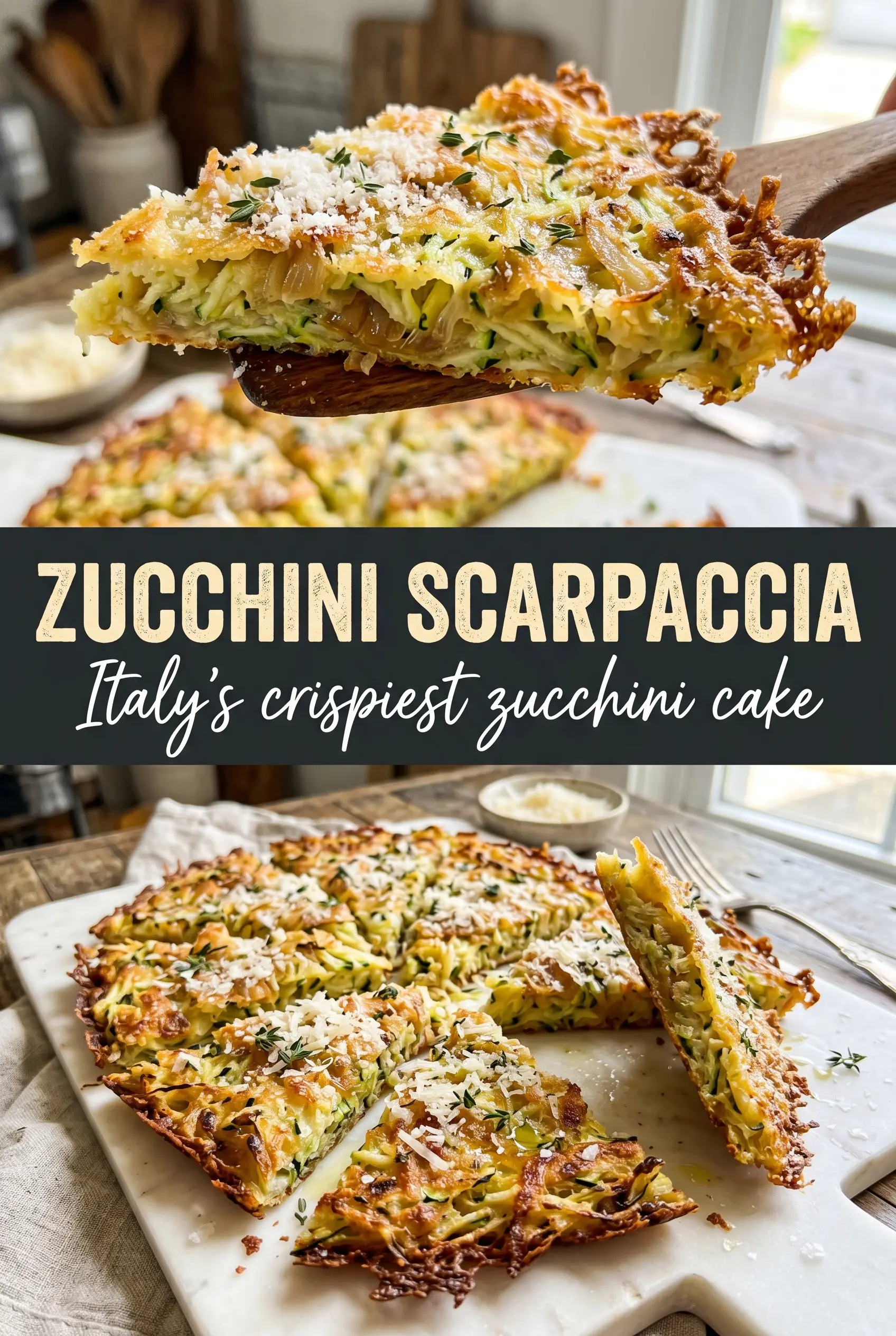
Zucchini Scarpaccia
Ingredients
Equipment
Method
- Toss the zucchini with 1 tablespoon salt and let sit for 30 minutes to draw out moisture, then rinse and squeeze out as much liquid as possible.
- Pat the zucchini very dry with clean towels until it feels less wet to the touch.
- Preheat the oven to 400°F and oil a large rimmed baking sheet generously.
- Whisk the all-purpose flour, semolina, parmesan, eggs, olive oil, thyme, and black pepper until the batter is thick.
- Fold in the squeezed zucchini and the very thinly sliced onion, then let the batter rest for 15 minutes.
- Pour the batter onto the oiled baking sheet and spread very thin to about 1/4 inch or less.
- Drizzle with olive oil and sprinkle flaky sea salt on top.
- Bake for 30–35 minutes at 400°F until deeply golden on the bottom and edges and the top is set.
- Cool for 5 minutes, then cut into squares or rectangles and serve.