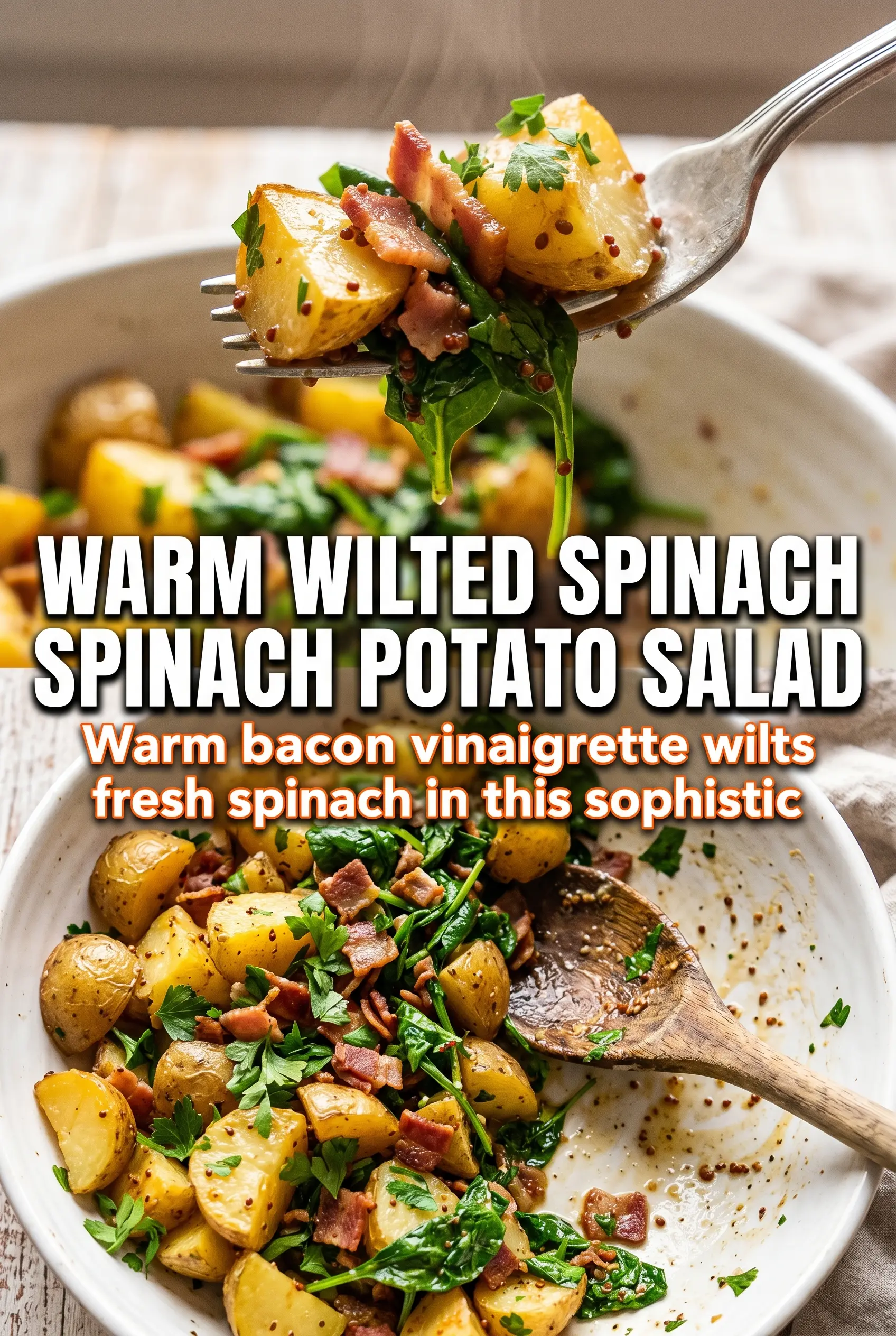
Warm potatoes, wilted spinach, and smoky bacon vinaigrette hit that sweet spot between hearty side dish and full-on meal. The potatoes stay tender without turning mushy, the spinach barely collapses under the heat, and the sharp dressing cuts through the richness so every bite tastes balanced instead of heavy. It’s the kind of salad that disappears fast because it actually eats like something you want to go back for.
The trick is keeping the potatoes warm and building the vinaigrette in the bacon drippings while the pan still has some heat. That gives you a dressing with depth, but it also means the vinegar softens the onion and picks up the browned bits left behind by the bacon. When that hot dressing hits the spinach and potatoes together, the greens wilt just enough to cling to the potatoes without turning slippery or dull.
Below, I’ll walk through the part that matters most: how to keep the potatoes intact, how hot the dressing should be when it goes over the bowl, and the small adjustment that keeps the vinaigrette from tasting flat.
The potatoes held their shape, the spinach wilted perfectly, and that bacon dressing soaked into everything without making it greasy. I served it with grilled chicken and my husband went back for seconds before he finished the first plate.
Warm Spinach Potato Salad with Bacon Vinaigrette is the kind of side dish that stays tender, smoky, and sharp enough to steal the meal.
The Reason the Spinach Goes in the Bowl First
Most warm potato salads go wrong when the potatoes sit too long after draining or the dressing gets poured over ingredients that have already cooled. In this dish, the spinach acts like a built-in buffer. It softens under the hot potatoes and vinaigrette, but it still keeps enough structure to catch the dressing instead of dissolving into a soggy heap.
The other thing that matters is timing. The potatoes need to be drained and kept warm, the bacon drippings should still be hot enough to cook the onion, and the vinegar mixture should come to a light simmer before it goes over the bowl. If the dressing is lukewarm, the spinach won’t wilt properly and the whole salad tastes flat. If it’s boiling hard, the vinegar gets harsh and the potatoes start to break apart.
What Each Ingredient Is Doing in the Bowl

- Red potatoes — These hold their shape better than russets and give you tender slices that still look like potatoes after tossing. Slice them evenly so they cook at the same pace; uneven slices lead to some turning ragged while others stay underdone.
- Spinach — Fresh spinach is the whole point here. It wilts fast from residual heat, which gives you that just-collapsed texture without needing to cook it separately. Baby spinach works best because the leaves are tender and don’t leave long tough stems in the bowl.
- Bacon — The bacon adds crunch, salt, and the fat that carries the vinaigrette. Thick-cut bacon is fine if that’s what you have, but thinner slices render more evenly and leave you with better drippings for the dressing.
- Red wine vinegar and Dijon — This is the backbone of the dressing. The vinegar wakes up the potatoes, and the Dijon helps the vinaigrette emulsify just enough to cling to everything instead of pooling at the bottom. If you only have white wine vinegar, use it, but the salad will taste a little less sharp and layered.
- Sugar — Just enough sugar smooths the vinegar and rounds out the bacon fat. Leave it out and the dressing can taste aggressive; add more and it starts to read like a sweet mustard sauce instead of a proper warm vinaigrette.
- Onion — The onion softens in the drippings and gives the dressing a little sweetness and bite. Dice it small so it cooks through quickly and doesn’t fight the potatoes in every forkful.
Building the Bacon Vinaigrette While Everything Is Still Hot
Cooking the Potatoes Until They’re Just Tender
Boil the potato slices until a fork slips in easily, but stop before they start to crumble at the edges. You want tenderness, not disintegration, because the dressing and toss will do the rest of the work. Drain them well and keep them warm; if they sit in a cold colander too long, they lose the heat needed to wilt the spinach later.
Using the Bacon Drippings Without Burning Them
Cook the bacon until crisp, then pour off the drippings only if the pan is crowded with excess fat. Leave enough in the skillet to coat the onion and carry the dressing, because that fat is what gives the vinaigrette its body. If the pan is too hot when the onion goes in, it will brown before it softens, and the finished salad will taste sharp instead of mellow.
Finishing the Dressing So It Clings
Add the vinegar, Dijon, sugar, salt, and pepper, then bring the mixture just to a simmer. You’re looking for a dressing that tastes punchy but not harsh, with the sugar dissolved and the mustard fully blended. Pour it over the spinach and warm potatoes right away. That heat is what wilts the greens and lets the dressing coat every slice.
Ways to Adjust the Salad Without Losing the Point
Make it lighter by cutting back the bacon fat
You can pour off most of the bacon drippings after cooking the bacon and leave just a few tablespoons in the pan. Add a tablespoon of olive oil if needed to soften the onion and carry the vinegar. The salad will still taste smoky, but the dressing will be a little cleaner and less rich.
Turn it into a gluten-free side with no changes
This recipe is naturally gluten-free as written, as long as your mustard is gluten-free. That makes it an easy side for cookouts and potlucks, and nobody misses anything because the texture comes from the potatoes and bacon, not from pasta or bread.
Swap the spinach for baby kale
Baby kale works if you want something a little sturdier and more earthy. Massage it lightly with a pinch of salt before adding the hot potatoes so it softens enough to take the dressing. Mature kale will stay too tough unless you slice it very thin.
Use turkey bacon, but expect a leaner finish
Turkey bacon gives you the smoky note but not the same amount of drippings, so the dressing won’t have quite as much depth. Add a splash of olive oil to the skillet before cooking the onion, then build the vinaigrette as written. The result is still good, just a little less rich and a little more tang-forward.
Storage and Reheating
- Refrigerator: Store leftovers for up to 3 days. The spinach will soften more and the potatoes will absorb some of the dressing.
- Freezer: Don’t freeze this salad. The spinach turns limp and watery, and the potatoes lose their texture once thawed.
- Reheating: Warm leftovers gently in a skillet over low heat or eat them cold or room temperature. Microwaving on high makes the spinach collapse and can turn the potatoes grainy.
Questions I Get Asked About This Recipe
Warm Spinach Potato Salad with Bacon Vinaigrette
Ingredients
Equipment
Method
- Bring a large pot of water to a boil, then add the sliced red potatoes and boil until tender, about 15–20 minutes, until easily pierced with a fork. Keep the potatoes warm after draining.
- Cook the bacon in a cast iron skillet over medium heat until crispy, about 8–10 minutes, and reserve the bacon drippings in the skillet. Transfer the bacon to a plate while keeping the drippings in the pan.
- Sauté the diced onion in the reserved bacon drippings until softened and lightly golden, about 4–6 minutes. Stir occasionally so the onion cooks evenly.
- Add the red wine vinegar, Dijon mustard, sugar, salt, and pepper to the skillet and bring the mixture to a simmer, about 2–3 minutes, until glossy and combined. Keep it hot so it will wilt the spinach on contact.
- Place the fresh spinach in a large bowl and add the warm boiled potatoes. Keep the bowl ready to receive the hot dressing.
- Pour the hot bacon vinaigrette over the spinach and potatoes, then toss thoroughly until the spinach wilts, about 30–60 seconds. The greens should darken quickly and become glossy from the dressing.
- Crumble the crispy bacon over the top and gently toss once more to distribute. Serve immediately while warm and steaming.