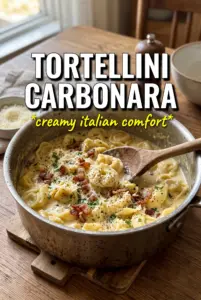
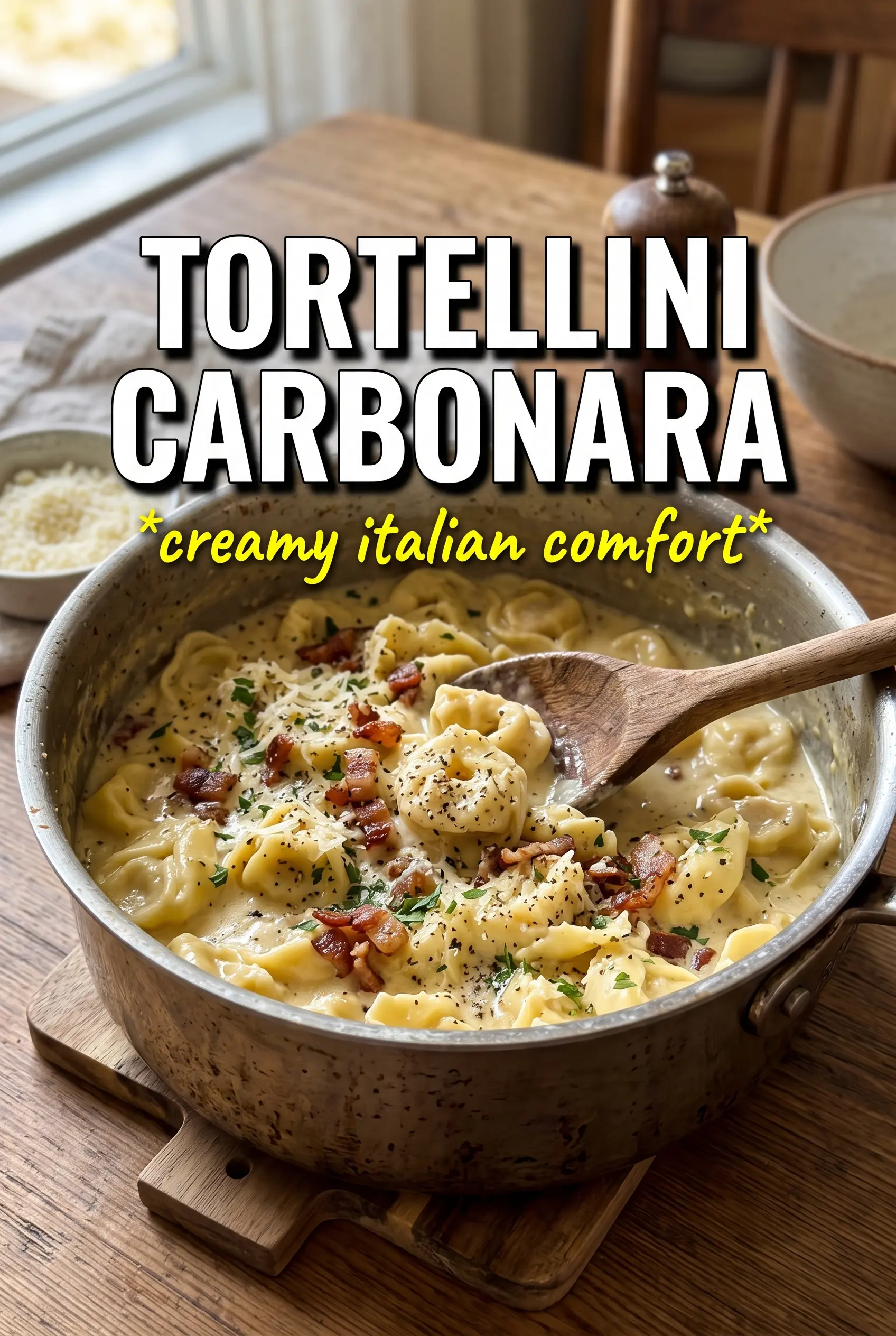
Plump cheese tortellini coated in a silky egg-and-parmesan sauce hits that sweet spot between comfort food and a dinner that still feels a little special. The pancetta gives you salty crunch in every bite, the black pepper cuts through the richness, and the sauce clings to the pasta instead of pooling at the bottom of the bowl. It’s the kind of dish that disappears fast, especially when the tortellini stay tender and the sauce turns glossy instead of heavy.
What makes this version work is the timing. Carbonara-style sauce needs hot pasta, but not a screaming-hot pan, or the eggs can scramble before they turn creamy. Tortellini also brings its own richness, so the parmesan and egg mixture needs enough pepper and a touch of nutmeg to keep the whole dish from tasting flat. A little pasta water is the difference between a clumpy coating and that smooth, spoonable finish you want.
Below, I’ll walk you through the small details that matter most: how to keep the sauce from breaking, when to add the pasta water, and which swaps still give you that same rich, glossy result.
The sauce turned out silky and coated every tortellini instead of getting scrambled, and the pancetta stayed crisp even after tossing. My husband went back for seconds before I’d even sat down.
Save this Tortellini Carbonara for the nights when you want a creamy, peppery pasta that comes together fast and still feels restaurant-worthy.
The Trick to Keeping the Eggs Silky, Not Scrambled
The biggest mistake in tortellini carbonara is treating the egg mixture like a sauce that needs heat to thicken. It doesn’t. The heat from the pasta and the pan is enough if you pull the skillet off the burner before you add the eggs. That stops the proteins from tightening too fast and gives you a glossy coating instead of little bits of cooked egg.
Another thing that matters here is how much you toss. A quick stir won’t do it. You want the tortellini moving so the egg mixture spreads thinly over every fold and seam, and then you add pasta water a splash at a time until the sauce loosens into something creamy. If it looks tight or streaky, it needs more tossing, not more heat.
- Hot tortellini — This is what cooks the egg gently. Drain it and move fast so it stays hot enough to emulsify the sauce.
- Off-heat pan — The skillet must come off the burner before the egg mixture goes in. Residual heat is enough; direct heat is what scrambles it.
- Pasta water — The starch in the water helps the sauce cling and smooth out. Add it slowly so you don’t thin the dish too far.
What Each Ingredient Is Actually Doing in This Dish
- Refrigerated cheese tortellini — Fresh tortellini cooks quickly and brings its own cheesy filling, which makes the dish richer than plain dried pasta. Frozen tortellini works too; just cook it until barely tender so it doesn’t fall apart when tossed.
- Pancetta or thick-cut bacon — Pancetta gives a cleaner, more delicate saltiness, while bacon adds a smokier edge. Use whichever you have, but cook it until the fat renders and the edges crisp so the final dish has texture, not just richness.
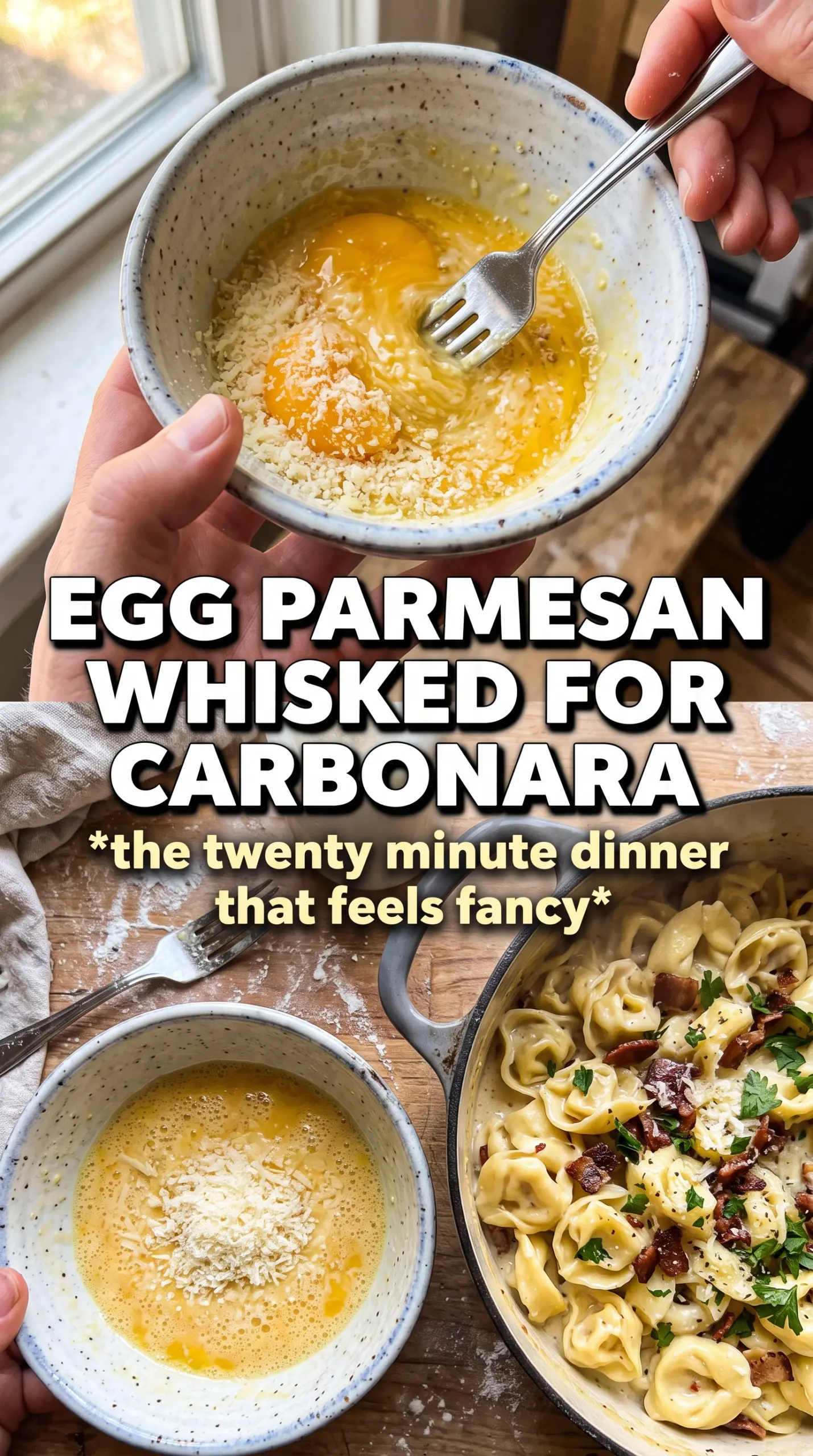
- Egg yolks plus one whole egg — The yolks create the velvety body, and the whole egg helps the sauce loosen without turning heavy. If you use only yolks, the sauce can get too thick and feel pasty once it cools.
- Finely grated parmesan — This needs to be finely grated so it melts into the eggs instead of clumping. Pre-grated parmesan often has anti-caking starch and won’t melt as smoothly, so grate it yourself if you can.
- Garlic and black pepper — Garlic softens the pancetta’s saltiness, and the pepper keeps the sauce from tasting flat. The pepper should be generous enough that you can see it in the bowl.
- Nutmeg — Just a little lifts the egg and cheese flavor without making the dish taste spiced. It’s subtle, but it rounds out the sauce in a way that’s easy to miss until it’s gone.
The 20 Minutes That Matter Most
Crisping the Pancetta
Start the pancetta in a cold skillet and cook it over medium heat so the fat renders slowly. If you rush this over high heat, the outside browns before the inside gets crisp, and you lose some of that savory fat you need for the sauce. When the pieces are deep golden and the pan has a thin layer of rendered fat, add the garlic for just one minute. Any longer and it can turn bitter.
Mixing the Egg Base
Whisk the egg yolks, whole egg, parmesan, nutmeg, and plenty of black pepper until the mixture looks thick and pasty. That looks wrong at first, but it’s exactly what you want. A loose egg mixture can turn watery when it hits the pasta, while a thicker one melts into a better coating once the hot tortellini goes in.
Tossing It All Together
Add the drained tortellini straight into the pancetta pan, then pull the pan off the heat before the egg mixture goes in. Toss immediately and keep everything moving so the residual heat turns the sauce silky. If it looks clumpy, add a spoonful of pasta water and toss again. Stop as soon as the sauce turns glossy and clings to the tortellini; too much stirring after that can make it tight.
The Final Seasoning
Taste before you salt. Pancetta, bacon, and parmesan already bring plenty of salt, so the final seasoning usually needs only a small pinch, if any. Finish with parsley and a little extra parmesan for brightness and contrast. The dish should taste rich, peppery, and balanced, not just heavy.
How to Adapt Tortellini Carbonara Without Losing the Creamy Finish
Make it gluten-free with GF tortellini
Use a gluten-free refrigerated tortellini and cook it just until tender. Gluten-free pasta can soften fast and break more easily when tossed, so move quickly at the end and use the pasta water sparingly until the sauce looks smooth.
Swap in bacon for a smokier version
Thick-cut bacon works well if pancetta isn’t in the fridge. It brings a stronger smoke flavor and a little more grease, so drain off excess fat before adding the garlic if the pan looks crowded with oil.
Go lighter on dairy without losing the sauce
You can reduce the parmesan slightly and still keep the creamy texture, but don’t cut it too far or the sauce loses body. The cheese is doing more than adding flavor here; it helps emulsify the eggs and pasta water into a smooth coating.
Make it ahead for easier weeknights
Cook the pancetta and mix the egg-cheese base up to a few hours ahead, then refrigerate them separately. Reheat the pancetta gently and combine everything only when the tortellini is freshly cooked, because the sauce won’t hold well if it sits already mixed.
Storage and Reheating
- Refrigerator: Store leftovers in an airtight container for up to 3 days. The sauce will tighten as it chills, and the tortellini will absorb some of the moisture.
- Freezer: I don’t recommend freezing this dish. The egg sauce tends to separate and the tortellini can turn soft after thawing.
- Reheating: Warm it gently in a skillet over low heat with a splash of water or milk, stirring often. High heat is the fastest way to make the eggs grainy and the sauce greasy.
Answers to the Questions Worth Asking
Tortellini Carbonara
Ingredients
Equipment
Method
- Bring a large pot of well-salted water to a boil, then cook the refrigerated cheese tortellini until tender. Reserve 1 cup of pasta cooking water before draining.
- In a skillet over medium heat, cook the diced pancetta until crisp, stirring occasionally. Add the minced garlic and cook for 1 minute, then remove the pan from the heat.
- Whisk the egg yolks, whole egg, finely grated parmesan, nutmeg, and lots of freshly cracked black pepper in a bowl until smooth and thick.
- Add the hot tortellini to the pancetta pan off the heat, then quickly pour in the egg mixture. Toss vigorously so the eggs coat the pasta and turn creamy without scrambling.
- Add reserved pasta cooking water a splash at a time while tossing until the sauce is silky and creamy. Season with salt to taste, then top with fresh parsley and extra parmesan with an abundant crack of black pepper.