Sweet potato and chickpea curry lands in the bowl with that deep orange color and a creamy spoon-coating sauce that makes rice disappear fast. The sweet potatoes turn tender without falling apart, the chickpeas hold their shape, and the lime at the end keeps the coconut richness from tasting heavy. It’s the kind of one-pot dinner that feels calm to cook and somehow tastes even better the next day.
What makes this version work is the way the spices bloom in hot coconut oil before anything liquid goes in. That short step wakes up the curry powder, cumin, turmeric, and cayenne so the sauce tastes layered instead of flat. The diced tomatoes bring enough acidity to balance the coconut milk, and the sweet potatoes give the curry body as they simmer and soften into the broth.
Below, I’ve added the small details that matter here: how to keep the spices from scorching, when the curry is actually done, and what to change if you want it milder, richer, or easier to reheat for lunches.
The curry thickened up beautifully and the sweet potatoes were soft without turning mushy. I followed the lime at the end like you suggested, and that brightness pulled the whole pot together.
Save this sweet potato and chickpea curry for a creamy one-pot dinner with bright lime, tender sweet potatoes, and a sauce that clings to rice.
The Secret to Keeping the Curry Creamy Without Going Flat
The biggest mistake with a curry like this is adding everything to the pot at once and hoping the coconut milk will carry the flavor. It won’t. The spice blend needs heat and fat first, because that’s what turns dry powder into a sauce with depth. If the spices go in too early with the tomatoes or broth, they taste dusty instead of round.
Sweet potatoes are forgiving, but they still need enough simmering time to soften all the way through. Cut them into even cubes so they finish together. Chickpeas go in from the start here because they benefit from bathing in the sauce, but they should still hold their shape. If they’re breaking down before the potatoes are tender, the heat is too high.
- Sweet potatoes — Cut them into 1-inch cubes so they cook through in about the same time as the simmer. Smaller pieces will disappear into the sauce; larger ones can stay firm in the center.
- Coconut milk — Full-fat coconut milk gives the curry its body and a silky finish. Light coconut milk works in a pinch, but the sauce will be thinner and less plush.
- Curry powder, cumin, turmeric, and cayenne — This spice mix is the backbone of the dish. Blooming it in oil for two minutes is what wakes up the flavor, so don’t rush that part.
- Diced tomatoes — These add acidity and keep the coconut from tasting one-note. Fire-roasted tomatoes work too if you want a little extra smokiness.
- Vegetable broth — This loosens the sauce just enough for simmering. If you want a thicker curry, use the lower end of the amount and simmer uncovered for the last few minutes.
What Each Ingredient Is Actually Doing in This Recipe
- Primary ingredient (the star) — Quality matters most. Choose the best you can find.
- Cooking medium (oil, butter, or broth) — This carries flavors and prevents dryness.
- Seasonings (salt, pepper, spices, herbs) — Layer flavors so nothing overpowers. Build depth gradually.
- Aromatics (garlic, onion, herbs) — Cook with fat to bloom flavors. Become the foundation.
- Supporting ingredients — Complement the main ingredient without overpowering it.
- Sauce or liquid (if applicable) — Brings flavors together. Balance richness with acid.
- Acid (lemon, vinegar, wine, or other) — Brightens and prevents flat-tasting results.
- Final finish (garnish, glaze, or sauce) — Prevents one-dimensional taste and adds visual appeal.
Building the Curry in the Right Order
Softening the Onion First
Start by heating the coconut oil and cooking the onion until it turns translucent and sweet at the edges. You want it softened, not browned, because browned onion changes the flavor in a way that can fight the curry spices. If the pan looks dry before the onion is ready, lower the heat rather than adding more oil too soon.
Blooming the Spices
Add the garlic, ginger, curry powder, cumin, turmeric, and cayenne and stir constantly for about 2 minutes. The mixture should smell fragrant and a little toasted, not sharp or raw. If the garlic starts to darken, the pan is too hot and the spices will turn bitter, so pull it back before the color changes.
Simmering Until the Sweet Potatoes Yield
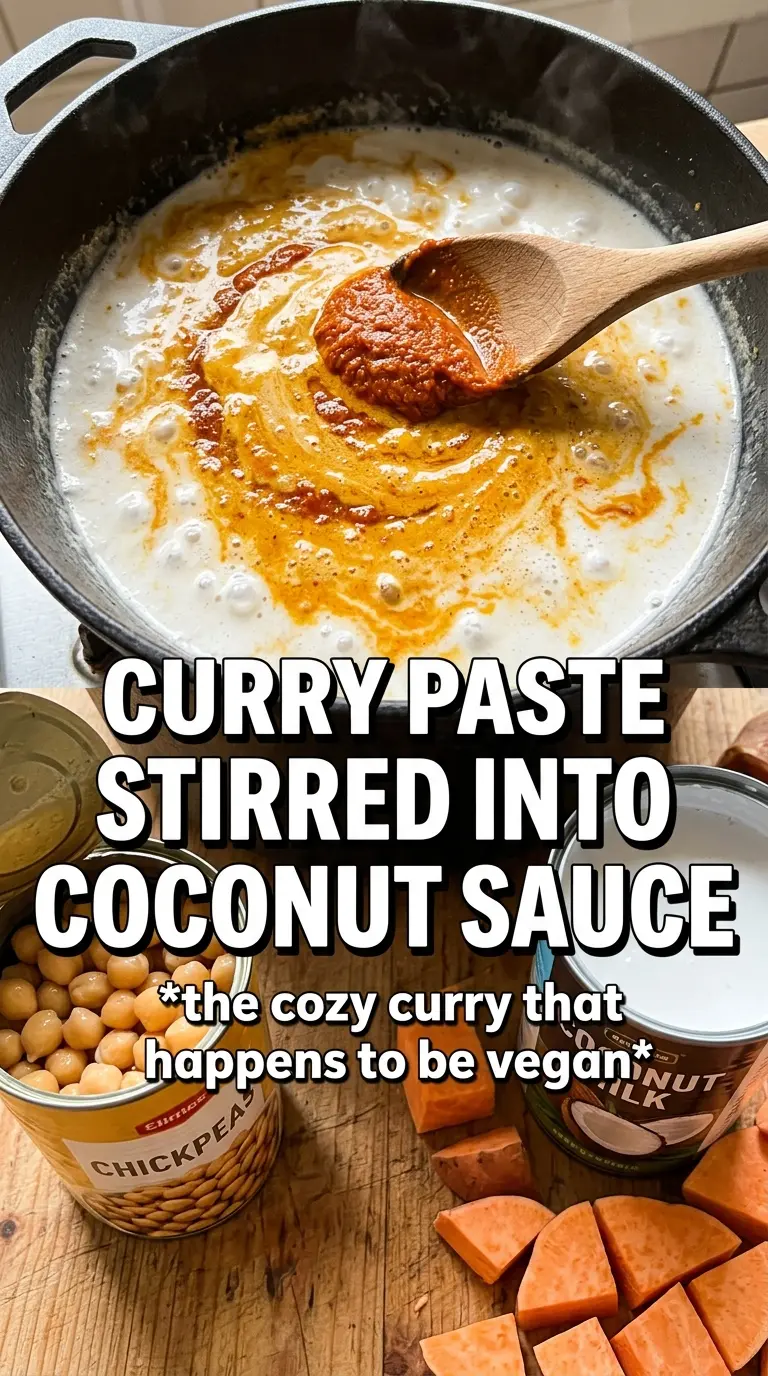
Stir in the sweet potatoes, chickpeas, coconut milk, tomatoes, and broth, then bring the pot to a boil before reducing it to a steady simmer. The curry is ready when the sweet potatoes are tender enough to cut with the side of a spoon but still hold their shape. If the sauce looks thin at first, let it keep simmering uncovered for a few minutes; it thickens as the potatoes release starch.
The Final Seasoning and Finish
Salt goes in at the end because the tomatoes and broth need time to settle before you judge the balance. Taste the curry hot, then add more salt, a squeeze of lime, and cilantro right before serving. The lime matters here; it sharpens the coconut milk and keeps the whole dish from tasting heavy.
Three Ways to Adjust This Curry Without Losing What Makes It Good
Make it dairy-free as written
This curry already fits a dairy-free table because the sauce gets its creaminess from coconut milk, not cream or yogurt. Keep the full-fat coconut milk if you want the richest texture, since that’s where the comfort-food feel comes from.
Turn down the heat without flattening the flavor
Skip the cayenne or cut it to a pinch if you want a milder curry. The dish still tastes complete because the curry powder, ginger, and lime do the heavy lifting; you’re only removing the back-of-the-throat heat, not the spice.
Swap the chickpeas for another protein
Cannellini beans work if that’s what you have, and they make the curry a little softer and creamier. If you use cubed tofu, add it near the end so it holds its shape instead of soaking up too much liquid and turning spongy.
How to store and reheat leftovers
- Refrigerator: Store in an airtight container for up to 4 days. The sauce thickens as it chills, and the flavors deepen overnight.
- Freezer: It freezes well for up to 2 months. Cool it fully before packing it into freezer-safe containers, leaving a little room for expansion.
- Reheating: Warm gently on the stovetop over low heat with a splash of broth or water to loosen the sauce. High heat can cause the coconut milk to separate and makes the sweet potatoes break down too far.
Questions I Get Asked About This Recipe

Sweet Potato And Chickpea Curry
Ingredients
Equipment
Method
- Heat coconut oil in a Dutch oven over medium heat, then sauté the diced onion for 4 minutes, stirring until softened and fragrant.
- Add minced garlic, grated ginger, curry powder, cumin, turmeric, and cayenne, and cook for 2 minutes, stirring constantly until the spices darken slightly and become fragrant.
- Add cubed sweet potatoes, drained chickpeas, coconut milk, diced tomatoes, and vegetable broth; stir to combine and bring the mixture to a boil.
- Reduce heat to a simmer and cook for 20-25 minutes, until the sweet potatoes are tender and the curry looks thick and cohesive.
- Season the curry with salt to taste, then serve over rice topped with fresh cilantro and a squeeze of lime.