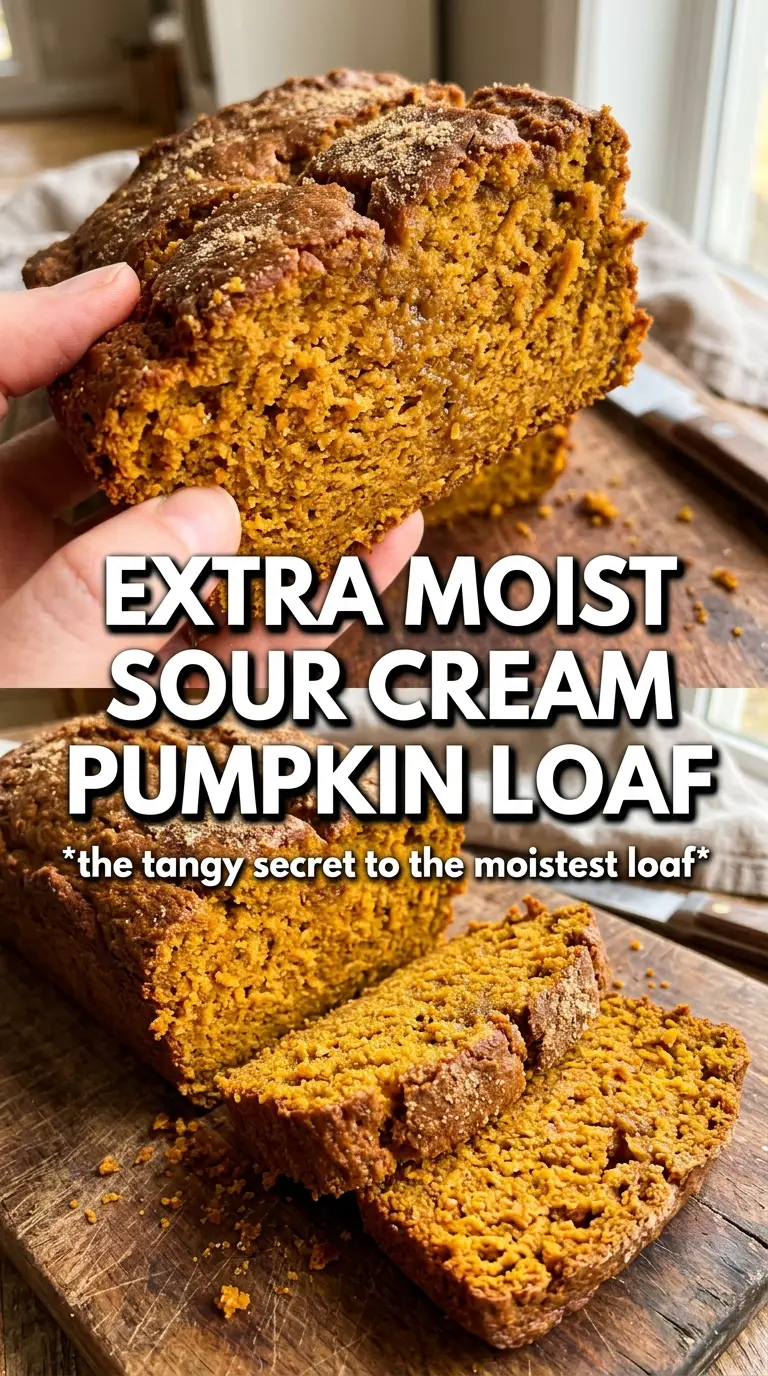
Sour Cream Pumpkin Bread bakes up with a plush, tender crumb and a cinnamon-sugar top that crackles just enough when you slice into it. The flavor stays balanced instead of leaning muddy or overly sweet, and the loaf holds onto moisture for days without turning dense or gummy. It’s the kind of quick bread that disappears one warm slice at a time, usually before it’s even fully cooled.
The full cup of sour cream is what makes this loaf stand out. It adds tang, richness, and enough fat to keep the crumb soft without making the bread heavy. Pumpkin puree brings structure and that deep autumn color, while the combination of granulated sugar and brown sugar gives both clean sweetness and a little caramel depth. The cinnamon sugar on top is not just decoration either; it gives the crust a light, sparkly crunch that makes each slice taste finished.
If you’ve ever had pumpkin bread that baked up dry at the edges or bland in the middle, the details below will help you avoid that. I’ve also included the swaps that still work when you’re missing an ingredient, plus the baking cues that matter most so you pull the loaf at the right time.
The loaf was unbelievably moist and the cinnamon sugar crust gave it that bakery-style finish. I sliced it while it was still a little warm and the crumb stayed tender all the way through, not gummy at all.
Save this Sour Cream Pumpkin Bread for a loaf that stays moist for days and finishes with a crackly cinnamon sugar top.
The Sour Cream Keeps This Loaf Soft, Not Heavy
Quick breads fail when the batter gets overmixed or when the moisture balance leans too far toward pumpkin without enough fat to keep the crumb tender. Pumpkin puree brings a lot of body but not much richness on its own, which is why some loaves bake up tight or a little pasty in the center. Sour cream changes that. It adds fat and tang, and it gives the batter enough tenderness to stay soft even after a full bake.
The other quiet advantage here is the balance of leaveners. Baking soda reacts with the sour cream and pumpkin’s natural acidity, while the small amount of baking powder helps the loaf rise evenly instead of doming hard in the middle. If your pumpkin bread has ever sunk or looked wet at the bottom, it usually needed either a gentler hand with the batter or a little more baking time at the center.
- Do not chase a completely smooth batter after the flour goes in. A few streaks are fine and usually mean you haven’t overworked the loaf.
- The cinnamon sugar top helps protect the surface from drying out before the center finishes baking.
- Using full-fat sour cream matters here. Low-fat versions can work, but they give up some of the richness that makes this loaf so tender.
What Each Ingredient Is Actually Doing in This Bread
- Pumpkin puree — This is the backbone of the loaf’s flavor and color. Use pure pumpkin puree, not pumpkin pie filling, or the sugar and spice balance gets thrown off immediately.
- Full-fat sour cream — This is the ingredient that makes the crumb plush and moist. Plain Greek yogurt can step in, but the loaf will taste a little sharper and the texture will be less rich.
- Vegetable oil — Oil keeps the bread softer than butter would in a quick bread like this. Butter adds flavor, but it also firms up more as the loaf cools, which is not what you want if you’re after that stay-soft crumb.
- Brown sugar — Packed brown sugar adds a faint molasses note and helps the loaf stay moist longer. If you only use white sugar, the bread still works, but the flavor is flatter.
- Pumpkin pie spice and cinnamon — The spice blend gives the loaf warmth without making it taste like one-note cinnamon bread. If you don’t have pumpkin pie spice, use extra cinnamon plus a pinch of ginger and nutmeg.
How to Keep the Center Moist Without Letting the Loaf Sink
Mix the wet ingredients until they look silky
Whisk the pumpkin, sugars, oil, eggs, sour cream, and vanilla until the mixture looks smooth and glossy. That step matters because it disperses the sour cream evenly, which keeps pockets of dense batter from forming later. If the mixture still looks streaky, keep whisking before the flour goes in, not after.
Fold the dry ingredients in lightly
Once the flour mixture goes into the bowl, switch from whisking to folding and stop as soon as the last dry streak disappears. Overmixing is the fastest way to make pumpkin bread tough, and it can also create a tunnel through the center of the loaf. The batter should look thick but spreadable, not stretchy.
Bake until the middle is set, not just the top
At 60 minutes, check the loaf in the center with a toothpick. It should come out clean or with a few moist crumbs, and the top should spring back lightly when touched. If the top is dark but the center is still wet, lay a loose piece of foil over the pan for the last 10 minutes so the crust doesn’t overbake while the middle catches up.
Let it rest before you slice
Cool the bread in the pan for 15 minutes, then lift it out and let it finish cooling on a rack. Cutting too soon can make the crumb look underbaked even when it’s done, because the steam is still settling. A warm slice is fine; a steaming-hot slice will usually feel gummy.
How to Adapt It When You Want a Different Finish
Greek Yogurt Instead of Sour Cream
Plain full-fat Greek yogurt works if that’s what you have, and it keeps the loaf moist. The texture turns a touch less rich and the tang comes forward a little more, but the bread still bakes up well. Thin the yogurt with a spoonful of milk if it’s very thick, so the batter doesn’t get heavy.
Gluten-Free Version
A 1:1 gluten-free baking flour blend is the cleanest swap here. The loaf will be slightly more delicate, so let it cool fully before slicing or it can crumble at the edges. Avoid almond flour on its own; it won’t give the same structure.
A More Dessert-Like Finish
Add a simple glaze after the loaf cools if you want a sweeter, bakery-style slice. A little powdered sugar with just enough milk to drizzle will give the bread a prettier finish, but wait until the loaf is no longer warm or the glaze will slide right off.
Storage and Reheating
- Refrigerator: Store tightly wrapped for up to 5 days. The crumb firms up a bit in the fridge, but the moisture holds well.
- Freezer: This loaf freezes beautifully. Wrap slices or the whole loaf tightly, then freeze for up to 3 months.
- Reheating: Warm slices in the microwave for 10 to 15 seconds or toast them lightly. Don’t overheat it or the bread can seem dry even though it isn’t.
Questions I Get Asked About This Recipe
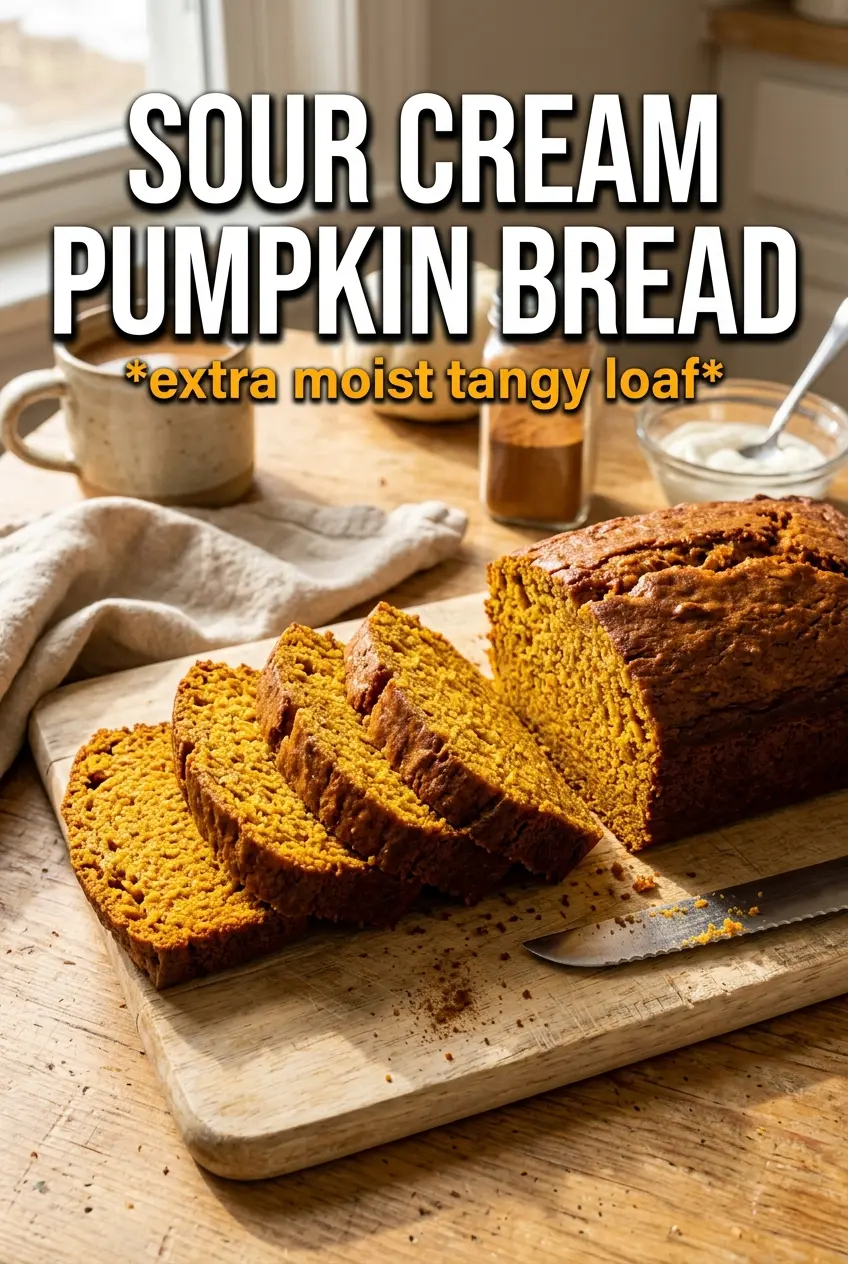
Sour Cream Pumpkin Bread
Ingredients
Equipment
Method
- Preheat the oven to 350°F, then grease a 9x5 loaf pan.
- Set the pan aside so it’s ready when the batter is poured.
- Whisk all-purpose flour, baking soda, baking powder, pumpkin pie spice, cinnamon, and salt until evenly combined.
- Whisk pumpkin puree, granulated sugar, brown sugar, vegetable oil, eggs, full-fat sour cream, and vanilla extract until smooth.
- Fold the dry ingredients into the wet ingredients just until combined, then pour the batter into the prepared loaf pan.
- Sprinkle the cinnamon sugar topping evenly over the top of the batter.
- Bake for 60-65 minutes at 350°F, until a toothpick comes out clean.
- Cool the loaf in the pan for 15 minutes, then remove and slice.