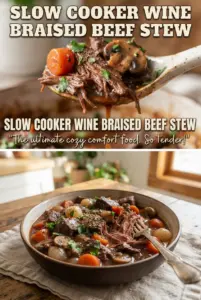
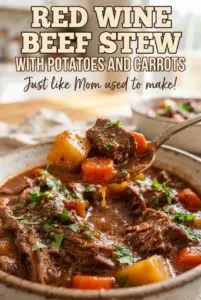
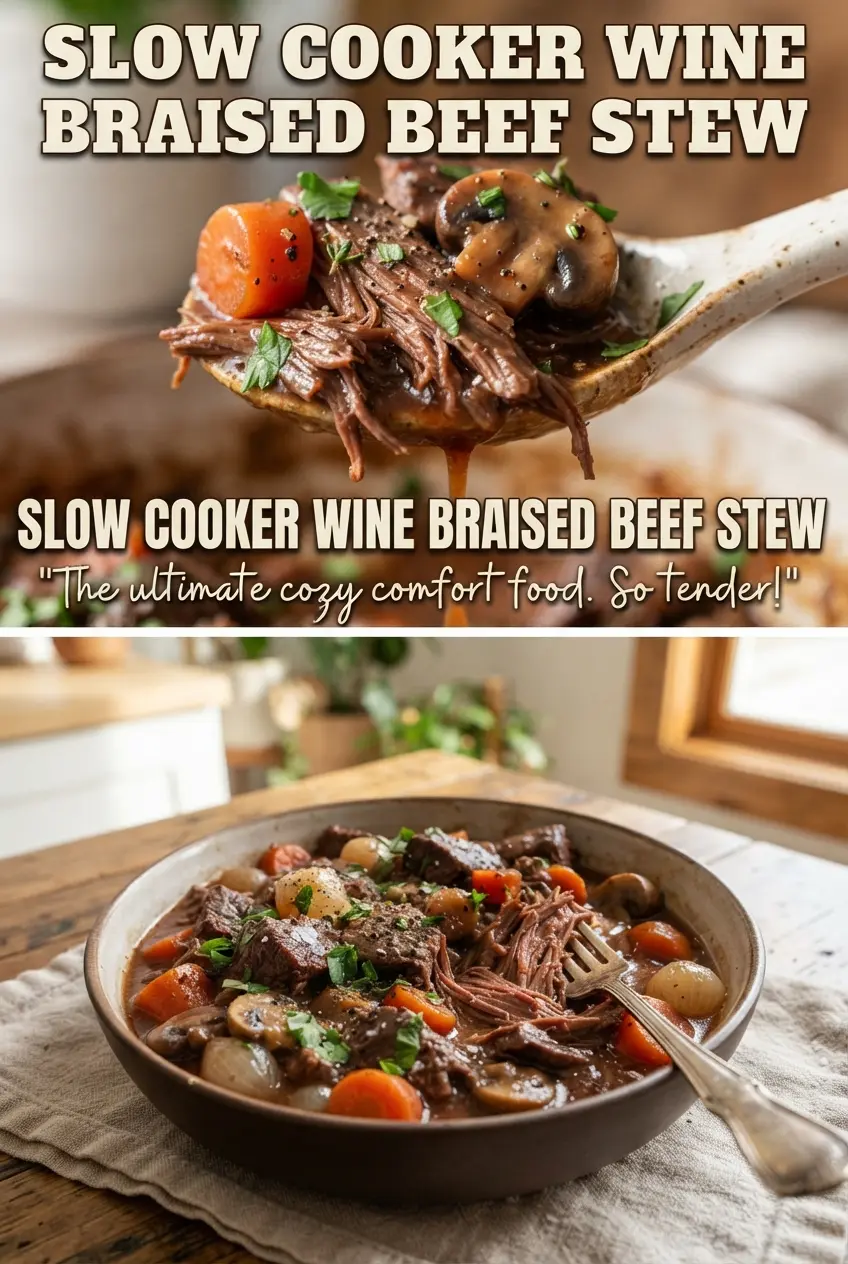
Slow cooker wine braised beef stew turns tough chuck into spoon-tender pieces with a deep, glossy broth that tastes like it simmered all day for a reason. The wine doesn’t shout; it rounds everything out, lifting the beef, carrots, and herbs into something rich without feeling heavy. By the time it’s done, the sauce clings to the meat and vegetables instead of sitting thin and brothy at the bottom of the bowl.
The trick is building flavor before the slow cooker ever comes into play. Browning the beef gives you that dark, savory base, and cooking the tomato paste in the pan for a minute or two takes the raw edge off and adds body. A dry red wine with enough structure to stand up to the beef does more here than broth alone ever could, and the balsamic vinegar sharpens the finish so the stew tastes complete instead of flat.
Below, I’ll walk through the small steps that make the biggest difference, including how to keep the stew rich instead of watery and what to serve it over when you want the full bowl-to-bowl comfort.
The beef turned out fall-apart tender and the sauce got that silky, winey finish I was hoping for. I served it over mashed potatoes and the whole pot disappeared fast.
Save this slow cooker wine braised beef stew for the nights when you want deep flavor, tender beef, and a red-wine sauce that cooks itself.
The Browning Step Is What Keeps This Stew from Tasting Flat
Slow cookers are great at tenderness, but they don’t create the kind of savory depth that makes beef stew taste finished. That comes from browning the meat first and using the same pan for the onion, garlic, and tomato paste. Those dark bits left in the pan are concentrated flavor, and the wine pulls them loose before everything goes into the slow cooker.
The other mistake is loading everything in at once and expecting time alone to fix the flavor. It won’t. The beef needs that flour coating to help the sauce thicken later, and the tomato paste needs a short cook in the pan so it loses its raw, metallic edge. If you skip those steps, the stew still cooks, but it won’t taste as layered or rich.
What Each Ingredient Is Doing in the Pot
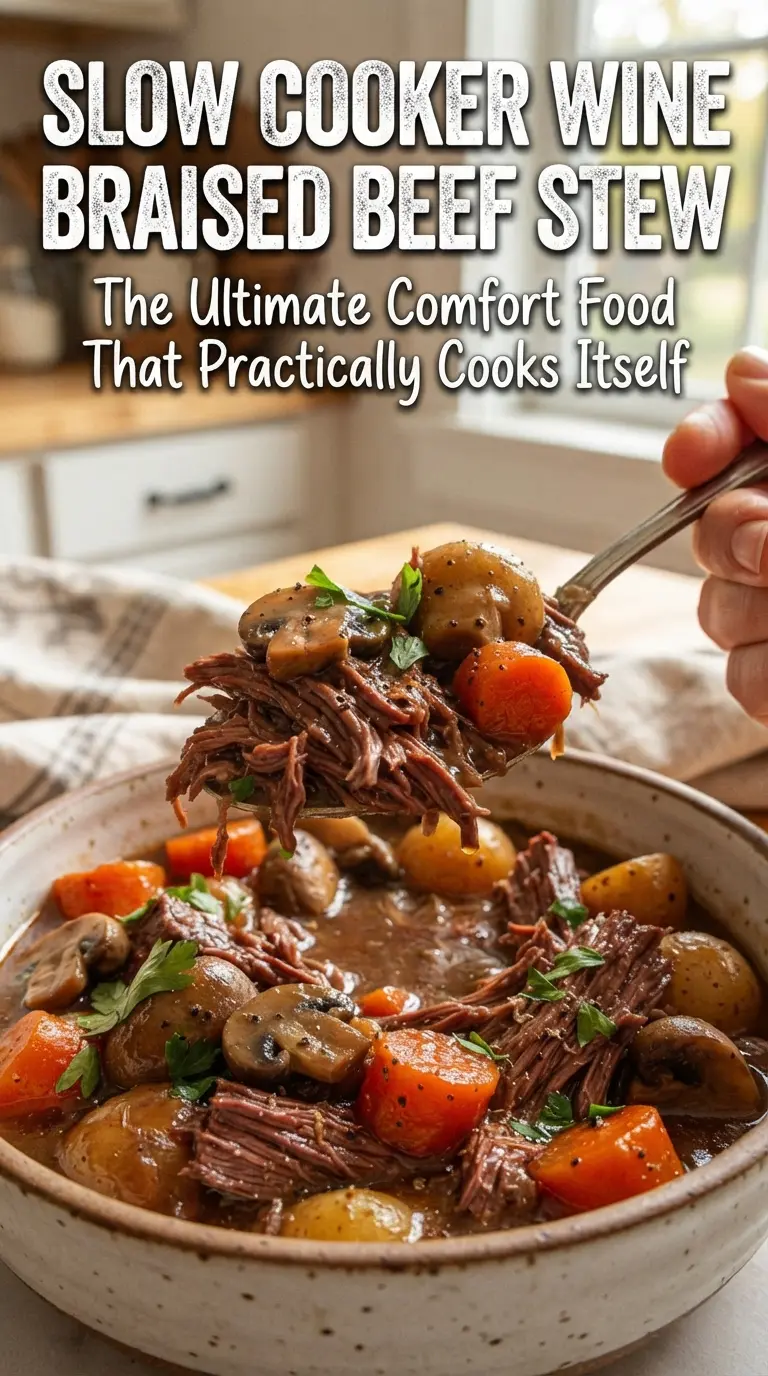
- Beef chuck — This cut has enough fat and connective tissue to turn silky over a long cook. Leaner beef gets dry before the sauce has a chance to develop.
- Flour — It lightly coats the beef and helps the braising liquid thicken as it cooks. You don’t need much; it just keeps the broth from staying thin.
- Dry red wine — This is the backbone of the sauce, so use one you’d actually drink. A bold but not overly tannic wine works best; something too sweet will make the stew taste muddled.
- Tomato paste — It adds body and quiet acidity that makes the beef taste fuller. Cooking it in the pan for a minute or two matters more than people think.
- Fresh rosemary and thyme — These herbs hold up to long cooking and give the stew its French-inspired edge. Dried herbs work in a pinch, but use less because they can take over.
- Pearl onions and carrots — They bring sweetness and balance to the winey, savory broth. Frozen pearl onions are a smart shortcut here and hold their shape well.
How to Build the Stew So the Sauce Turns Glossy, Not Watery
Brown the Beef in Small Batches
Toss the beef with flour, salt, and pepper, then brown it in batches in hot oil. Crowding the pan causes the meat to steam, and steaming means gray beef and weak flavor. You want a dark crust on the outside and raw spots kept to a minimum. Those browned edges do most of the work once the liquid goes in.
Cook the Aromatics Until They Smell Sweet
After the beef comes out, cook the onion, garlic, and tomato paste in the same pan. Stir them often and watch for the tomato paste to darken slightly and smell less sharp. That short cook gives the stew a fuller, rounder base. If the garlic starts to brown hard, the heat is too high and the finished stew can turn bitter.
Use the Wine to Lift the Pan Clean
Pour in the wine and scrape every bit from the bottom of the pan. This is where the flavor is, and it needs to dissolve before the liquid goes into the slow cooker. Let the wine simmer for a few minutes so some of the raw alcohol cooks off and the liquid tastes smoother. Then add the broth and balsamic and transfer everything to the slow cooker.
Cook Low and Give It Time
Set the slow cooker to LOW for the full eight hours. High heat shortens the timing, but it also makes the beef less gentle and the sauce less integrated. When it’s ready, the meat should fall apart with a fork and the carrots should be tender without turning mushy. Pull out the herb stems before serving so the broth stays clean and balanced.
Ways to Adapt the Stew Without Losing What Makes It Work
For a thicker, spoon-coating sauce
After the stew finishes cooking, leave the lid off and let it sit on warm for 15 to 20 minutes, or mash a few carrots and onions into the broth. That gives you body without adding extra starch. If you want it even thicker, stir in a small cornstarch slurry at the end instead of loading in more flour at the beginning.
For a gluten-free version
Skip the all-purpose flour and brown the beef plain, then thicken the finished stew with a cornstarch slurry if needed. The texture stays rich, and you won’t lose the braised flavor. Cornstarch works best stirred in near the end because it thickens fast and can go a little gluey if it cooks for hours.
For a dairy-free serving base
Serve the stew over olive oil mashed potatoes or plain polenta made with stock and a little olive oil instead of butter and cream. The stew itself is already dairy-free, so the swap only changes the base. Polenta gives you a soft, spoonable bed for the sauce, while potatoes make the whole bowl feel a little more rustic.
If you want a deeper mushroom-like note
Add a handful of sliced cremini mushrooms when you add the carrots and pearl onions. They soak up the winey broth and make the stew taste even more earthy. Brown them first if you have the time; otherwise they’ll still work, but the flavor will be softer.
Storage and Reheating
- Refrigerator: Store for up to 4 days. The flavor gets even better on day two, and the sauce will thicken as it chills.
- Freezer: It freezes well for up to 3 months. Cool it completely first, then freeze in portions so the beef and broth reheat evenly.
- Reheating: Warm it gently on the stove over low heat or in the microwave at medium power. Don’t boil it hard or the beef can tighten up and the sauce can separate.
Questions I Get Asked About This Recipe
Slow Cooker Wine Braised Beef Stew
Ingredients
Equipment
Method
- Toss the beef with all-purpose flour, salt, and black pepper until evenly coated, then brown in batches in the cast iron skillet over medium-high heat, 3 to 4 minutes per batch, until well-browned; transfer to the slow cooker with a small visual crust on the beef.
- In the same pan, cook the diced onion, minced garlic, and tomato paste for 3 minutes over medium heat, stirring until fragrant and slightly darkened.
- Pour in the dry red wine, scraping the bottom of the pan to release browned bits, then simmer for 3 minutes until reduced slightly; pour the mixture into the slow cooker.
- Add the beef broth, balsamic vinegar, rosemary, thyme, carrot chunks, and frozen pearl onions to the slow cooker; make sure everything is mostly submerged in the wine-broth liquid.
- Cover and cook on LOW for 8 hours, until the beef falls apart when pressed with a spoon and the vegetables are tender; keep the lid on for consistent simmering.
- Remove the herb stems and serve the stew over creamy polenta or mashed potatoes, spooning the glossy wine sauce over top.