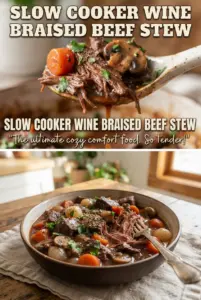
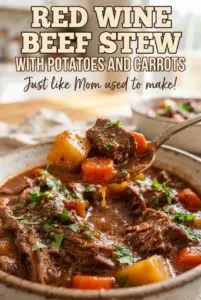
Deep, winey beef stew earns its place in the cold-weather rotation because it delivers two things at once: fork-tender beef and vegetables that soak up every bit of the braising liquid. The broth turns glossy and full-bodied as it cooks, with potatoes that stay intact and carrots that soften just enough to sweeten the pot without turning to mush.
The trick is in the order. Browning the beef in batches builds the base flavor, and the flour coating gives the stew just enough body without making it pasty. The wine also needs a few minutes in the pot before the broth goes in; that step cooks off the sharp edge and lets the tomato paste and thyme settle into something deeper and rounder. If you rush that part, the stew can taste thin no matter how long it simmers.
Below, I’ve included the details that matter most: how to keep the beef nicely browned instead of gray, what to watch for when the liquid reduces, and a few smart swaps if you need to work with what’s in your kitchen.
The sauce reduced beautifully and the beef came out fall-apart tender after the full braise. Even the potatoes held their shape, and the leftovers tasted even better the next day.
Save this red wine beef stew for a slow braise that turns chuck, potatoes, and carrots into a rich one-pot dinner.
The Browning Step That Gives This Stew Its Depth
The beef needs real color before anything else goes into the pot. If the cubes go in crowded or wet, they steam instead of sear, and the stew loses that dark, savory base that makes braised beef taste like more than boiled meat. Work in batches and leave the pieces alone long enough to form a crust before turning them.
The other place people lose flavor is the pan bottom. After the wine goes in, scrape up every browned bit and let it simmer until the liquid drops by about a third. That reduction concentrates the wine and softens the edge, which matters because the broth is only part of the story here; the rest comes from what you build in the pot before the oven takes over.
What Each Ingredient Is Actually Doing in the Pot
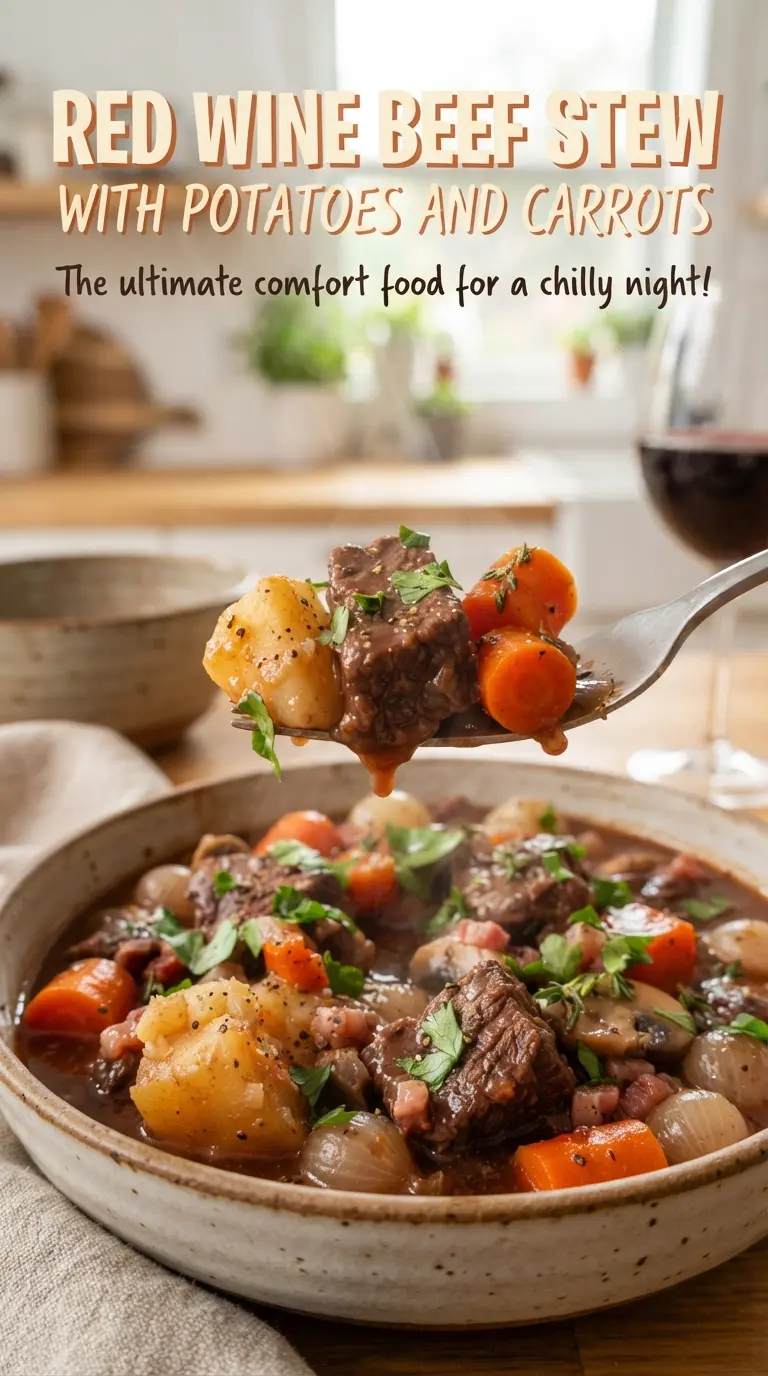
- Beef chuck — This is the right cut because the connective tissue melts during the long braise and turns the meat silky. Stew meat can work in a pinch, but chuck gives you better marbling and a more reliable texture.
- Dry red wine — This brings the deep, rounded backbone of the stew. Use something you’d drink, not cooking wine; a Cabernet, Merlot, or Côtes du Rhône style wine all work well.
- Tomato paste — It looks small on the ingredient list, but it adds concentrated savory depth and helps the sauce taste braised instead of brothy. Let it cook for a minute with the onions and garlic so it loses that raw tomato edge.
- Yukon gold potatoes — They hold their shape better than russets and keep the stew from turning grainy or starchy. Cut them into even chunks so they finish at the same pace as the carrots.
- Balsamic vinegar — Just a tablespoon sharpens the finished stew without making it taste sweet. If you skip it, the broth can land a little flat after the long cook.
Building the Braise So the Beef Stays Tender
Seasoning and Browning the Beef
Toss the beef with salt, pepper, and flour until every piece is lightly coated, then brown it in hot olive oil in batches. You want a deep brown crust on the outside, not a gray exterior with juice pooling in the pan. If the pot starts to look wet, stop and let the moisture cook off before adding the next batch, because browning happens in dry heat.
Cooking the Onion Base
Once the beef comes out, the onion goes into the same pot and picks up all that flavor left behind. Cook it until softened and lightly golden, then add the garlic and tomato paste for just a minute so the paste darkens slightly and smells sweet rather than raw. If the garlic burns, the whole pot will taste bitter, so keep the heat moderate here.
Reducing the Wine
Pour in the red wine and scrape the bottom thoroughly. Let it bubble until the liquid volume drops by about a third; that tells you the harsh alcohol has mellowed and the sauce has started to concentrate. If you add the broth too soon, the stew can taste thin and the wine will stay sharp instead of integrated.
Slow Braising in the Oven
Once the broth, balsamic, thyme, bay leaves, and beef go in, cover the pot and let the oven do the work at 325°F. After two hours, the beef should be beginning to yield but not falling apart yet. Add the potatoes and carrots only then; if they go in from the start, they’ll turn too soft before the beef has had time to tenderize.
Finishing for the Best Texture
The final hour is where everything comes together. The carrots should be tender at the edges, the potatoes should slice with a spoon but still hold their shape, and the beef should pull apart with gentle pressure. Pull out the bay leaves and thyme stems before serving, then finish with parsley for freshness that keeps the stew from tasting heavy.
How to Adapt This Stew When You Need a Different Finish
Gluten-Free Version
Swap the all-purpose flour for a gluten-free flour blend or skip the coating and brown the beef bare. The stew will be a little looser without the flour, but the long braise still gives the broth enough body to feel substantial.
Lower-Carb Bowl
Replace the potatoes with turnips or radishes cut into similar-size chunks. They’ll soften in the broth without giving you the same starch, so the stew tastes lighter and a little more vegetable-forward.
No Wine on Hand
Use extra beef broth plus a teaspoon of red wine vinegar or more balsamic to bring back some depth. You’ll lose a little of the stew’s signature roundness, but the braise will still taste rich if you brown the beef well and let the tomato paste cook properly.
Make It Ahead
This stew tastes even better the next day because the broth settles and the beef absorbs more of the sauce. Cook it fully, cool it, then chill overnight and reheat gently before serving.
Storage and Reheating
- Refrigerator: Keep covered for up to 4 days. The sauce thickens a bit as it sits, which is normal.
- Freezer: Freezes well for up to 3 months. Cool completely first and leave a little headspace if using containers.
- Reheating: Warm it gently on the stovetop over low heat, adding a splash of broth if needed. A hard boil can break down the potatoes and make the beef stringy.
Answers to the Questions Worth Asking
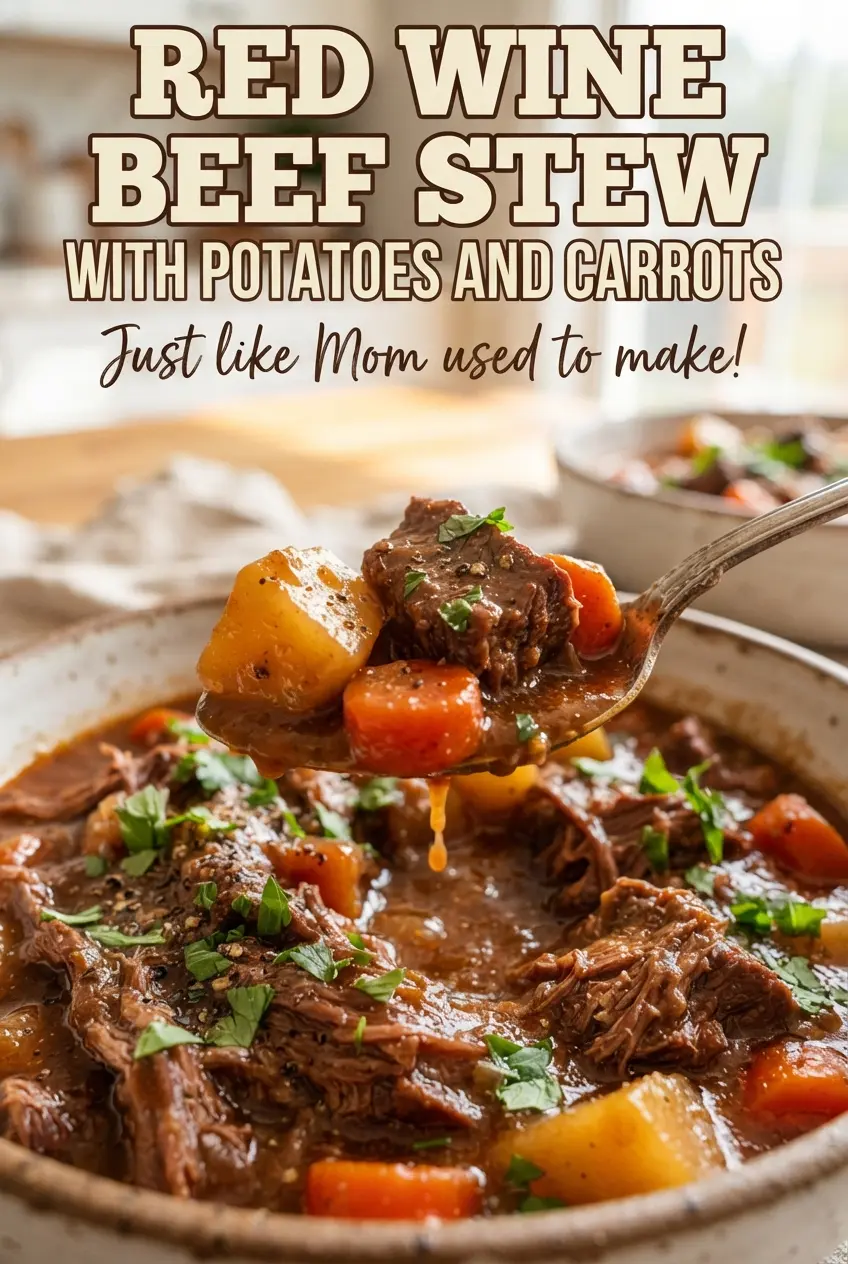
Red Wine Beef Stew with Potatoes and Carrots
Ingredients
Equipment
Method
- Preheat the oven to 325F. Season the beef with salt and black pepper, toss with the flour, and brown in batches in a Dutch oven with olive oil until well browned.
- Transfer browned beef to a plate while you brown the next batch to keep the pan hot. Make sure the browned bits remain in the Dutch oven for later flavor.
- Cook the diced onion for 5 minutes in the Dutch oven. Add the minced garlic and tomato paste and cook for 1 minute, stirring to coat the aromatics.
- Pour in the dry red wine and simmer for 5 minutes, scraping the bottom of the Dutch oven, until reduced by a third. Let the liquid bubble actively so it concentrates into a deeper sauce.
- Add the beef broth, balsamic vinegar, fresh thyme, bay leaves, and the browned beef back to the Dutch oven. Stir to combine and bring the mixture to a simmer.
- Cover with a lid and braise in the oven at 325F for 2 hours. Look for steady, gentle bubbling around the edges and very tender beef with fork-ready texture.
- Add the Yukon gold potatoes and carrots to the Dutch oven, then return to the oven covered. Braid for 1 hour more, until the potatoes and carrots are tender and the sauce thickly clings to the meat.
- Remove the thyme and bay leaves from the stew. Top with chopped fresh parsley and serve hot, with the vegetables visibly tender in the deep burgundy sauce.