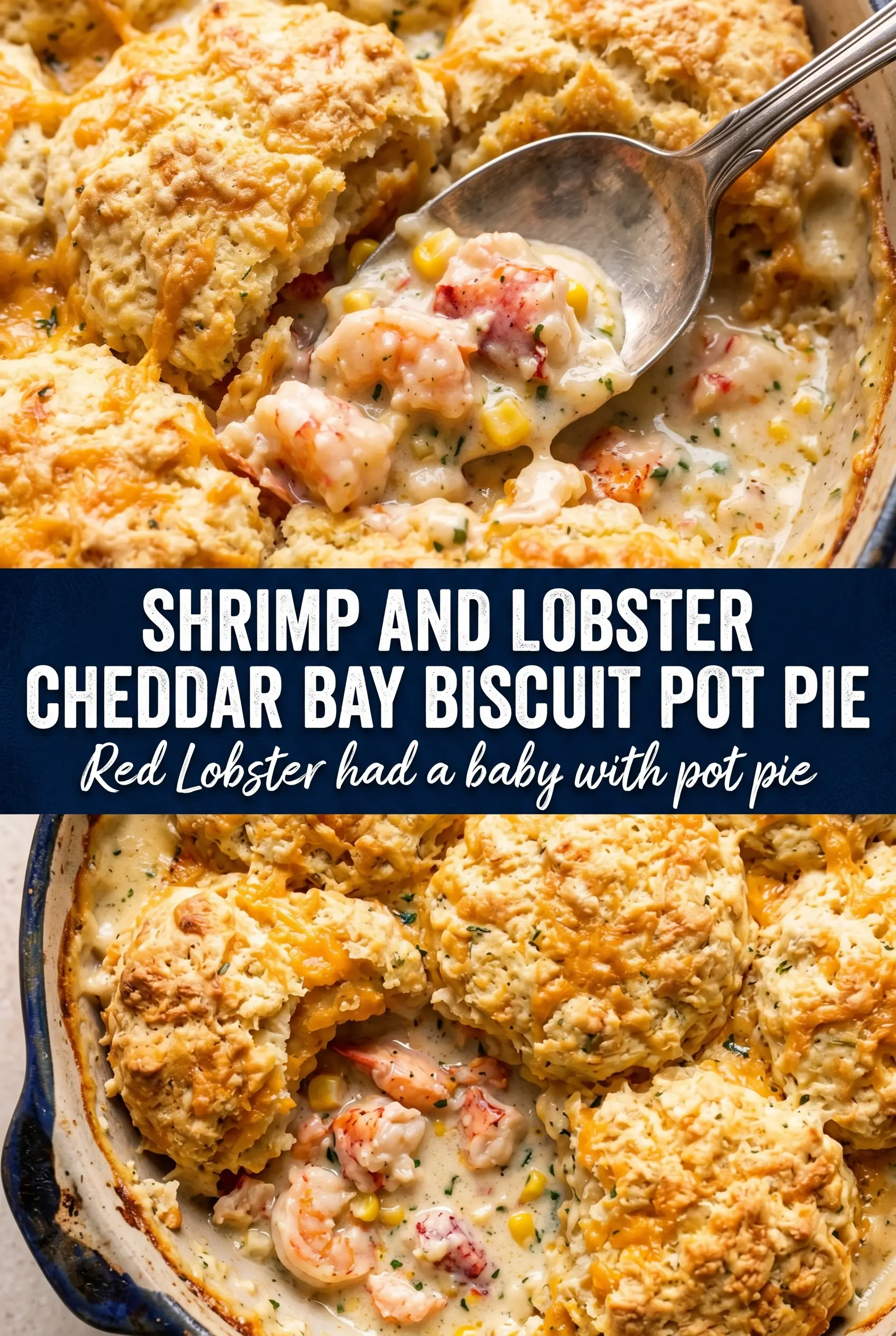
Golden cheddar bay biscuits on top of a bubbling shrimp and lobster filling turn this pot pie into the kind of dinner people hover over before it even hits the table. The biscuit topping bakes up buttery and crisp on the outside while staying tender underneath, and the seafood filling stays creamy without turning heavy or gluey. Every spoonful gets you sweet corn, peas, tender shrimp, and little bites of lobster tucked into a rich sauce that clings to the spoon.
What makes this version work is the order of the cooking. The onions and garlic go into butter first to build a savory base, then the flour cooks long enough to lose its raw taste before the broth and cream go in. That keeps the sauce smooth instead of chalky. The seafood gets added only near the end, just long enough for the shrimp to turn pink and the lobster to warm through. Overcook it and the filling turns tough fast, especially the shrimp.
Below, you’ll find the biscuit texture to aim for, the small timing detail that keeps the filling creamy, and a few smart swaps if you want to change the seafood or make it more weeknight-friendly.
The biscuit topping baked up golden and the filling thickened exactly like a restaurant pot pie. I used the imitation lobster and it still tasted rich, but the shrimp stayed tender because I pulled it from the oven right when the biscuits were done.
Save this shrimp and lobster cheddar bay biscuit pot pie for the night you want a creamy seafood dinner with a golden biscuit crust.
The Sauce Needs a Head Start Before the Seafood Goes In
A pot pie filling falls apart when the sauce is rushed. If the broth and cream go in before the flour has cooked for a full minute, the filling can taste raw and stay a little loose even after baking. If the heat is too high once the dairy is in, the sauce can break and look grainy instead of silky. The fix is simple: build the roux in the skillet first, then whisk in the liquid gradually and let it bubble until it coats the back of a spoon.
The seafood should never simmer for long in the oven. Shrimp tighten fast, and lobster turns stringy if it sits in heat too long. That’s why the filling should be thick and seasoned before the seafood goes in. The biscuits bake on top long enough to finish the dish without overworking the filling underneath.
What Each Ingredient Is Actually Doing in This Pot Pie

- Shrimp — Large shrimp hold up best here because they stay juicy for the short bake. Smaller shrimp can overcook before the biscuits are done.
- Lobster tails — Cooked lobster adds sweetness and a little luxury to the filling. If lobster is expensive or hard to find, imitation lobster works, but it won’t have the same clean, briny bite.
- Butter, onion, and garlic — This is the flavor base. Don’t shortcut the onion cooking time; you want it soft and sweet, not sharp.
- Flour — It thickens the sauce into a proper pot pie filling. Let it cook for a minute before adding liquid so the sauce doesn’t taste pasty.
- Seafood or chicken broth — Seafood broth gives the filling a deeper coastal flavor, but chicken broth works well if that’s what you have. Use a good broth, since this is one place where the liquid really matters.
- Heavy cream — This gives the sauce body and that rich, clingy texture. Half-and-half will work in a pinch, but the filling will be a little thinner.
- Old Bay seasoning — It’s the seasoning that ties the shrimp, lobster, corn, and cream together. If you use a saltier broth, start with less and adjust at the end.
- Bisquick, milk, and cheddar — This shortcut biscuit dough is what makes the topping fast and reliable. Cheddar shreds melt best when you grate it yourself instead of using the pre-shredded kind.
Getting the Filling Thick, Then Topping It Before It Overworks
Building the Base
Melt the butter in an oven-safe skillet and cook the onion until it turns translucent and sweet, about four minutes. Stir in the garlic just long enough for it to smell fragrant, not browned. Once the flour goes in, keep it moving for a full minute so the mixture looks sandy and pasty but not colored much yet. That little minute is what keeps the sauce from tasting flat later.
Thickening the Cream Sauce
Whisk in the broth a splash at a time first, then add the cream and keep whisking until the sauce smooths out. Let it simmer until it looks slightly glossy and coats a spoon instead of running off in a thin sheet, about five minutes. If it looks thin in the pan, it’ll still look thin after baking, so don’t move ahead too fast. A steady bubble is what you want, not a hard boil.
Cooking the Seafood Briefly
Stir in the shrimp, lobster, peas, corn, and Old Bay, then cook just until the shrimp start to turn pink around the edges. They don’t need to be fully finished here because the oven will take them the rest of the way. If you leave them on the stove until they’re opaque all the way through, they’ll go rubbery by the time the biscuits are done.
Finishing Under the Biscuit Topping
Drop spoonfuls of the biscuit dough over the filling, leaving little gaps so steam can escape. The biscuits puff and brown best when they aren’t smoothed into one solid layer. Bake until the tops are deep golden and the filling is bubbling at the edges, then brush the biscuits with garlic butter and parsley right away. That final brush gives you the cheddar bay finish before the top has time to dry out.
How to Adapt This for a Different Pantry or a Different Table
Make It Without Lobster
Use all shrimp, or replace the lobster with imitation lobster for a cheaper version that still gives you that seafood-pot-pie feel. The filling will taste a little less sweet and luxurious, but the creamy sauce and biscuit topping still carry the dish.
Gluten-Free Version
Use a gluten-free baking mix in place of Bisquick and thicken the filling with a one-for-one gluten-free flour blend. The texture will be a little more delicate, but the pot pie still bakes up well if you let the sauce simmer until fully thickened before the biscuits go on top.
Dairy-Free Adjustment
Swap in a plant-based butter and use unsweetened, full-bodied oat cream or cashew cream. The sauce won’t be quite as rich, and the biscuits lose some of that classic cheddar bay flavor unless you use a dairy-free shredded cheese, but the dish still holds together nicely.
Storage and Reheating
- Refrigerator: Store leftovers covered for up to 3 days. The biscuits soften as they sit, but the filling stays good.
- Freezer: The creamy seafood filling freezes better than the biscuit topping. For best results, freeze the filling alone and bake fresh biscuits on top after reheating, because frozen baked biscuits turn soggy when thawed.
- Reheating: Reheat in a 325°F oven, covered loosely with foil, until the filling is hot. The microwave works in a pinch, but it can make the shrimp tough and the biscuits rubbery if you overdo it.
Answers to the Questions Worth Asking
Shrimp and Lobster Cheddar Bay Biscuit Pot Pie
Ingredients
Equipment
Method
- Preheat the oven to 400°F so it’s ready for baking when the biscuits are assembled.
- Melt the butter in an oven-safe skillet over medium heat, then cook the onion for 4 minutes until softened and translucent.
- Add the garlic cloves and cook briefly, then whisk in the all-purpose flour and cook for 1 minute to remove the raw flour taste.
- Gradually whisk in the seafood or chicken broth and heavy cream, then simmer until thickened for about 5 minutes, until the sauce coats the back of a spoon.
- Stir in the large shrimp, lobster tails, frozen peas, corn kernels, Old Bay seasoning, and salt and black pepper, then cook for 3 minutes until the shrimp just begin to turn pink.
- Mix the Bisquick baking mix, whole milk, and sharp cheddar until just combined, with no dry pockets left.
- Drop spoonfuls of the biscuit mixture over the bubbling seafood filling, covering most of the surface.
- Bake for 18–22 minutes at 400°F until the biscuits are golden and set.
- Brush the hot biscuits with melted butter and sprinkle with fresh parsley immediately out of the oven for a buttery, aromatic finish.