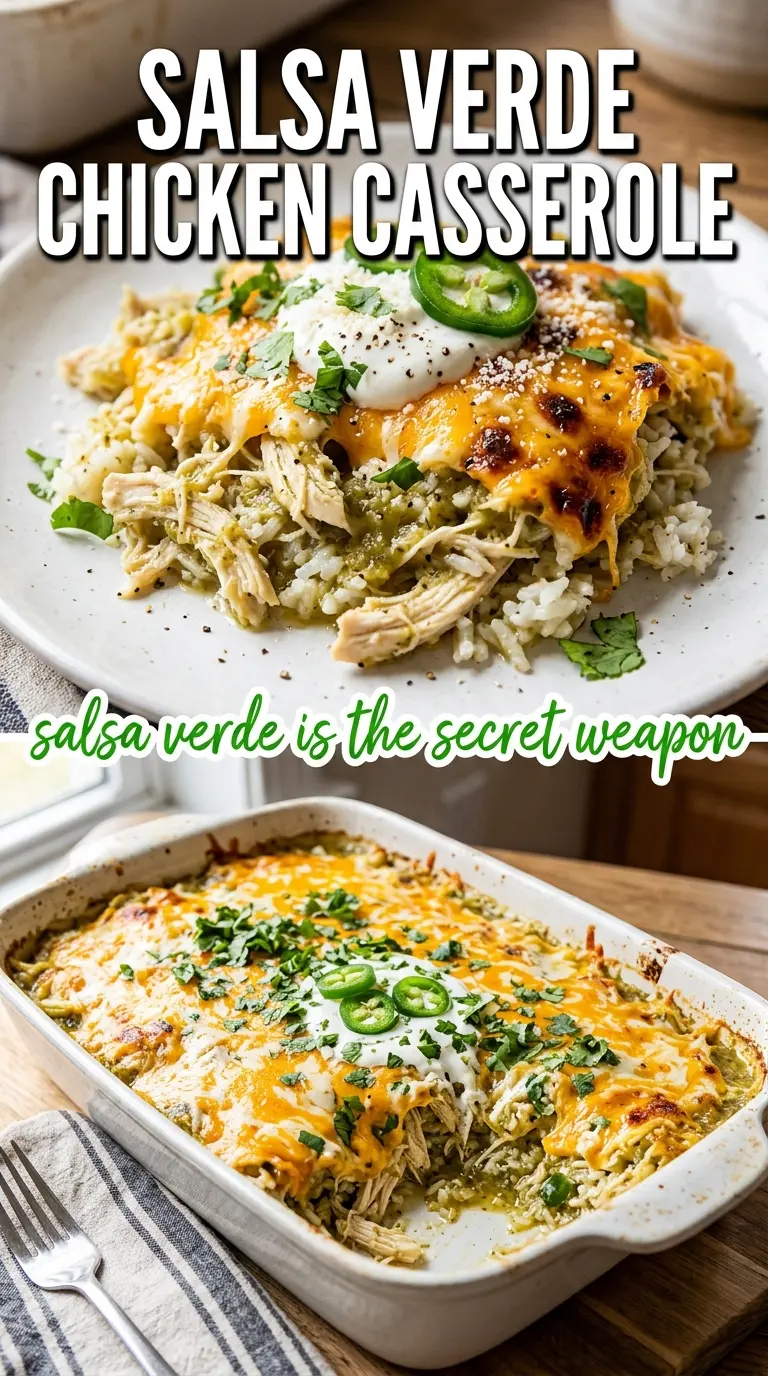
Salsa verde chicken casserole lands right in that sweet spot between comforting and lively: creamy, tangy, cheesy, and filling without tasting heavy. The rice soaks up the green sauce, the chicken stays tender, and the top turns into a bubbling layer of melted Monterey Jack with just enough browning at the edges to give every scoop a little bit of crunch.
What makes this version work is the balance. Salsa verde brings acidity and brightness, sour cream smooths it out, and the beans and corn give the casserole some backbone so it doesn’t eat like mush. Mixing everything before it goes into the oven lets the rice absorb flavor instead of sitting underneath a bland top layer, and baking uncovered is what gives the cheese its golden finish.
Below you’ll find the small details that keep this casserole from turning watery or flat, plus a few smart ways to adapt it when you need a different grain, a dairy-free option, or a meal you can stretch into leftovers without losing the good texture.
The casserole came out bubbly with the cheese browned on top and the rice held its texture instead of getting soggy. I used leftover rotisserie chicken and the salsa verde flavor came through perfectly.
Like this salsa verde chicken casserole? Save it for the nights when you want a cheesy Tex-Mex bake with tender rice, tangy green sauce, and almost no cleanup.
The Green Sauce Needs Room to Reduce, Not Steam
A lot of casseroles fail because they get loaded into the oven as one wet, crowded mass. That traps moisture, which softens the cheese and leaves the rice a little bloated instead of distinct. Here, the mixture is already cooked and cohesive before it goes into the dish, so the oven’s job is to heat everything through and finish the top, not rescue a loose filling.
The other thing that matters is the bake temperature and the uncovered pan. Salsa verde has enough moisture on its own, and the sour cream adds more, so covering the casserole would keep the surface pale and can make the bottom feel soupy. Uncovered heat lets the edges thicken while the top turns properly golden.
What Each Ingredient Is Actually Doing in This Dish
- Shredded chicken — Use cooked chicken that has been pulled into medium shreds, not tiny bits. Rotisserie chicken works well here because it stays juicy and saves time.
- Cooked white rice — Day-old rice is ideal because it holds its shape better and doesn’t collapse into paste. Fresh rice works too, but let it cool a few minutes before mixing so it doesn’t melt the sour cream.
- Salsa verde — This is the main flavor driver, so choose one you actually like straight from the jar. Thicker salsa verde gives you a better casserole texture; if yours is thin, drain the beans well to keep the filling from loosening up.
- Sour cream — It softens the tang of the tomatillo sauce and makes the casserole creamy without turning it into a heavy sauce. Greek yogurt can stand in, but it brings a sharper edge and can break a little more easily if the casserole bakes too long.
- Monterey Jack cheese — This melts smoothly and gives you that stretchy, glossy top. Pre-shredded cheese works in a pinch, but block-grated cheese melts with a cleaner finish.
- Beans and corn — The beans give the casserole body, and the corn adds little pops of sweetness against the salsa verde. Drain the beans well and thaw the corn first so excess liquid doesn’t thin the filling.
Building the Casserole So It Stays Creamy, Not Watery
Mix the filling until every grain is coated
Combine the chicken, rice, salsa verde, beans, corn, sour cream, cumin, and garlic powder in a large bowl before it goes into the baking dish. The goal is even coating, not just a rough stir. If you see dry pockets of rice, those spots will bake up bland and separate from the rest of the casserole. A wide spatula works better than a spoon because it folds the mixture without smashing the rice.
Spread it into the dish without packing it down
Transfer the mixture to a greased 9×13 baking dish and level it gently. Don’t press it firmly into the corners; compacting the filling makes the center dense and keeps the top from browning evenly. You want a loose, even layer so the heat can move through the casserole and the cheese can melt across the surface.
Bake until the edges bubble first
Slide the dish into a 375°F oven and bake it uncovered until the cheese is melted, the top is golden, and you can see bubbling around the perimeter. That bubbling at the edges tells you the center is hot too. If the cheese is browning before the filling is hot, tent it loosely with foil for the last few minutes, but only after the surface has already taken on some color.
Finish with fresh toppings after baking
Let the casserole sit for about 5 minutes before serving, then add cilantro and sliced jalapeños. The short rest helps the sauce settle, so the first scoop holds together instead of running across the plate. Add the cold toppings after baking, not before, or they lose the bright contrast that makes the dish taste fresh.
Ways to Change the Casserole Without Losing the Balance
Dairy-Free Version
Swap the sour cream for an unsweetened dairy-free alternative and use a good melting vegan cheese on top. The casserole will still bake up creamy, but the flavor will be a little less rich and the top won’t brown quite the same way, so watch it for doneness by the bubbling around the edges.
Make It Gluten-Free
This recipe is naturally gluten-free as long as your salsa verde and beans are labeled gluten-free. That’s worth checking because some jarred sauces use thickeners or shared equipment that can matter if you’re serving someone with celiac disease.
Swap the Rice for Cauliflower Rice
Use cooked, well-drained cauliflower rice if you want a lower-carb casserole. The texture turns softer and a little looser, so don’t expect the same scoopable bite you get from white rice, but it still carries the salsa verde and cheese well.
Use Pinto Beans Instead of White Beans
Pinto beans give the casserole a slightly earthier flavor and a little more visual contrast. They hold up just as well, but the finished dish reads more like a classic Tex-Mex bake and less like a mild chicken-and-rice casserole.
Storage and Reheating
- Refrigerator: Store leftovers covered for up to 4 days. The rice will absorb more of the sauce as it sits, so the casserole gets a little thicker by day two.
- Freezer: It freezes well in individual portions or as a whole baked casserole. Wrap tightly and freeze for up to 2 months; thaw overnight in the fridge before reheating for the best texture.
- Reheating: Warm covered in a 350°F oven until heated through, or use the microwave in short bursts with a splash of water or extra salsa verde. If you reheat it uncovered for too long, the rice dries out and the cheese turns leathery instead of melty.
Answers to the Questions Worth Asking

Salsa Verde Chicken Casserole
Ingredients
Equipment
Method
- Preheat the oven to 375°F and grease a 9x13 baking dish so the casserole releases cleanly after baking.
- In a large bowl, mix shredded chicken, cooked rice, salsa verde, beans, corn, sour cream, cumin, and garlic powder until fully combined with no dry pockets of rice.
- Transfer the mixture to the greased baking dish and spread it evenly for consistent bubbling at the edges.
- Top the casserole evenly with shredded Monterey jack cheese so it melts into a golden layer.
- Bake uncovered for 25–30 minutes at 375°F until the cheese is golden and the edges are bubbling.
- Serve immediately with fresh cilantro and sliced jalapeños on top for bright, spicy finish after baking.