Golden chicken thighs tucked into tangy salsa verde rice make this skillet dinner hit the table with the kind of flavor that usually takes twice as many pans. The rice cooks right in the sauce, which means every grain soaks up the tomatillo flavor instead of sitting underneath it. When the cheese melts over the top, you get a spoonable, comforting dinner with enough brightness from the lime to keep every bite lively.
The trick is giving the rice a head start in the pan before the liquid goes in. That quick toast keeps the grains from turning gummy and helps the skillet finish with separate, tender rice instead of a soft mash. Browning the chicken first does double duty: it seasons the pan and builds those savory bits that the rice cooks through later.
Below, I’ve included the small details that matter here, from the best way to keep the rice from sticking to easy swaps if you want to use what’s already in your pantry. If you’ve made one-pan chicken and rice before and ended up with uneven rice or bland chicken, this version fixes both.
The rice came out fluffy and soaked up all the salsa verde, and the chicken stayed juicy even after the cheese went on top. I was worried the beans would make it heavy, but they just made it more filling without taking over.
Keep this salsa verde chicken and rice skillet handy for the nights when you want one pan, tender chicken thighs, and rice that cooks up with real flavor.
The Trick That Keeps the Rice Separate in a Salsa Verde Skillet
One-pan chicken and rice can go wrong in two places: the rice turns pasty, or the chicken overcooks while the grains finish. The fix here is to toast the rice in the skillet after the garlic goes in and before the broth hits the pan. That tiny step gives the grains a little structure, so they hold up in the sauce instead of collapsing into it.
The other thing that matters is heat control after you cover the pan. Once the chicken goes back in, the skillet should settle into a low simmer, not a boil. A hard boil agitates the rice and can make the bottom stick before the center is cooked. Low heat keeps everything moving just enough to finish evenly.
What Each Ingredient Is Actually Doing in This Skillet
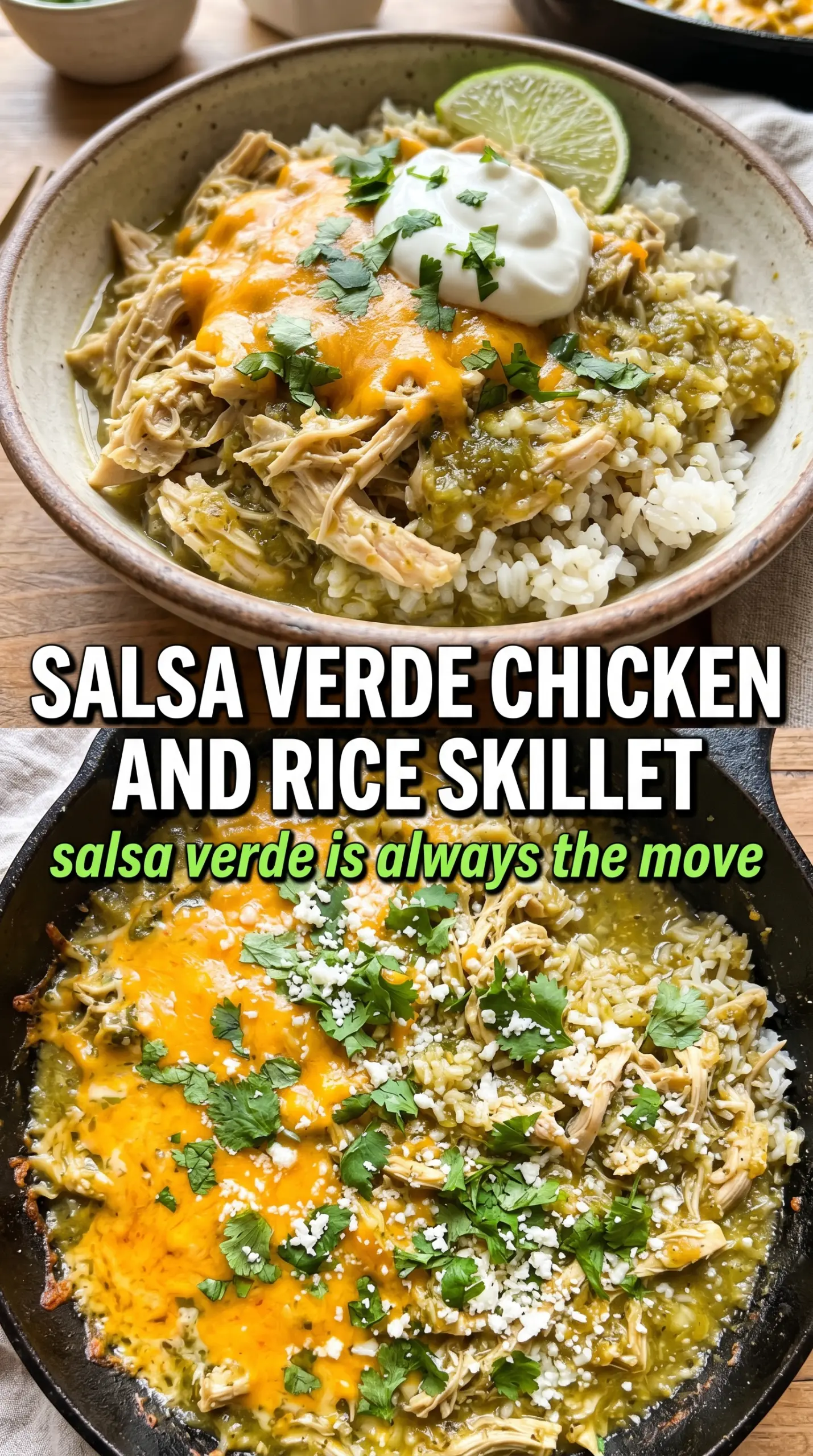
- Boneless chicken thighs — Thighs stay juicy through the simmer and don’t dry out the way chicken breast can. They also brown well, which gives the whole skillet a deeper savory base. If you only have breasts, cut the simmer time back a bit and check them early so they don’t go stringy.
- Salsa verde — This is the main flavor here, so use one you actually like. A thinner salsa verde works best because it blends into the rice and broth without making the pan too thick too soon. If your jar tastes sharp, the cheese and beans will soften it, but a good-tasting salsa still matters most.
- Long-grain white rice — Long-grain rice stays fluffy and separate, which is exactly what you want in a skillet like this. Short-grain rice turns softer and can make the dish feel heavy. Rinse the rice if it tends to be starchy, then toast it briefly so it keeps its shape.
- White beans or pinto beans — These add body and make the skillet more filling without changing the cooking method. Canned beans are fine here; just drain them well so they don’t water down the sauce. Pinto beans give a slightly earthier bite, while white beans disappear more into the rice.
- Monterey jack cheese — It melts cleanly and gives you that glossy top layer without getting greasy. Pre-shredded works, but freshly shredded melts smoother because it doesn’t have the anti-caking coating. Add it after the rice is cooked so it melts on top instead of sinking into the pan.
Getting the Chicken Browned Before the Rice Goes In
Season and Sear the Thighs
Pat the chicken dry first, then season it well with cumin, chili powder, salt, and pepper. The thighs should hit a hot skillet and sizzle immediately; if they just sit there, the pan isn’t hot enough and you’ll miss the browning that builds flavor. Give them 4 to 5 minutes per side until they’re deeply golden, then move them out of the pan. They don’t need to be cooked through yet. If you leave them in too long at this stage, they’ll dry out before the rice is done.
Toast the Rice in the Pan Drippings
Add the garlic and stir it just long enough to smell it, about 30 seconds, then add the rice. The rice should look glossy and start to smell a little nutty after a couple of minutes. That’s your cue that it’s ready for liquid. If the garlic browns, the heat is too high and it will taste bitter once the broth goes in.
Simmer Until the Rice Is Tender
Pour in the salsa verde and broth, scrape up the browned bits, then stir in the beans and corn. Nestle the chicken back into the rice, cover the skillet, and let it cook over low heat until the rice is tender and the chicken reaches 165°F. Don’t lift the lid over and over; every peek releases steam and slows the rice down. When the liquid is absorbed and the grains are tender with just a little bite, you’re there.
Finish with Cheese, Cilantro, and Lime
Scatter the Monterey jack over the top, cover the skillet for a couple of minutes, and let the residual heat melt it. The cheese should look soft and glossy, not browned. Finish with cilantro and a generous squeeze of lime, which wakes up the whole pan and keeps the dish from tasting flat. If the rice seems a touch salty at the end, the lime usually pulls it back into balance.
How to Change This Skillet Without Losing the Good Part
Make It Dairy-Free
Skip the Monterey jack and finish with extra cilantro, lime, and a little diced avocado if you want something creamy on top. You lose the melty finish, but the skillet still has plenty of body from the rice, beans, and salsa verde. If you want a richer result without dairy, stir in a spoonful of mashed avocado right before serving.
Use Brown Rice Instead
Brown rice needs more liquid and a longer simmer, so this isn’t a straight swap. Add extra broth and expect the cook time to stretch significantly, or par-cook the rice first and fold it into the salsa verde mixture near the end. The flavor still works, but the texture will be a little less plush than the white rice version.
Swap in Chicken Breast
Chicken breast works if that’s what you have, but it needs less time in the pan and less time under the lid. Sear it for color, then pull it as soon as the center is just underdone and let the rice finish it gently. Overcooked breast gets chalky fast in a skillet like this, so keep the heat low once everything is covered.
Storage and Reheating
- Refrigerator: Store leftovers in an airtight container for up to 4 days. The rice will tighten a little as it chills, but the flavor holds up well.
- Freezer: This freezes well without the cheese topping. Cool it completely, portion it into containers, and freeze for up to 2 months. The rice softens a bit after thawing, but it still makes a good make-ahead meal.
- Reheating: Reheat gently in a skillet or covered in the microwave with a splash of broth or water. The common mistake is blasting it on high heat until the rice dries out and the chicken gets rubbery. Low, covered heat brings the moisture back without wrecking the texture.
Answers to the Questions Worth Asking
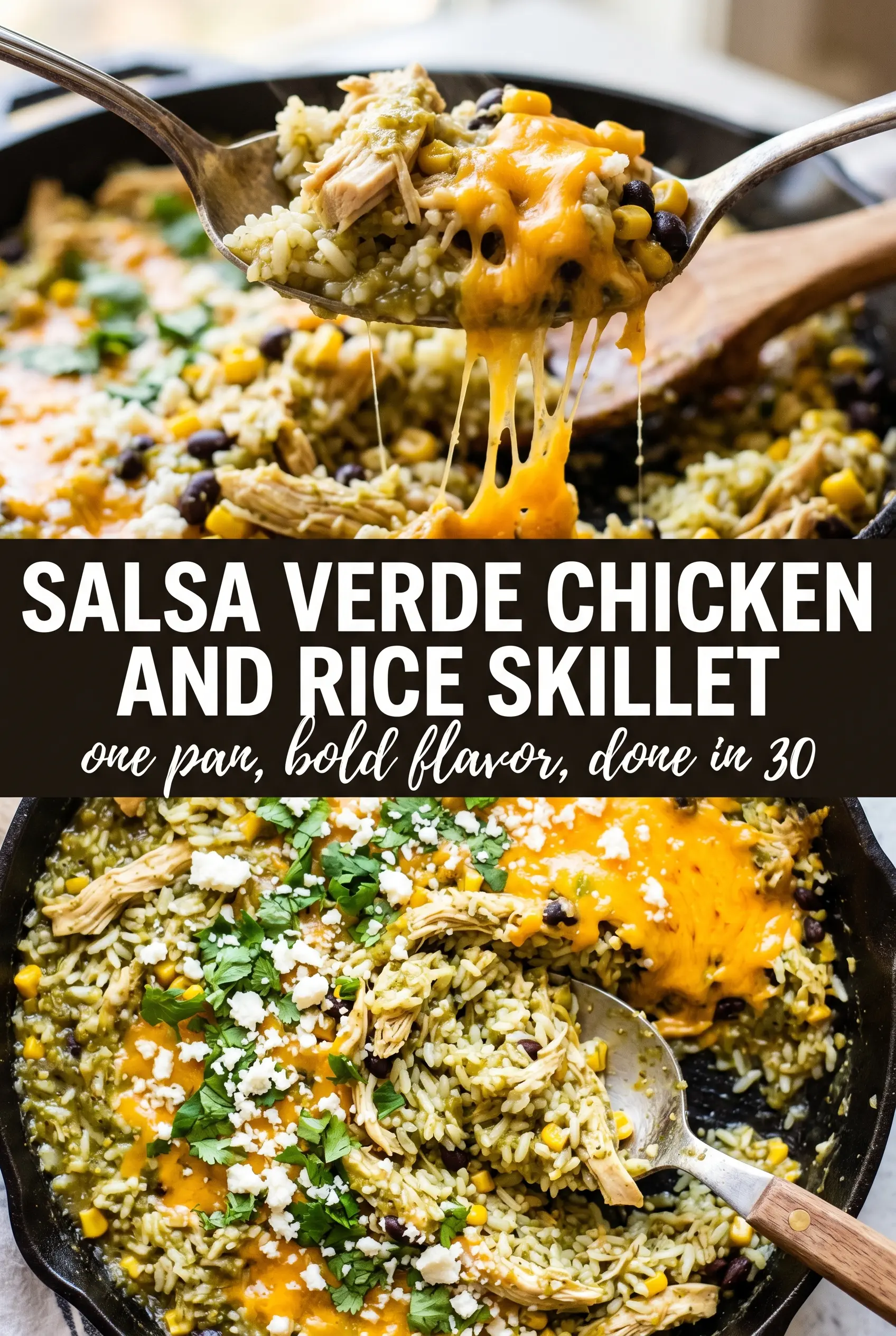
Salsa Verde Chicken and Rice Skillet
Ingredients
Equipment
Method
- Season boneless chicken thighs with cumin, chili powder, salt, and pepper.
- Heat olive oil in a large oven-safe cast iron skillet over high heat, then sear chicken thighs for 4–5 minutes per side until golden. Remove and set aside.
- Add garlic to the skillet and cook for 30 seconds, until fragrant and just starting to brown.
- Add long-grain white rice and toast for 2 minutes, stirring so grains are lightly coated.
- Pour in salsa verde and chicken broth, then stir to combine and loosen any browned bits from the pan.
- Add white beans or pinto beans and thawed frozen corn, then stir again to distribute evenly.
- Nestle chicken thighs back into the rice mixture, bring to a simmer, cover, and cook over low heat for 20 minutes, until rice is cooked and chicken is done.
- Top with shredded Monterey jack cheese, cover, and cook for 2 minutes to melt.
- Garnish with fresh cilantro and serve with lime wedges.