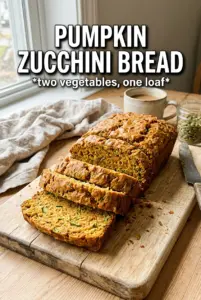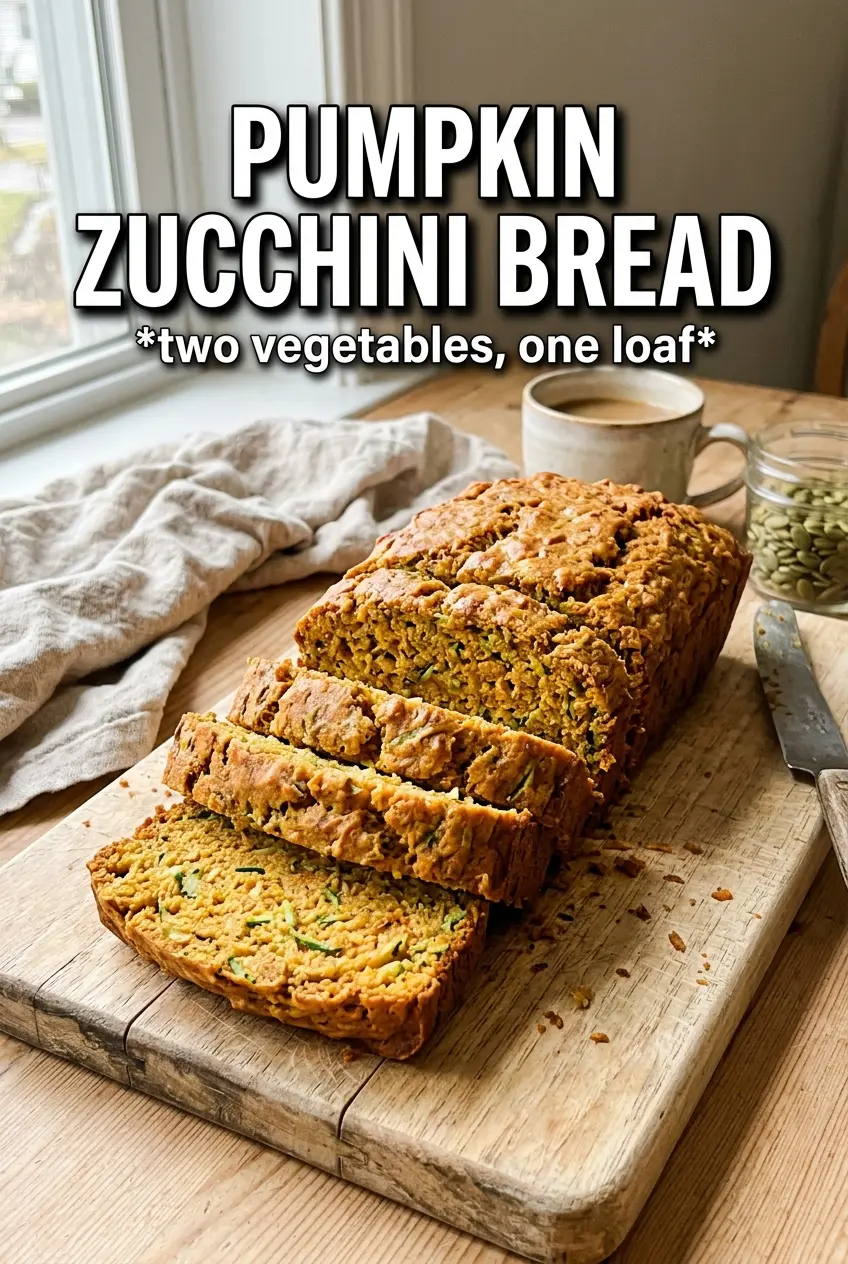
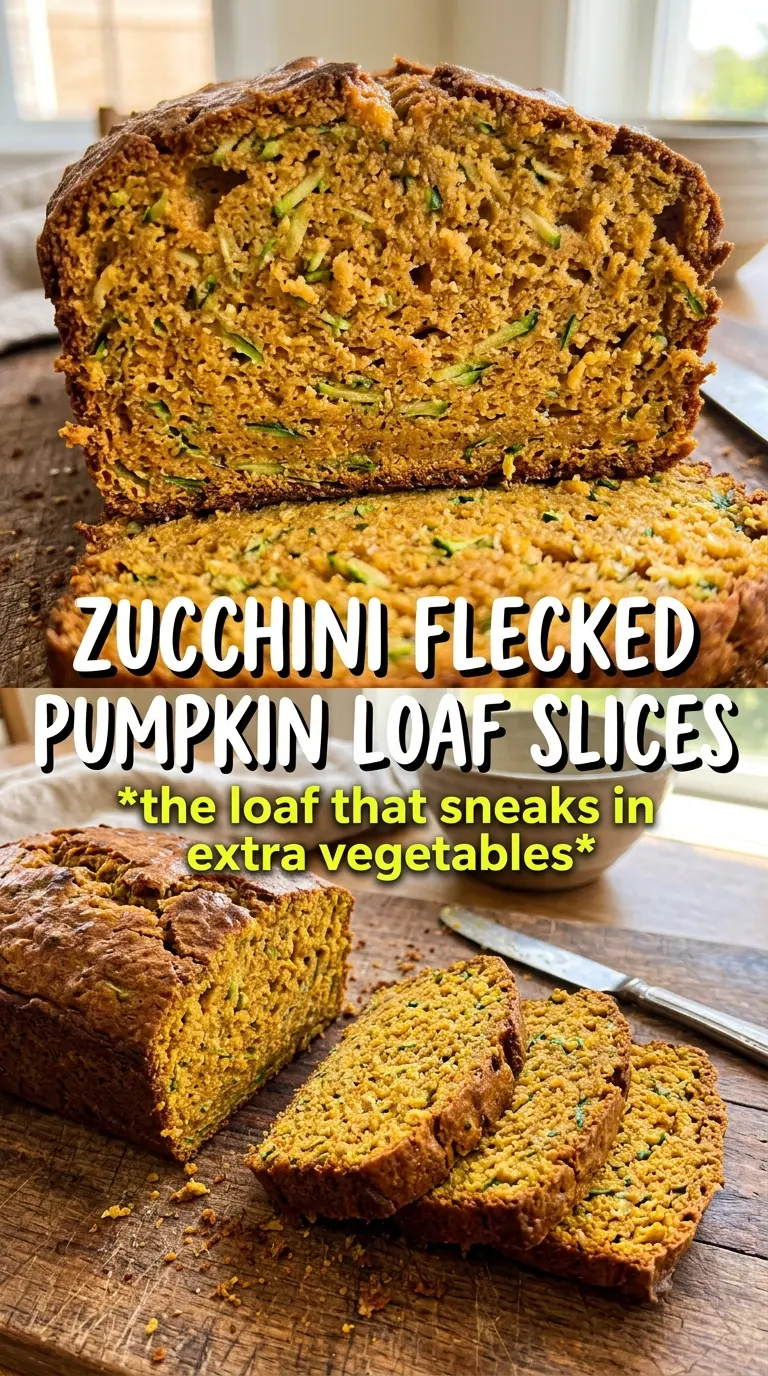
Pumpkin zucchini bread bakes up with a tender, close crumb, a soft autumn-spiced aroma, and just enough moisture to stay good on the counter for days. The pumpkin brings body and gentle sweetness, while the zucchini disappears into the loaf and keeps every slice plush instead of dry or crumbly. It tastes like classic pumpkin bread, but with a little extra softness that makes people reach for a second slice without thinking about it.
The part that matters most is getting the zucchini dry before it goes into the bowl. If it carries too much water, the loaf can turn gummy in the middle even when the top looks finished. I also like using both granulated sugar and brown sugar here: the white sugar keeps the crumb light, while the brown sugar adds a deeper, rounder sweetness that works beautifully with the pumpkin pie spice.
Below you’ll find the trick for squeezing the zucchini properly, what the glaze should look like before you drizzle it, and a few easy swaps if you want to make the loaf dairy-free or add nuts.
The loaf came out super moist, and the zucchini disappeared completely after squeezing it dry. The cinnamon glaze set up nicely on top, and the slices held together without crumbling.
Save this pumpkin zucchini bread for the days when you want a super-moist loaf with cinnamon glaze and a tender crumb.
The Trick to Keeping Pumpkin Zucchini Bread Tender, Not Dense
Pumpkin zucchini bread can go heavy fast if the batter gets overmixed or the zucchini goes in wet. The pumpkin puree already brings a lot of moisture, so the loaf depends on balance: enough flour to hold the structure, enough fat and sugar to keep the crumb soft, and zucchini that has been squeezed nearly dry. When those three parts are in sync, the loaf slices cleanly and still feels plush.
The other place people run into trouble is the bake time. The top can look set before the center is done because the sugars brown early in a loaf pan. The toothpick test still matters here, but I also watch for the loaf to pull slightly from the sides and spring back when gently pressed in the middle.
- Pumpkin puree — This gives the loaf that rich, earthy base and helps keep the crumb moist. Use plain pumpkin puree, not pumpkin pie filling, or the spice and sweetness will throw the balance off.
- Zucchini — This is the ingredient that makes the texture feel almost custardy without tasting like vegetables. Squeeze it hard in a towel; if water drips out after you think you’re done, keep going.
- Brown sugar — It adds depth and a little chew to the crumb. If you only use white sugar, the loaf still works, but it tastes flatter and less rounded.
- Vegetable oil — Oil keeps the bread soft after it cools, which is why this loaf stays moist for days. Melted butter can work in a pinch, but the crumb will be a little firmer and less plush.
What Each Ingredient Is Actually Doing in This Loaf
- All-purpose flour — This keeps the loaf sturdy enough to slice without turning cakey. I wouldn’t swap in bread flour here; it adds chew that fights the soft, tender crumb this bread is supposed to have.
- Baking soda and baking powder — The combo gives the loaf lift without making it puff and collapse. The baking soda also helps the sugars brown, which matters in a long-bake loaf.
- Pumpkin pie spice and cinnamon — These carry the flavor of the whole loaf. If your spice blend is old, the bread will taste muted, so use fresh spice if you can.
- Eggs — They bind the batter and help the loaf set in the center. Room-temperature eggs mix in more smoothly, which keeps you from overworking the batter.
- Walnuts — Optional, but they add crunch against the soft crumb. Toast them first if you want the nut flavor to stand out more.
- Powdered sugar glaze — This finishes the loaf with a thin sweet layer that sets up nicely once the bread cools. Add the milk a little at a time so it stays drizzleable instead of turning runny.
Mixing the Batter So the Center Bakes Through
Dry the zucchini first
Grate the zucchini, then squeeze it in a clean towel until it feels almost dry in your hands. You want the shreds to stay soft and damp, not wet enough to release liquid when pressed. This is the one step that protects the loaf from a gummy middle, and it matters more here because the pumpkin already brings plenty of moisture.
Whisk the wet ingredients until smooth
Stir the pumpkin puree, both sugars, oil, eggs, and vanilla until the mixture looks glossy and even. You don’t need to beat air into it; you just want the sugars dissolved enough that the batter bakes evenly. If you see streaks of egg white, keep whisking for another minute.
Fold, don’t beat
Add the dry ingredients and fold just until the flour disappears, then fold in the zucchini and walnuts. Overmixing at this point builds too much gluten and gives you a tougher loaf with tunnels through the center. The batter should look thick and a little shaggy, not perfectly smooth.
Bake until the middle tests clean
Pour into a greased 9×5 loaf pan and bake at 350F for 60 to 65 minutes. If the top browns before the center is done, tent it loosely with foil for the last 10 to 15 minutes. A toothpick in the center should come out with a few moist crumbs, not raw batter, and the loaf should feel set when lightly pressed.
Three Ways to Adjust This Loaf Without Ruining the Texture
Make it dairy-free
The bread itself is already dairy-free if you use milk in the glaze as written or swap in a nondairy milk. Almond, oat, or soy milk all work in the glaze; just add it slowly because some nondairy milks thin out faster than whole milk.
Skip the walnuts
Leave them out for a softer, more uniform slice. You lose the crunch, but the loaf stays a little cleaner to cut and is easier to pack in lunchboxes.
Turn it into muffins
Divide the batter among lined muffin cups and bake at 350F for about 18 to 22 minutes. Muffins bake faster and dry out faster too, so start checking early and pull them when the centers spring back.
Storage and Reheating
- Refrigerator: Store tightly covered for up to 5 days. The crumb stays moist, though the glaze may soften after day one.
- Freezer: This loaf freezes well. Wrap slices or the whole cooled loaf tightly in plastic, then foil, and freeze for up to 3 months.
- Reheating: Warm slices in the toaster oven or microwave just until soft. If you heat it too long, the glaze melts off and the crumb turns dry at the edges.