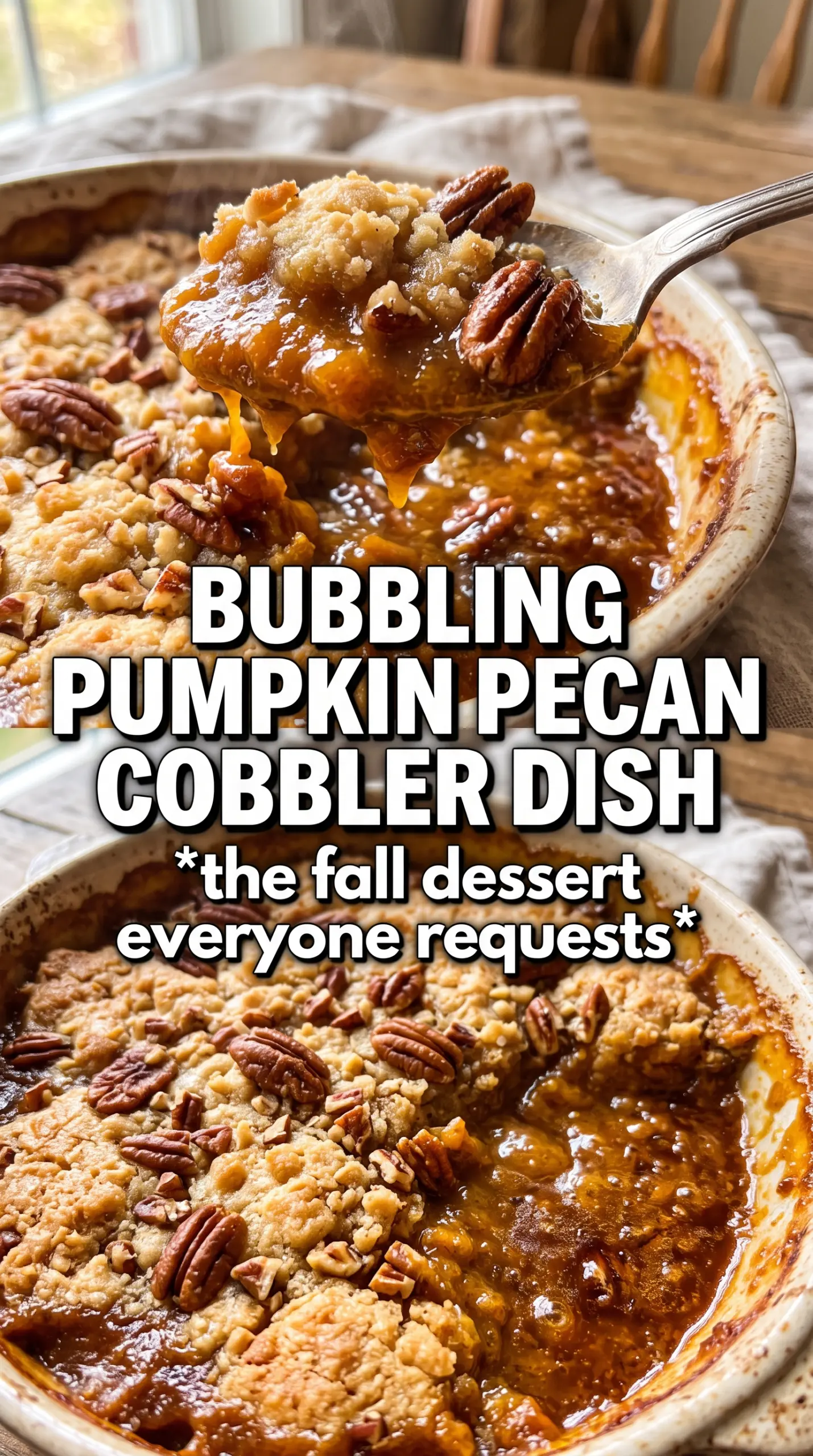
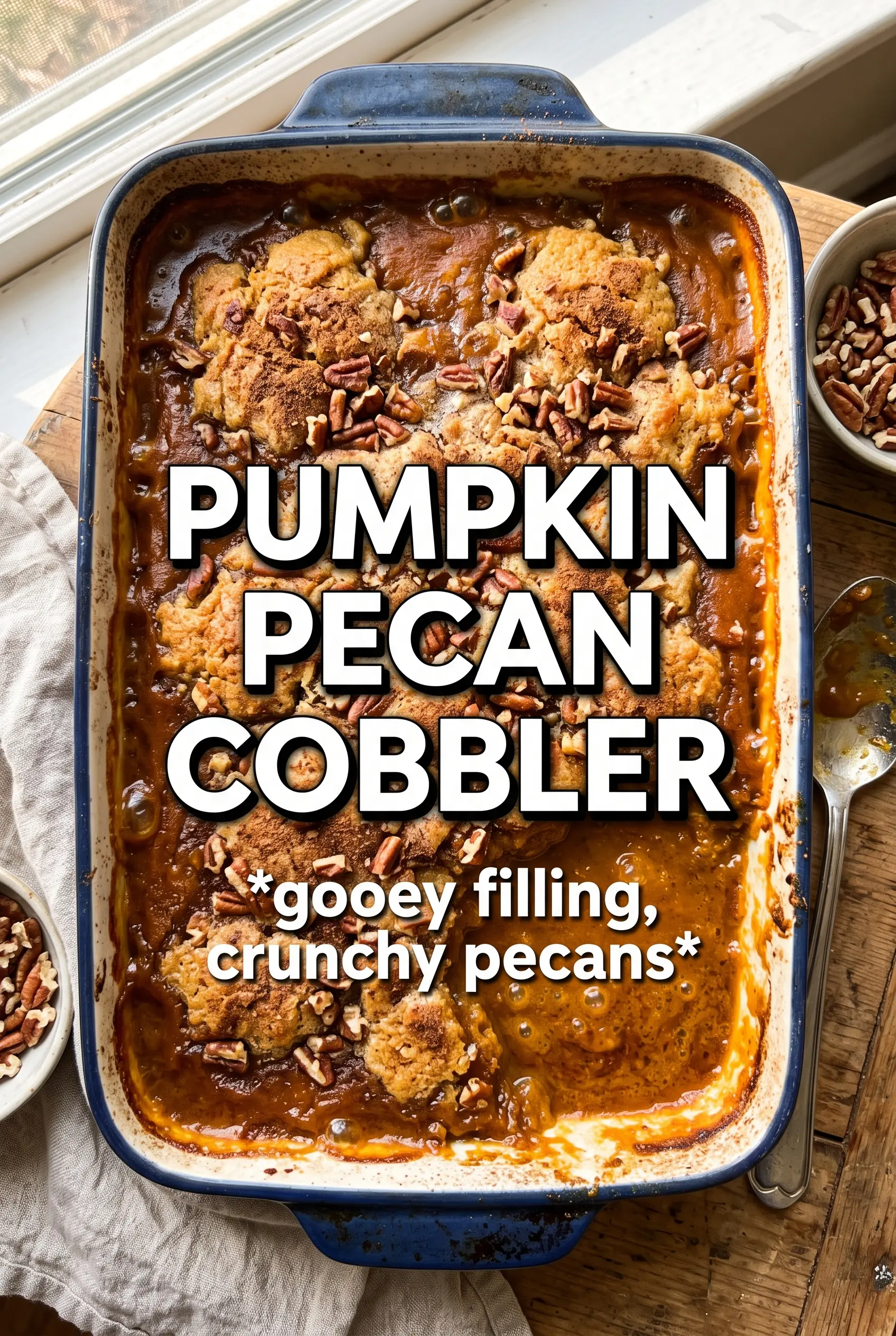
Pumpkin pecan cobbler bakes into one of those desserts that looks humble going in and comes out with a spoon-reaching, sauce-puddling finish that gets attention fast. The top turns tender and cakey in spots, the pecans toast right on the surface, and underneath all of it is a warm caramel-pumpkin sauce that you only get when the layering is done correctly. Served warm with vanilla ice cream, it lands somewhere between cobbler, pudding cake, and a buttery spice dessert.
The part that makes this version work is the hot-water pour at the end. It feels wrong if you haven’t made this style of cobbler before, but it is exactly what creates that self-saucing layer underneath the batter. The pumpkin puree keeps the base soft and rich, while the brown sugar topping and cinnamon melt into the water and turn into a glossy sauce as the cobbler bakes.
Below, you’ll find the small details that matter most: how to keep the batter from getting too thick, why the pecans go on before the sugar layer, and what to watch for so you pull it from the oven when the center is just set and the sauce is still active underneath.
The sauce came out perfectly underneath and the pecans stayed crisp on top. I was skeptical about pouring hot water over everything, but it baked into the best caramel layer and tasted even better the next day.
Save this Pumpkin Pecan Cobbler for the nights when you want a self-saucing dessert with warm spice, toasted pecans, and vanilla ice cream.
The Hot Water Layer Is What Creates the Sauce
With a cobbler like this, the sauce doesn’t come from stirring after baking. It forms because the sugar topping sits over the batter, then the hot water sinks through the gaps and carries the sugar down as the dessert bakes. If you stir, you’ll end up with a thick, muddy batter instead of distinct layers and a clean sauce underneath.
The other mistake people make is underbaking it because the center still looks loose. This dessert needs to look set at the edges and slightly jiggly in the middle when it comes out. It finishes thickening as it cools for a few minutes, and that resting time is when the sauce settles into the right consistency.
- Pumpkin puree — Use plain pumpkin puree, not pumpkin pie filling. Pie filling already has sugar and spice mixed in, which throws off both the batter texture and the sweetness balance.
- Pecans — Roughly chopped pecans give the topping its crunch and keep their shape during baking. Whole halves don’t distribute as evenly, and smaller pieces can disappear into the sauce.
- Hot water — It has to be very hot so it starts dissolving the sugar layer right away. Warm water won’t work the same way and can leave you with a bland, grainy top instead of a real sauce.
- Brown sugar — This is what gives the sauce its deeper caramel note. You can use light brown sugar or dark brown sugar; dark will give you a richer, molasses-heavy finish.
What Each Ingredient Is Actually Doing in This Recipe
- Primary ingredient (the star) — Quality matters most. Choose the best you can find.
- Cooking medium (oil, butter, or broth) — This carries flavors and prevents dryness.
- Seasonings (salt, pepper, spices, herbs) — Layer flavors so nothing overpowers. Build depth gradually.
- Aromatics (garlic, onion, herbs) — Cook with fat to bloom flavors. Become the foundation.
- Supporting ingredients — Complement the main ingredient without overpowering it.
- Sauce or liquid (if applicable) — Brings flavors together. Balance richness with acid.
- Acid (lemon, vinegar, wine, or other) — Brightens and prevents flat-tasting results.
- Final finish (garnish, glaze, or sauce) — Prevents one-dimensional taste and adds visual appeal.
Building the Batter, Then Leaving It Alone
Mix the Pumpkin Base Just Until Smooth
Whisk the dry ingredients first so the baking powder and spice distribute evenly, then stir in the pumpkin, melted butter, milk, and vanilla until the batter looks thick but spreadable. It should look more like a soft cake batter than a pourable pancake batter. If it seems stiff, the pumpkin puree may have been especially dense, and a spoonful of milk will loosen it without thinning it too far. Spread it evenly in the buttered dish so the topping bakes uniformly.
Scatter the Pecans Before the Sugar
The pecans go on top of the batter before the sugar layer because they need direct contact with the hot surface to toast. If they get buried under the sugar, they soften instead of crisping. A loose, even scatter works better than a thick pile, since crowded nuts can steam and clump together. You want every spoonful to catch a few pieces.
Pour the Water Without Touching the Pan
Once the sugar mixture is sprinkled over the pecans, pour the hot water slowly over the entire surface. Don’t stir, and don’t worry if it looks wrong at this stage. The water should sit on top and work its way down during baking, which is how the sauce forms underneath the batter instead of blending into it. Bake until the edges are bubbling and the center has just set; overbaking dries out the top and leaves less sauce behind.
How to Adapt This Cobbler for Different Kitchens and Tables
Dairy-Free Version
Swap the butter for melted plant-based butter and use an unsweetened dairy-free milk. The texture stays close to the original as long as you use a milk with some body, like oat or soy milk. Skip any thin, watery milk substitute or the batter can bake up less tender.
Nut-Free Version
Leave out the pecans and bake as written. You’ll lose the crunchy top layer, but the cobbler still has a good contrast between the soft pumpkin base and the caramel sauce. If you want another texture element, add a handful of sunflower seeds, though they won’t taste as rich as pecans.
Gluten-Free Swap
Use a 1:1 gluten-free baking flour blend in place of the all-purpose flour. The batter may bake up a touch more delicate, but the self-saucing layer still works. I don’t recommend almond flour alone here because it changes the structure too much and can make the base greasy.
Storage and Reheating
- Refrigerator: Store covered for up to 4 days. The sauce thickens as it chills, and the top softens a little.
- Freezer: It freezes, but the sauce texture changes a bit after thawing. Freeze in airtight portions for up to 2 months, then thaw overnight in the refrigerator.
- Reheating: Warm individual portions in the microwave or reheat the whole dish, covered, in a 325F oven until hot. Add the ice cream after reheating, not before, or it melts into the sauce and disappears.
Questions I Get Asked About This Recipe
Pumpkin Pecan Cobbler
Ingredients
Equipment
Method
- Preheat the oven to 350F and butter a 9x13 baking dish for easy release.
- Whisk all-purpose flour, granulated sugar, baking powder, pumpkin pie spice, cinnamon, and salt until evenly combined.
- Stir in pumpkin puree, melted butter, milk, and vanilla extract, then spread the batter evenly in the dish.
- Scatter the roughly chopped pecans over the batter in an even layer.
- Mix brown sugar, granulated sugar, and cinnamon, then sprinkle evenly over the batter.
- Pour very hot water over everything without stirring, so it sinks and forms the sauce.
- Bake for 40-45 minutes at 350F, until the center is just set and the top looks golden.
- Let the cobbler rest briefly, then serve warm with vanilla ice cream.