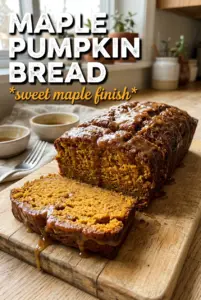
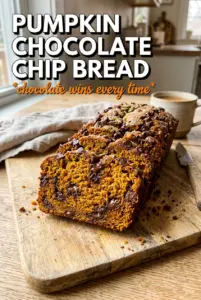
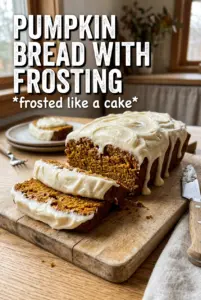
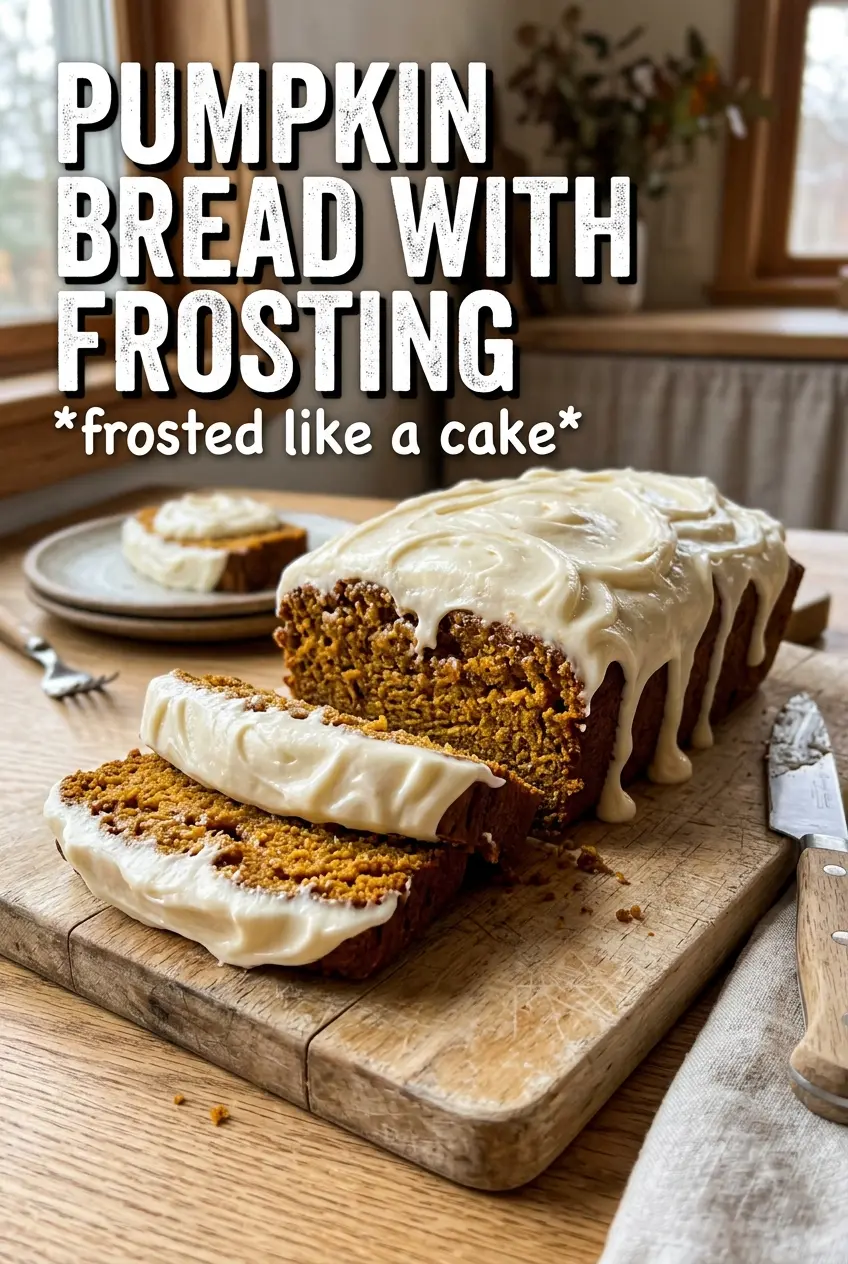
Pumpkin bread with cream cheese frosting lands somewhere between a quick bread and a dessert, and that’s exactly why it keeps disappearing off the cutting board. The loaf stays tender and moist without turning heavy, with warm pumpkin spice running through every slice. The frosting on top brings tang, sweetness, and just enough richness to make each bite feel finished instead of plain.
What makes this version work is balance. The pumpkin puree brings moisture, but the batter still has enough flour and eggs to set into a sliceable loaf instead of a gummy one. Brown sugar deepens the flavor, while cinnamon and pumpkin pie spice keep the loaf from tasting flat. The frosting is built thick on purpose, so it sits on top in a generous layer instead of sliding down the sides.
Below, I’ve included the little things that matter most here: how to keep the loaf from sinking in the middle, how to know when the frosting is spreadable but not loose, and a few smart swaps if you need to work around what’s in your pantry.
The loaf baked up soft and stayed moist for days, and the frosting set up thick enough to slice cleanly without sliding off. I added the cinnamon on top and it tasted like a bakery loaf.
Save this pumpkin bread with cream cheese frosting for a loaf that slices cleanly, stays moist, and finishes with a thick cinnamon-kissed frosting.
The Secret to a Tender Loaf Without a Wet Center
Pumpkin bread goes wrong in one of two ways: it bakes up dense from too much mixing, or it stays gummy in the middle because the batter never had enough structure to support all that puree. This loaf avoids both problems by keeping the mixing gentle and the pan size right. A 9×5 loaf pan gives the batter enough room to rise and set without spilling over or baking into a squat brick.
The other trap is overbaking just to be safe. Once the toothpick comes out clean and the center no longer looks glossy, pull it. The loaf keeps cooking from residual heat as it cools, and that last bit of carryover is what finishes the crumb without drying it out. If the top is browning too quickly, cover it loosely with foil for the last 15 minutes.
What Each Ingredient Is Actually Doing in This Loaf
- Pumpkin puree — This is the moisture source and the main flavor. Use plain pumpkin puree, not pumpkin pie filling, or the loaf will taste overly sweet and the texture can turn loose.
- Brown sugar and granulated sugar — The brown sugar adds depth and a little softness, while the white sugar keeps the crumb from getting too heavy. You need both for a balanced loaf.
- Oil — Oil keeps the bread tender for days. Melted butter gives more flavor, but it firms up as it cools and makes the loaf less plush.
- Pumpkin pie spice and cinnamon — These build the warm spice note without making the bread taste like one spice only. If you don’t have pumpkin pie spice, use extra cinnamon plus a little nutmeg and ginger.
- Cream cheese — Full-fat cream cheese gives the frosting its tang and body. Neufchâtel works in a pinch, but the frosting will be a little softer.
- Powdered sugar — This thickens the frosting quickly and gives it that smooth, spreadable finish. If the frosting feels loose, add more a tablespoon at a time instead of dumping in a big handful.
Getting the Batter, Bake, and Frosting Right
Mix the dry and wet bowls separately
Whisk the flour, baking soda, spices, and salt first so the leavening is evenly distributed. In the wet bowl, mix the pumpkin puree, sugars, oil, eggs, and vanilla until the mixture looks smooth and uniform. If you see streaks of egg white, keep whisking for a few more seconds; unmixed egg leaves little rubbery pockets in the baked loaf.
Fold, don’t beat, once the flour goes in
Add the dry ingredients to the wet and stir only until you stop seeing floury streaks. A few small lumps are fine. Overmixing develops too much gluten and turns quick bread chewy instead of tender, especially with a heavy batter like this one.
Watch the center, not the clock alone
Scrape the batter into the greased loaf pan and bake at 350°F for 60 to 65 minutes. Start checking near the 60-minute mark, but trust the visual cue more than the timer: the top should look set, the sides should pull slightly from the pan, and a toothpick in the center should come out clean or with a few moist crumbs. If it comes out coated in wet batter, keep baking in 5-minute bursts.
Cool the loaf completely before frosting
This matters more than most people think. If the bread is even a little warm, the frosting softens and slides right off. Let the loaf cool in the pan for a bit, then move it to a rack and wait until it feels fully room temperature before you spread anything on top.
Beat the frosting until it’s thick and smooth
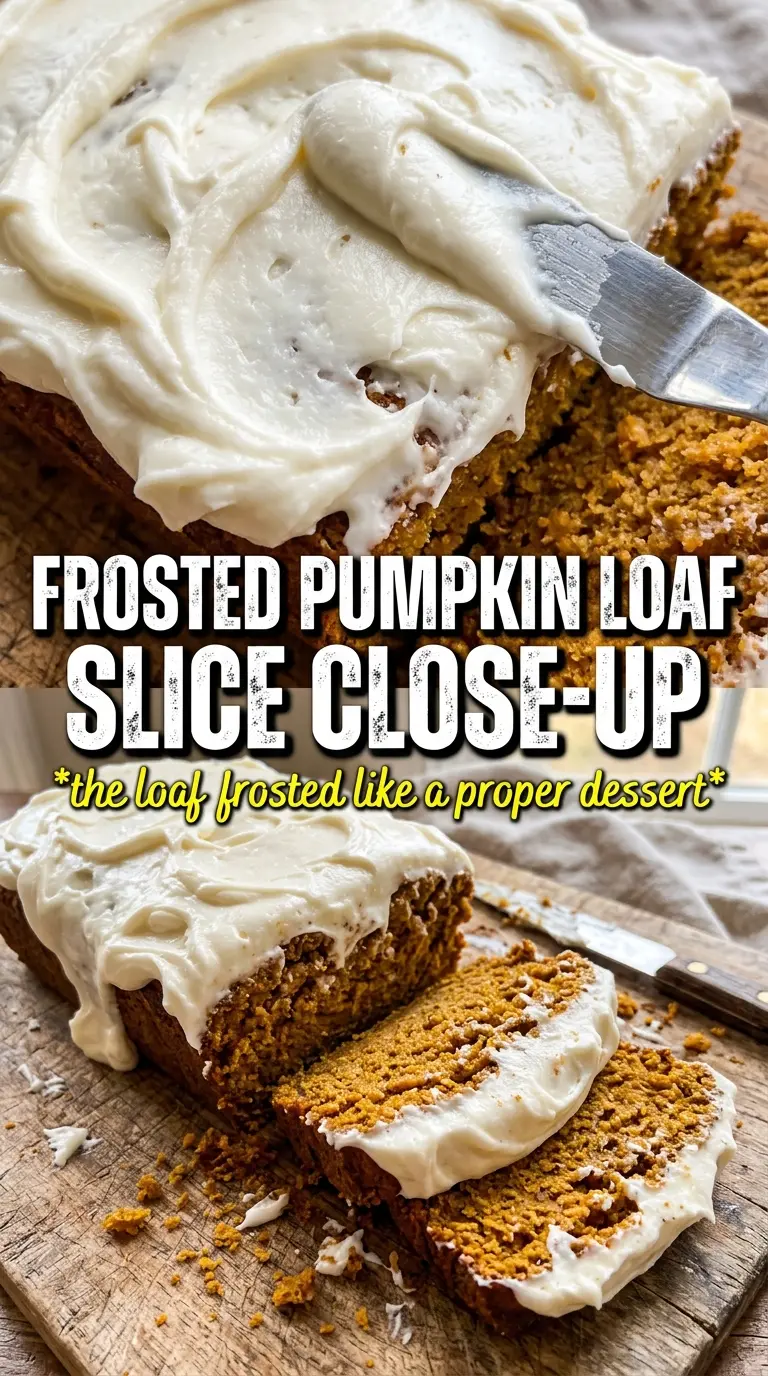
Start with softened cream cheese and butter, then beat until there are no lumps. Add the powdered sugar, vanilla, and cinnamon, then thin with milk just enough to make it spreadable. The goal is a frosting that holds its shape when you swipe a knife through it, not a glaze that runs down the bread.
How to Adapt This Loaf for Different Kitchens and Schedules
Dairy-Free Frosting
Use a dairy-free cream cheese and plant-based butter for the frosting. The texture will be a little softer and the tang can vary by brand, so start with less milk than you think you need and add it only if the frosting feels stiff.
Gluten-Free Loaf
A 1:1 gluten-free baking flour can work here, but the loaf usually bakes up a little more delicate. Let it cool fully before slicing so the crumb has time to set, and expect a softer slice rather than the springier texture of the original.
Make It Ahead
Bake the loaf a day ahead and frost it once it’s completely cool. The flavor settles overnight, and the texture slices even cleaner the next day. If you frost it too early, the topping can soften and lose its sharp, thick look.
Storage and Reheating
- Refrigerator: Store covered for up to 5 days. The frosting will firm up and the crumb will feel slightly denser when cold.
- Freezer: Freeze the unfrosted loaf tightly wrapped for up to 2 months. Frosting doesn’t freeze as neatly, so add it after thawing for the best texture.
- Reheating: Warm individual slices briefly at room temperature or for a few seconds in the microwave. Don’t heat long enough to melt the frosting unless you want it soft and spoonable.
Questions I Get Asked About This Recipe
Pumpkin Bread With Cream Cheese Frosting
Ingredients
Equipment
Method
- Preheat the oven to 350°F and grease a 9x5 loaf pan.
- Whisk together the flour, baking soda, pumpkin pie spice, cinnamon, and salt until evenly combined.
- Whisk together the pumpkin puree, sugar, brown sugar, oil, eggs, and vanilla until smooth.
- Fold the wet mixture into the dry mixture until just combined, then pour the batter into the greased loaf pan.
- Bake for 60-65 minutes, until a toothpick comes out clean.
- Cool the loaf completely before frosting.
- Beat the cream cheese and unsalted butter until smooth.
- Add the powdered sugar, vanilla, and cinnamon, then mix in enough milk to make a thick but spreadable frosting.
- Spread the frosting generously over the cooled loaf, then dust with cinnamon and serve.