Deeply spiced pumpkin bread with a tender, moist crumb and a glossy brown butter maple icing is the kind of loaf that disappears slice by slice before it ever makes it to the counter for long. The bread stays soft for days, with enough structure to hold a thick drizzle of icing, and the maple-butter finish adds a nutty sweetness that makes each bite taste bakery-worthy without being fussy.
What sets this version apart is the balance. Pumpkin puree brings moisture, brown sugar adds a little depth, and the oil keeps the crumb plush instead of dry or cakey. The icing starts with browned butter, which gives the maple glaze a toasty edge that plain melted butter just can’t match. Let the loaf cool all the way before icing it, or the glaze will melt right off and soak into the top instead of setting in those pretty ribbons.
Below, you’ll find the small details that matter most: how to keep the bread tender, when to stop mixing, and how to get the icing thick enough to drizzle without running away down the sides.
The loaf came out super moist and the icing set just enough that it didn’t disappear into the bread. I browned the butter a little longer than usual and the maple flavor came through beautifully.
Save this pumpkin bread with brown butter maple icing for the days when you want a soft, spiced loaf with a thick maple drizzle.
The Mistake That Makes Pumpkin Bread Dense Instead of Tender
Pumpkin bread usually goes wrong in one of two places: the batter gets overmixed, or the loaf gets pulled before the center is set. This recipe dodges both problems by keeping the mixing gentle and relying on a full bake time, not a rushed timer. Once the dry ingredients hit the wet, stir only until the flour disappears. A few streaks are better than a heavy, rubbery loaf.
The other thing that matters is the pumpkin itself. Use plain pumpkin puree, not pumpkin pie filling. Pie filling already has sugar and spices added, which throws off the balance here and can leave the crumb overly sweet and oddly soft. The batter will be thick, and that is exactly what you want. Thick batter gives you a loaf that rises into a neat dome instead of sinking in the middle.
What Each Ingredient Is Actually Doing in This Loaf
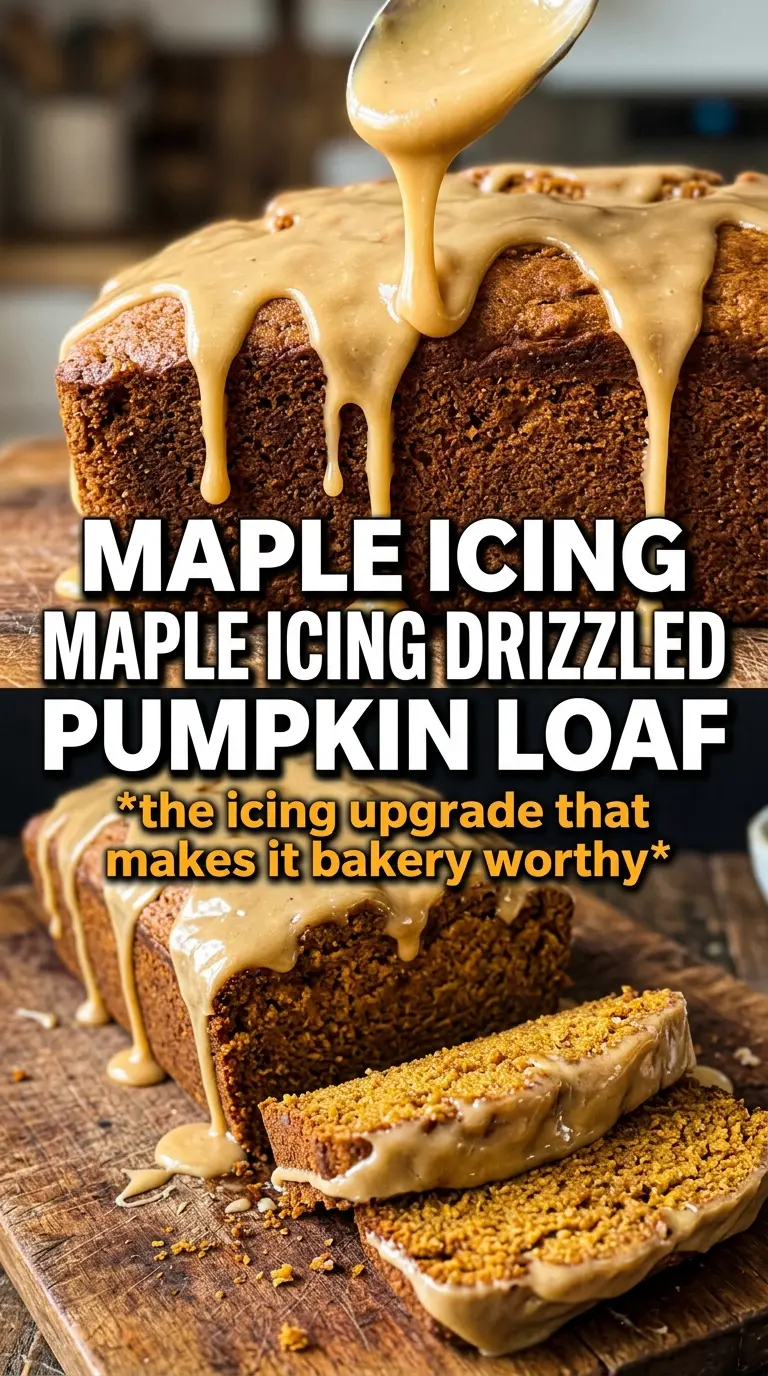
- Pumpkin puree — This is the moisture and the flavor base. It keeps the loaf soft for days, and there isn’t a substitute that gives the same texture. If your puree looks watery, spoon it into a bowl and stir it well before measuring so the batter stays consistent.
- Vegetable oil — Oil keeps the crumb plush even after the loaf cools. Butter can work in a pinch, but the texture will be a little firmer and less moist the next day. This is one of those times when a neutral oil does the job best.
- Brown sugar and granulated sugar — The mix of both matters. Granulated sugar gives clean sweetness and structure, while brown sugar adds a deeper molasses note that plays nicely with the spices and maple icing.
- Pumpkin pie spice and cinnamon — The spice blend brings warmth, while the extra cinnamon keeps the flavor from tasting flat. If you only have pumpkin pie spice, use it and increase the cinnamon slightly if you want a stronger finish.
- Brown butter in the icing — Browning the butter changes the whole topping. You get a toasted, nutty edge that makes the maple taste richer. Don’t walk away from the pan; it goes from golden to burnt fast.
- Pure maple syrup — Use the real thing here. Pancake syrup won’t give the same flavor or body, and the icing will taste thin. The maple syrup is what makes the glaze taste like it belongs on this bread instead of on any old cake.
Mixing the Batter and Getting the Icing Right
Build the Pumpkin Base First
Whisk the pumpkin puree, both sugars, oil, eggs, and vanilla until the mixture looks smooth and glossy. You want the sugars mostly dissolved into the wet ingredients before the flour goes in, because that helps the loaf bake evenly. If the mixture looks a little grainy at this point, keep whisking for another few seconds. That step matters more than people think.
Fold the Flour In Without Beating It
Add the dry ingredients and fold just until the flour disappears. The batter should look thick and slightly streaked, not whipped and airy. Overmixing builds gluten and turns pumpkin bread tough, which is why so many loaves come out with a chewy line through the center. Stop as soon as you no longer see dry pockets at the bottom of the bowl.
Bake Until the Center Actually Sets
Scrape the batter into the loaf pan and bake until a toothpick comes out clean from the center, usually 60 to 65 minutes. The top should be deeply golden and cracked, and the loaf should spring back lightly when touched. If the top browns too quickly, tent it loosely with foil for the last 15 minutes. Cooling completely is nonnegotiable; warm bread melts the icing and makes the topping slide right off.
Brown the Butter and Keep the Glaze Thick
Cook the butter in a small saucepan until it foams, then turns amber and smells nutty. Pull it off the heat as soon as you see browned bits at the bottom, because it keeps cooking in the hot pan. Let it cool for about 10 minutes before whisking in the sugar, maple syrup, vanilla, cinnamon, and just enough milk to make a thick, drizzly glaze. If it gets too thin, add a spoonful more powdered sugar; if it gets too thick, add milk a teaspoon at a time.
How to Adapt This Loaf for Different Kitchens and Different Cravings
Make it dairy-free
The bread is already dairy-free as written. For the icing, use a plant-based butter that browns well enough for your brand, or skip browning and use melted dairy-free butter instead. The glaze will taste a little less toasted, but it still sets nicely over the cooled loaf.
Make it gluten-free
A 1:1 gluten-free flour blend can work here if it already includes xanthan gum. The loaf may bake up a little more delicate, so let it cool fully before slicing. Without that rest, the crumb can crumble at the knife.
Add nuts for more texture
Fold in up to 3/4 cup chopped toasted pecans or walnuts after the flour is mixed in. Toasting matters here because raw nuts can taste flat against the maple icing. The loaf will slice with a little more crunch and a little less of that all-soft crumb.
Store and reheat for the best texture
- Refrigerator: Keep covered for up to 5 days. The icing will firm up and the loaf may taste denser straight from the fridge.
- Freezer: Freeze the unglazed loaf or individual slices for up to 3 months, wrapped tightly and sealed well. Add the icing after thawing for the best texture.
- Reheating: Warm slices briefly at room temperature or in the microwave for 10 to 15 seconds. Too much heat melts the icing and dries out the crumb.
Answers to the Questions Worth Asking
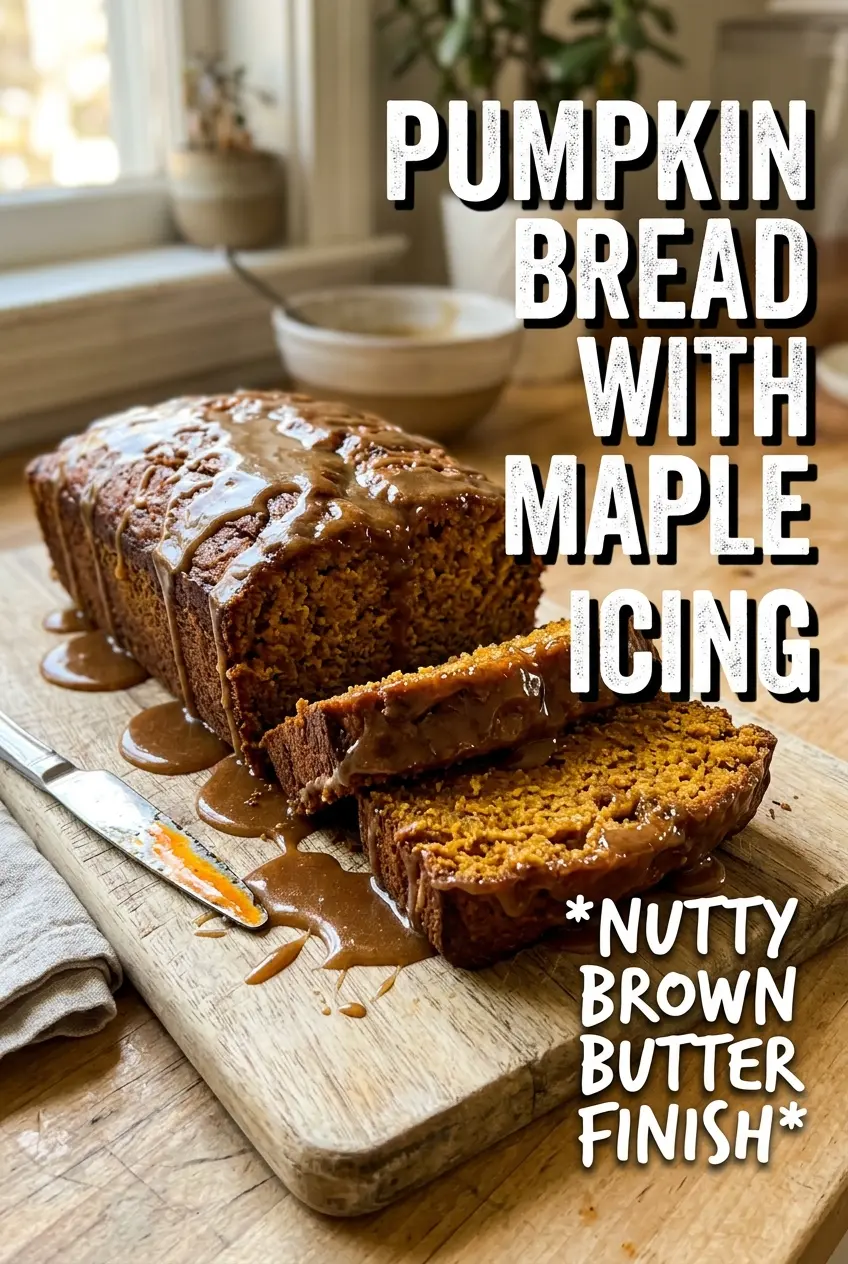
Pumpkin Bread With Brown Butter Maple Icing
Ingredients
Equipment
Method
- Preheat the oven to 350F, then grease a 9x5 loaf pan so the loaf releases cleanly.
- In a bowl, whisk all-purpose flour, baking soda, pumpkin pie spice, cinnamon, and salt until the spices are evenly distributed and no lumps remain.
- In a second bowl, whisk pumpkin puree, granulated sugar, brown sugar (packed), vegetable oil, eggs, and vanilla until the mixture looks smooth.
- Pour the dry ingredients into the wet ingredients and fold until just combined, then stop as soon as no dry streaks are visible.
- Transfer the batter to the prepared loaf pan, smoothing the top so it bakes evenly.
- Bake for 60-65 minutes at 350F, until a toothpick inserted in the center comes out clean.
- Let the loaf cool completely before icing so the glaze stays glossy and doesn’t melt off.
- Melt unsalted butter in a saucepan over medium heat until it turns golden and smells nutty.
- Cool the browned butter for 10 minutes so it’s warm but not hot before mixing.
- Whisk the browned butter with powdered sugar, pure maple syrup, vanilla, cinnamon, and enough milk to make a thick drizzling consistency, until smooth.
- Drizzle the icing generously over the cooled loaf, letting it run down the sides for a set glaze.