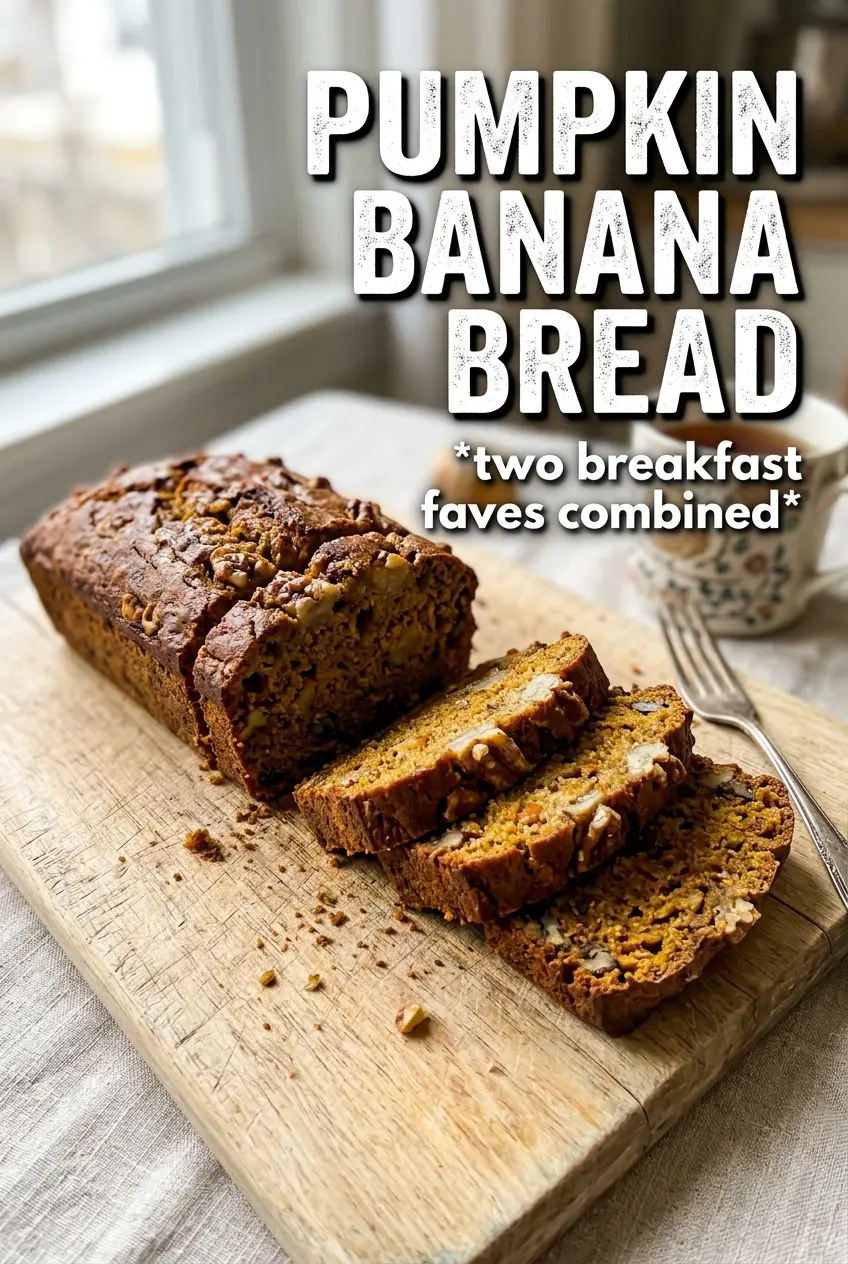
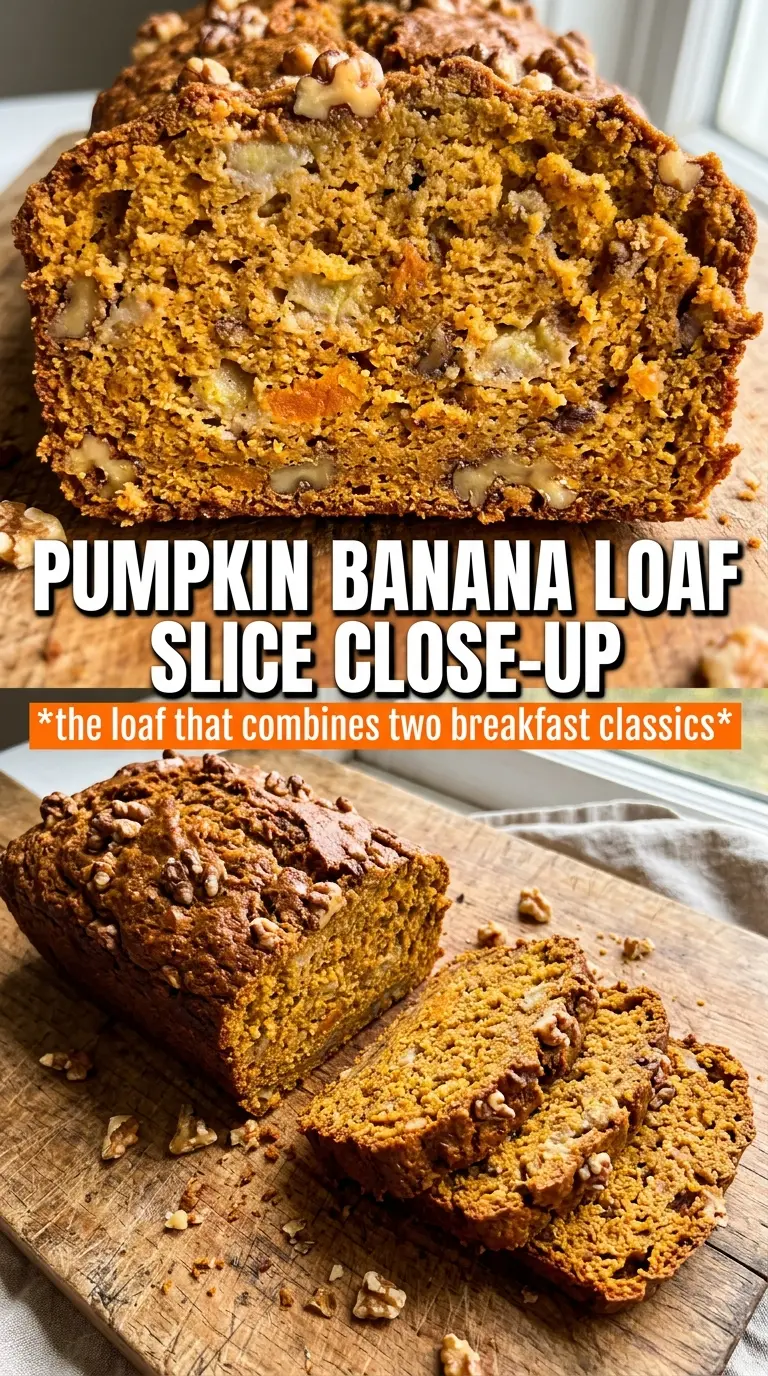
Deeply moist pumpkin banana bread is the kind of loaf that disappears fast, mostly because it tastes like two comfort bakes merged into one tidy slice. The pumpkin brings a soft, plush crumb and warm spice, while the bananas keep it tender and naturally sweet without turning the loaf heavy. A thin maple glaze on top gives each slice a little extra sweetness and makes the whole thing feel bakery-worthy without much effort.
What makes this version work is the balance. Pumpkin puree adds moisture, but it can also make quick bread dense if the batter is overmixed or overloaded with flour. Ripe bananas do a lot of the sweetness work here, so you don’t need a huge amount of sugar to get a good loaf. The trick is to mash the bananas until they’re almost smooth and fold the dry ingredients in just until no flour streaks remain.
Below you’ll find the small details that matter most: how to tell when the center is baked through, how to keep the crumb soft instead of gummy, and a few smart swaps if you want to adjust the glaze or make the loaf dairy-free.
The loaf baked up with a really soft crumb and the maple glaze soaked into the top just enough without making it sticky. I used extra-ripe bananas and it came out sweet enough that my kids kept grabbing slices before it even cooled.
Love the soft crumb and maple glaze on this pumpkin banana bread? Save it to Pinterest for an easy breakfast loaf that stays moist for days.
The Moisture Balance That Keeps This Loaf From Going Gummy
Pumpkin banana bread can go wrong fast when the batter gets too wet or the flour gets packed in too heavily. This loaf works because pumpkin puree and mashed banana both bring moisture, but the structure still comes from the flour, eggs, and just enough leavening to lift it. The result should be tender and plush, not pudding-like.
The other thing that matters is mixing. Once the dry ingredients go in, stop as soon as the flour disappears. Stirring too long builds gluten and turns a soft breakfast loaf into something tight and rubbery. If your loaf has ever sunk in the middle, the batter was probably overmixed or pulled from the oven before the center set.
- Pumpkin puree — Use plain pumpkin puree, not pumpkin pie filling. Pie filling already has sugar and spices mixed in, which throws off both the texture and the flavor balance.
- Bananas — The riper they are, the better. Bananas with plenty of brown spots mash smoother and bring more sweetness, which helps the loaf stay moist without tasting flat.
- Vegetable oil — Oil keeps the crumb softer for longer than butter does. Butter gives more flavor, but oil is the better choice when you want a loaf that still feels tender on day two or three.
- Eggs — They hold the batter together and help the loaf rise evenly. Room-temperature eggs blend more smoothly into the pumpkin mixture, but cold eggs still work if that’s what you have.
What Each Ingredient Is Actually Doing in This Recipe
- Primary ingredient (the star) — Quality matters most. Choose the best you can find.
- Cooking medium (oil, butter, or broth) — This carries flavors and prevents dryness.
- Seasonings (salt, pepper, spices, herbs) — Layer flavors so nothing overpowers. Build depth gradually.
- Aromatics (garlic, onion, herbs) — Cook with fat to bloom flavors. Become the foundation.
- Supporting ingredients — Complement the main ingredient without overpowering it.
- Sauce or liquid (if applicable) — Brings flavors together. Balance richness with acid.
- Acid (lemon, vinegar, wine, or other) — Brightens and prevents flat-tasting results.
- Final finish (garnish, glaze, or sauce) — Prevents one-dimensional taste and adds visual appeal.
Building the Batter Without Beating the Air Out of It
Get the Pan and Oven Ready First
Set the oven to 350°F and grease a 9×5-inch loaf pan before you mix anything. Quick bread batter doesn’t wait around well, and having the pan ready keeps you from overworking it while you scramble for equipment. A light coating of grease on the corners helps the loaf release cleanly after cooling.
Whisk the Wet Ingredients Until Smooth
Mash the bananas until there are no big chunks left, then whisk them with the pumpkin, sugars, oil, eggs, and vanilla until the mixture looks uniform. You want the brown sugar to dissolve as much as it can and the batter to turn glossy. If the banana stays lumpy, it leaves little wet pockets in the finished loaf.
Fold in the Dry Ingredients Gently
Whisk the flour, baking soda, baking powder, spices, and salt in a separate bowl, then fold them into the wet mixture just until the last streak of flour disappears. The batter will be thick, and that’s exactly what you want. If you keep stirring after it comes together, the loaf bakes up tougher and can tunnel through the middle.
Bake Until the Center Springs Back
Pour the batter into the pan and bake for 60 to 65 minutes. Start checking near the end with a toothpick in the center; it should come out clean or with a few dry crumbs, not wet batter. If the top is browning too fast before the center is done, lay a piece of foil loosely over the loaf for the last 10 to 15 minutes.
Cool Before You Glaze
Let the loaf cool completely before drizzling on the maple glaze. If you glaze it while it’s still warm, the icing melts right off and the top turns sticky instead of pretty. A fully cooled loaf slices cleanly and gives you those neat, moist pieces that hold together well.
How to Tweak This Loaf Without Losing the Soft Crumb
Make It Dairy-Free
The loaf is already dairy-free as written if you use milk in the glaze. Swap that tablespoon for any unsweetened non-dairy milk and the glaze will still drizzle well. The texture of the bread itself doesn’t change at all.
Skip the Glaze for a Less Sweet Slice
Leave the maple glaze off and the loaf becomes more breakfast-forward, with the banana and pumpkin spice taking center stage. This is the version I bake when I want something I can toast lightly and spread with butter or cream cheese.
Add Chocolate Chips or Chopped Pecans
Fold in up to 3/4 cup of chocolate chips or chopped pecans at the very end. Chips make the loaf sweeter and a little richer, while pecans add crunch and a toasted note that works well with the pumpkin spice.
Storage and Reheating
- Refrigerator: Store tightly wrapped for up to 5 days. The crumb stays moist, but the glaze softens a bit after day one.
- Freezer: Freezes well. Wrap individual slices or the whole cooled loaf tightly, then freeze for up to 3 months.
- Reheating: Warm slices in the microwave for 10 to 15 seconds or toast them lightly. Heat just enough to soften the crumb; too much heat dries out the edges fast.