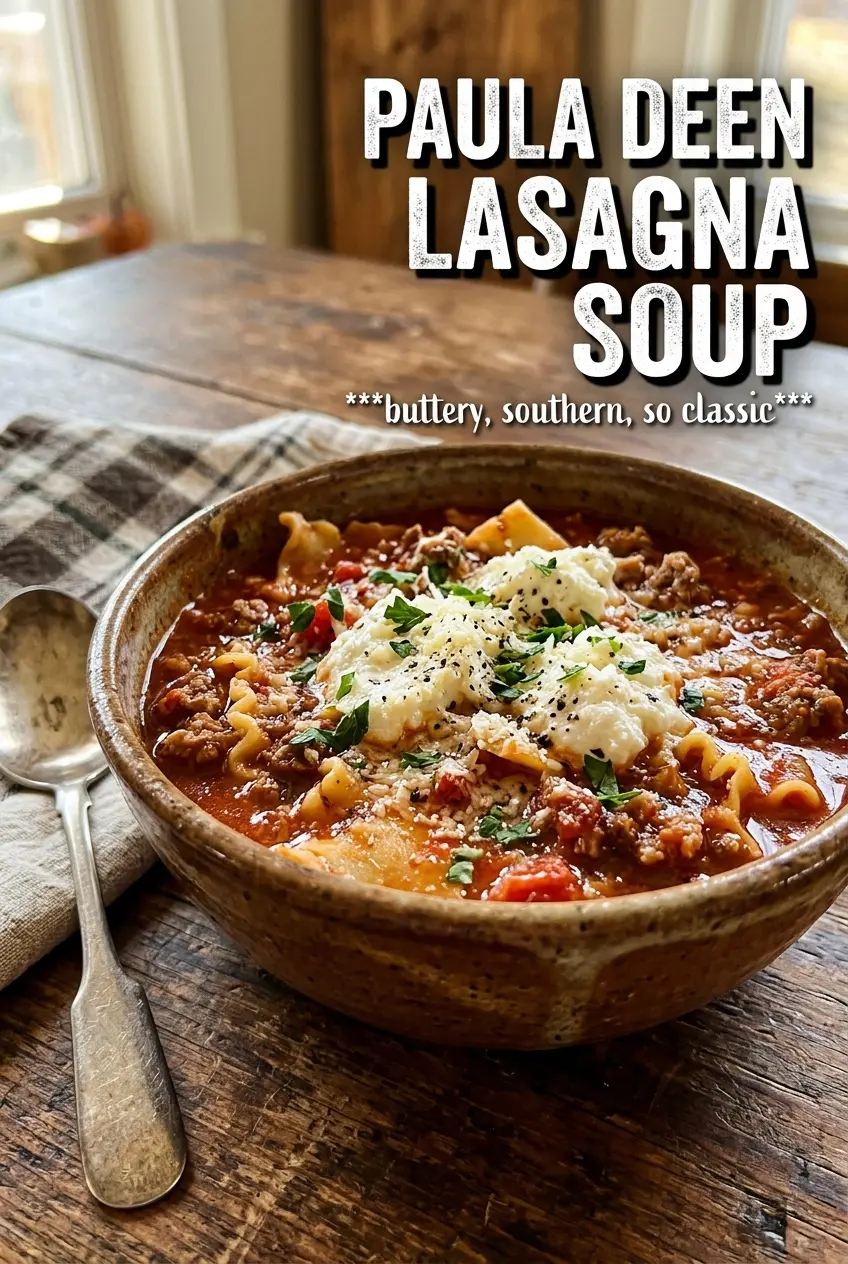
Paula Deen lasagna soup tastes like the best part of a baked pan of lasagna, but in a bowl that comes together fast enough for a weeknight. The broth is rich and tomatoy, the sausage and beef give it real backbone, and the broken noodles soak up just enough of everything without turning mushy. The cheese on top melts into the soup and gives each spoonful that creamy, stretchy finish people expect from lasagna.
What makes this version work is the layering. Browning the sausage and beef with butter gives the pot a deeper, rounder base before the tomatoes ever go in, and cooking the tomato paste for a minute or two gets rid of that raw, tinny edge. The soup itself stays brothy, but the generous ricotta-mozzarella topping makes it eat like something much heartier than a simple soup.
Below, I’ve included the little details that matter most: how to keep the noodles from overcooking, how to season the broth so it doesn’t taste flat, and the best way to serve it so the cheese topping stays lush instead of disappearing into the pot.
The noodles stayed tender without falling apart, and the ricotta on top melted into the broth instead of getting lost. I added a little extra basil at the end and it tasted like lasagna in soup form.
Save this Paula Deen lasagna soup for the nights when you want a buttery tomato broth, hearty sausage, and a pile of melty ricotta on top.
The Reason This Soup Stays Rich Instead of Thin
The biggest mistake with lasagna soup is treating it like watered-down pasta sauce. If you build the pot in the right order, the broth tastes full and satisfying instead of hollow. Browning the meats in butter, then cooking the tomato paste in the fat left behind, gives the soup a deep base before the broth goes in.
The noodles matter too. They need to simmer just until tender, not until floppy and swollen. If you let them cook too long, they soak up too much broth and the soup turns heavy in a dull way. Pull the pot off the heat as soon as they’re done, because they’ll keep softening in the hot liquid.
What the Cheese Topping Is Doing Here

- Italian sausage — This brings salt, spice, and enough fat to flavor the whole pot. Mild sausage keeps the soup balanced; hot sausage gives it more kick.
- Ground beef — Beef adds the classic lasagna flavor and gives the soup more body. You can swap in all sausage if that’s what you have, but the mix tastes fuller.
- Butter — This is part of the signature richness. A little butter in the browning stage rounds out the broth and helps the tomato paste cook down without sticking.
- Tomato paste — Don’t skip the short cook time here. That minute or two takes the sharp edge off and makes the broth taste slow-simmered.
- Ricotta, mozzarella, and parmesan — This topping is what turns the soup into lasagna soup instead of just tomato pasta soup. Whole milk ricotta gives the creamiest result, and parmesan adds the salty finish that keeps the topping from tasting flat.
- Broken lasagna noodles — Regular lasagna noodles hold their shape better than most short pasta and give you those unmistakable wide ribbons in the bowl. Break them into uneven pieces so the texture feels rustic, not factory-perfect.
Building the Pot Without Overcooking the Pasta
Brown the meats in the butter
Start with a large pot over medium heat and cook the sausage and beef together in the butter until the meat is no longer pink and some browned bits stick to the bottom. Those browned bits are useful; they’ll dissolve later into the broth and add depth. If there’s a lot of excess fat in the pot, drain off most of it, but leave enough behind to cook the onion.
Cook the onion and tomato paste until they smell sweet
Add the diced onion and let it soften for about 4 minutes, scraping the bottom as it cooks. Then stir in the garlic and tomato paste and cook for 1 to 2 minutes more. The garlic should smell fragrant, not sharp, and the tomato paste should darken slightly; if it starts sticking hard, lower the heat instead of adding liquid too soon.
Build the broth and simmer the noodles at the end
Pour in the crushed tomatoes, diced tomatoes, chicken broth, Italian seasoning, and basil, then bring everything to a boil before adding the broken noodles. Drop the heat to a steady simmer and cook until the noodles are tender, usually 10 to 12 minutes. If the soup is boiling hard the whole time, the noodles can split and turn soft before the broth has a chance to thicken naturally.
Finish with cheese in the bowl, not the pot
Stir the soup, taste it, and season it well with salt and pepper before serving. Mix the ricotta, mozzarella, parmesan, and basil in a separate bowl, then spoon a generous mound over each serving. That keeps the cheese creamy and dramatic instead of disappearing into the pot, and the heat from the soup melts it just enough.
How to Adapt It for a Different Table
Use all sausage for a spicier, richer bowl
If you want a stronger sausage flavor, skip the ground beef and use 2 pounds of Italian sausage instead. The soup will be a little fattier and a little bolder, so drain the pot well after browning and season with care at the end.
Make it gluten-free with sturdy short pasta
Use your favorite gluten-free lasagna-style noodle or a sturdy gluten-free pasta shape, but cook it a little less than the package suggests. Gluten-free noodles can go from tender to brittle fast, and they’ll keep softening in the hot soup after the heat is off.
Lighten the topping without losing the lasagna feel
If you want a lighter finish, use part-skim ricotta and mozzarella, but keep the parmesan in the mix. The soup will still taste like lasagna, though the topping won’t be quite as lush or creamy as the whole-milk version.
Make it ahead for easy lunches
Cook the soup base without the noodles if you know you’ll have leftovers, then boil the noodles separately when you’re ready to serve. That keeps the texture better, since pasta in soup keeps drinking broth and turns soft overnight.
Storage and Reheating
- Refrigerator: Store the soup for up to 4 days. The noodles will keep softening, so expect a thicker texture the next day.
- Freezer: Freeze the soup base without the noodles and without the cheese topping for up to 3 months. Pasta turns mushy after freezing and thawing, so add fresh noodles when reheating.
- Reheating: Warm it gently on the stove over medium-low heat until hot, adding a splash of broth if needed. If the soup boils hard, the noodles can break down and the broth can taste tighter than it should.
Answers to the Questions Worth Asking
Paula Deen Lasagna Soup
Ingredients
Equipment
Method
- Brown both meats together in a large pot with butter, then drain excess fat.
- Keep the pot at medium-high heat so the sausage and beef brown, not steam.
- Sauté the onion in the meat mixture for 4 minutes, stirring until softened with browned bits on the bottom.
- Add the garlic and tomato paste and cook for 2 minutes, stirring until fragrant.
- Add the crushed tomatoes, diced tomatoes, broth, Italian seasoning, and basil, then bring the mixture to a boil.
- Once boiling, scrape up any browned flavor from the bottom so it blends into the broth.
- Add the broken lasagna noodles and simmer for 10-12 minutes, stirring occasionally until tender.
- Season generously with salt and pepper once the noodles are nearly done.
- Mix the whole milk ricotta, shredded mozzarella, parmesan, and fresh basil together into one generous cheese mixture.
- Taste the mixture after mixing and keep it well-seasoned so it stands out against the tomato broth.
- Ladle the soup into bowls.
- Top each bowl with a very large, heaping spoonful of the cheese mixture so it melts into the hot soup.