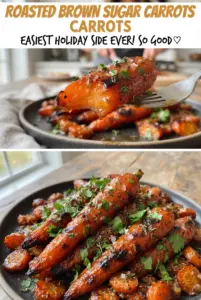
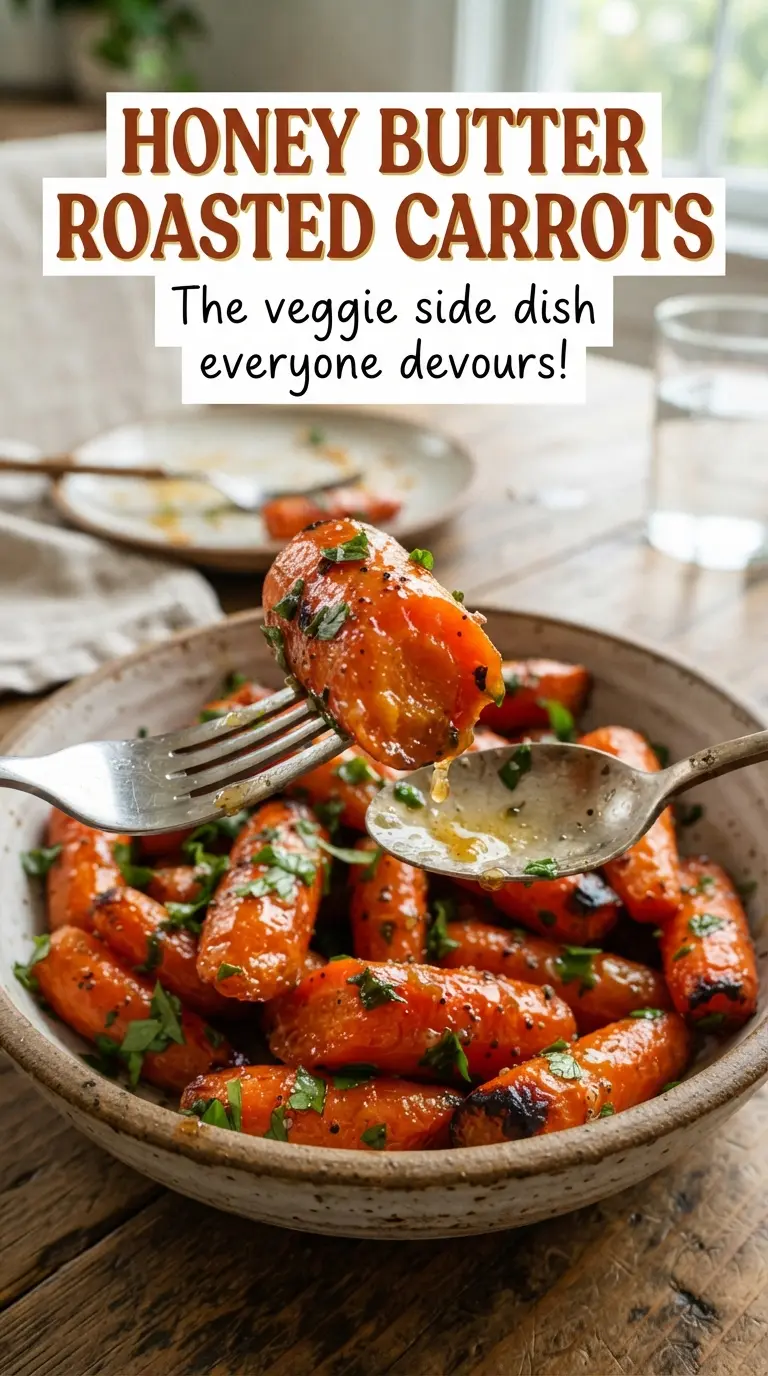
Honey butter roasted carrots come out glossy, tender, and edged with those sticky little caramelized spots that make people keep sneaking bites before dinner hits the table. The honey turns the roasting juices into a light glaze, while the butter gives the carrots a round, savory finish that keeps them from tasting one-note or overly sweet. It’s the kind of side dish that fits beside a simple roast chicken just as easily as it does a holiday spread.
The trick is in the layering. Half the honey butter goes on before roasting so the carrots can caramelize and pick up color, then the rest gets brushed on after they’re tender, which keeps the glaze fresh and glossy instead of cooked off. A little garlic and thyme make the sweetness taste balanced, and a final pinch of flaky salt sharpens every bite. Thin carrots will roast faster, thicker ones need the full time, and the difference between soft and perfectly tender is worth watching closely.
Below you’ll find the exact roasting cues I look for, plus the substitutions that still give you a good result when you need to work with what’s in the kitchen.
The carrots caramelized beautifully, and brushing on the second layer of honey butter at the end gave them that shiny glaze instead of a sticky, burnt coating.
Love the glossy honey butter finish? Save these roasted carrots for holiday dinners or any night you want an easy side with real caramelized flavor.
The Secret to Carrots That Caramelize Instead of Steam
Roasted carrots only get that deep, sweet edge when they have room to breathe. If they’re crowded on the pan, they soften in their own moisture and go limp before they ever brown. A single layer on parchment keeps the butter-honey mixture in contact with the carrots instead of pooling underneath them, which means the glaze can actually cling and caramelize.
The other detail that matters is the split glaze. Butter and honey burn faster than plain oil, so putting some on at the start builds flavor while roasting, then brushing on the rest after the carrots come out keeps the finish bright and glossy. That last step is what gives the carrots their lacquered look without pushing the sugars too far.
- Rainbow or regular carrots — Rainbow carrots look beautiful, but they don’t roast differently from standard orange carrots. If the carrots are thick, slice them lengthwise so they cook at the same pace as the thinner ones.
- Butter — Melted butter gives the glaze body and a richer finish than oil alone. If you need a dairy-free version, use a good olive oil and add a tiny extra pinch of salt to keep the flavor from falling flat.
- Honey — Honey is what creates that sticky, caramelized coating. Maple syrup can work in a pinch, but it tastes a little deeper and less floral, and it won’t set quite as shiny.
- Fresh thyme — Fresh thyme cuts through the sweetness and keeps the carrots tasting savory. Dried thyme is fine if that’s what you have, but use less because it comes on stronger once heated.
What Each Ingredient Is Actually Doing in This Recipe
- Primary ingredient (the star) — Quality matters most. Choose the best you can find.
- Cooking medium (oil, butter, or broth) — This carries flavors and prevents dryness.
- Seasonings (salt, pepper, spices, herbs) — Layer flavors so nothing overpowers. Build depth gradually.
- Aromatics (garlic, onion, herbs) — Cook with fat to bloom flavors. Become the foundation.
- Supporting ingredients — Complement the main ingredient without overpowering it.
- Sauce or liquid (if applicable) — Brings flavors together. Balance richness with acid.
- Acid (lemon, vinegar, wine, or other) — Brightens and prevents flat-tasting results.
- Final finish (garnish, glaze, or sauce) — Prevents one-dimensional taste and adds visual appeal.
Roasting, Glazing, and Finishing the Carrots at the Right Moment
Mixing the glaze
Whisk the melted butter, honey, olive oil, garlic, salt, and pepper until the mixture looks smooth and unified, not streaky. If the butter starts to separate, whisk in the olive oil and keep going; that little bit of oil helps the glaze move more evenly over the carrots. Tossing them in only half the sauce at this stage prevents the first layer from getting diluted by steam in the oven.
Roasting until tender and browned
Spread the carrots out with space between them and roast at 400°F until a knife slips in easily and the edges are lightly browned. You’re looking for tender centers, not collapsed carrots. If they’re still pale after 25 minutes, give them another 5 minutes rather than cranking up the heat, because the sugars need time to brown without burning.
Brushing on the final glaze
As soon as the carrots come off the pan, brush on the remaining honey butter while they’re still hot. The heat helps the glaze melt into a thin coating instead of sitting on top in thick patches. Finish with thyme and flaky salt right away so the herbs stick and the salt lands on the glossy surface, not on the serving platter.
Maple Butter Roasted Carrots
Swap the honey for pure maple syrup and you’ll get a deeper, woodsy sweetness with a slightly softer glaze. It’s a good change when you want a less floral finish, but expect a touch less shine than the honey version.
Dairy-Free Roasted Carrots
Use olive oil instead of butter and keep the garlic, honey, and thyme the same. You’ll lose some richness, but the carrots still caramelize well, and the finish tastes lighter and a little cleaner.
Herby Savory Carrots
Add a pinch of rosemary or chopped parsley at the end if you want the sweetness pulled further into savory territory. Rosemary brings a woodier edge, while parsley keeps the finish bright and fresh.
Storage and Reheating
- Refrigerator: Store leftovers in an airtight container for up to 4 days. The glaze will thicken as it chills.
- Freezer: They freeze, but the texture softens after thawing, so I only do this if I’m planning to use them in a grain bowl or mash-style side later.
- Reheating: Warm them in a 350°F oven until hot, or use a skillet over medium-low heat. The mistake to avoid is blasting them in the microwave, which makes the carrots watery and dulls the glaze.
Questions I Get Asked About This Recipe

Honey Butter Roasted Carrots
Ingredients
Equipment
Method
- Preheat oven to 400°F and line a sheet pan with parchment to prevent sticking and promote even browning.
- Whisk melted butter, honey, olive oil, garlic, salt, and black pepper until smooth and glossy.
- Toss carrots in half the honey butter, then spread them in a single layer on the sheet pan so they roast and caramelize instead of steaming.
- Roast for 25-30 minutes at 400°F, until tender with caramelized spots and browned edges.
- Brush with the remaining honey butter, then finish with fresh thyme leaves and flaky sea salt for a fragrant, savory-sweet top.