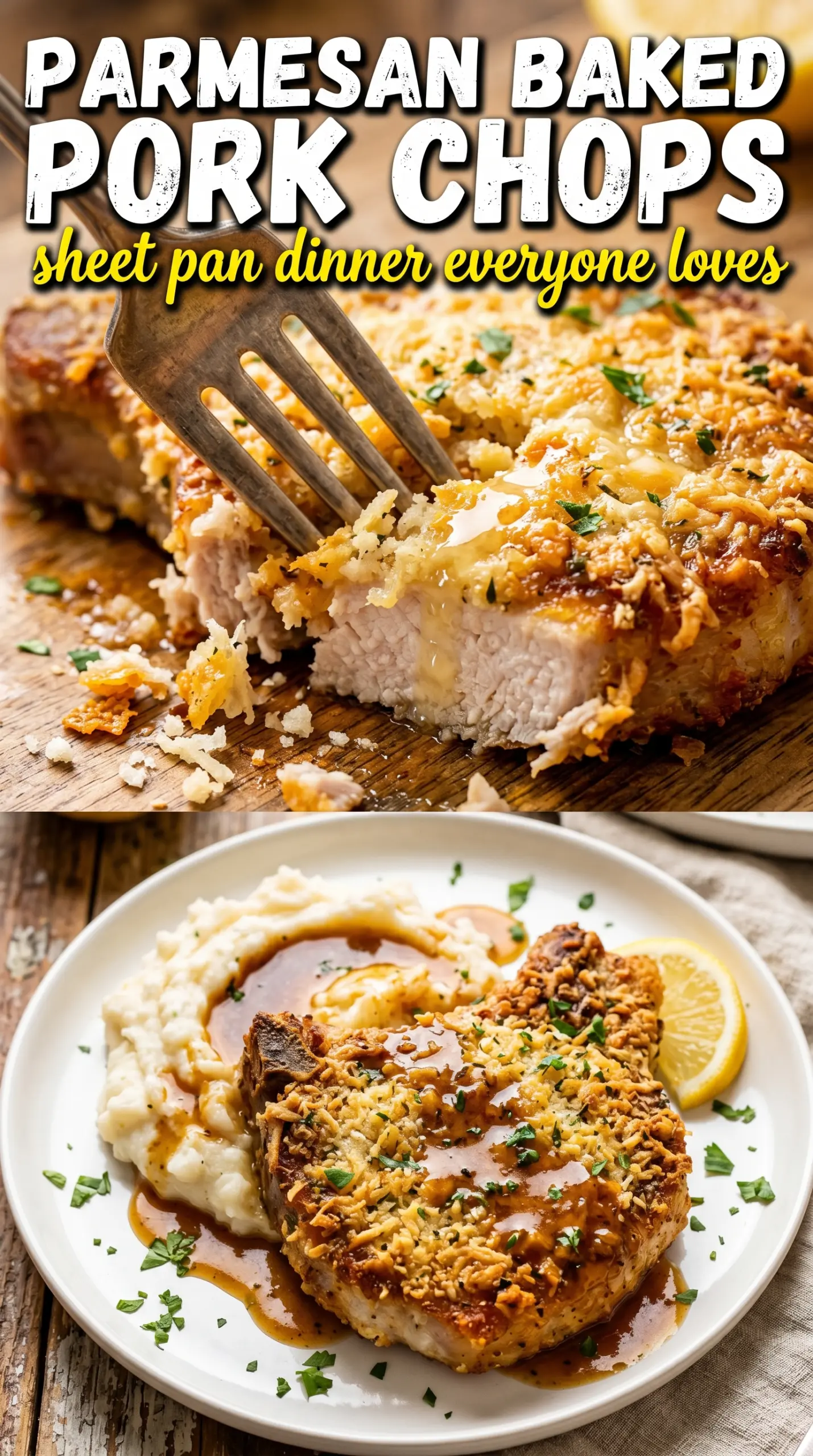
Golden parmesan baked pork chops earn a permanent spot in the dinner rotation because the crust turns deeply crisp while the pork stays juicy underneath. The coating doesn’t just sit on top; it bakes into a salty, savory shell that crackles when you cut into it, with the Dijon and mayo underneath keeping everything anchored and flavorful.
The trick is in the layering. Panko brings the crunch, parmesan brings the browning and that nutty edge, and the thin Dijon-mayo layer acts like edible glue without making the crust heavy. A wire rack helps hot air move around the chops, which keeps the bottom from going soggy and gives you that all-over golden finish instead of one pale side.
Below you’ll find the small details that matter most: how to press on a crust that actually stays put, what to look for in the oven so the chops don’t dry out, and a few smart swaps if you need to work with what’s in your kitchen.
The crust came out shatteringly crisp and stayed on the pork chops instead of sliding off, and they were still juicy at 145°F. The Dijon-mayo layer sounded odd at first, but it really kept the topping stuck and gave the chops a great tang.
Save these parmesan baked pork chops for the night you want a crunchy crust, juicy center, and an easy sheet-pan dinner that actually feels finished.
The Crust Stays Crisp Because the Pork Isn’t Sitting in Its Own Steam
The most common reason baked breaded pork chops go limp is simple: they’re baked flat on a pan, where the bottom traps moisture and softens before the top ever gets a chance to brown properly. A wire rack changes that. Hot air can move under the chops, so the coating dries and crisps instead of steaming in place.
The other detail that matters is the topping mixture itself. Parmesan browns faster than plain breadcrumbs, and panko gives it lift, but the crust only holds if you press it on firmly after the mustard-mayo layer goes on. A thin, even layer is enough; if you pile on too much mayo, the coating slides and turns pasty instead of crunchy.
What the Parmesan, Panko, and Dijon Are Each Doing Here
- Parmesan cheese — This is what gives the crust its salty, nutty edge and helps it bronze in the oven. Freshly grated parmesan melts and browns better than the shelf-stable powdery kind, which can bake up a little dusty. If you use pre-grated parmesan, choose one that still looks a bit coarse rather than ultra-fine.
- Panko breadcrumbs — Panko keeps the coating light and crunchy instead of dense. Regular breadcrumbs work in a pinch, but the crust will be tighter and less shattery. If you need gluten-free, use a gluten-free panko and keep the rest of the method the same.
- Dijon mustard and mayonnaise — Together they create a thin, sticky layer that helps the crust cling to the pork chops while adding moisture and tang. Dijon alone can taste sharp and mayo alone can taste flat, but the combination balances out once it bakes. Spread it thin; a thick coat softens the crust.
- Bone-in pork chops — Bone-in chops stay juicier than boneless here because the bone helps buffer the meat from drying out. One-inch thickness is the sweet spot for this cooking time. If your chops are thinner, start checking early so the crust doesn’t overbrown before the center reaches temperature.
Pressing, Baking, and Pulling Them at the Right Moment
Mix the Coating Until the Parmesan Is Evenly Distributed
Stir the parmesan, panko, garlic powder, Italian seasoning, and smoked paprika together until the mixture looks uniform. If the parmesan clumps in one spot, those clumps brown too fast and can taste a little burnt while the rest of the crust stays pale. Breaking it up now gives you an even, golden finish later.
Build the Sticky Layer on the Pork
Season the chops with salt and pepper first, then spread the Dijon-mayo mixture in a thin layer over the top and sides. Don’t slather it on; the coating should look glossy, not thick. That layer is there to help the crust grip, and too much will weigh it down.
Press the Crust On With Your Hand
Spoon the parmesan mixture over each chop and press it firmly into the surface with your fingers. The press matters. If you just sprinkle it on, it falls off in the oven and ends up on the foil instead of on the meat. Aim for a thick, even cap of coating that stays put when you lift the chop.
Bake Until the Center Hits 145°F
Set the chops on the rack and bake at 425°F until the crust is deeply golden and the internal temperature reaches 145°F, usually 22 to 25 minutes. If the crust is browning before the pork is done, the chops are probably thin or your oven runs hot; tent loosely with foil for the last few minutes if needed. Rest them for 3 minutes before serving so the juices settle back into the meat instead of running out onto the plate.
How to Adapt These Pork Chops Without Losing the Crunch
Gluten-Free Version With the Same Crispy Finish
Swap in gluten-free panko and keep the parmesan amount the same. The crust stays light and crunchy as long as the crumbs are coarse enough to brown, so don’t use a fine gluten-free breadcrumb unless that’s all you have. The texture will be a little tighter, but still crisp.
Dairy-Free Adjustment That Still Bakes Well
Use a dairy-free parmesan-style topping that melts and browns well, and watch the salt carefully because many substitutes are already seasoned. The crust won’t taste exactly the same, but you’ll still get a savory, crunchy coating if the replacement is finely grated and not too oily.
Boneless Pork Chops for a Quicker Dinner
Boneless chops work, but they cook faster and dry out more easily, so start checking them a few minutes early. Keep the crust layer slightly thinner so the exterior doesn’t overbrown before the center is done. A meat thermometer matters more here than the clock.
Storage and Reheating
- Refrigerator: Store leftovers in an airtight container for up to 3 days. The crust softens a bit, but the flavor holds up well.
- Freezer: These freeze best after baking, though the crust will lose some crunch. Wrap tightly and freeze for up to 2 months, then thaw in the fridge before reheating.
- Reheating: Warm in a 375°F oven or air fryer until heated through and the coating crisps back up. Skip the microwave if you can; it turns the parmesan crust soft and rubbery fast.
Answers to the Questions Worth Asking
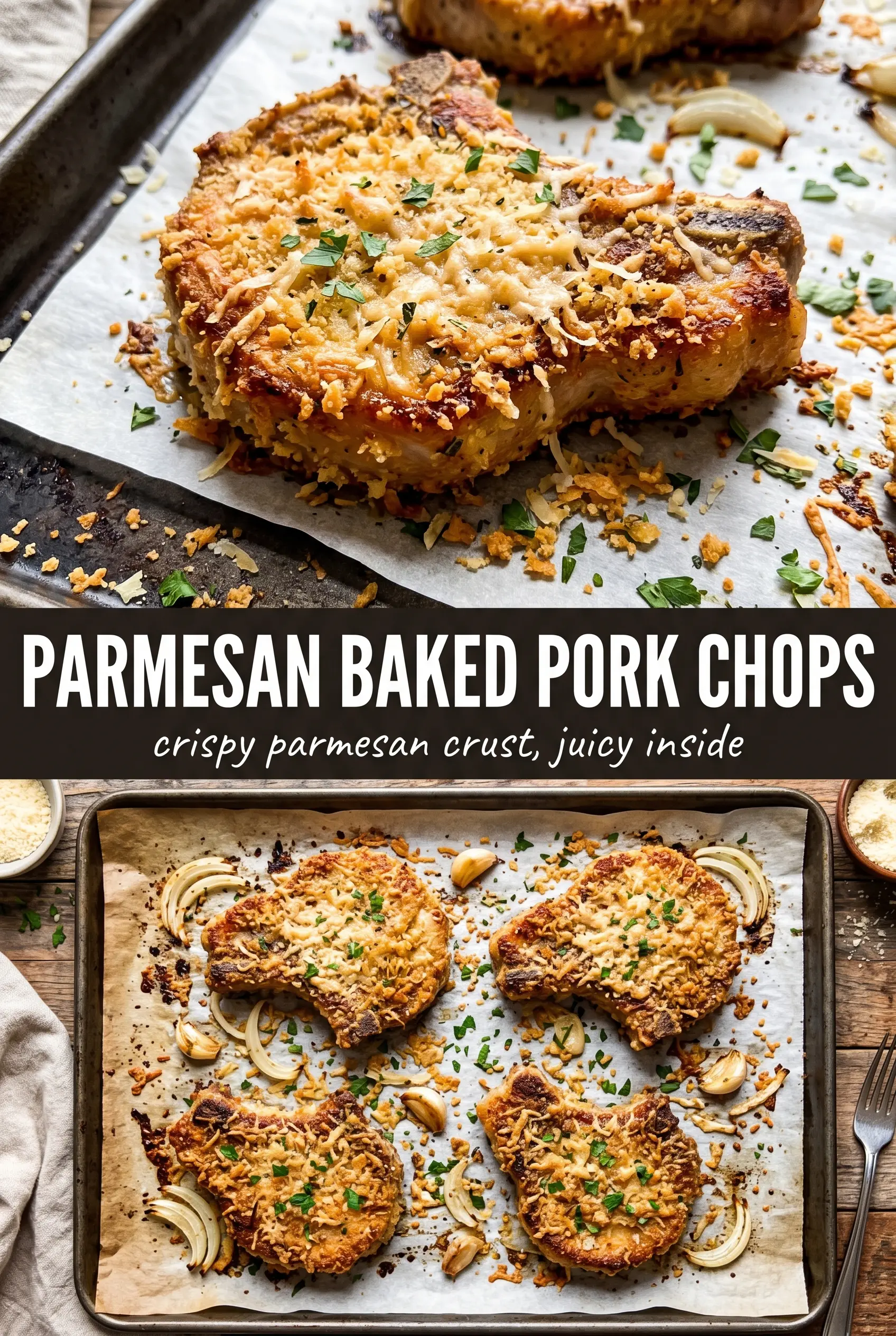
Parmesan Baked Pork Chops
Ingredients
Equipment
Method
- Preheat the oven to 425°F and line a sheet pan with foil, placing a wire rack on top.
- Mix parmesan cheese, panko breadcrumbs, garlic powder, Italian seasoning, and smoked paprika together.
- Season the pork chops with salt and black pepper, then spread a thin layer of Dijon-mayo mixture over the top of each chop.
- Press the parmesan mixture firmly onto the top and sides of each chop to form a thick crust.
- Place the crusted pork chops on the wire rack and bake at 425°F for 22–25 minutes, until the crust is deeply golden and bubbly and the internal temperature reaches 145°F.
- Rest the pork chops for 3 minutes to let juices set, then garnish with fresh parsley and serve with lemon wedges.