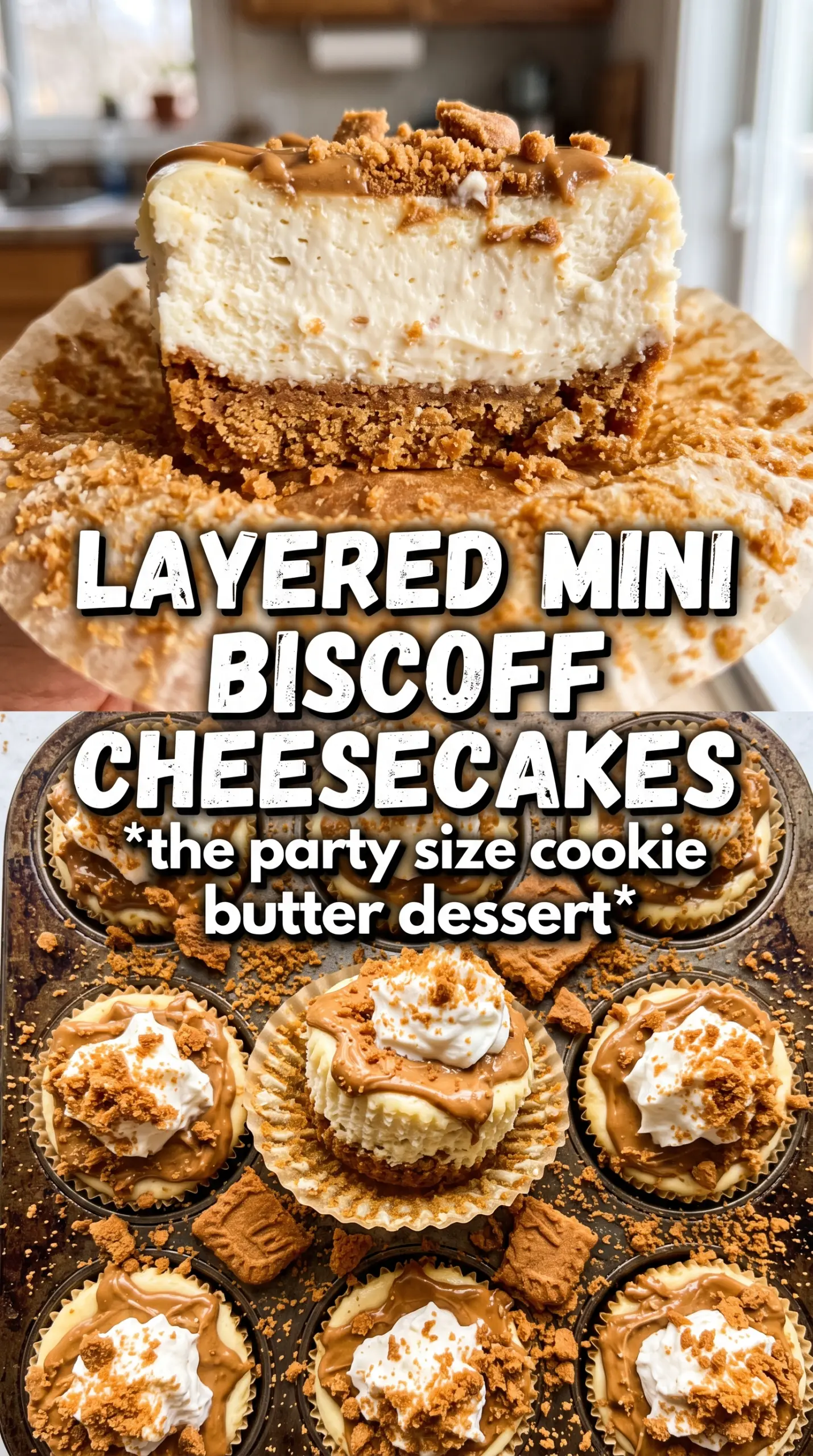
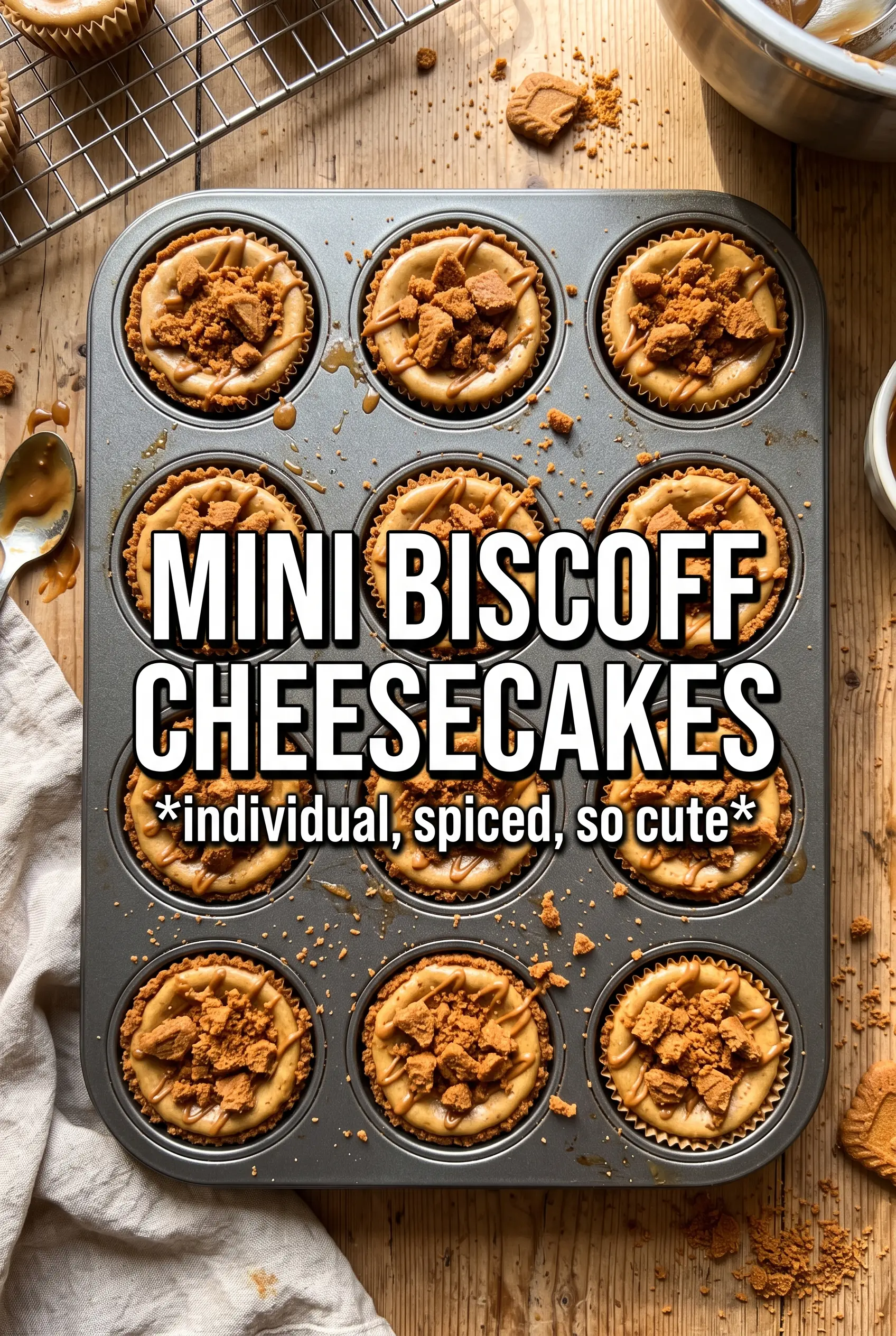
These mini Biscoff cheesecakes bake up with a buttery cookie crust, a creamy center, and that unmistakable caramel-spice Biscoff flavor in every bite. They hold their shape cleanly, chill into tidy little desserts, and still taste rich enough to feel special without turning heavy.
The trick is keeping the filling smooth and the bake gentle. Cream cheese needs to be fully softened before it ever meets the sugar, and the eggs go in one at a time so the batter stays silky instead of lumpy. The cheesecake layer also gets a little sour cream and cinnamon, which keeps the filling from tasting flat and gives the cookie butter a warmer, rounder finish.
Below, I’ve included the part that matters most: how to avoid overbaking mini cheesecakes, what to do if your Biscoff drizzle thickens too fast, and the small adjustments that help these come out neat every time.
The cookie crust stayed crisp even after chilling, and the filling set up with that smooth, dense cheesecake texture I was hoping for. The warmed Biscoff drizzle on top made them taste like a bakery dessert.
Save these mini Biscoff cheesecakes for the days when you want a make-ahead dessert with a crisp cookie base and a thick cookie butter topping.
The Chill Time That Keeps Mini Cheesecakes From Sinking
Mini cheesecakes fail in a very specific way: they look set in the oven, then collapse as they cool because the center was still too loose. With this recipe, the goal is a slight wobble in the middle, not a fully firm top. They finish setting in the fridge, which keeps the texture dense and creamy instead of dry and crumbly.
Pressing the crust firmly into the liners matters more here than it does in a full-size cheesecake. A loose crust can break apart when you peel the liner back, especially once the cookie butter drizzle goes on top. Bake the crust for just five minutes so it holds together without turning hard.
What Each Ingredient Is Doing in These Biscoff Cheesecakes
- Biscoff cookies — These give you the base flavor twice: once in the crust and again as the whole cookie on top. There’s no substitute that tastes exactly the same, but gingersnaps are the closest swap if you want a spiced crust with a little snap.
- Cream cheese — This is the structure of the filling. Full-fat brick cream cheese gives the right dense, sliceable texture; tub cream cheese is too soft and can bake up loose.
- Sour cream — This adds tang and keeps the filling from tasting one-note sweet. If you need a swap, use full-fat plain Greek yogurt in the same amount, but expect a slightly sharper finish.
- Biscoff cookie butter — This is what makes the cheesecake taste unmistakably like Biscoff instead of just a spiced cheesecake. Warm it gently only after baking if you want a smooth drizzle; overheated spread can turn oily.
- Eggs — They set the filling. Add them one at a time and stop mixing as soon as each one disappears, or you’ll beat in too much air and the cheesecakes can puff, crack, or sink.
Building the Filling Without Overmixing It
Starting With a Smooth Base
Beat the softened cream cheese and sugar until the mixture looks silky and there are no little white lumps left behind. If the cream cheese is cold, the batter stays grainy no matter how long you mix it. Scrape the bowl well, especially along the bottom, because a few cold streaks can hide there and show up after baking.
Adding the Eggs the Right Way
Mix in the eggs one at a time on low speed. That keeps the batter thick and prevents it from turning airy, which is what leads to cracks and a puffy rise followed by a collapse. As soon as the last egg disappears, stop mixing and move on.
Finishing the Biscoff Batter
Stir in the sour cream, Biscoff spread, vanilla, and cinnamon just until combined. The batter should look smooth and glossy, with no streaks of cookie butter left behind. Divide it evenly among the cups so they bake at the same rate, and pull them from the oven when the centers still have a slight jiggle.
Dairy-Free Version With a Different Texture
Use dairy-free cream cheese and a thick dairy-free yogurt in place of the sour cream. The filling won’t be quite as rich or tangy, but it still bakes into a creamy mini cheesecake if you keep the mixing gentle and chill it fully before topping.
Gluten-Free Crust With the Same Cookie Butter Flavor
Swap in gluten-free speculoos-style cookies if you can find them. The crust should behave almost the same as the original, though some gluten-free cookies are a little drier, so press them firmly and don’t skip the melted butter.
How to Make Them Ahead for a Party
Bake the cheesecakes a day ahead, chill them uncovered until cold, then cover and refrigerate. Add the warmed Biscoff drizzle and whole cookie topping close to serving so the cookies stay crisp and the drizzle keeps its shine.
Storage and Reheating
- Refrigerator: Store covered for up to 4 days. The cookie crust stays best in the first two days, then softens a little from the filling.
- Freezer: Freeze without the drizzle and cookie topping for up to 1 month. Wrap each cheesecake tightly, then thaw overnight in the refrigerator before finishing.
- Reheating: Don’t reheat these. Cheesecake is meant to be served chilled, and warming it will soften the texture and make the topping slide.
Questions I Get Asked About This Recipe
Mini Biscoff Cheesecakes
Ingredients
Equipment
Method
- Preheat the oven to 325F and line a 12-cup muffin tin with liners, then set it on a sheet pan for stability. The liners should be snug in each cup so the crust bakes evenly.
- Mix crushed Biscoff cookies, melted unsalted butter, and sugar, then press firmly into each liner to form a compact base. Pack it down until the bottom looks level and tightly packed.
- Bake the crusts for 5 minutes at 325F, until they look slightly set and fragrant. You want them to hold together when you gently tap the liners.
- Beat softened cream cheese and granulated sugar until smooth, stopping to scrape the bowl as needed. The mixture should look glossy with no visible lumps.
- Add eggs one at a time, beating briefly after each addition. Stop mixing as soon as each egg disappears to prevent over-aerating.
- Stir in sour cream, Biscoff cookie butter, vanilla extract, and cinnamon until fully combined. The batter should turn evenly tan with a uniform spice distribution.
- Divide the filling among the muffin cups, then bake at 325F for 18-20 minutes until just set. The centers should still have a slight jiggle when you move the pan.
- Cool the mini cheesecakes in the muffin tin until they reach room temperature. The tops should look set and not wet or loose.
- Refrigerate for 3 hours to fully chill. They should feel firm when you gently press the edge of a liner.
- Warm the Biscoff spread and drizzle it over each cheesecake. The drizzle should look thick and pooled slightly in the center.
- Press a whole Biscoff cookie into the top of each cheesecake. Position it so it adheres to the spread without sliding.