Split sweet potatoes turn into a full breakfast with almost no fuss: soft, caramelized flesh underneath, fluffy eggs on top, sharp cheddar melting into the cracks, and crisp bacon bringing the salt. It eats like something you’d order at a diner, but the sweet potato keeps it hearty without feeling heavy.
The key is baking the potatoes until they’re completely tender all the way through. If they’re even a little firm in the center, they won’t fluff well and the filling gets awkward to eat. Scrambling the eggs separately in butter keeps them soft and gives you control over the texture, which matters here because they’re balancing a creamy potato and crunchy bacon.
Below, I’ll walk through the small details that keep the potato fluffy, the eggs tender, and the toppings stacked in a way that stays neat until the last bite.
The sweet potatoes turned creamy and sweet in the oven, and the eggs stayed soft instead of dry. I loved how the cheddar melted into everything and the bacon added just enough crunch.
Save these loaded breakfast sweet potatoes for mornings when you want eggs, bacon, and melted cheddar all in one easy-to-assemble breakfast.
The Part That Makes the Sweet Potato Work Like a Breakfast Base
The biggest mistake with a breakfast sweet potato is stopping the bake too early. A potato that’s only halfway tender turns stringy when you split it, and it won’t hold the toppings in a clean, spoonable way. You want the skin wrinkled, the flesh collapsing under a knife, and the center soft enough that a fork can fluff it without resistance.
That fluffy interior does two jobs at once. It creates a little nest for the eggs, and it catches the butter, cheddar, and bacon drippings so the whole thing tastes seasoned from the inside out. If the potato comes out dry, it usually means it was underbaked or wrapped too tightly in foil, which traps steam instead of building that sweet, concentrated flavor.
- Sweet potatoes — Large ones give you enough room for toppings without the breakfast falling off the sides. Pick potatoes that feel firm and heavy for their size.
- Eggs — Scramble them softly; they should still look slightly glossy when you pull them from the pan. Overcooked eggs turn this from cozy to chalky fast.
- Bacon — Cook it until crisp enough to crumble cleanly. If it’s chewy, it disappears into the filling instead of adding contrast.
- Sharp cheddar — Sharp cheese matters here because the sweet potato is already naturally sweet. Mild cheddar gets lost; sharp cheddar cuts through and makes the whole bite taste fuller.
- Sour cream — A cool dollop at the end balances the richness. Plain Greek yogurt works in a pinch, but it will taste tangier and a little less lush.
- Hot sauce — Use it at the table, not while cooking, so the heat stays bright instead of flattening out in the oven.
What Each Ingredient Is Actually Doing in This Recipe

- Primary ingredient (the star) — Quality matters most. Choose the best you can find.
- Cooking medium (oil, butter, or broth) — This carries flavors and prevents dryness.
- Seasonings (salt, pepper, spices, herbs) — Layer flavors so nothing overpowers. Build depth gradually.
- Aromatics (garlic, onion, herbs) — Cook with fat to bloom flavors. Become the foundation.
- Supporting ingredients — Complement the main ingredient without overpowering it.
- Sauce or liquid (if applicable) — Brings flavors together. Balance richness with acid.
- Acid (lemon, vinegar, wine, or other) — Brightens and prevents flat-tasting results.
- Final finish (garnish, glaze, or sauce) — Prevents one-dimensional taste and adds visual appeal.
Building the Fillings So Nothing Turns Dry or Watery
Baking the Potatoes Until They Collapse
Start the potatoes in a hot oven and bake them until a knife slips in without any pushback. Don’t rely on the clock alone; a small potato can finish early and a thick one may need a few extra minutes. The skin should look slightly puckered, and if you gently squeeze with an oven mitt, it should give. If the center still feels firm, keep baking, because underdone sweet potatoes won’t fluff properly and they’ll fight you when you try to split them.
Scrambling the Eggs Soft and Tender
Cook the eggs in butter over medium-low heat and pull them while they still look a little underdone. They’ll finish from residual heat as you build the potatoes. If you cook them all the way through in the pan, they go crumbly once they sit on the hot sweet potato. Season them lightly with salt and pepper so the bacon and cheddar still have room to stand out.
Stacking the Toppings in the Right Order
Split the potatoes open first, then fluff the flesh with a fork to create some texture. Add the eggs while they’re still warm so the cheddar melts on contact, then scatter the bacon and green onions over the top. Finish with sour cream and hot sauce at the table. If you pile everything on too early and let it sit, the toppings will steam and the bacon loses its crunch.
How to Adapt This Loaded Breakfast Sweet Potato
Make It Dairy-Free
Swap the butter for olive oil or plant-based butter, and skip the cheddar or use a dairy-free shred that melts well. The result is still hearty, but you’ll lose a little of the creamy richness that cheddar brings to the filling.
Make It Meat-Free
Leave out the bacon and add sautéed mushrooms, diced peppers, or spinach cooked until the moisture cooks off. You’ll get a lighter version with less salt and crunch, so a little extra cheddar or hot sauce helps keep the flavor bold.
Use What You Have for the Cheese
Cheddar gives the cleanest bite, but Monterey Jack, pepper jack, or even a little crumbled feta can work. Just keep the cheese flavorful enough to stand up to the sweet potato, because very mild cheese gets buried.
Storage and Reheating
- Refrigerator: Store the baked sweet potatoes and toppings separately if you can, or assembled for up to 3 days. The potato stays good, but the bacon softens after a day.
- Freezer: The baked sweet potato freezes well on its own, but the finished loaded version doesn’t. Eggs and sour cream change texture after thawing, so freeze the potato base only.
- Reheating: Warm the potato in a 350°F oven or microwave until hot, then add freshly scrambled eggs and toppings. If you reheat the whole assembled potato too long, the eggs turn rubbery and the bacon goes limp.
Answers to the Questions Worth Asking
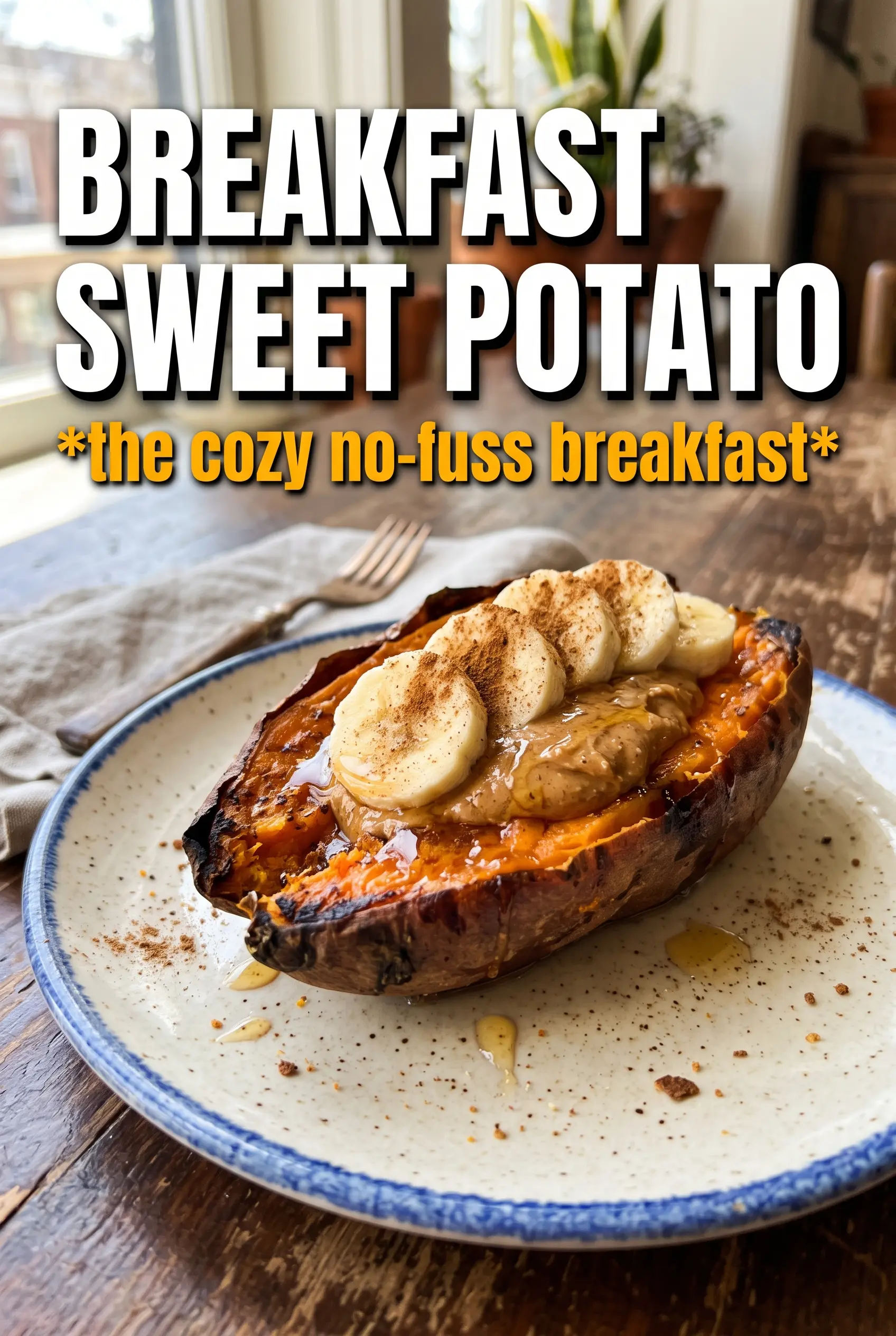
Breakfast Loaded Sweet Potatoes with Scrambled Eggs
Ingredients
Equipment
Method
- Preheat the oven to 400F. Prick the sweet potatoes all over with a fork.
- Bake for 45-50 minutes at 400F until completely tender when pierced with a knife. Transfer carefully to a plate.
- Slice the sweet potatoes open and fluff the flesh with a fork. Keep them warm for loading.
- Melt the butter in a pan over medium heat, then add the eggs. Scramble and season with salt and pepper until just set.
- Divide the scrambled eggs between the sweet potatoes. Add bacon crumbles, shredded cheddar, and green onions over the top.
- Finish each potato with a dollop of sour cream and hot sauce. Serve immediately while hot.