Layered cornbread cake brings the best parts of cornbread into dessert territory: tender crumb, a gentle corn flavor, and just enough sweetness to hold its own against a thick honey butter frosting. The layers stay soft instead of dry and crumbly, and the frosting gives each bite that sweet-salty finish that keeps people going back for one more sliver.
What makes this version work is the balance. Cornmeal gives the cake its rustic texture, but all-purpose flour keeps it light enough to stack. Honey goes into both the cake and the frosting, which ties the whole dessert together instead of making the sweetness feel one-note. A little buttermilk helps the layers stay tender and adds a subtle tang that plays well with the butter.
Below, I’ll walk through the part that matters most: how to keep the layers from baking up dry and how to whip the frosting so it spreads like a dream. There’s also a quick note on the best way to finish it with honey and flaky salt so the top looks as good as it tastes.
The cake stayed incredibly soft for a cornbread base, and the honey butter frosting was fluffy instead of heavy. I loved the little hit of flaky salt on top — it kept the sweetness in check and made every bite taste finished.
Save this layered cornbread cake with honey butter frosting for a dessert that slices neatly and finishes with honey and flaky salt.
The Trick to Keeping Cornbread Cake Tender Enough to Stack
Most cornbread cakes dry out because they lean too hard into the cornmeal and underbake the structure. This version uses more flour than a classic skillet cornbread, which gives the layers enough body to stack without turning gritty or crumbly. The key is not overmixing once the wet and dry ingredients come together; stop as soon as the batter looks evenly combined. If you beat it smooth, you’ll work too much gluten into the batter and the cake can bake up dense instead of soft.
The other thing that matters is watching the bake time closely. Eight-inch layers cook fast, and the edges can look done before the center fully sets. Pull them when a toothpick comes out clean or with a few moist crumbs, then let them cool completely before frosting. Warm layers will melt the honey butter frosting and slide right out of alignment.
What the Honey, Buttermilk, and Cornmeal Each Bring to the Pan
- Yellow cornmeal — This gives the cake its cornbread character and a little texture in every bite. Fine or medium grind both work; coarse cornmeal makes the layers feel too rustic for a stacked cake.
- Buttermilk — This keeps the crumb tender and adds enough tang to keep the sweetness from flattening out. If you don’t have it, use regular milk plus a teaspoon of lemon juice or vinegar, then let it sit for a few minutes before mixing.
- Honey — Honey belongs in both the cake and the frosting because it rounds out the corn flavor and ties the layers together. Different honeys will shift the flavor a bit, so use one you actually like the taste of.
- Unsalted butter — Melted butter in the batter gives the cake richness without making it heavy, while softened butter in the frosting whips into a lighter, spreadable texture. Salted butter can work, but then you need to be more careful with the added salt in the frosting.
Building the Layers Before the Frosting Gets a Chance to Slide
Mix the batter just until it comes together
Whisk the dry ingredients in one bowl and the wet ingredients in another, then fold them together gently. The batter should look thick and a little nubby from the cornmeal, not whipped or glossy. If you keep stirring after the flour disappears, the cake can bake up tough around the edges. Divide it evenly between the pans so all three layers finish at the same time.
Watch the center, not the color
Bake at 350°F until a toothpick comes out clean and the tops spring back lightly when touched. Don’t rely on browning alone, because the honey in the batter can make the tops look done before the middle actually is. If the pans are crowded or your oven runs cool, add a minute or two, but start checking early. A dry cornbread cake is almost always the result of overbaking.
Whip the frosting until it turns pale and fluffy
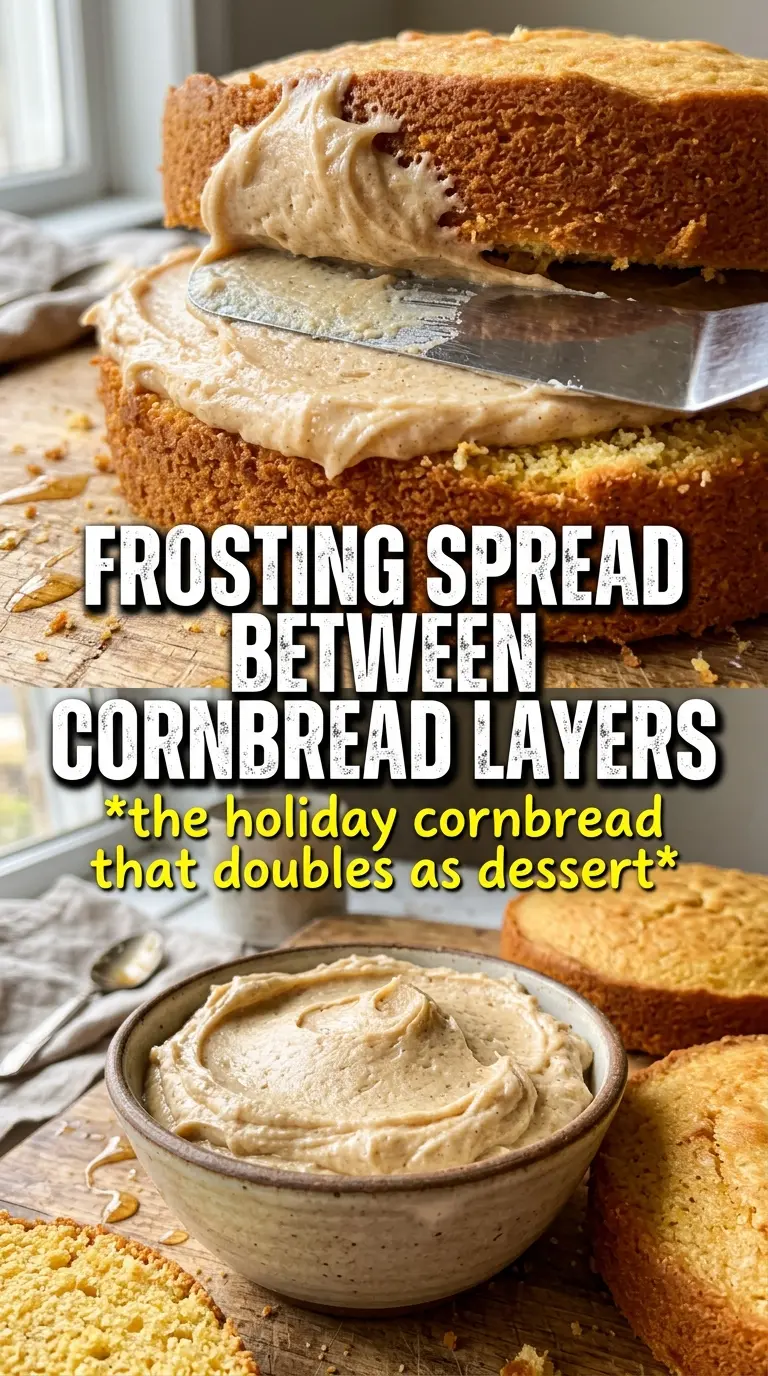
Beat the butter and honey first, then add the powdered sugar, cream, vanilla, and salt. The frosting should look lighter in color and hold soft swirls on the beaters, not feel stiff or grainy. If it seems too thick to spread, a teaspoon of cream loosens it fast. If it looks loose, keep beating for another minute before adding more sugar.
Stack with a generous hand
Spread frosting between each fully cooled layer and let it go just to the edge. The filling gets pressed outward when you stack the top layer, so you don’t need to load the middle aggressively. A thin crumb coat helps if you want a smoother finish, but a rustic swirl works beautifully here. Finish with a drizzle of honey and a few flakes of sea salt right before serving so the topping stays bright and glossy.
How to Adapt It Without Losing the Cornbread Character
Make it gluten-free with a 1:1 baking blend
Use a good 1:1 gluten-free flour blend in place of the all-purpose flour. The cake will still have the cornmeal texture, but it may be a touch more delicate, so let the layers cool completely before moving them. If your blend is especially absorbent, add an extra tablespoon or two of milk only if the batter looks dry.
Swap the frosting for a less sweet whipped buttercream
If you want the cake a little less dessert-forward, cut the powdered sugar by about half a cup and whip the butter until it looks almost mousse-like before frosting. You’ll get a softer, more buttery finish and the honey will stand out more. The tradeoff is a frosting that won’t hold quite as firm on a warm day.
Bake it as a sheet cake instead of layers
Pour the batter into a greased 9×13-inch pan and start checking a few minutes earlier than you would for layers. This version is easier for potlucks and still tastes like cornbread cake, but you’ll lose the dramatic stacked look and the frosting will sit more like a thick topping than a filling.
Add a little spice if you want more contrast
A pinch of cinnamon or a little cayenne in the batter gives the honey frosting a warmer edge without changing the cake’s basic identity. Keep it subtle; the goal is to echo the corn and honey, not turn the cake into spice cake.
Storage and Reheating
- Refrigerator: Store covered for up to 4 days. The crumb stays moist, but the frosting will firm up in the fridge.
- Freezer: Freeze unfrosted layers tightly wrapped for up to 2 months. Frosting can be frozen separately, but the texture is best when made fresh.
- Reheating: Bring slices to room temperature before serving, or warm them briefly in the microwave without frosting if you want the cake softer. Don’t heat a frosted slice too long or the honey butter frosting will melt and slide.
Questions I Get Asked About This Recipe
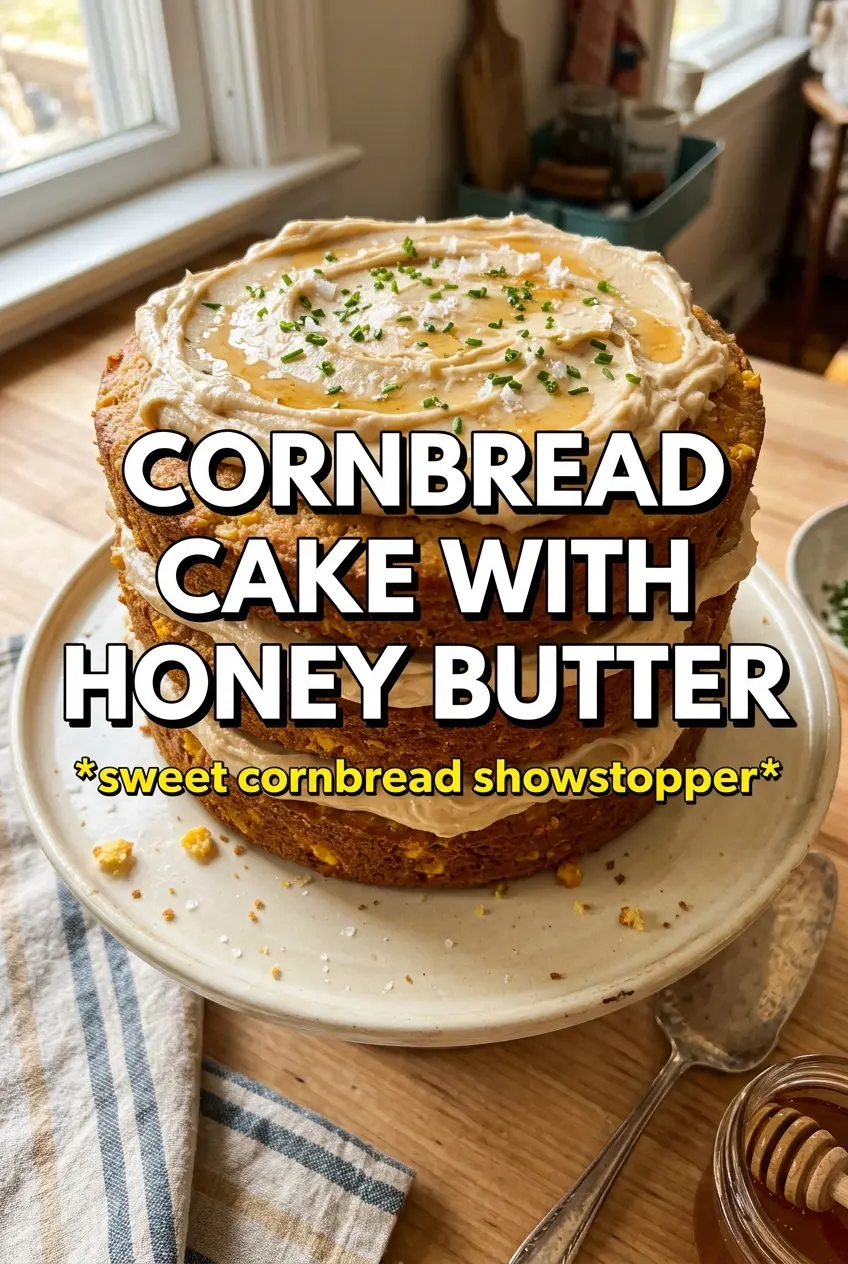
Layered Cornbread Cake With Honey Butter Frosting
Ingredients
Equipment
Method
- Preheat oven to 350°F and grease three 8-inch round pans.
- Whisk all-purpose flour, yellow cornmeal, granulated sugar, baking powder, baking soda, and salt in a bowl.
- Whisk eggs, whole milk, buttermilk, unsalted butter, melted, honey, and vanilla in a separate bowl.
- Fold wet ingredients into dry ingredients until just combined, then divide the batter evenly between the three pans.
- Bake at 350°F for 22-25 minutes until a toothpick comes out clean, then cool completely.
- Beat softened unsalted butter with honey until smooth, then add powdered sugar and continue beating until very light and fluffy.
- Mix in heavy cream, vanilla, and salt until the frosting is spreadable.
- Frost generously between all layers and over the outside of the cooled cake.
- Drizzle with honey and sprinkle flaky sea salt over the top to finish.