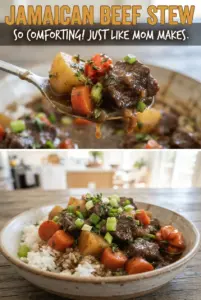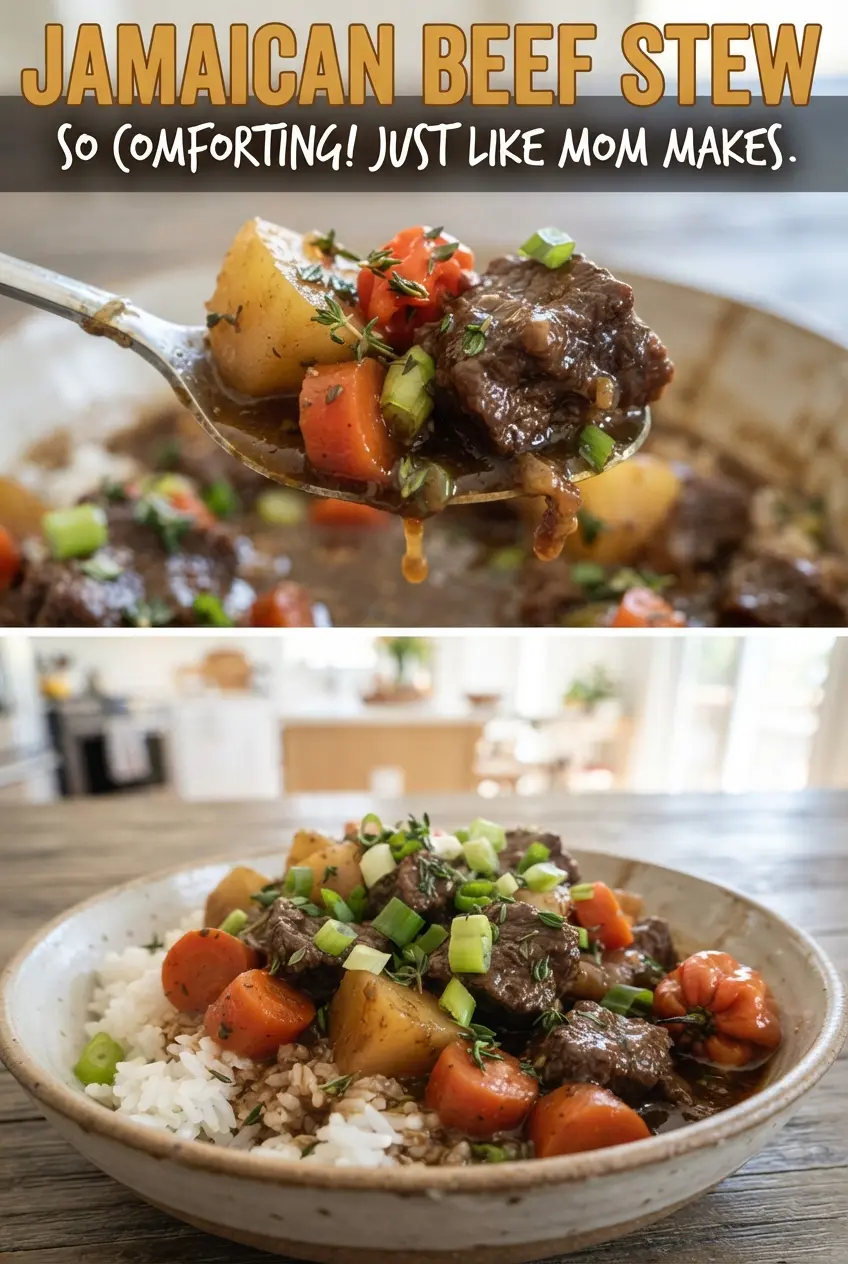
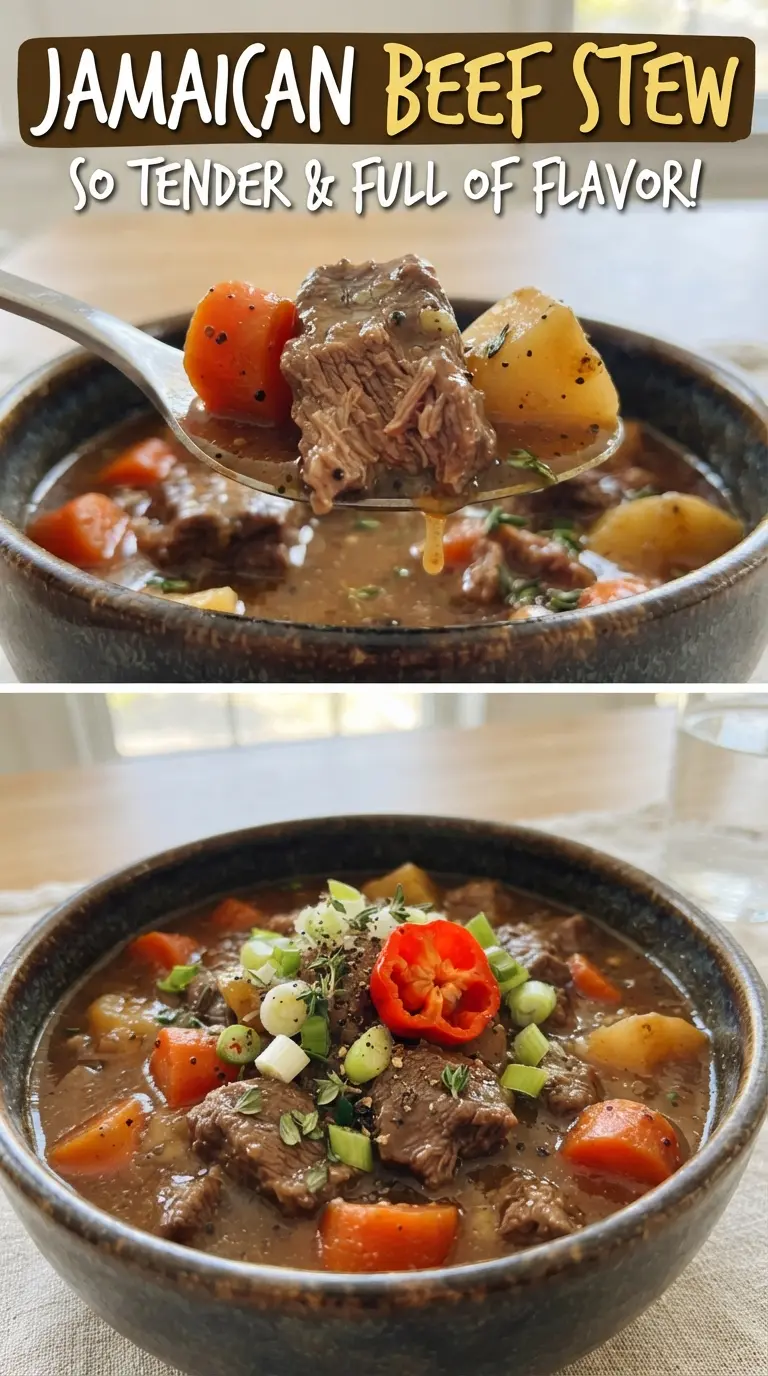
Deep brown, glossy Jamaican beef stew earns its place in the regular rotation because the gravy tastes like it cooked all day, but the work is straightforward: a hard sear, a patient simmer, and vegetables added late enough to keep their shape. The beef turns fork-tender without falling apart into shreds, and the sauce picks up a little sweetness, a little heat, and that dark, savory depth that makes every spoonful worth going back for.
The flavor starts before the pot ever goes on the stove. Browning sauce, soy sauce, Worcestershire, allspice, ginger, thyme, and scotch bonnet build a base that tastes layered instead of flat, while the brown sugar and ketchup help the stew develop that classic Jamaican-style color and body. The trick is keeping the heat under control once the sugar goes in and adding the potatoes and carrots only after the beef has had time to soften. That keeps the stew rich instead of muddy.
Below, I’ve included the detail that matters most here: how to handle the browning stage so the stew stays glossy and never tastes burnt. I’ve also added practical swaps and storage notes, because this is the kind of pot that tastes even better the next day.
The gravy turned out deep and glossy, and the beef was tender right at the 2-hour mark. I loved that the carrots held their shape and the scotch bonnet gave the stew a warm finish without making it too hot.
Save this Jamaican beef stew for the night you want deep, glossy gravy, tender beef, and rice-friendly sauce with real island flavor.
The Browning Step Is What Gives This Stew Its Real Depth
The part that separates a good Jamaican beef stew from one that tastes thin is the dark base you build before the liquid goes in. Browning sauce adds color and a roasted note fast, but it still needs that sugar-and-oil caramelization at the bottom of the pot to turn the gravy glossy and rich. If the sugar goes too far, though, the stew turns bitter, so the goal is dark amber, not burnt black.
Once the beef hits the pot, let it sit long enough to take on color instead of stirring constantly. Those browned bits on the bottom are what the broth pulls into the sauce. If the pan looks dry or the beef starts steaming, the heat is too low for a proper sear; if the sugar smokes hard, it’s too high and you need to move fast before the whole pot turns sharp.
What Each Ingredient Is Actually Doing In This Pot
- Beef chuck — This is the right cut because it has enough connective tissue to turn silky during the long simmer. Leaner stew meat will dry out before the sauce develops its body.
- Browning sauce — This gives the stew its signature dark color and a cooked, caramelized note that plain broth can’t fake. If you skip it, the stew can still taste good, but it won’t look or taste quite the same.
- Allspice, thyme, ginger, and scotch bonnet — These are the backbone of the flavor. Allspice adds warmth, thyme keeps the stew savory, ginger brightens the pot, and the whole pepper perfumes the broth without making it impossible to eat.
- Brown sugar and ketchup — These soften the edges of the broth and help the sauce turn glossy. The sugar also helps with the initial browning step, but you need to watch the pot closely so it doesn’t go bitter.
- Butter beans — Stir them in at the end so they stay intact and creamy instead of splitting apart. Canned beans are fine here; just drain them well before they go in.
Building the Stew So the Beef Stays Tender and the Gravy Stays Glossy
Marinating the Beef First
Mix the beef with the browning sauce, soy sauce, Worcestershire, all-purpose seasoning, allspice, onion, garlic, ginger, and green onions, then leave it for an hour. That short marination time seasons the meat all the way through and gives the stew a head start on flavor. If you rush this part, the broth has to do all the work later, and the finished pot tastes flatter.
Getting the Sear Without Steaming the Meat
Heat the oil and brown sugar together until the sugar darkens, then add the beef and keep the aromatics aside for a moment. The beef needs direct contact with the hot pot to brown, not steam in its own juices. If the pot fills with liquid right away, don’t crowd it; sear in batches so the edges catch color instead of turning gray.
Letting the Simmer Do the Heavy Lifting
Stir the reserved aromatics back in with the ketchup, broth, thyme, and whole scotch bonnet, then cover and simmer gently until the beef is nearly tender. The liquid should move in slow, lazy bubbles, not a hard boil. A violent boil tightens the meat and can leave the broth cloudy, while a steady simmer turns the chuck soft and the sauce deep and cohesive.
Adding the Vegetables at the Right Time
Carrots and potatoes go in only after the beef has started to give way under a fork. They need enough time to cook through, but not so much that they dissolve into the sauce. Stir in the butter beans during the last few minutes so they warm through and keep their shape, then pull out the scotch bonnet and thyme stems before serving over rice.
How to Adapt This Jamaican Beef Stew Without Losing What Makes It Work
Milder Heat With the Same Flavor Base
Leave the scotch bonnet whole, but don’t split it open. That gives you the fruity pepper aroma without the full burn. If you want even less heat, pull it out after 20 minutes of simmering instead of waiting until the end.
Gluten-Free Without Losing Body
Use a gluten-free Worcestershire sauce and check that your browning sauce and all-purpose seasoning are certified gluten-free. The stew itself doesn’t need flour to thicken; the long simmer and the starch from the potatoes give the gravy its body.
Make-Ahead and Reheat-Friendly
This stew holds up beautifully overnight. If you know you’ll be reheating it later, cook the carrots until just tender and stop there; they’ll finish softening when the stew is warmed again. The flavor gets deeper after a day in the fridge.
Freezing the Stew for Later
Freeze the stew without the rice. The beef and gravy freeze well, though the potatoes will soften a little after thawing. Reheat it slowly on the stove with a splash of broth so the sauce loosens back up instead of turning thick and sticky.
Storage and Reheating
- Refrigerator: 4 days. The sauce thickens as it sits, and the beef gets even more tender.
- Freezer: 2 to 3 months. Freeze in airtight containers with a little headspace; the potatoes will soften, but the stew still freezes well.
- Reheating: Warm gently on the stove over low heat with a splash of broth or water. A hard boil can tighten the beef and break up the beans, so heat it slowly until the stew is steaming through.