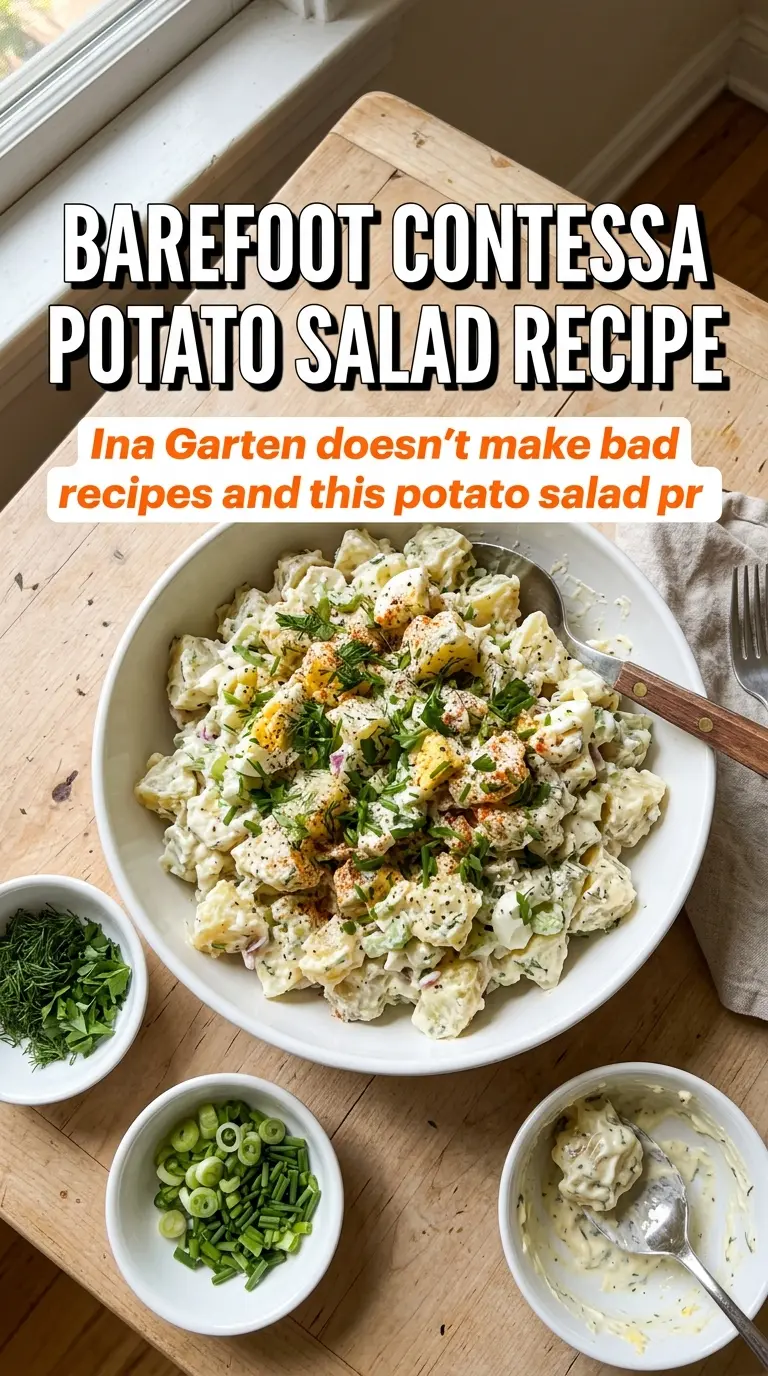
Golden potatoes are what make this potato salad feel polished instead of heavy. The dressing clings in a light, tangy coat, the celery stays crisp, and the herbs give every bite a fresh finish that keeps you going back for another forkful. It’s the kind of side dish that looks right at home next to grilled chicken, roasted salmon, or anything you’re serving on a platter.
The trick is using warm potatoes so they drink in the vinaigrette-mayo dressing before they chill. That gives you better seasoning all the way through, not just on the outside. Yukon golds hold their shape without turning waxy or falling apart, which matters here because this salad is meant to look neat and taste clean, not mashed around the edges.
Below, I’ve included the one step that makes the texture work, plus a few swaps that still keep the salad bright and elegant. If you’ve ever had potato salad go gluey or flat, this version solves both problems.
The potatoes held their shape beautifully and the dressing soaked in after chilling, so it tasted even better the next day. The dill and Dijon made it taste fresh instead of heavy.
Love the fresh herb finish and creamy-tangy dressing in Ina Garten’s Potato Salad? Save it to Pinterest for cookouts and make-ahead dinners.
The Mistake That Makes Potato Salad Heavy Instead of Bright
Most potato salads get dull because the dressing sits on top instead of seasoning the potatoes from the inside out. Warm potatoes fix that. They open up just enough to absorb the vinegar, mustard, and salt before the salad chills, which gives you a cleaner, more balanced bite instead of a bland, coated one.
There’s another detail that matters here: don’t overcook the potatoes until they split apart. Yukon golds should be tender when pierced, but still intact enough to quarter cleanly. If they’re waterlogged, they’ll break down when you toss them and the salad turns pasty fast.
- Warm potatoes — This is what helps the dressing settle in. If you wait until they’re fully cold, the flavor stays mostly on the surface.
- White wine vinegar and Dijon — They sharpen the mayonnaise so the salad tastes lively instead of rich for richness’s sake.
- Celery and red onion — These bring crunch and bite, which keeps the texture from feeling soft all the way through.
- Fresh dill and parsley — Add them at the end so the herbs stay bright and don’t wilt into the dressing.
What Each Ingredient Is Actually Doing in the Bowl
- Yukon gold potatoes — These are the right potato for this style because they stay creamy without crumbling. Russets get too fluffy and lose their shape; waxy potatoes can feel too firm. Yukon golds land in the middle.
- Mayonnaise — This gives the salad body, but it’s not carrying the whole dish. The vinegar and mustard cut it down so the texture stays light.
- White wine vinegar — This is the ingredient that wakes everything up. If you swap in a harsher vinegar, use a little less and taste as you go.
- Dijon mustard — Dijon deepens the dressing and helps it emulsify. Yellow mustard will work in a pinch, but the flavor turns sharper and less elegant.
- Olive oil — A small amount smooths the dressing and gives it a silkier finish. Don’t skip it; it helps the vinaigrette component taste intentional instead of mixed in as an afterthought.
- Celery, red onion, dill, and parsley — These are the freshness layer. If your red onion tastes too sharp, rinse the diced pieces under cold water and drain well before adding them.
How to Keep the Potatoes Intact and the Dressing Balanced
Boiling the Potatoes Until They’re Tender, Not Fragile
Start the potatoes in cold water so they cook evenly from the outside in. Once the water comes up to a boil, keep it at a steady simmer and check them at about 18 minutes. They’re ready when a knife slides in easily but the potato still holds its shape when lifted. If they burst open in the pot, they’ve gone too far and the salad will turn shaggy.
Whisking the Dressing Before It Hits the Bowl
Mix the mayonnaise, vinegar, mustard, olive oil, salt, and pepper until it looks smooth and loose. The goal is a dressing that pours, not one that clumps. If the vinegar seems strong at this stage, don’t panic — the warm potatoes and chilling time round it out. What you don’t want is to dump unwhisked ingredients over the potatoes and chase streaks of mayo around the bowl.
Tossing Gently So the Salad Stays Elegant
Add the warm potatoes, celery, and onion first, then pour the dressing over and fold everything together with a wide spoon. Use a light hand so the quarters stay recognizable. Add the herbs last and toss just enough to distribute them. When the salad looks glossy and the potatoes are coated without breaking, stop mixing.
Chilling Long Enough for the Flavor to Settle
The two-hour chill is doing real work here. It lets the dressing thicken slightly and gives the vinegar time to mellow into the potatoes. If you serve it too soon, the salad can taste a little sharp and loose. After chilling, give it one gentle stir before serving, because some dressing will settle at the bottom.
How to Adapt This for Different Tables and Diets
Dairy-Free Version
This salad is already dairy-free as written, which is one reason it works so well for mixed crowds. The mayonnaise still gives you creaminess, while the vinegar and mustard keep it from tasting heavy.
For a Slightly Lighter Potato Salad
Swap half the mayonnaise for plain Greek yogurt if you want a sharper, lighter finish. The texture will be a little tangier and less plush, so chill it well before serving to let the dressing set.
If You Want More Crunch
Add an extra celery stalk or a handful of diced cucumber just before serving. That keeps the salad bright and gives you a fresher bite, but add watery vegetables at the last minute so they don’t thin the dressing.
Make-Ahead for a Crowd
You can make this a full day ahead, and it often tastes better after the flavors settle. If it tightens up in the fridge, loosen it with a small spoonful of mayo or a splash of vinegar before serving.
Storage and Reheating
- Refrigerator: Store covered for up to 4 days. The potatoes will absorb more dressing as it sits, so the salad gets slightly thicker on day two.
- Freezer: Don’t freeze it. The potatoes turn grainy and the mayonnaise breaks after thawing.
- Reheating: This salad is meant to be served cold or cool room temperature. If it’s been chilled hard, let it sit out for 15 to 20 minutes and stir before serving instead of trying to warm it.
Answers to the Questions Worth Asking

Ina Garten's Potato Salad
Ingredients
Equipment
Method
- Bring a pot of water to a boil in a Dutch oven, then add the small Yukon gold potatoes and cook until tender, about 20 minutes. Visual cue: the potatoes should yield easily when pierced with a fork.
- Drain the potatoes and let them cool slightly before cutting them into quarters. Visual cue: they should be warm and manageable, not steaming-hot.
- Whisk together the mayonnaise, white wine vinegar, Dijon mustard, olive oil, kosher salt, and black pepper until smooth. Visual cue: the dressing should look glossy and evenly combined.
- Combine the warm potatoes, celery, and red onion in a bowl. Visual cue: the potatoes should be coated lightly by the vegetable juices.
- Pour the dressing over the potatoes and toss gently to coat. Visual cue: the potatoes take on a pale, creamy sheen.
- Add the fresh dill and fresh parsley, then toss again until evenly distributed. Visual cue: you should see green herbs throughout the salad.
- Refrigerate the potato salad for at least 2 hours before serving. Visual cue: it should look set and more flavorful with herbs suspended in the dressing.