Greek potato salad lands with a bright lemon-oregano dressing that sinks into the potatoes instead of sitting on top of them, and that’s what makes this version worth repeating. The potatoes stay tender but intact, the feta gives little salty bursts, and the olives cut through everything with just enough brine to keep each bite interesting.
The trick is using red potatoes and cooling them before the dressing goes on. Warm potatoes soak up the vinegar and lemon better than cold ones, but if they’re steaming hot when you add the feta and tomatoes, they can soften everything too much and turn the salad muddy. A gentle toss matters here. You want the potatoes coated, not mashed.
Below you’ll find the timing that keeps the texture right, plus the one chilling step that makes the flavors settle into place instead of tasting sharp and separate.
I chilled it for the full two hours and the dressing went from sharp to perfectly mellow. The potatoes held their shape, and the feta stayed creamy instead of dissolving into the bowl.
Like this Greek Potato Salad? Save it for the creamy feta, briny olives, and lemon-oregano dressing that only gets better after chilling.
The Dressing Needs Warm Potatoes, Not Hot Ones
Most potato salads wait until everything is completely cold before the dressing goes on. That works fine for a mayonnaise-based salad, but it leaves this Greek version tasting flatter than it should. Warm potatoes absorb the lemon, vinegar, and oregano from the inside out, which gives the salad more depth without making it heavy.
The line you do not want to cross is hot enough to wilt the tomatoes and melt the feta. Drain the potatoes, let the steam die down for a few minutes, and then season while they’re still just warm. That’s the sweet spot: enough heat to take on flavor, not so much that the mix turns soft and greasy.
What Each Ingredient Is Actually Doing In This Salad
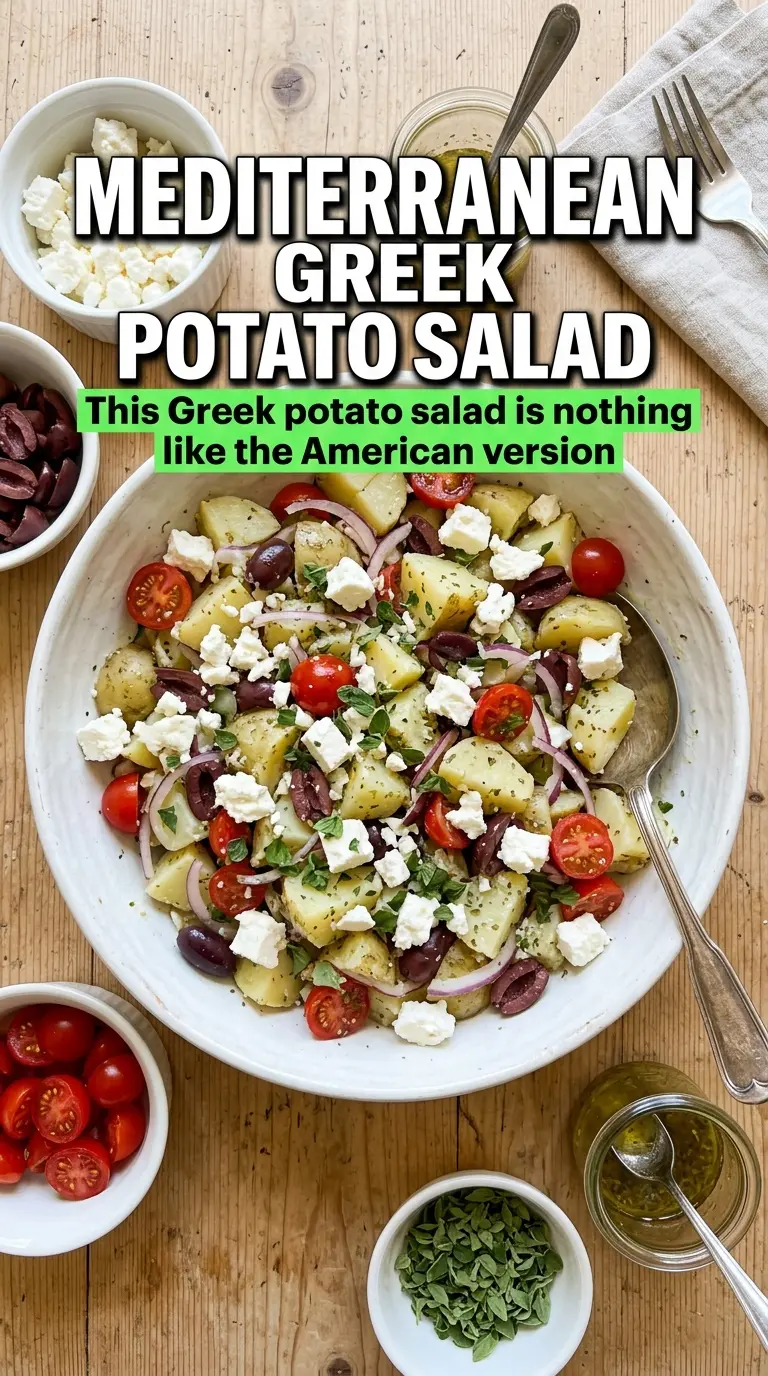
- Red potatoes — These hold their shape after boiling and have a waxier texture that suits potato salad. Russets will fall apart too easily and make the bowl starchy.
- Feta — Use a block if you can and crumble it yourself. Pre-crumbled feta is drier and doesn’t soften into the salad the same way.
- Kalamata olives — They bring the salty, briny edge that makes this taste Greek instead of just lemony. If you need a swap, use another dark olive, not green olives, which come off sharper and less round.
- Lemon juice and red wine vinegar — The two acids work together, with lemon giving brightness and vinegar adding a little backbone. You need both to keep the dressing from tasting thin.
- Olive oil — A good extra-virgin oil makes a difference here because there’s no mayonnaise to hide behind. Cheap oil can taste harsh, so use the best one you’ve got.
- Fresh parsley — It wakes everything up at the end and keeps the salad from tasting heavy. Add it right before chilling so it stays vivid.
Building The Salad So It Stays Bright, Not Watery
Boiling The Potatoes To The Right Tenderness
Cut the potatoes into even cubes so they finish at the same time, then boil them until a fork slips in without resistance but the pieces still hold their edges. If they’re undercooked, they’ll taste chalky after chilling. If they go too far, they’ll break apart when you toss the salad.
Mixing The Dressing Before It Hits The Bowl
Whisk the olive oil, lemon juice, vinegar, oregano, salt, and pepper together until the dressing looks emulsified and slightly cloudy. That helps the acid and oil coat the potatoes evenly instead of separating into streaks. Pour it over the potatoes while they’re still slightly warm so the flavor soaks in instead of staying on the surface.
Adding The Feta And Tomatoes Gently
Fold the feta, olives, tomatoes, and onion in with a light hand. The potatoes should stay in chunks, not become a mash with toppings scattered through it. If you stir hard, the tomatoes burst and the feta smears, and the salad loses the clean look and texture that make it work.
Chilling Until The Flavors Settle
Two hours in the fridge is where this salad comes together. The onion softens, the oregano rounds out, and the dressing settles into the potatoes instead of tasting sharp and separate. Give it one gentle toss before serving, then taste again for salt, since cold food usually needs a little more seasoning than it did at room temperature.
Three Ways To Adjust This Greek Potato Salad Without Losing The Point
Make It Dairy-Free
Leave out the feta and add a handful of chopped cucumber or extra tomatoes for freshness. You’ll lose the salty creaminess, so bump the olives slightly and season the dressing with a touch more salt to keep the salad balanced.
Make It Heartier For A Main Dish Side
Add chickpeas or grilled chicken on the side, and keep the dressing slightly extra so the salad doesn’t feel dry next to a bigger plate. Chickpeas keep the Mediterranean feel and soak up the lemon dressing well.
Swap The Herbs
Parsley is clean and fresh, but dill or mint can work if that’s what you have. Dill pushes the salad a little more tangy and classic-tasting, while mint makes it brighter and more springlike.
Storage And Reheating
- Refrigerator: Keeps for up to 3 days. The potatoes soften a little, but the flavor gets better after the first day.
- Freezer: Don’t freeze this salad. The potatoes turn grainy and the tomatoes and feta won’t recover well.
- Reheating: Serve it cold or let it sit at room temperature for 20 to 30 minutes. Heating it changes the texture and can make the feta greasy.
Questions I Get Asked About This Recipe
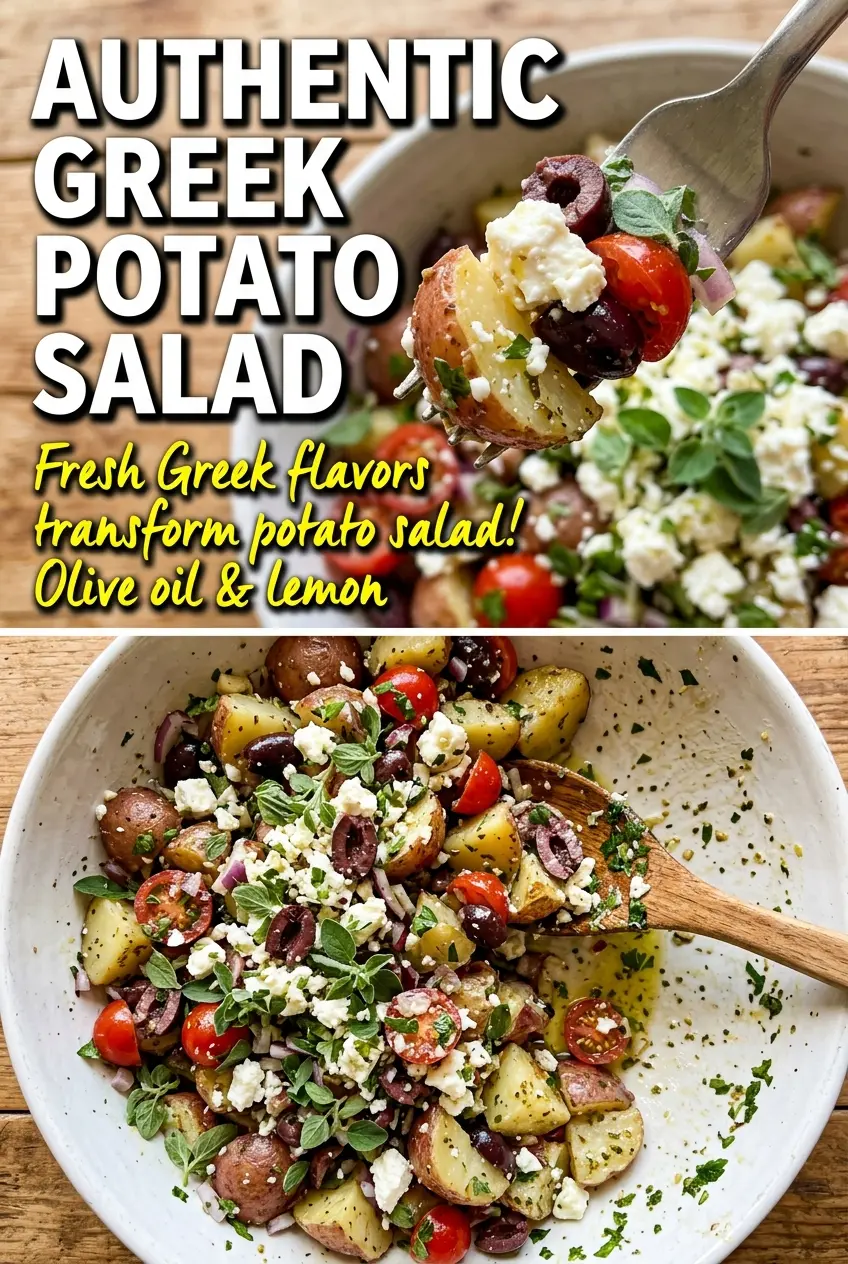
Greek Potato Salad
Ingredients
Equipment
Method
- Bring a large pot of water to a boil, add the cubed red potatoes, and cook until tender, about 12–18 minutes with steady simmering. Visual cue: the tip of a knife slides in easily with little resistance.
- Drain the potatoes and cool them to room temperature. Visual cue: they look matte and hold their shape rather than steaming.
- Add the cooled potatoes to a mixing bowl and combine with crumbled feta, pitted halved Kalamata olives, halved cherry tomatoes, and thinly sliced red onion. Visual cue: the mixture shows even pink-and-white streaks from feta and red tomato pieces throughout.
- Whisk olive oil, lemon juice, red wine vinegar, dried oregano, salt, and pepper until the dressing looks uniform. Visual cue: no dry oregano clumps remain and the liquid turns slightly opaque.
- Pour the dressing over the potato mixture and toss gently until everything is lightly coated. Visual cue: potatoes glisten with a thin coating rather than pooling wet dressing.
- Fold in the chopped fresh parsley. Visual cue: bright green flecks appear across the top layer.
- Cover and refrigerate the salad for 2 hours before serving. Visual cue: the salad firms up and the flavors look blended and cohesive.