Rigatoni turns luxuriously coated in this tomato ricotta sauce, with just enough body to cling to every ridge and tube without feeling heavy. The ricotta softens the sharp edge of the tomatoes, the cream rounds everything out, and parmesan pulls the sauce into that silky, blush-pink finish that keeps you going back for another forkful.
What makes this version work is the order. The tomatoes simmer first so they lose their raw bite, then the ricotta, cream, and parmesan go in off a gentle heat so the sauce stays smooth instead of grainy. A little reserved pasta water is the final adjustment, and it matters more than it sounds like it should. It loosens the sauce just enough to coat the pasta without making it thin.
Below, I’m walking through the one timing detail that keeps the sauce creamy, the ingredient swap that works if you only have part-skim ricotta, and the best way to reheat leftovers without drying out the pasta.
The sauce got silky without being heavy, and the ricotta never turned grainy. I added a splash of pasta water like you suggested and it coated the rigatoni perfectly.
Love the silky blush-pink sauce and rigatoni? Save this creamy tomato ricotta pasta for the night you want a fast Italian-American dinner with real comfort.
The Trick That Keeps Ricotta Smooth Instead of Grainy
Ricotta can go from creamy to curdled-looking fast if it hits a bubbling sauce too hard. The fix is simple: keep the tomato base at a gentle simmer, then stir in the ricotta, cream, and parmesan once the heat is low enough that the sauce looks calm at the edges instead of actively boiling. That slower finish gives the dairy time to melt into the tomatoes instead of seizing up.
The other place people lose the texture is skipping the pasta water. Tomato sauce with ricotta needs a little starch to help it emulsify and cling to the pasta, especially with rigatoni. Add it a splash at a time until the sauce looks glossy and slides around the noodles instead of pooling underneath them.
What Each Ingredient Is Actually Doing in This Pasta
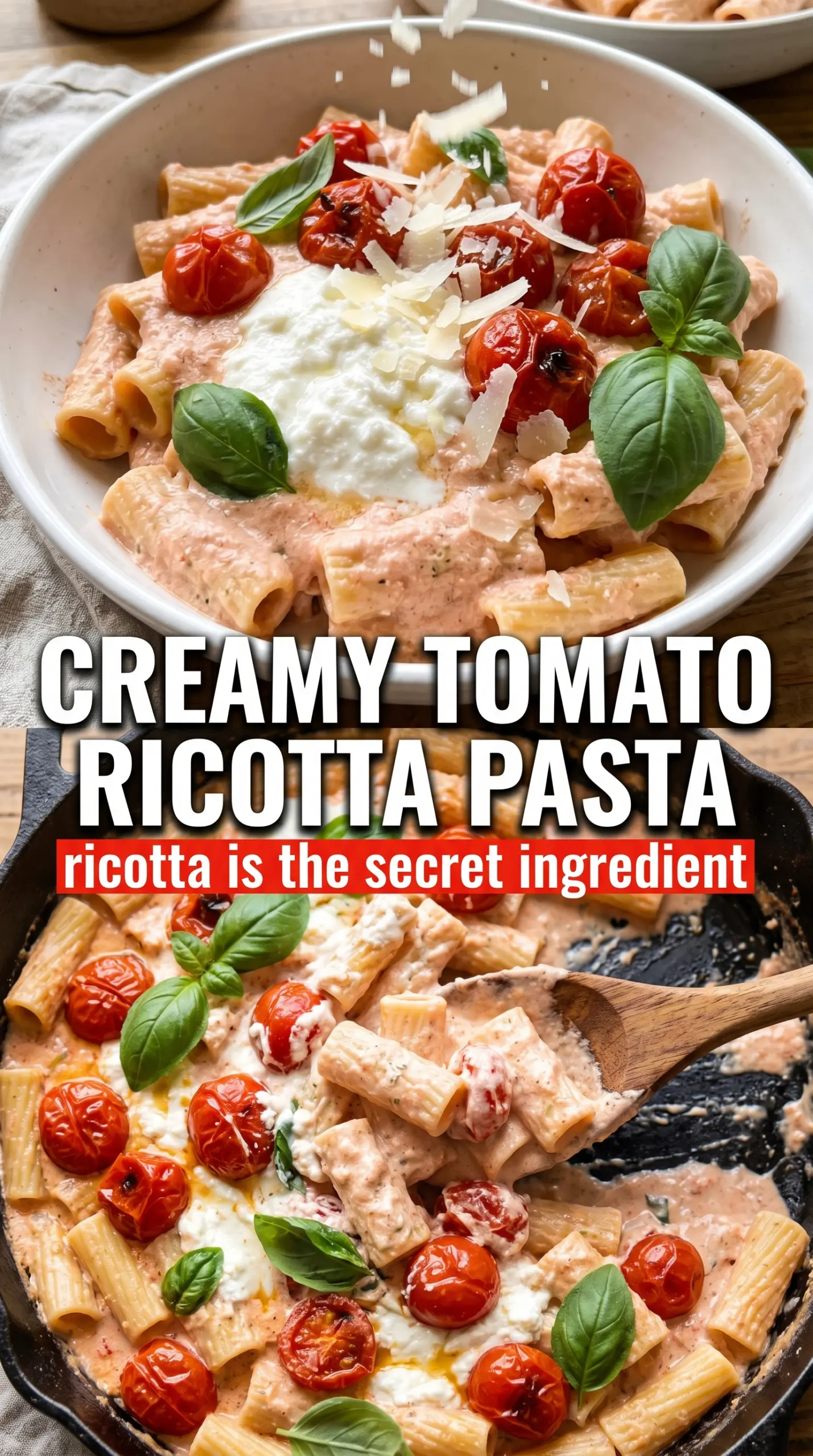
- Rigatoni — The tubes catch the sauce inside and out, which is why this pasta feels extra satisfying. Penne works in a pinch, but rigatoni gives you more sauce in every bite.
- Crushed tomatoes — These build the body of the sauce. Use a good canned brand if you can, because this is where the tomato flavor comes from.
- Whole milk ricotta — This is what makes the sauce creamy without making it heavy. Part-skim ricotta works, but it can taste a little drier and less lush.
- Heavy cream — It smooths out the tomato sharpness and helps the sauce stay velvety. If you cut it back, the sauce will still work, but it won’t have the same round finish.
- Parmesan — This adds salt and depth while tightening the sauce just enough to coat the pasta. Grate it finely so it melts in cleanly instead of clumping.
- Garlic, Italian seasoning, and red pepper flakes — Garlic gives the base its backbone, the seasoning adds herb flavor without extra chopping, and the pepper flakes keep the sauce from tasting flat. If you want less heat, cut the flakes in half instead of skipping them entirely.
Building the Blush Sauce in the Right Order
Waking Up the Garlic
Start the garlic and red pepper flakes in olive oil over medium heat and give them about a minute, just until the garlic smells sweet and you see the tiniest bit of color around the edges. If the garlic browns, it turns bitter and the whole sauce gets harsh. Keep it moving in the pan so it perfumes the oil without frying hard.
Letting the Tomatoes Cook Down
Once the tomatoes and seasoning go in, let the sauce simmer for about 10 minutes. You’re looking for bubbles that break lazily across the surface, not a hard boil. That short simmer takes the raw edge off the tomatoes and thickens the base enough that the ricotta can blend in smoothly later.
Finishing Without Breaking the Sauce
Lower the heat before adding the ricotta, cream, and parmesan, then stir until the sauce turns uniform and blush pink. If it looks a little speckled at first, keep stirring; the ricotta needs a minute to melt fully. Toss in the rigatoni right away, then use pasta water a spoonful at a time until every tube looks coated and glossy.
Make It Spicier Without Changing the Texture
Increase the red pepper flakes to 1 teaspoon or add a pinch of Calabrian chili paste with the tomatoes. That keeps the sauce creamy while giving it a deeper, warmer heat than just shaking on chili flakes at the end.
Dairy-Light Version That Still Tastes Rich
Swap the heavy cream for whole milk and use the full cup of ricotta to carry the richness. The sauce will be a little less plush, but it still comes together well if you keep the heat low and finish with extra parmesan.
Gluten-Free Pasta That Holds Up
Use a sturdy gluten-free rigatoni and pull it from the water when it still has a little bite. Gluten-free pasta softens fast once it hits the sauce, so undercooking by about a minute keeps the final bowl from turning mushy.
Storage and Reheating
- Refrigerator: Store leftovers in an airtight container for up to 4 days. The sauce thickens as it sits, so expect it to look a little tighter the next day.
- Freezer: It freezes, but the ricotta texture changes a bit after thawing. If you do freeze it, pack it in a shallow container for up to 2 months and thaw it in the fridge overnight.
- Reheating: Warm it gently on the stove with a splash of water or milk over low heat. The biggest mistake is blasting it in the microwave until the dairy separates and the pasta dries out.
Answers to the Questions Worth Asking
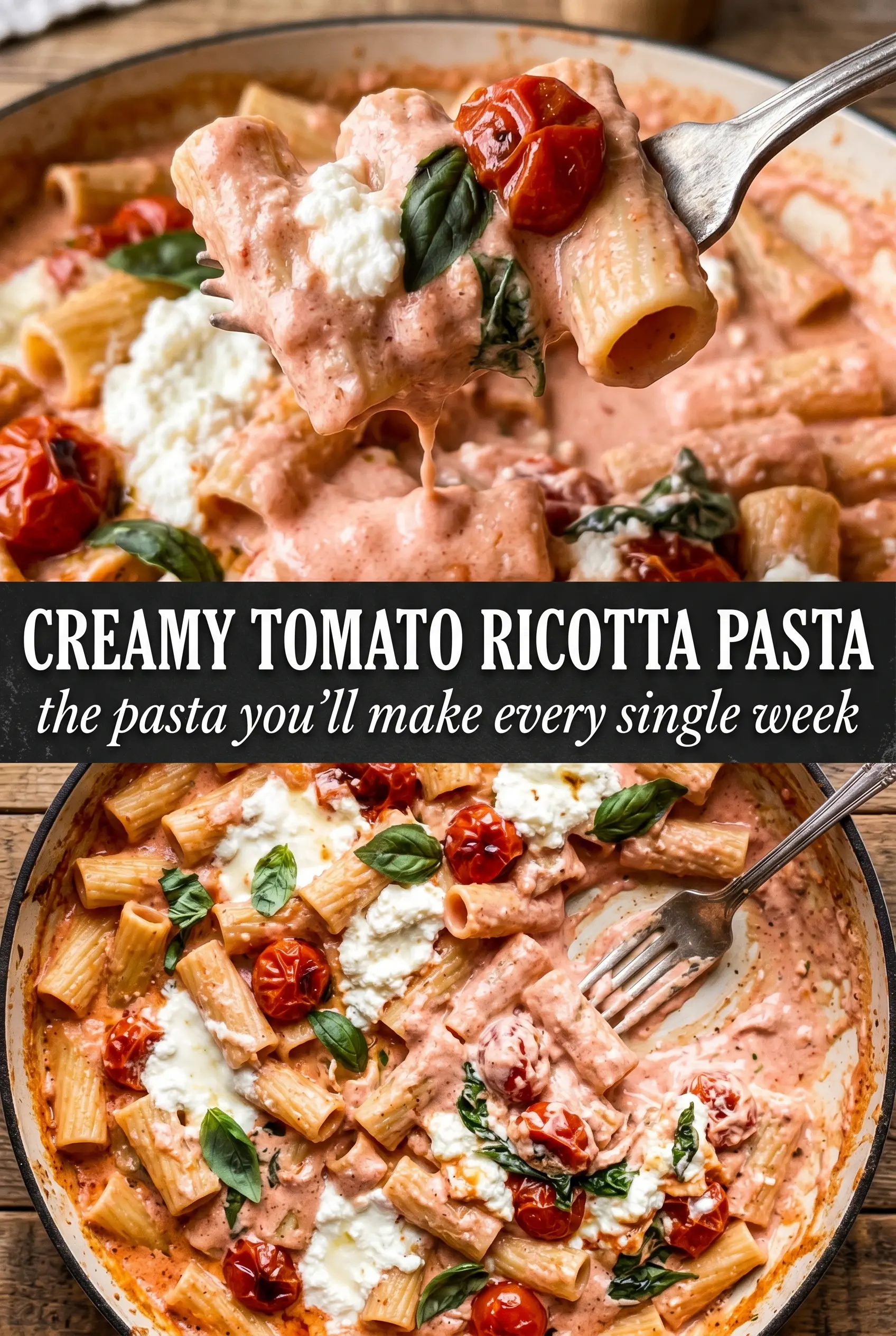
Creamy Tomato Ricotta Pasta
Ingredients
Equipment
Method
- Bring a large pot of salted water to a boil and cook the rigatoni until al dente. Before draining, reserve 1/2 cup pasta water and set aside the drained pasta.
- Heat olive oil in a large skillet over medium heat, then add minced garlic and red pepper flakes. Cook for 1 minute until fragrant and lightly sizzling.
- Add crushed tomatoes, Italian seasoning, salt, and black pepper, then simmer for 10 minutes. Stir occasionally as the sauce thickens slightly and reduces.
- Reduce the heat to maintain a gentle simmer, then stir in ricotta, heavy cream, and parmesan. Simmer for 3 minutes, stirring often, until the sauce turns smooth and creamy.
- Add the rigatoni to the skillet and toss to coat in the tomato ricotta cream sauce. Add reserved pasta water as needed, 1 to 2 tablespoons at a time, until the sauce clings to every tube.
- Serve immediately with fresh basil and extra parmesan on top. Finish with an even sprinkle so each bite has creamy sauce, herb aroma, and salty cheese.