Cold potato salad gets a lot more interesting when the dressing has a sharp horseradish bite running through it. The creaminess is still there, but it doesn’t sit heavy on the tongue, and that little heat makes the potatoes taste fuller and the herbs taste fresher. This is the bowl people keep coming back to for second helpings because it holds its shape, stays tangy, and never turns muddy or bland.
The trick is using red potatoes and stopping the boil when they’re tender but not collapsing. That gives you clean cubes that soak up dressing without turning pasty. The sour cream and mayonnaise do different jobs here: sour cream brings tang and a lighter finish, while mayo gives the dressing enough body to cling to the potatoes after chilling. Horseradish and Dijon sharpen everything, so you don’t need a heavy hand with vinegar to wake it up.
Below, I’ve added the details that matter most: how to keep the potatoes from overcooking, why the dressing tastes better after it chills, and the small swaps that still keep the salad balanced. If you’ve ever had potato salad go watery or flat, this version fixes both problems.
The dressing had just enough horseradish to give it a kick without overpowering the potatoes, and after chilling it for two hours the flavors came together perfectly. We served it with roast beef and there wasn’t a spoonful left.
Creamy Horseradish Potato Salad with that tangy beef-friendly kick is worth saving for your next cookout or Sunday roast.
The Reason This Potato Salad Stays Creamy Instead of Turning Gluey
Potato salad goes wrong when the potatoes are overworked or dressed while they’re still too hot. Red potatoes help because they hold their shape, but they still need a gentle hand after cooking. Once they’re tender, drain them well and let the steam escape before adding the dressing. If you rush that part, the residual heat loosens the mayo and sour cream too much, and the salad ends up thin by the time it chills.
The other mistake is stirring too aggressively. Toss the potatoes with the dressing just until every piece is coated. That’s enough. The horseradish and Dijon do the heavy lifting for flavor, so there’s no need to mash the cubes trying to force more seasoning into them.
What the Horseradish, Dijon, and Herbs Are Really Doing Here
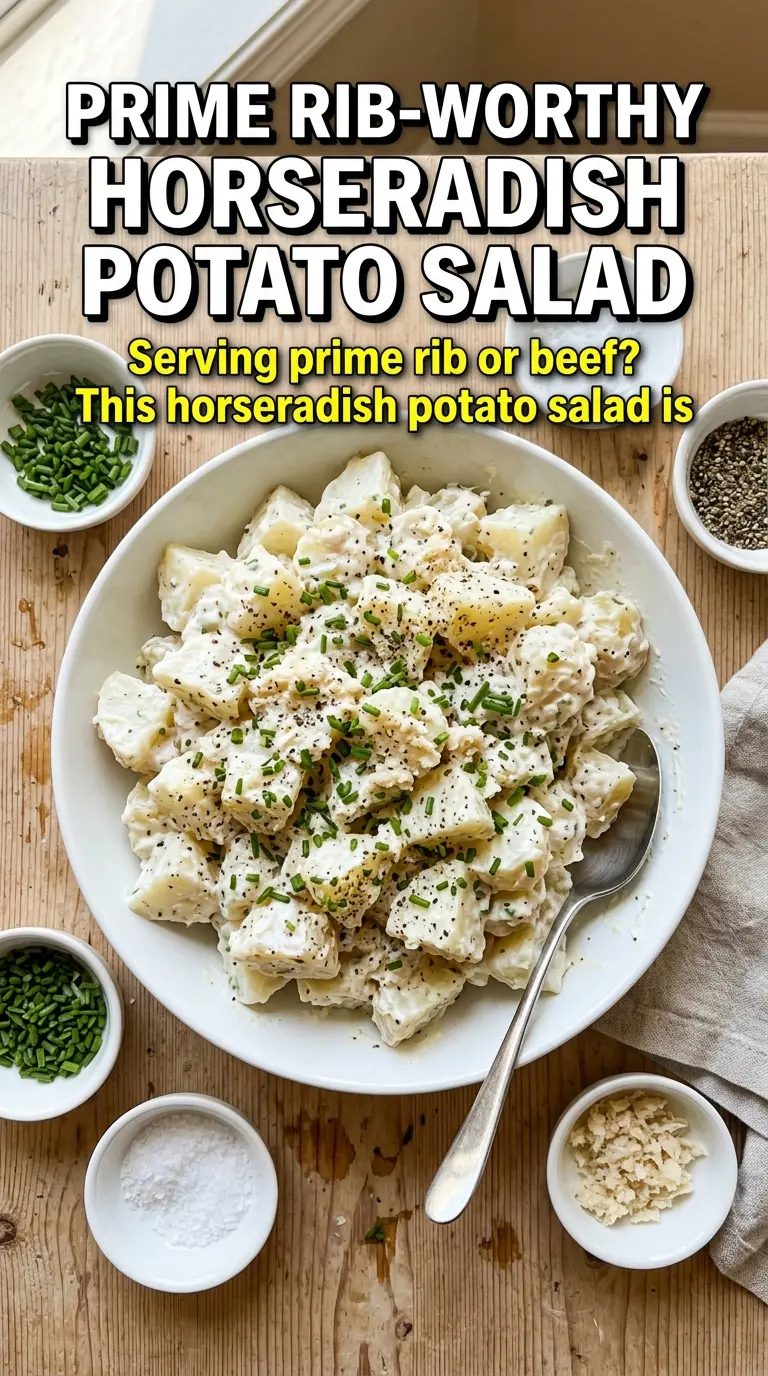
- Red potatoes — These are the right potato for this salad because they stay firm after boiling and don’t fall apart in the bowl. Waxy potatoes keep the dressing on the surface instead of soaking up so much that the salad turns heavy. If you need to substitute, Yukon Golds are the closest swap, but peel-and-cut russets will go too soft.
- Prepared horseradish — This is the ingredient that gives the salad its bite. Use prepared horseradish, not horseradish sauce, or you’ll add sweetness and extra liquid that dulls the sharp edge. Start with the amount listed, then adjust after chilling if you want more heat.
- Sour cream and mayonnaise — Sour cream brings the tang, mayonnaise brings the body. That combination keeps the dressing plush without tasting greasy. If you want a lighter version, swap half the mayo for plain Greek yogurt, but expect a slightly firmer, more tart dressing after it chills.
- Dijon mustard — Dijon adds a quiet sharpness that connects the horseradish to the potatoes. Yellow mustard won’t give the same depth, and whole grain mustard will change the texture. Use a smooth Dijon so the dressing stays creamy.
- Chives and parsley — These aren’t garnish here; they keep the salad from tasting flat. Chives add a mild onion note, while parsley brings freshness that cuts through the richness. Chop them fine so they distribute through the dressing instead of clumping in one bite.
How to Build the Salad So the Flavor Gets Better After Chilling
Boiling the Potatoes Just to Tender
Start the potatoes in cold salted water, then bring them up to a boil so the centers cook evenly with the outside. Drain them when a knife slips in easily but the cubes still hold their edges. If they’re cooked past that point, they’ll break down as soon as you toss them and the salad will look mashed instead of chunky.
Mixing the Dressing First
Stir the sour cream, mayonnaise, horseradish, Dijon, vinegar, salt, and pepper together before the potatoes go in. That lets you taste the balance on its own and prevents streaks of plain mayo in the finished bowl. The dressing should taste a touch sharper than you want in the final salad because the potatoes will soften it as they chill.
Tossing Without Crushing
Add the potatoes, chives, and parsley once the dressing is ready, then fold everything together with a spatula or large spoon. You’re coating, not beating. If you see the cubes starting to smear at the edges, stop mixing. The salad will pick up more flavor during the rest in the refrigerator, and a gentle toss leaves you with a cleaner texture.
Chilling Until the Dressing Settles In
Two hours in the refrigerator gives the horseradish a chance to mellow into the sour cream and mayo instead of tasting harsh. The dressing will also thicken as it sits, which is why the salad tastes better cold than right after mixing. If you serve it too soon, the horseradish reads louder and the potatoes won’t be fully seasoned all the way through.
How to Adjust It for Different Tables and Dietary Needs
Make it lighter with Greek yogurt
Swap half the sour cream or mayo for plain Greek yogurt if you want a sharper, lighter salad. The texture will be a little less silky and a little more tangy, which works well if you’re serving it next to rich meat.
Make it dairy-free with all mayo
Use a dairy-free mayonnaise and replace the sour cream with a thick unsweetened dairy-free yogurt or more mayo. You’ll lose a little of the classic tang, so add the vinegar slowly and taste after chilling. The dressing should still cling well if you keep it thick.
Turn up the heat for roast beef
Add another teaspoon or two of prepared horseradish if you want the salad to stand up beside brisket or roast beef. Do that after the first chill, not before, so you don’t overshoot the heat while the flavors are still settling. This version lands sharper and more savory.
Storage and Reheating
- Refrigerator: Keeps well for 3 to 4 days in a covered container. The dressing may tighten a little, so stir before serving.
- Freezer: Don’t freeze it. The potatoes turn grainy and the creamy dressing separates once thawed.
- Reheating: This salad is meant to be served cold. If it’s too firm from the fridge, let it sit on the counter for 15 to 20 minutes so the dressing loosens back up.
Answers to the Questions Worth Asking

Creamy Horseradish Potato Salad
Ingredients
Equipment
Method
- Bring a pot of water to a boil over high heat, add the cubed red potatoes, and boil until tender, 10-12 minutes. Visual cue: a fork should slide in and out with little resistance.
- Drain the potatoes and spread them out to cool for 5-10 minutes. Visual cue: they look matte rather than glossy and warm steam is no longer rising.
- In a mixing bowl, whisk together sour cream, mayonnaise, prepared horseradish, Dijon mustard, and white wine vinegar until smooth, 1-2 minutes. Visual cue: the mixture turns creamy and uniformly pale.
- Season the dressing with salt and pepper to taste and whisk again until evenly distributed. Visual cue: dark pepper specks are suspended throughout.
- Combine the cooled potatoes with fresh chives and fresh parsley, tossing gently until herbs are evenly scattered. Visual cue: green flecks are visible across the potato cubes.
- Pour the dressing over the potato mixture and toss well until every piece is coated, 1-2 minutes. Visual cue: the salad looks creamy and thick rather than dry.
- Refrigerate the potato salad for 2 hours before serving. Visual cue: it firms slightly and looks cold and creamy when scooped.