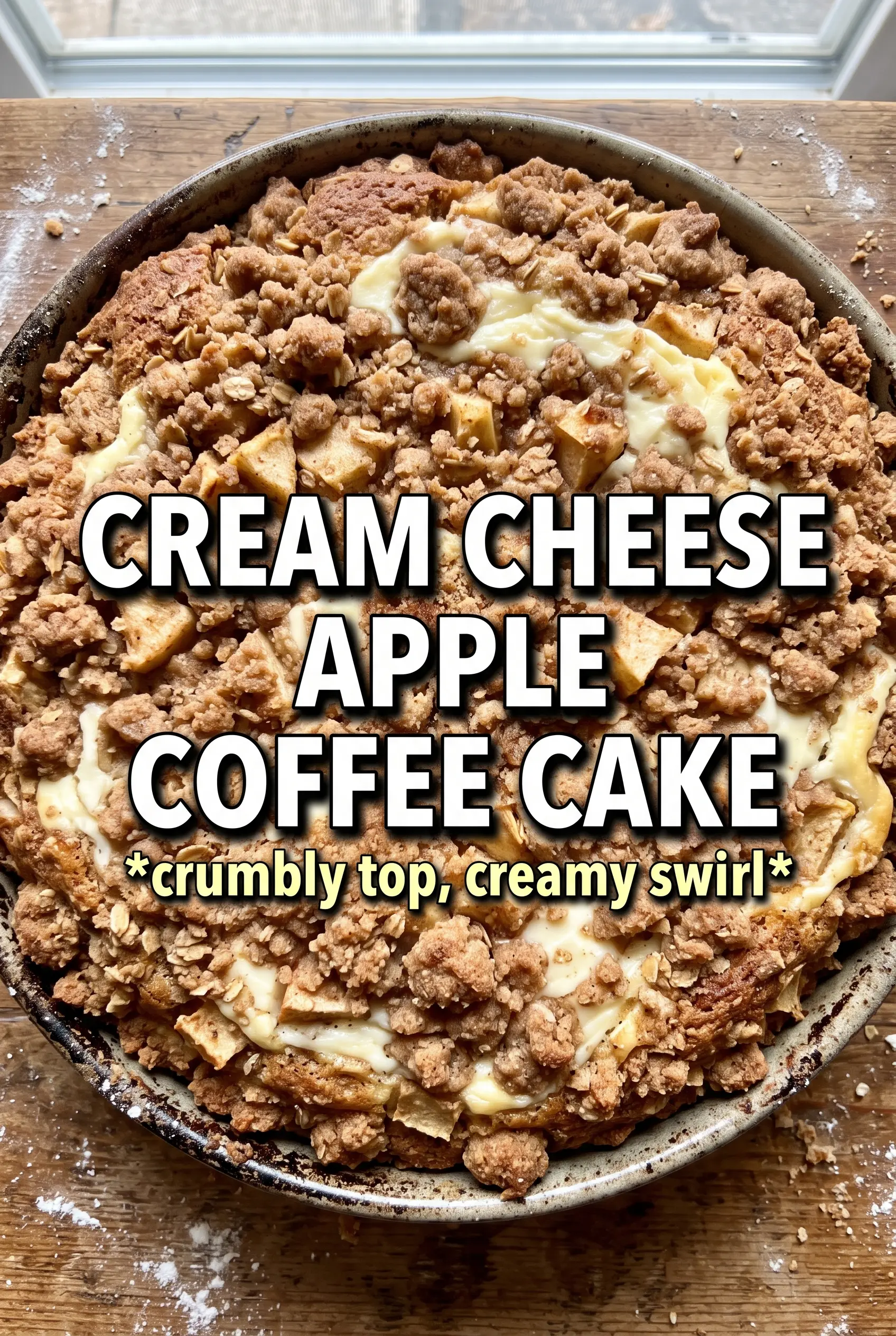
Golden streusel, tender cake, and a ribbon of cream cheese running through cinnamon apples make this coffee cake the kind of breakfast people hover around the pan for. The top bakes into a crisp, caramelized crust while the middle stays soft and rich, so every slice gives you a little crunch, a little tang, and a lot of warm apple-cinnamon comfort.
What keeps this version from turning heavy is the balance: sour cream in the batter for moisture, cream cheese for a clean tang, and apples that are lightly sugared so they soften without dumping too much juice into the pan. The streusel goes on dry and cold, which helps it stay crumbly instead of sinking into the batter. That contrast is what makes each bite stand up.
Below, I’ll walk through the one place this cake can go sideways, which ingredients matter most, and how to adapt it if you need to work with what’s already in your kitchen.
The cream cheese layer stayed perfectly distinct and the apples baked soft without making the middle soggy. I served it warm and the streusel still had that crisp edge the next morning.
Save this Cream Cheese Apple Coffee Cake for a brunch-worthy bake with a tangy center, cinnamon apples, and a crunchy streusel top.
The Part That Keeps the Cream Cheese Layer from Sinking
This cake looks layered and neat when the batter has enough structure to hold the fillings in place. The common failure is a loose, overmixed batter or cream cheese that’s too thin, which turns the middle into a swirl of filling instead of a clean layer. Here, the batter is thick enough to support the cream cheese and apples, and the fillings are built with just enough sugar to stay flavorful without flooding the pan.
The other detail that matters is order. Batter goes in first, then the cream cheese layer gets spread gently, and the apples and streusel finish the top. If you stir the fillings into the batter, you lose the distinct layers and the cake bakes up dense in the center. Keep the cream cheese soft enough to spread, but not warm and loose.
- Softened butter — This is what gives the cake batter its fluffy base. Cold butter won’t cream properly, and melted butter changes the texture from tender to tight.
- Sour cream — It adds moisture and a slight tang that keeps the crumb from tasting flat. Full-fat sour cream gives the best texture, but plain Greek yogurt works in a pinch, though the cake will be a little less rich.
- Cream cheese — Use block-style cream cheese, not whipped tubs. Whipped cream cheese can be too loose and won’t hold its layer as cleanly.
- Apples — Dice them small so they soften in the bake time. If your apples are very juicy, toss them with the sugar and cinnamon right before assembling so they don’t sit around and leak extra liquid.
What Each Ingredient Is Actually Doing in This Recipe
- Primary ingredient (the star) — Quality matters most. Choose the best you can find.
- Cooking medium (oil, butter, or broth) — This carries flavors and prevents dryness.
- Seasonings (salt, pepper, spices, herbs) — Layer flavors so nothing overpowers. Build depth gradually.
- Aromatics (garlic, onion, herbs) — Cook with fat to bloom flavors. Become the foundation.
- Supporting ingredients — Complement the main ingredient without overpowering it.
- Sauce or liquid (if applicable) — Brings flavors together. Balance richness with acid.
- Acid (lemon, vinegar, wine, or other) — Brightens and prevents flat-tasting results.
- Final finish (garnish, glaze, or sauce) — Prevents one-dimensional taste and adds visual appeal.
Building the Layers So the Center Bakes Through
Mixing the Streusel First
Start with the streusel so it has time to stay cold while you build the rest of the cake. Cut the butter into the flour, brown sugar, and cinnamon until you have clumps ranging from pea-sized to sandy crumbs. If the butter softens into a paste, the topping will melt instead of crisping. Pop the bowl into the fridge if your kitchen runs warm.
Making the Cream Cheese Layer Smooth
Beat the cream cheese with sugar, egg, and vanilla until the mixture looks silky and spreadable with no lumps left behind. Scrape the bowl well, especially around the bottom edges, because a few cold pockets of cream cheese will bake into dense spots. This layer should be thick but easy to dollop. If it looks runny, the cream cheese was too warm.
Whipping the Cake Batter Just Enough
Cream the butter and sugar until it looks lighter in color and slightly fluffy, then add the eggs and vanilla before alternating the flour mixture with the sour cream. Stop mixing as soon as the flour disappears. If you keep going, the cake turns tight instead of tender. The batter should be thick enough to spread, not pour.
Assembling Without Muddying the Layers
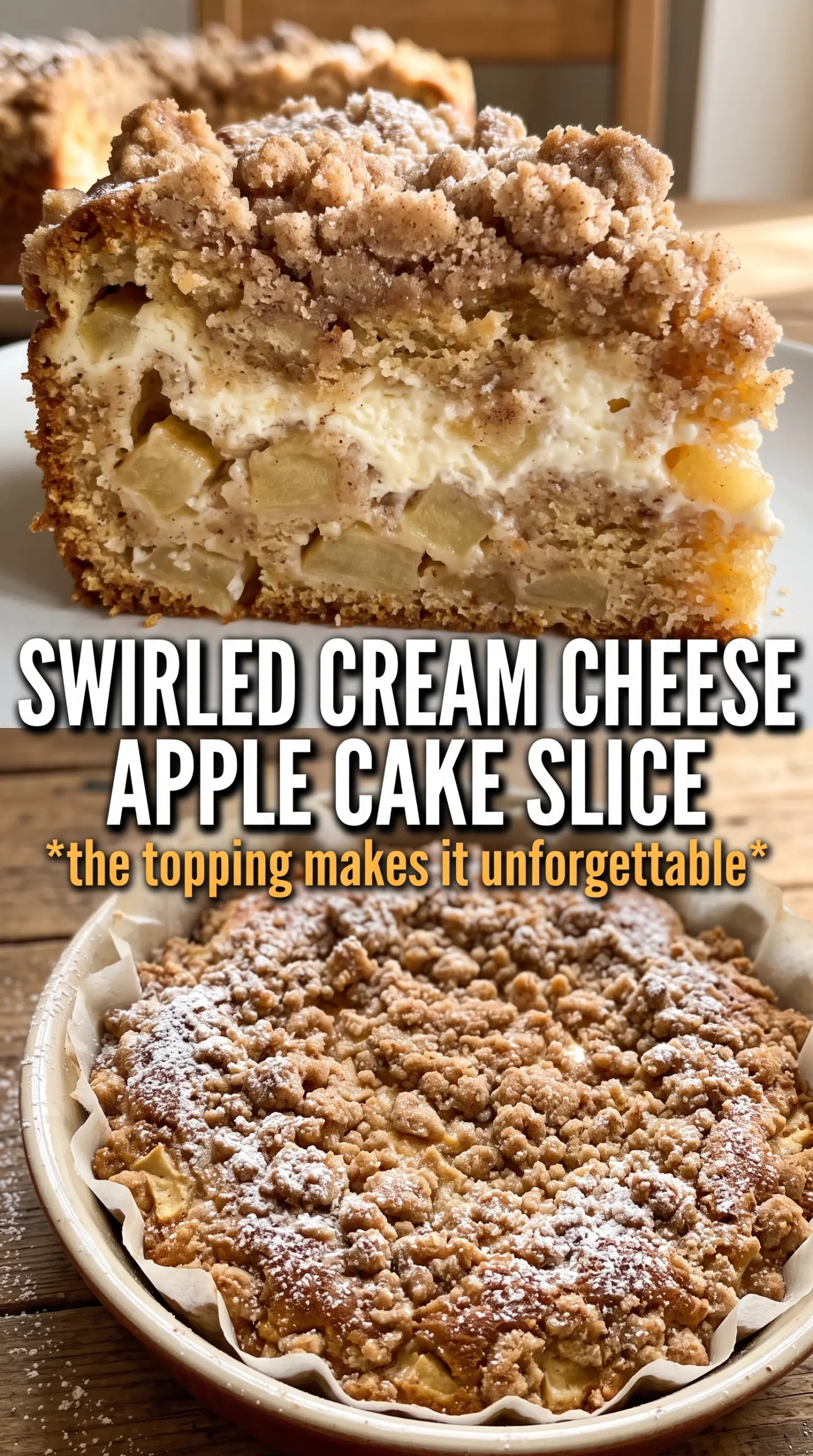
Spread the batter in an even layer in the greased pan, then dollop the cream cheese mixture over the surface and spread it gently. Scatter the cinnamon apples over the top, then finish with the streusel. Don’t press the toppings down; they settle on their own as the cake bakes. The bake is done when the center no longer jiggles and a toothpick comes out clean or with a few moist crumbs, not wet batter.
Make It with Pears Instead of Apples
Firm pears work well here if apples aren’t on hand. Use the same amount, dice them small, and keep the cinnamon because pears need that warmth to taste complete. The filling will be a little softer and more delicate, but still hold the same layered structure.
Dairy-Free Adjustment
Use a plant-based butter, dairy-free cream cheese, and a thick non-dairy yogurt in place of sour cream. The texture will be slightly less rich, and the cream cheese layer may bake up a touch softer, but the cake still slices well if you let it cool fully before cutting.
Gluten-Free Version
A good 1:1 gluten-free baking flour can replace the all-purpose flour in both the cake and streusel. The crumb will be a little more delicate, so let the cake cool longer before slicing. If your flour blend already includes xanthan gum, don’t add extra.
How to Bake It the Night Before
This cake keeps well for serving the next day, which makes it a solid choice for brunch. Bake it fully, cool it completely, then cover it once it’s no longer warm so condensation doesn’t soften the streusel. The top loses a little crunch overnight, but the flavor gets deeper and the cream cheese layer slices more cleanly.
Storage and Reheating
- Refrigerator: Store covered for up to 5 days. The streusel softens a bit, but the cake stays moist.
- Freezer: Freeze individual slices tightly wrapped for up to 2 months. Thaw in the fridge overnight for the best texture.
- Reheating: Warm slices in a 300°F oven for 10 to 12 minutes or microwave briefly in short bursts. Long microwave time makes the cream cheese layer rubbery and the streusel soggy.
Answers to the Questions Worth Asking
Cream Cheese Apple Coffee Cake
Ingredients
Equipment
Method
- Preheat the oven to 350°F, then grease a 9x13 baking dish so the cake releases cleanly.
- In a bowl, combine flour, brown sugar, and cinnamon, then cut in cold butter until crumbly with visible pea-size bits.
- Beat the cream cheese until smooth, then set it aside for easier spreading later.
- Toss diced apples with sugar and cinnamon until evenly coated.
- Beat the softened butter and granulated sugar until fluffy, about 2 minutes for a lighter texture.
- Add eggs and vanilla, mixing until smooth and glossy.
- Alternate adding the flour mixture and sour cream, mixing just until combined to keep the crumb tender.
- Spread the batter in the prepared pan, then dollop the cream cheese over the top and spread gently.
- Top with cinnamon apples, then scatter the streusel over everything so it bakes into a crisp layer.
- Bake for 45–50 minutes at 350°F until a toothpick comes out clean and the streusel turns golden at the edges.