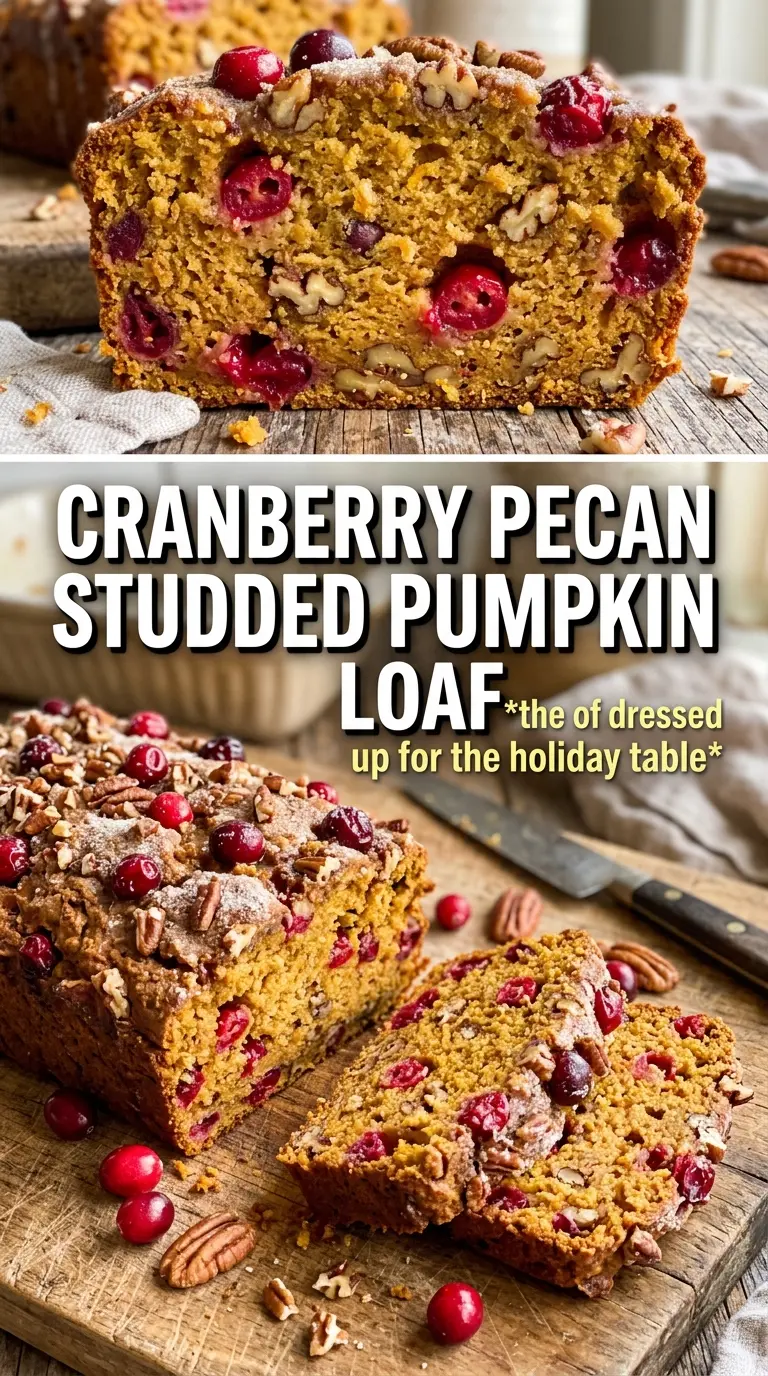
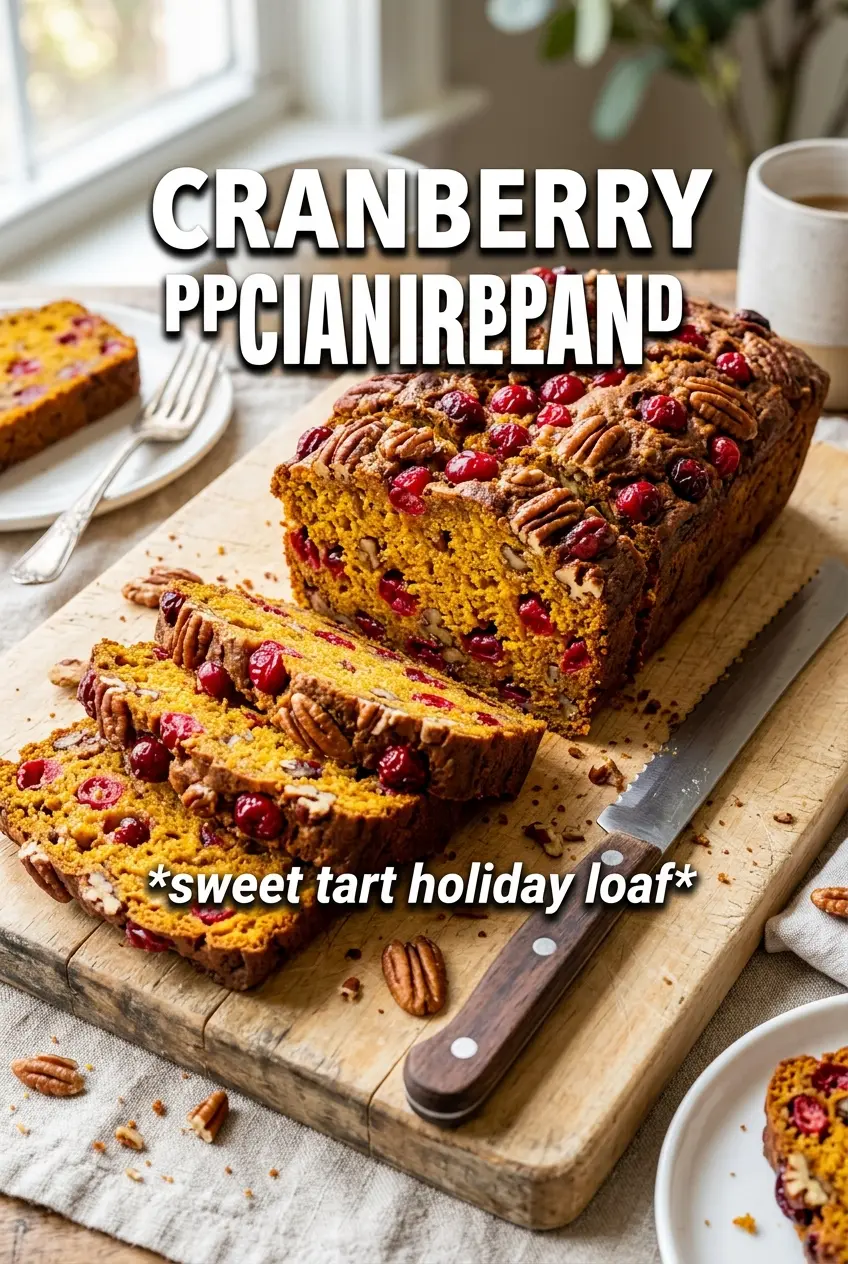
Moist pumpkin bread gets a bright, crackly top here from tart cranberries, buttery pecans, and a little orange zest that keeps the loaf from tasting heavy. The crumb stays tender for days, but the best part is the contrast: soft pumpkin base, juicy pops of cranberry, and toasted nuts in every slice. It’s the kind of breakfast loaf that disappears quietly, one warm piece at a time.
This version leans on pumpkin puree for structure and moisture, but the orange zest and glaze keep it from falling flat. A mix of granulated and brown sugar gives the loaf the right balance of sweetness and softness, while the pecans add just enough crunch to make each bite feel complete. I’ve also found that chopping the cranberries helps them distribute better, so you don’t end up with all the fruit sinking to the bottom.
Below, you’ll find the small details that matter most here: how to keep the loaf from turning dense, how to fold in the add-ins without streaking the batter, and a few smart ways to adapt it if you need to swap ingredients.
The bread baked up with a soft, even crumb and the cranberries stayed bright instead of disappearing into the batter. I loved the orange glaze on top — it made each slice taste fresh, not heavy.
Love the tart cranberries, toasted pecans, and orange glaze in this pumpkin bread? Save it to Pinterest for a cozy breakfast loaf that slices beautifully.
The Trick to Keeping Pumpkin Bread Light Instead of Gummy
Pumpkin bread turns dense fast when the batter gets overmixed or the flour is packed in too tightly. The batter should look thick and smooth, but once the dry ingredients go in, stop folding as soon as the last streaks disappear. That’s the difference between a tender crumb and a loaf that eats like wet cake.
The other mistake is pulling it too early. Pumpkin puree holds a lot of moisture, so the center needs the full bake time and sometimes a few extra minutes. A toothpick should come out clean or with just a few moist crumbs, and the top should spring back lightly when touched.
- Pumpkin puree — Use canned puree for the most consistent texture. Homemade puree can work, but only if it’s thick, not watery, or the loaf may bake up heavy.
- Orange zest — This is what wakes up the whole loaf. The zest adds brightness that cuts through the pumpkin and spice, and fresh zest matters here more than the juice.
- Cranberries — Fresh or frozen both work. If using frozen, chop them while still partially frozen so they hold their shape and don’t bleed too much into the batter.
- Pecans — Toasted pecans bring better flavor, but even untoasted ones add a nice buttery crunch. Chop them fairly small so they distribute evenly and don’t sink.
What Each Ingredient Is Actually Doing in This Loaf
- All-purpose flour — Keeps the loaf soft without making it fragile. I wouldn’t swap in cake flour here; it can make the bread too delicate to hold the fruit and nuts.
- Pumpkin pie spice and cinnamon — These give the loaf its warm backbone. If you only have pumpkin pie spice, you can use all of it and skip the extra cinnamon, but the added cinnamon gives the crumb a deeper finish.
- Brown sugar — This adds moisture and a little caramel note. White sugar alone will work, but the loaf won’t taste as rich and the crumb won’t stay as soft on day two.
- Vegetable oil — Oil keeps the bread tender longer than butter does. Melted butter can be used, but the texture will be a little firmer once cooled.
- Orange juice glaze — The glaze is worth making. It adds a bright finish that ties the orange zest in the batter back to the top of the loaf, and it firms up just enough to set without dripping off completely.
How to Mix, Bake, and Finish the Loaf Without Losing the Crumb
Mix the Wet Ingredients Until Smooth
Start by whisking the pumpkin, sugars, oil, eggs, vanilla, and orange zest until the mixture looks glossy and completely blended. You’re not trying to whip in air here. You just want the sugar to dissolve enough that the batter bakes up evenly instead of leaving grainy pockets.
Fold the Dry Ingredients Just Until Combined
Add the flour mixture in one go and fold with a spatula until the batter is mostly combined, then stop. A few streaks are fine because the final folds will finish the job. Overmixing tightens the crumb, and with cranberries and pecans in the batter, it can also make the loaf tough around the edges.
Scatter the Fruit and Nuts on Top Before Baking
Reserve a small handful of cranberries and pecans and press them gently over the surface before the loaf goes into the oven. That gives the bread the bakery-style look and keeps the top from baking flat and plain. If the add-ins are piled too heavily, they can sink as the batter rises, so keep the top layer light and even.
Bake Until the Center Is Fully Set
Bake the loaf until a toothpick inserted in the center comes out clean. The top should be deeply golden and slightly cracked, and the sides should pull just a little from the pan. If the center still looks wet but the top is browning quickly, tent it loosely with foil and keep baking until the middle catches up.
Glaze After the Loaf Has Cooled
Let the bread cool for about 20 minutes before adding the glaze. If you drizzle it over a loaf that’s too hot, the glaze melts straight in and disappears. Once the bread is just warm, the glaze will sit on top in thin ribbons and set into a shiny finish.
How to Adapt This Loaf for Different Kitchens and Different Cravings
Make It Dairy-Free Without Changing the Texture
This recipe is already naturally dairy-free if you use oil and skip any butter-based substitutions. Keep the glaze made with orange juice and powdered sugar, and nothing about the texture changes. It’s one of the easiest ways to keep a rich loaf on the table without dairy.
Swap in Walnuts When That’s What You Have
Walnuts work in place of pecans and give a slightly sharper, more earthy crunch. They won’t taste as buttery, but they hold up well in the batter and still give you that nutty bite in every slice.
Use Dried Cranberries for a Sweeter Slice
Dried cranberries will make the loaf sweeter and a little less juicy, which some people prefer for breakfast. Chop them first and toss them with a teaspoon of flour so they don’t clump, and expect a slightly firmer bite than you get from fresh fruit.
Storage and Reheating
- Refrigerator: Store sliced or unsliced loaf in an airtight container for up to 5 days. The crumb stays moist, but the glaze may soften a little.
- Freezer: This bread freezes well. Wrap the cooled loaf or individual slices tightly and freeze for up to 3 months; thaw at room temperature still wrapped so the bread doesn’t dry out.
- Reheating: Warm slices in the microwave for 10 to 15 seconds or in a low oven until just heated through. Don’t overheat it or the crumb turns dry and the glaze gets sticky instead of glossy.
Answers to the Questions Worth Asking
Cranberry Pecan Pumpkin Bread
Ingredients
Equipment
Method
- Preheat the oven to 350F and grease a 9x5 loaf pan.
- Whisk together all-purpose flour, baking soda, pumpkin pie spice, cinnamon, and salt.
- Whisk pumpkin puree, granulated sugar, brown sugar, vegetable oil, eggs, vanilla, and orange zest until smooth.
- Fold the dry mixture into the wet mixture until just combined, then fold in cranberries and pecans, reserving a few for the top.
- Pour the batter into the loaf pan, then scatter the reserved cranberries and pecans over the top.
- Bake for 60–65 minutes at 350F, until a toothpick comes out clean.
- Cool the loaf for 20 minutes in the pan.
- Stir powdered sugar, orange juice, and cinnamon until smooth, then drizzle over the cooled bread.