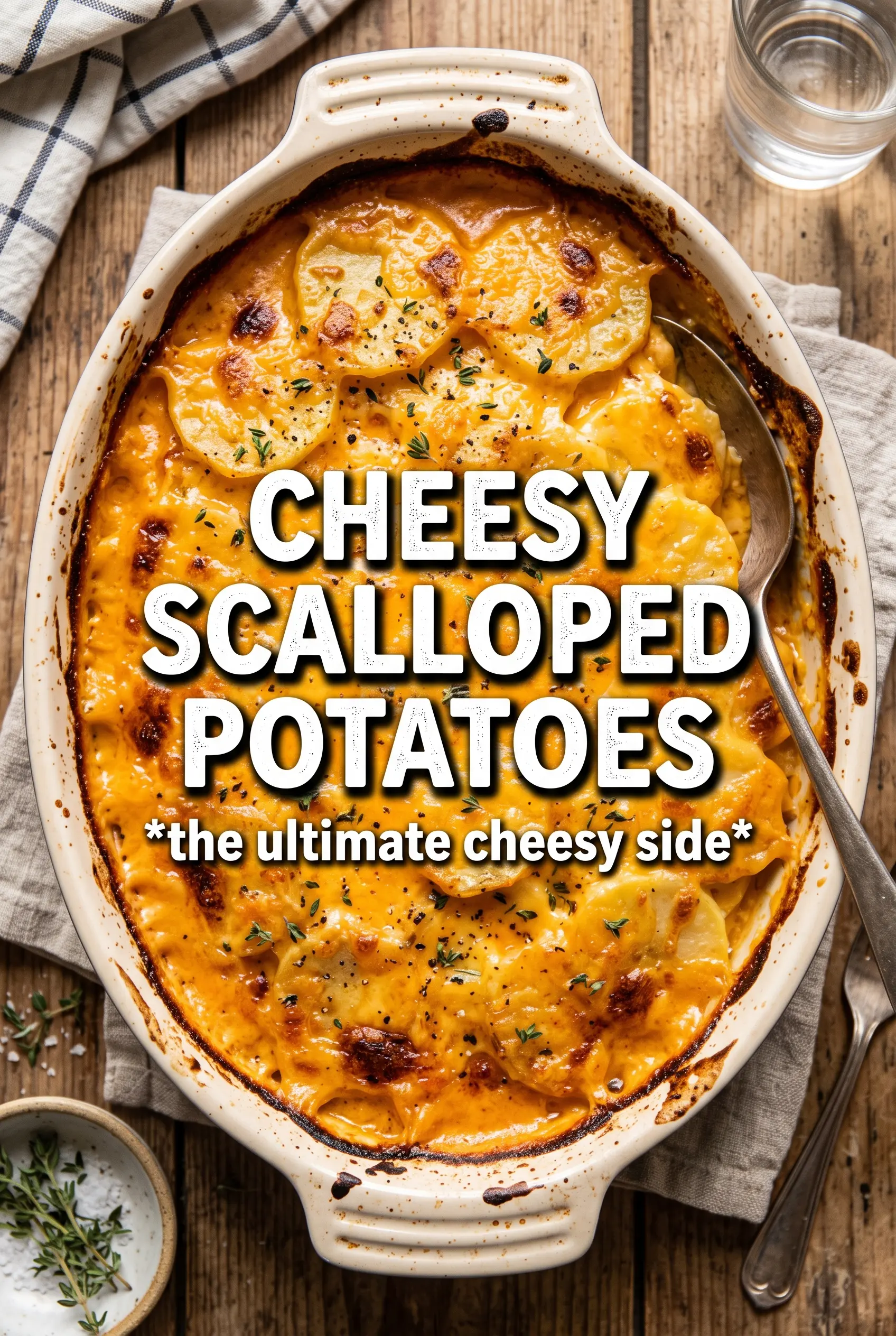
Cheesy scalloped potatoes land on the table with tender layers that hold together just enough to slice, then give way to a rich cream sauce and a bubbling lid of Gruyere and cheddar. The best versions don’t turn gluey or greasy; they stay silky in the middle, with crisp-edged top layers that catch a little extra color in the oven. That contrast is what makes people go back for a second spoonful before the pan has even cooled.
Yukon gold potatoes are the right choice here because they stay creamy instead of falling apart, and the thin slicing matters just as much as the cheese. The potatoes cook evenly only when they’re cut to the same thickness, then packed tightly enough to settle into the sauce instead of floating around the dish. The Dijon and nutmeg don’t make the dish taste like mustard or spice; they sharpen the cream just enough to keep it from tasting flat.
Below, I’ve included the small timing and layering details that keep the sauce smooth and the potatoes tender, plus a few ways to adapt the dish if you need to work around the cheese or dairy.
The potatoes were tender all the way through and the sauce stayed creamy instead of separating. I used the full 10-minute rest and it sliced beautifully without falling apart.
Save these cheesy scalloped potatoes for the nights when you want a bubbling Gruyere-and-cheddar crust with creamy layers underneath.
The Trick to Potatoes That Turn Tender Without Breaking the Sauce
The biggest mistake with scalloped potatoes is rushing the bake and pulling the dish before the center is fully tender. The top may look done long before the layers underneath are soft, which is how you end up with a browned lid and a firm middle. Covering the dish tightly for the first stretch traps steam, and that steam helps the potatoes soften before the cheese goes on.
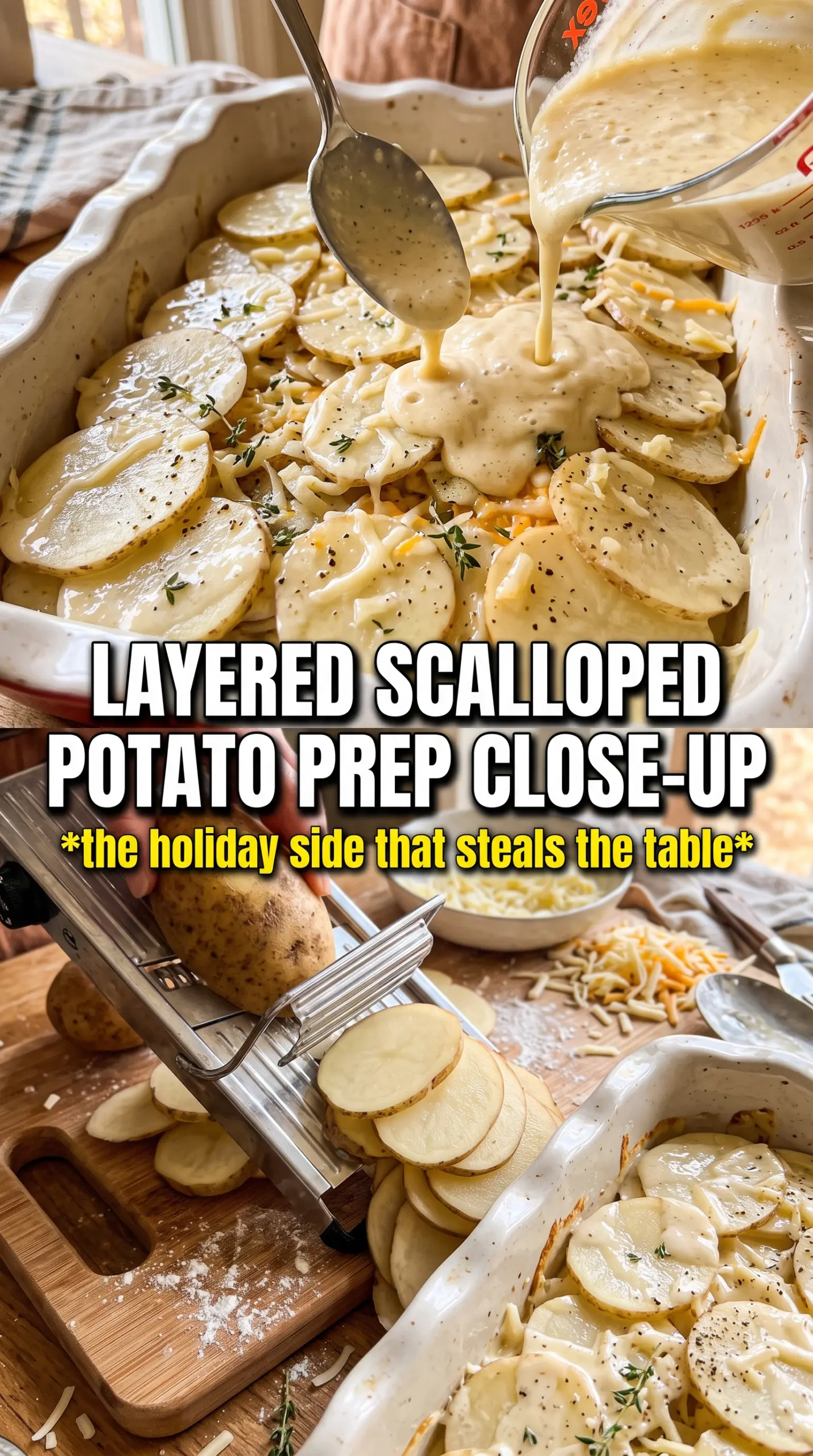
Thin, even slices matter more than almost anything else here. If the slices vary too much, the smaller pieces overcook while the thicker ones stay chalky. A mandoline makes this easier, but a sharp knife works fine if you keep the slices close to 1/8 inch and stack them neatly so the sauce can work its way through every layer.
- Keep the foil tight during the first bake so the steam stays in the pan.
- Use Yukon gold potatoes for a creamy texture that holds its shape.
- Wait for the final uncovered bake to add color and concentration to the sauce.
- Rest the dish before serving so the cream settles and the layers slice cleanly.
What the Cream, Cheese, and Seasoning Are Really Doing Here
- Yukon gold potatoes — These are worth using. They stay creamy and slice neatly, which matters in a dish where the potatoes need to soften without turning mealy. Russets can work in a pinch, but they’re starchier and more likely to collapse into the sauce.
- Heavy cream plus whole milk — The cream gives body, while the milk keeps the sauce from feeling too heavy. Don’t swap in low-fat milk unless you’re willing to lose some richness; the sauce will be thinner and less stable.
- Gruyere and sharp cheddar — Gruyere melts smoothly and brings a nutty depth, while cheddar adds that sharp, familiar pull. Pre-shredded cheese works, but freshly shredded melts more evenly and gives you a cleaner top without that dusty coating some bagged cheeses have.
- Dijon, thyme, and nutmeg — These are the small details that keep the dish from tasting flat. Dijon sharpens the cream, thyme adds a gentle savory note, and nutmeg rounds out the sauce without calling attention to itself.
Building the Layers So the Potatoes Cook Through Evenly
Whisk the Sauce Until It Smells Balanced
Mix the cream, milk, garlic, Dijon, thyme, nutmeg, salt, and pepper before the potatoes go in. You want the garlic spread through the liquid, not clumped in one spot, and the seasoning should taste a little bolder than you expect because the potatoes will soften it as they cook. If the sauce tastes flat at this stage, the finished dish will taste flat too.
Layer the Potatoes Tightly
Overlap the slices in rows so there aren’t big gaps. Loose layering lets the sauce pool at the bottom, which leaves the top dry and the bottom too rich. Press the potatoes down after pouring in the cream mixture so the slices settle below the surface as much as they can.
Bake Covered Before You Add the Cheese
The covered bake is where the texture gets built. This is the point that turns raw potato slices into tender layers, so don’t judge doneness by the top of the dish. When you remove the foil, the potatoes should already be close to tender, and the sauce should look slightly thickened around the edges.
Finish Hot and Rest Before Serving
Scatter the cheeses over the top and return the dish to the oven until the surface is bubbling and bronzed. If the top browns before the potatoes are fully tender, re-cover it loosely and keep baking. The final rest matters because the sauce thickens as it sits, and that’s what gives you clean spoonfuls instead of a loose puddle.
Three Useful Ways to Adjust the Dish Without Losing the Good Part
Dairy-Free Version With a Lighter Finish
Use unsweetened full-fat oat milk and a rich dairy-free cream substitute, then add a spoonful of nutritional yeast for depth. The result will be a little less lush than the original, but it still gives you a creamy, savory bake if you keep the potatoes tightly layered and bake until fully tender.
Gluten-Free by Default
This recipe is already gluten-free as written, so the main job is to keep your seasonings and cheese clean of hidden additives. If you’re serving someone highly sensitive, check the mustard and shredded cheese labels, since some brands add thickeners or anti-caking agents.
Make It a Little Richer for a Special Meal
Swap in all Gruyere on top if you want a more pronounced nutty flavor, or add a few extra tablespoons of cheese between the layers for a denser finish. That makes the dish heavier and a touch saltier, so it works best when you’re serving it alongside roast meat or something simple and lean.
Storage and Reheating
- Refrigerator: Store covered for up to 4 days. The sauce will firm up as it chills, but the flavor deepens.
- Freezer: It freezes, but the texture softens a bit on thawing. Wrap portions tightly and freeze for up to 2 months if you don’t mind a slightly looser sauce.
- Reheating: Reheat covered at 325F until hot in the center, then uncover for a few minutes if you want the top to crisp again. Don’t blast it in the microwave unless you’re fine with uneven heating and a broken sauce.
Questions I Get Asked About This Recipe
Cheesy Scalloped Potatoes
Ingredients
Equipment
Method
- Preheat oven to 375F and butter a 9x13 baking dish.
- Whisk heavy cream, whole milk, garlic, Dijon mustard, fresh thyme, nutmeg, 1-1/2 teaspoons salt, and pepper until smooth.
- Layer Yukon gold potatoes in overlapping rows in the dish and pour the cream mixture over them.
- Press potatoes down to submerge and cover tightly with foil to prevent browning while cooking through.
- Bake 50 minutes at 375F, then uncover and scatter Gruyere and sharp cheddar over the top.
- Bake 18 to 22 more minutes at 375F until the top is golden, bubbling, and potatoes are completely tender.
- Rest 10 minutes before serving to help the layers set.