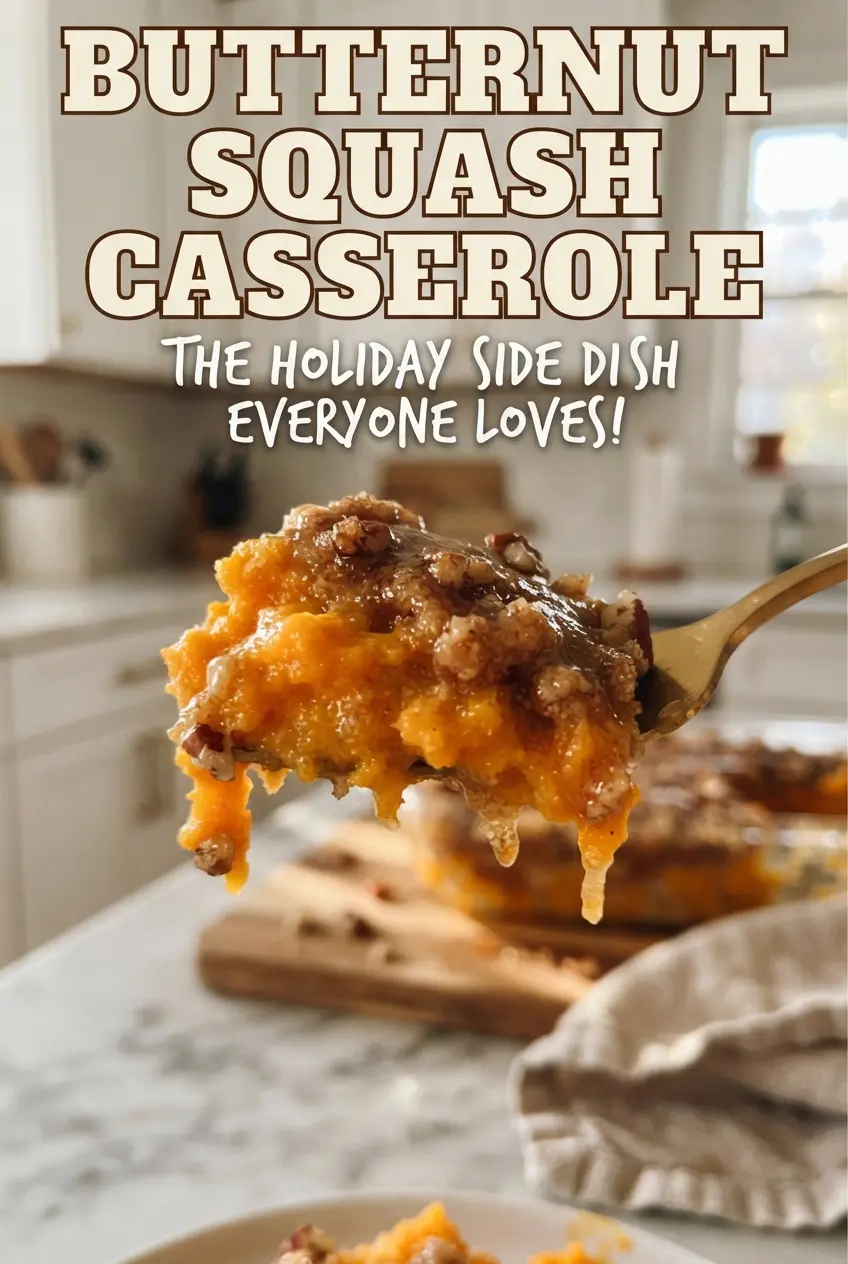
Butternut squash casserole turns soft, sweet squash into a creamy side dish with a crisp pecan topping that cracks a little when your spoon goes through it. The contrast is what makes it worth putting on the table: smooth, custardy squash underneath and a brown-sugar streusel on top that bakes into a golden crust. It lands somewhere between a holiday side and a comforting Southern bake, and it earns its keep every time someone goes back for a second scoop.
The part that matters most is how dry the squash is before it goes into the baking dish. Boiled squash holds onto more water than people expect, and if you mash it without letting it drain well, the casserole turns loose instead of rich and creamy. The egg gives the filling enough structure to slice or spoon neatly, while the butter and brown sugar carry the squash’s natural sweetness without making it cloying.
Below, I’ve included the small details that keep the texture right, plus a few swaps if you need to work around what’s in your pantry. The topping is simple, but there’s a specific way to mix it so it bakes up crumbly instead of pasty.
The squash came out creamy and held its shape under the pecan topping, and the edges bubbled just like you said. I drained it really well and the casserole wasn’t watery at all.
Pin this butternut squash casserole for that creamy filling and crunchy pecan streusel whenever you need a reliable Southern side dish.
The Reason This Casserole Stays Creamy Instead of Watery
The biggest mistake with squash casseroles is treating the squash like it behaves the same way every time. Boiled squash releases a lot of moisture, and if that water stays in the mash, the filling loosens as it bakes and the top sinks into it. Draining the squash well after boiling matters more than adding extra thickener later, because the filling should taste like squash, not flour.
The eggs do the quiet work here. They set the casserole just enough to hold a spoonful without turning it into a firm custard. That’s also why you don’t want the squash steaming hot when you mix everything together; a little cooling keeps the eggs from scrambling when they hit the bowl.
What Each Ingredient Is Doing in the Pan

- Butternut squash — This is the body of the dish, so start with a squash that feels heavy for its size and cuts into even cubes. Smaller pieces boil more evenly and mash smoother, which helps the casserole bake into a creamy layer instead of a lumpy one.
- Butter — It carries the brown sugar and gives the filling its rich, silky finish. Melted butter is fine here; save the best-quality butter for the topping if you want a slightly more pronounced flavor.
- Brown sugar — This sweetens the casserole without making it taste flat. It also deepens the color of the topping as it bakes, which is why the casserole looks as good as it tastes.
- Eggs — They’re the structure. Without them, the filling would bake up loose and scoop like mashed squash instead of holding together with a creamy set.
- Pecans — They give the casserole its crunch and that unmistakable Southern finish. Chop them fairly small so the topping stays crumbly and easy to scoop.
- Flour — This binds the streusel just enough to clump in sandy bits. If you need a gluten-free version, use a cup-for-cup gluten-free flour blend; the topping won’t be identical, but it will still bake up crisp.
Building the Mash and Baking the Topping at the Same Time
Cooking the Squash Until It Mashes Cleanly
Boil the squash until a fork slides through with no resistance, usually about 15 minutes. If the cubes are still firm in the center, the mash will stay grainy no matter how long you stir it later. Drain it well in a colander and let steam escape for a minute or two; that extra moisture is what makes casseroles turn loose.
Making the Filling Smooth and Even
Mash the squash with the butter, brown sugar, eggs, milk, vanilla, cinnamon, and salt until the mixture looks uniform and creamy. A few tiny bits of squash are fine, but you don’t want large chunks because they break up the texture of the finished dish. If the bowl feels hot to the touch, wait a minute before adding the eggs so they blend in instead of cooking on contact.
Getting the Streusel Crumbly, Not Paste-like
Mix the flour, pecans, remaining butter, and remaining brown sugar until the mixture holds together in loose crumbs. If it turns into a wet paste, the butter was too warm or there was too much stirring. A fork works better than a spoon here because it keeps the topping airy, and that’s what gives you those crisp, golden bits on top.
Baking Until the Edges Bubble
Spread the squash mixture into a greased 9×13-inch baking dish and scatter the topping evenly over the surface. Bake until the top is deeply golden and the edges are actively bubbling, which tells you the filling is hot all the way through. If the topping browns before the center sets, lay a loose sheet of foil over the top for the last few minutes.
Three Ways to Work This Casserole Around Your Pantry
Make It Dairy-Free Without Losing the Creamy Texture
Swap the butter for a plant-based butter that melts like real butter and use an unsweetened non-dairy milk with some body, such as oat milk. The casserole will still set, but the flavor will be a little less rich, so keep the vanilla and cinnamon in place to round it out.
Skip the Nuts if You Need a Softer Topping
Leave out the pecans and add a little more flour to keep the topping crumbly. You’ll lose the roasted, nutty crunch, but the casserole will still bake with a pleasant crisp layer over the top instead of a dense lid.
Use Sweet Potato for a Denser, Earthier Casserole
Sweet potatoes can stand in for the squash if that’s what you have, and they’ll make the filling a little denser and more earthy. You may need a touch more milk to loosen the mash, since sweet potatoes can be starchier and thicker after boiling.
Use a Gluten-Free Flour Blend in the Topping
A 1:1 gluten-free flour blend works in the streusel and keeps the topping close to the original texture. The crumbs may be a little more delicate, but they still bake into a crisp finish as long as you keep the butter cold enough to stay crumbly.
Storage and Reheating
- Refrigerator: Store covered for up to 4 days. The topping softens a bit in the fridge, but the flavor holds well.
- Freezer: It freezes better without the topping. For the best texture, freeze the baked filling in a tightly covered dish, then add a fresh streusel before reheating if you want the crunch back.
- Reheating: Warm in a 325F oven, covered loosely with foil at first, until heated through. Microwaving works for a single serving, but it softens the topping fast, so the oven gives you the best result.
Questions I Get Asked About This Recipe
Butternut Squash Casserole
Ingredients
Equipment
Method
- Boil the peeled and cubed butternut squash for 15 minutes until very tender, then drain well to remove excess water. Look for cubes that crush easily when pressed.
- Preheat the oven to 350F and grease a 9x13-inch baking dish. You should be ready to transfer the filling right after mashing.
- Mash the hot squash with 1/4 cup melted butter, 1/4 cup brown sugar, eggs, milk, vanilla extract, ground cinnamon, and salt until smooth. The mixture should look creamy and evenly blended with no visible chunks.
- Spread the mashed squash mixture into the greased baking dish in an even layer. Smooth the top so the topping bakes uniformly.
- Mix all-purpose flour, chopped pecans, the remaining butter, and the remaining brown sugar until crumbly. The crumbs should clump when pressed and look dry, not wet.
- Sprinkle the pecan streusel evenly over the squash. Cover the surface in an even layer so the topping turns golden all over.
- Bake at 350F for 35-40 minutes until the topping is golden and the edges bubble. Let it stand briefly after baking so the center firms up slightly.