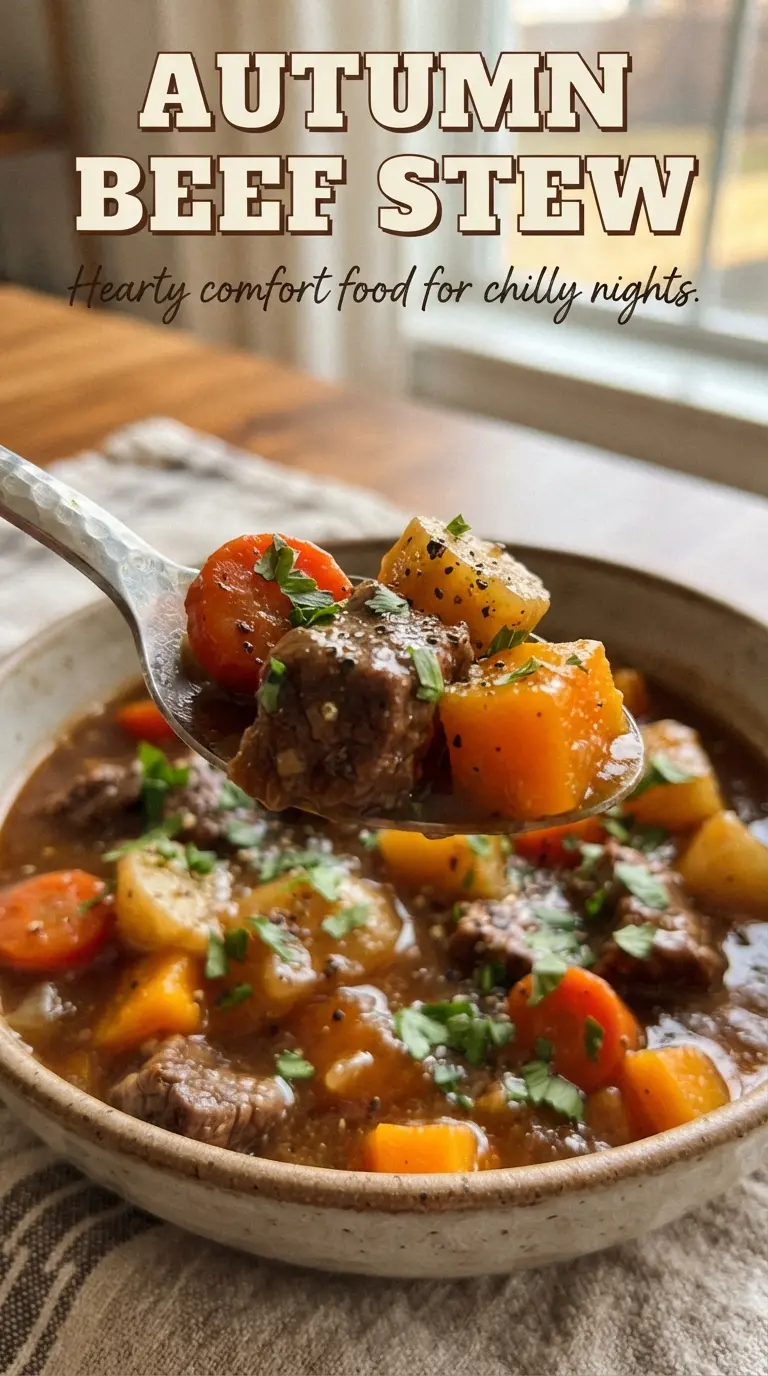
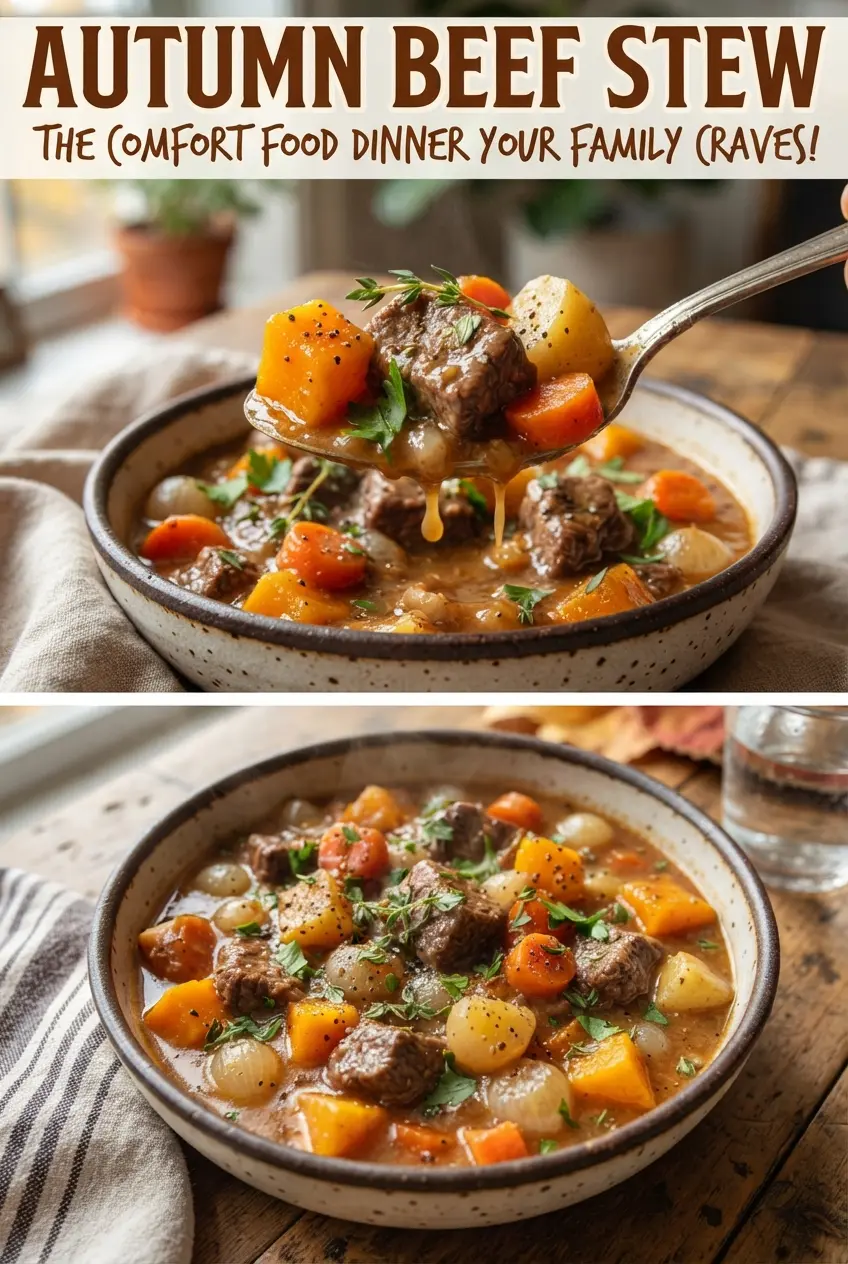
Autumn beef stew lands in that sweet spot between hearty and bright: deep, slow-cooked beef in a glossy broth that gets lifted by apple cider, maple, and a handful of dried cranberries. The vegetables keep their shape instead of disappearing, and the finished bowl tastes layered rather than heavy.
What makes this version work is the order of the build. Browning the beef in batches gives you the savory base that plain simmering never can, and the cider goes in early enough to deglaze the pan but not so late that it turns the whole pot sharp. Maple syrup doesn’t make the stew taste sweet; it rounds out the acidity and gives the broth a gentle depth that plays especially well with sage and thyme.
Below, I’ve included the little timing details that matter most, plus a few swaps and storage notes so you can make it with what’s on hand and still end up with a stew that tastes like it simmered all afternoon.
The broth got silky after the cider and flour from the beef thickened it up, and the cranberries at the end gave it this great little pop that kept it from tasting flat.
Pin this autumn beef stew for the nights when you want tender chuck, maple-kissed broth, and a one-pot dinner with real depth.
The Trick to Keeping the Beef Tender While the Vegetables Hold Their Shape
The biggest mistake in stew is treating every ingredient like it needs the same amount of time. Chuck needs a long, gentle simmer to relax into tenderness, but squash, carrots, and parsnips go mushy if they spend the full cook under heat. That’s why this stew starts with the beef alone and waits to add the vegetables until the end of the braise.
Flour on the beef does two jobs here. It helps the meat brown in the pan, and it gives the stew a little body as the liquid simmers. The key is browning in batches. If the pot is crowded, the meat steams, the flour turns pasty, and you lose the dark fond that gives the broth its depth.
What Each Ingredient Is Actually Doing in This Stew
- Beef chuck — This is the right cut because it has enough connective tissue to turn tender during the long simmer. Leaner stew meat can work, but it won’t get the same silky texture.
- Apple cider — Cider adds brightness and a gentle fruit note that plain broth can’t replicate. Use fresh cider if you can; hard cider changes the flavor and makes the stew sharper.
- Maple syrup — Just a spoonful rounds out the cider and brings the broth together without making it taste sugary. Honey can substitute, but it tastes a little more floral and less autumnal.
- Butternut squash, parsnips, and carrots — These vegetables bring sweetness and texture, but they also need different timing than the beef. Cutting them into even pieces helps them finish at the same pace instead of breaking down early.
- Dried cranberries — They’re added at the end so they stay plump and tart instead of dissolving into the stew. If you skip them, the stew is still good, but it loses that clean little burst at the finish.
Building the Pot in the Right Order
Browning the Beef in Batches
Season the chuck with salt and pepper, toss it with flour, then brown it in hot olive oil without crowding the pan. You want deep brown edges, not gray surfaces. If the pieces sit too close together, moisture collects and stops the crust from forming, which is where a lot of stew flavor gets left behind.
Cooking Down the Onion, Garlic, and Tomato Paste
Once the beef comes out, the onion goes into the same pot and picks up all those browned bits. Let it soften and turn translucent before adding the garlic and tomato paste, then cook just long enough for the paste to darken slightly and smell sweet. If the garlic goes in too early, it can scorch; if the paste stays raw, the stew tastes flat and tinny.
Deglazing With Cider Before the Long Simmer
Pour in the apple cider and scrape the bottom of the pot hard enough to release every stuck bit. That layer is the backbone of the broth. Add the beef broth, maple syrup, sage, thyme, and browned beef after the pan is clean, then bring everything to a gentle simmer before covering. A hard boil tightens the meat and muddies the broth, so keep the heat low enough that you see only lazy bubbles.
Adding the Vegetables and Finishing the Broth
The squash, parsnips, and carrots go in after the beef has had time to soften. They need about 45 minutes to turn tender without falling apart, which is why they’re added later instead of from the start. Stir in the cranberries near the end so they warm through and stay intact. By the time the vegetables are done, the broth should look glossy and lightly thickened, not thin and watery.
How to Adapt This Stew for Different Kitchens and Different Diets
Gluten-Free Version
Swap the all-purpose flour for a 1:1 gluten-free flour blend or skip the dredge and thicken the stew at the end by simmering uncovered for a few extra minutes. You’ll lose a little of the coating on the beef, but the broth will still turn rich if you brown the meat well.
More Classic and Less Sweet
If you want the stew to lean more savory, cut the maple syrup to 1 teaspoon and use a little extra broth in its place. The broth will still have depth from the cider and browned beef, just with less of that round, glossy finish.
Swap the Fall Vegetables
Sweet potatoes can stand in for the squash, and turnips work in place of the parsnips if that’s what you have. Keep the pieces similar in size so they finish evenly, and expect the flavor to tilt a little earthier with turnips and a little denser with sweet potatoes.
Storage and Reheating
- Refrigerator: Keeps well for 4 days. The broth thickens as it chills, and the vegetables soften a little more overnight.
- Freezer: Freezes well for up to 3 months. Cool it fully first, then freeze in portions so the vegetables don’t get crushed when you reheat.
- Reheating: Warm it gently on the stove over low heat with a splash of broth or water if needed. A hard boil can make the beef tough and break down the vegetables more than you want.
Answers to the Questions Worth Asking
Autumn Beef Stew
Ingredients
Equipment
Method
- Season the cubed beef with salt and black pepper, then toss with the all-purpose flour until coated (about the look of a light dry powder layer). Heat olive oil in a Dutch oven over medium-high heat until shimmering, then brown the beef in batches so it sears instead of steams (about 2–4 minutes per batch) and transfer to a plate with a visible caramelized crust.
- Cook the diced onion for 5 minutes until softened and lightly translucent, scraping up browned bits from the bottom as needed. Add the minced garlic and tomato paste and cook for 1 minute until fragrant and darker in color.
- Pour in the apple cider and scrape the bottom of the pot to release any stuck fond, then simmer briefly to reduce (about 2–3 minutes).
- Add the beef broth, maple syrup, chopped sage, thyme leaves, and the browned beef, then bring to a simmer and ensure the beef is mostly covered by liquid. Cover and simmer for 1 3/4 hours (105 minutes), checking for a steady gentle bubble with occasional stirring at least once so the gravy thickens.
- Add the butternut squash, sliced parsnips, and sliced carrots, then return to a simmer. Simmer for 45 minutes until the vegetables are tender enough to pierce easily, with the surface gently bubbling and the gravy looking thicker.
- Stir in the dried cranberries and simmer for the last 10 minutes so they plump and stay suspended in the sauce (look for bursts of color throughout). Serve hot, with extra chopped sage visible on top for a fresh herby cue.