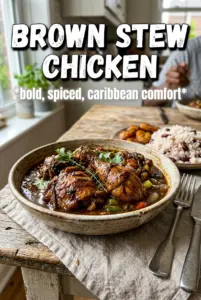
Deep mahogany brown stew chicken has a way of making the whole kitchen smell like something worth sitting down for. The chicken gets a glossy, almost sticky coating from the browning sugar and sauce, then simmers in a savory gravy that clings to every piece instead of pooling thinly at the bottom of the pot. What you end up with is tender chicken, sweet peppers, softened onions, and a sauce that tastes layered and slow-cooked even though the hands-on part is straightforward.
The part that matters most is the browning. The sugar needs to turn a deep amber before the chicken goes in, because that color is the backbone of the dish; too pale and the stew tastes flat, too dark and it turns bitter. Marinating the chicken ahead of time also gives the seasoning time to settle into the meat, so the gravy doesn’t have to do all the work at the end. The vegetables cook just long enough to lose their raw edge without turning to mush, which keeps the finished pot hearty instead of muddy.
Below, I’ll walk through the caramelizing step that makes or breaks brown stew chicken, the ingredient choices that matter most, and the small changes that help if you want a milder pot or need to stretch it for leftovers.
The gravy came out thick and dark without tasting burnt, and the chicken was falling off the bone after the full simmer. I served it over rice and even the next-day leftovers held onto that deep Jamaican seasoning.
Save this brown stew chicken for the nights when you want deep, peppery gravy and fall-apart chicken over hot rice.
The Browning Step Is What Gives This Stew Its Depth
Brown stew chicken lives or dies on color. The sugar and browning sauce have to go from clear and sandy to deep amber before the chicken hits the pot, because that caramelized base is what gives the gravy its dark color and that slow-cooked taste. If the sugar stays too light, the finished dish looks pale and tastes one-note. If you push it too far, it turns harsh and bitter, and that bitterness stays in the sauce.
Once the chicken goes in, the goal is to coat every surface in that caramel oil and let the pieces develop real color before the broth is added. Crowding the pot is the fastest way to stop browning, so give the pieces room and work in batches if needed. The chicken doesn’t need to be cooked through at this stage; it needs a deep sear so the stew tastes rich instead of boiled.
What Each Ingredient Is Actually Doing In This Dish
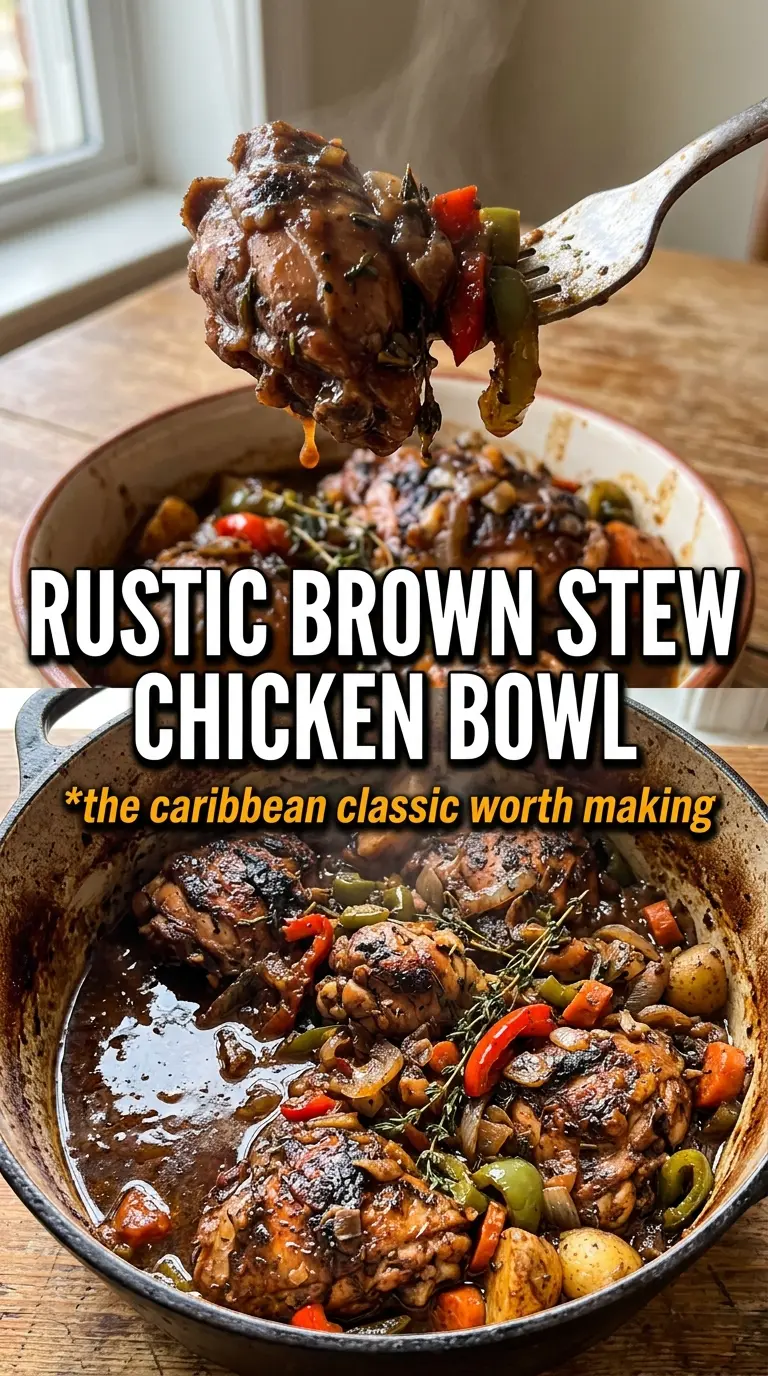
- Chicken thighs and drumsticks — Bone-in pieces hold up best in a long simmer and give the gravy more body than boneless cuts. Thighs stay juicy, and drumsticks add flavor, so this combination gives you tender meat without the stew drying out.
- Browning sauce and sugar — These are the backbone of the color and flavor. Browning sauce gives you that deep Jamaican-style color fast, while the sugar caramelizes in the pan and creates the base for the gravy; don’t swap in plain soy sauce and expect the same result, because it won’t give the same mahogany finish.
- All-purpose seasoning, garlic powder, onion powder, thyme, salt, and pepper — This marinade seasons the meat all the way through before it ever hits the pot. Dried thyme matters here because it carries through the simmer; if you use fresh thyme in the marinade, the flavor will be softer and less assertive.
- Bell peppers, onion, garlic, green onions, and Scotch bonnet — These build the stew’s aromatic base and add sweetness, heat, and freshness. If you want less heat, leave out the Scotch bonnet entirely; the dish still tastes complete without it.
- Chicken broth — This loosens the caramelized bits on the bottom of the pan and turns them into gravy. Use a broth you’d actually drink, because a weak broth makes the sauce taste thin even after simmering.
Building the Gravy Without Burning the Bottom
Marinate for Flavor That Reaches the Bone
Toss the chicken with the browning sauce and dry seasonings until every piece looks evenly coated, then let it sit for at least two hours, or overnight if you have the time. The rest period isn’t just about seasoning the outside; it gives the salt and spices time to pull into the meat so the finished stew tastes seasoned all the way through. If the chicken goes into the pan cold from the fridge, give it a few minutes on the counter so it doesn’t shock the oil and splatter as badly.
Caramelize the Sugar to the Right Shade
Heat the oil first, then add the sugar and watch it closely as it melts. You want a deep golden-brown color, not a pale tan, and you need to move fast once it reaches that point because it can go from perfect to burnt in seconds. The pot should smell nutty and warm, not acrid. If the sugar clumps or hardens, let it melt back down before adding the chicken.
Sear the Chicken Before the Liquid Goes In
Add the marinated chicken to the caramel oil and brown it on all sides until the surface looks dark and lacquered. This step builds flavor and keeps the chicken from tasting like it was merely simmered in sauce. Don’t rush to add broth while the pan still looks pale; that sear is what gives the stew its roasted, cooked-all-day depth. If the pot starts to smoke aggressively, lower the heat before the sugar scorches.
Simmer Until the Gravy Clings
After the vegetables soften in the same pot, return the chicken, add the broth, and bring everything to a boil before turning the heat down. The simmer should be gentle, with only small bubbles breaking the surface, because a hard boil will toughen the chicken and reduce the sauce too aggressively. Cover the pot and cook until the meat is pulling cleanly from the bone and the gravy has thickened enough to coat a spoon. If the sauce still looks thin near the end, uncover the pot for the last few minutes and let it reduce.
How to Adapt Brown Stew Chicken for Different Needs
Milder Heat Without Losing the Jamaican Flavor
Skip the Scotch bonnet and keep the rest of the seasoning the same. You’ll lose the sharp heat, but the thyme, browning, and caramelized sauce still give you the same savory backbone. A little black pepper can help fill in the gap if you want the stew to still have some bite.
Gluten-Free Version
Use a gluten-free all-purpose seasoning and check that your browning sauce and broth are certified gluten-free. The technique stays the same, and this dish doesn’t need flour to thicken, so the final gravy still comes together naturally as it simmers.
Using Only Chicken Thighs
Thighs work beautifully if that’s what you have. The stew will be a little easier to eat because there are fewer bones, and the meat stays especially juicy, though you lose some of the extra flavor that drumsticks bring to the broth.
Storage and Reheating
- Refrigerator: Store in an airtight container for up to 4 days. The gravy often tastes even better the next day as the seasoning settles in.
- Freezer: Freezes well for up to 3 months. Cool it completely first, then freeze in portions with enough gravy to keep the chicken from drying out.
- Reheating: Reheat gently on the stovetop over low heat with a splash of broth or water. A hard boil can tighten the chicken and make the gravy separate, so warm it slowly until the sauce loosens again.
Answers to the Questions Worth Asking
Brown Stew Chicken
Ingredients
Equipment
Method
- Mix browning sauce, all-purpose seasoning, garlic powder, onion powder, dried thyme, salt, and pepper, then rub into the chicken thighs and drumsticks. Cover and marinate for at least 2 hours up to overnight for better flavor.
- Heat vegetable oil in a large skillet or Dutch oven, then sprinkle in sugar and cook until caramelized to golden brown. Keep the heat steady so the caramel turns amber without burning.
- Add the marinated chicken pieces and cook until deeply golden on all sides, turning as needed. Remove chicken to a plate once browned.
- Sauté onion, bell peppers, garlic, green onions, and scotch bonnet in the pan for 4 minutes. Stir until fragrant and the peppers begin to soften.
- Return browned chicken to the pot, add chicken broth, and bring to a boil. Scrape up any browned bits from the bottom for extra color.
- Reduce heat to a gentle simmer, cover, and cook for 35-40 minutes until fall-apart tender and the gravy is thick. Uncover near the end if you need more reduction.
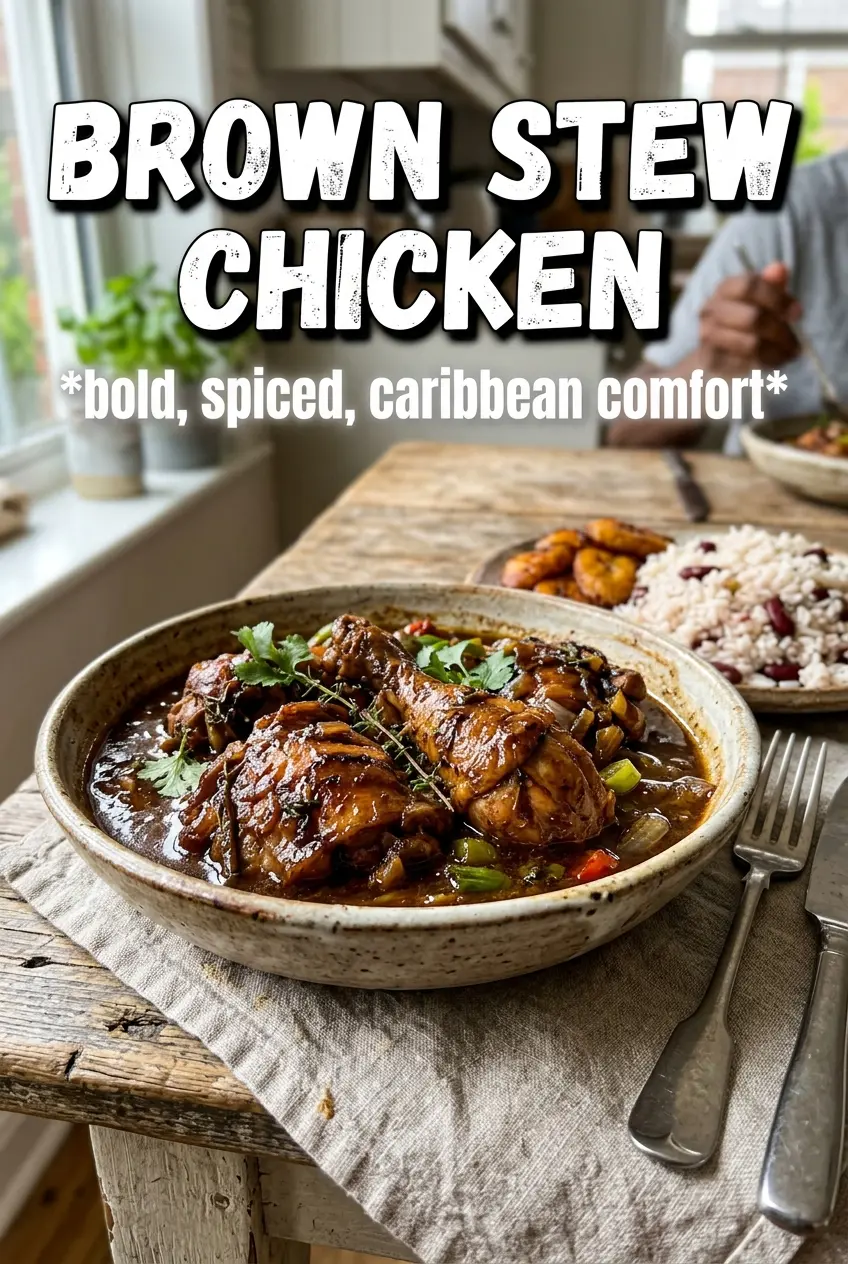
- Spoon the brown stew chicken and mahogany gravy into bowls and finish with fresh thyme. Serve with rice.