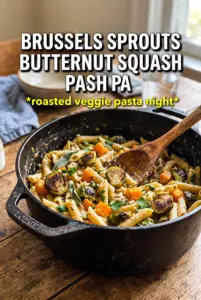
Roasted Brussels sprouts and butternut squash give this pasta the kind of deep, caramelized flavor that plain weeknight pasta usually misses. The squash turns soft and sweet at the edges, the sprouts pick up crisp browned leaves, and the brown butter pulls everything together with a nutty sauce that clings to every ridge of rigatoni or penne.
What makes this version work is the way each piece is handled on its own. The vegetables roast separately so they don’t steam each other, and the butter is browned before the garlic and sage go in, which keeps the sauce fragrant instead of flat. A splash of pasta water loosens the sauce just enough to coat the noodles and help the parmesan melt in without turning grainy.
Below, I’ve included the little details that matter here: how to keep the vegetables caramelized, why the brown butter needs close attention, and the easiest swaps if you need to work with what’s already in the pantry.
The squash stayed creamy, the Brussels sprouts kept their edges, and the brown butter with sage made the whole pan taste like something from a restaurant. I added the pasta water a little at a time and the sauce turned silky instead of greasy.
Brussels sprouts and butternut squash pasta with brown butter, sage, and parmesan deserves a spot on your Pinterest board for the nights when you want a cozy pan of pasta with real roasted flavor.
The Trick to Roasting Both Vegetables Without Steaming Them
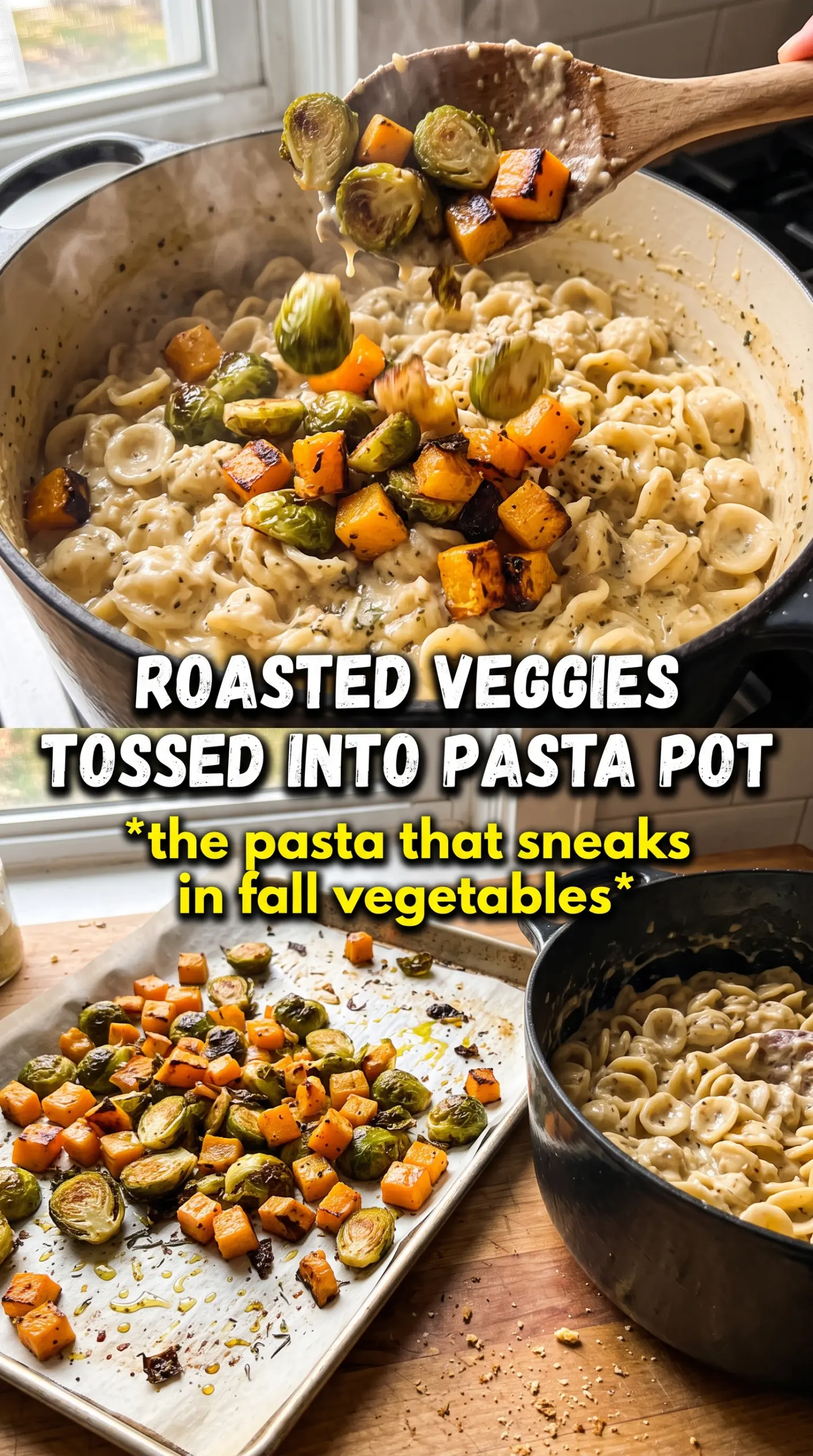
Brussels sprouts and butternut squash need different treatment if you want real caramelization. The squash releases more moisture and can go soft before it browns, while the sprouts need enough space for their cut sides to hit the pan and crisp instead of collapsing into a soggy pile. Roasting them separately gives each vegetable the time it needs.
The other thing that matters is the oven temperature. At 425F, the edges brown before the centers dry out, which is exactly what you want for a pasta like this. If your pan is crowded, the vegetables will steam. Use two sheet pans if you need to, and don’t pile the pieces on top of each other.
- Butternut squash — Cut it into even cubes so it cooks at the same rate on every side. Bigger chunks stay too firm in the middle; tiny pieces can collapse before they caramelize.
- Brussels sprouts — Halve them through the stem so the leaves stay attached and the cut side can brown. If some outer leaves fall off, keep them on the tray; they turn crisp and almost chip-like.
- Brown butter — This is what makes the sauce taste layered instead of just rich. The butter should smell nutty and show little golden flecks before the garlic goes in.
- Pasta water — The starch in it helps the butter and parmesan emulsify. Plain water won’t give you the same glossy finish.
What the Brown Butter, Sage, and Parmesan Are Actually Doing
- Rigatoni or penne — A short, ridged pasta holds onto the sauce and catches bits of parmesan and roasted vegetables. Long pasta can work, but it won’t trap the same amount of sauce.
- Unsalted butter — Unsalted gives you control while browning, because salted butter can make it harder to judge the flavor at the end. Brown it slowly enough to catch the color change before it burns.
- Garlic and sage — Add them after the butter browns, not before. Garlic burns fast, and sage turns bitter if it sits in the pan too long over high heat.
- Parmesan — Freshly grated parmesan melts more smoothly than the pre-grated stuff in a canister. If you use pre-grated cheese, it can turn the sauce a little grainy.
- Hazelnuts or walnuts — Toasted nuts are the finishing crunch that keeps the pasta from feeling heavy. Hazelnuts give a deeper, sweeter nuttiness; walnuts are a fine substitute if that’s what you have.
Building the Sauce So It Stays Glossy
Roast the Vegetables First
Get the squash and Brussels sprouts into the oven before you start the sauce. You want them deeply browned, with the squash tender at the center and the sprouts showing dark golden edges. If they come out pale, the pasta will taste flat because the vegetables never developed enough flavor on their own.
Brown the Butter Slowly
Set the butter over medium heat and watch for the foaming to settle. The color will shift from yellow to gold, then you’ll see little brown specks at the bottom and smell a nutty aroma. Pull it from the heat before it turns amber-dark; browned butter can go from perfect to burnt in less than a minute.
Finish With Pasta Water and Cheese
Add the drained pasta to the pan with the brown butter, then splash in pasta water a little at a time. Stir until the sauce turns silky and coats the noodles instead of pooling at the bottom. Add the parmesan off the heat or over very low heat; if the pan is scorching hot, the cheese can clump instead of melting into the sauce.
Fold in the Roasted Vegetables at the End
Use a gentle hand here so the squash doesn’t break down completely. You want some pieces to stay intact for contrast against the pasta. Taste at the end and season with salt and pepper after the parmesan goes in, since the cheese already brings a good amount of salt.
How to Adapt This for a Different Pantry or Diet
Make It Gluten-Free
Use a sturdy gluten-free short pasta and cook it just shy of fully tender. Gluten-free pasta can get soft fast once it hits the sauce, so pull it early and finish it in the pan with the brown butter and a little pasta water.
Make It Dairy-Free
Swap the butter for a good olive oil and use a dairy-free parmesan-style topping or skip the cheese altogether. You’ll lose the browned butter flavor, but the roasted vegetables, sage, and nuts still give the dish plenty of depth.
Use What You Have in the Nut Bowl
Hazelnuts are excellent here, but walnuts work almost as well and are easier to find. Skip any unsalted, raw nuts straight from the bag; toasting them first brings out the flavor and keeps the topping from tasting dusty.
Storage and Reheating
- Refrigerator: Store leftovers in an airtight container for up to 3 days. The pasta will absorb some of the sauce as it sits, so expect it to look a little drier the next day.
- Freezer: This freezes, but the vegetables soften and the sauce loses some of its silky texture after thawing. Freeze only if you don’t mind a softer result, and pack it tightly in a freezer-safe container for up to 2 months.
- Reheating: Reheat gently in a skillet with a splash of water or broth over low to medium-low heat. High heat makes the parmesan separate and the pasta toughen up before the center warms through.
Questions I Get Asked About This Recipe
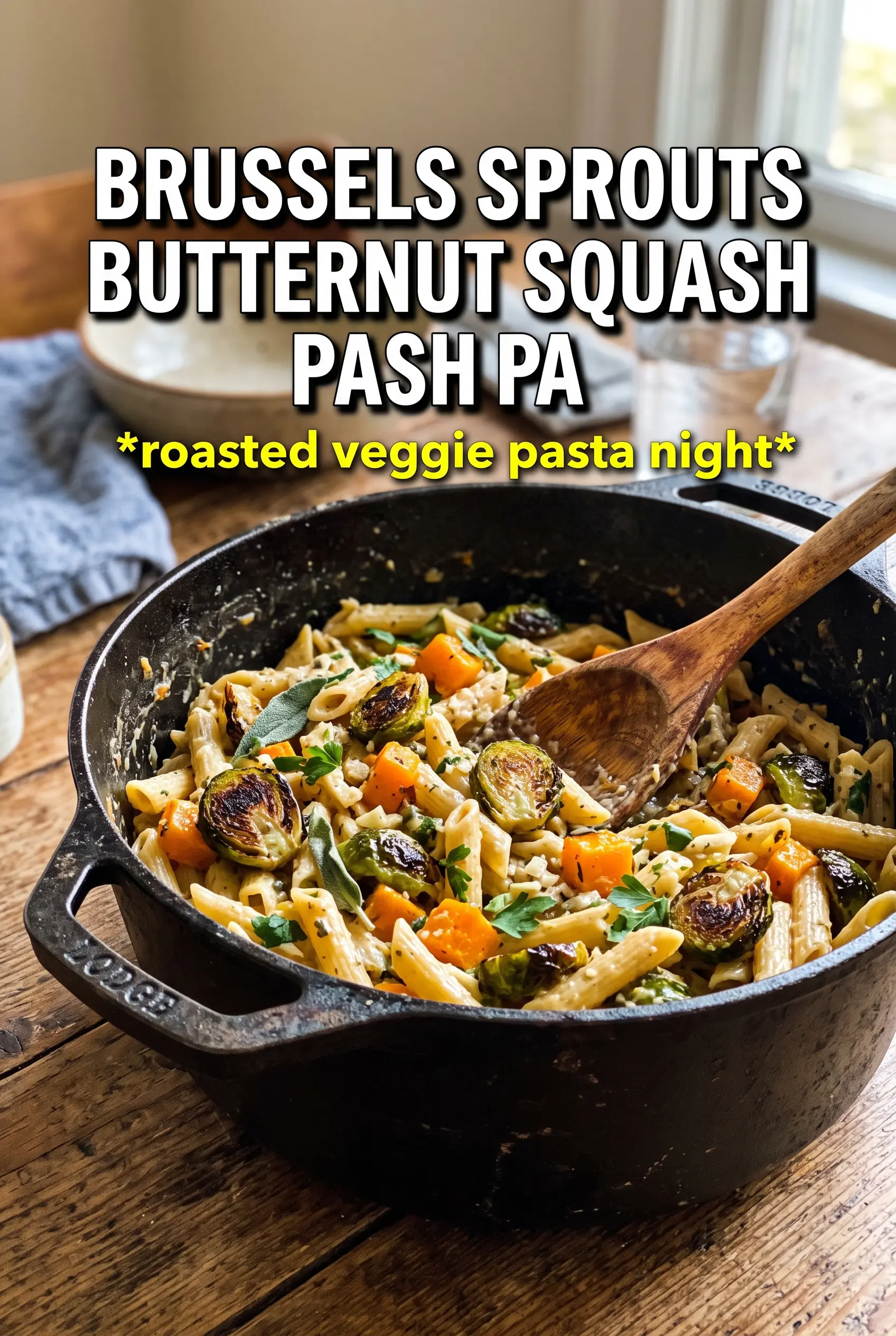
Brussels Sprouts And Butternut Squash Pasta
Ingredients
Equipment
Method
- Heat oven to 425F. Toss butternut squash cubes with olive oil, salt, and pepper, then spread on a sheet pan.
- Roast the butternut squash for 25 minutes at 425F, until caramelized. Transfer to a bowl when done.
- Toss halved Brussels sprouts with olive oil, salt, and pepper, then spread on a sheet pan. Roast at 425F for 25 minutes until caramelized.
- Cook rigatoni or penne according to package directions, and reserve 1 cup pasta water. Drain the pasta and set aside.
- Brown the butter with minced garlic and chopped sage in a pan over medium heat until golden and nutty, stirring constantly to prevent burning.
- Toss the hot pasta in the brown butter with 1/2 cup pasta water until glossy and evenly coated.
- Add the roasted butternut squash and roasted Brussels sprouts, then toss to combine.
- Sprinkle in grated parmesan and season with salt and pepper to taste, tossing again until the sauce clings to the pasta.
- Top with toasted hazelnuts or walnuts and serve immediately.