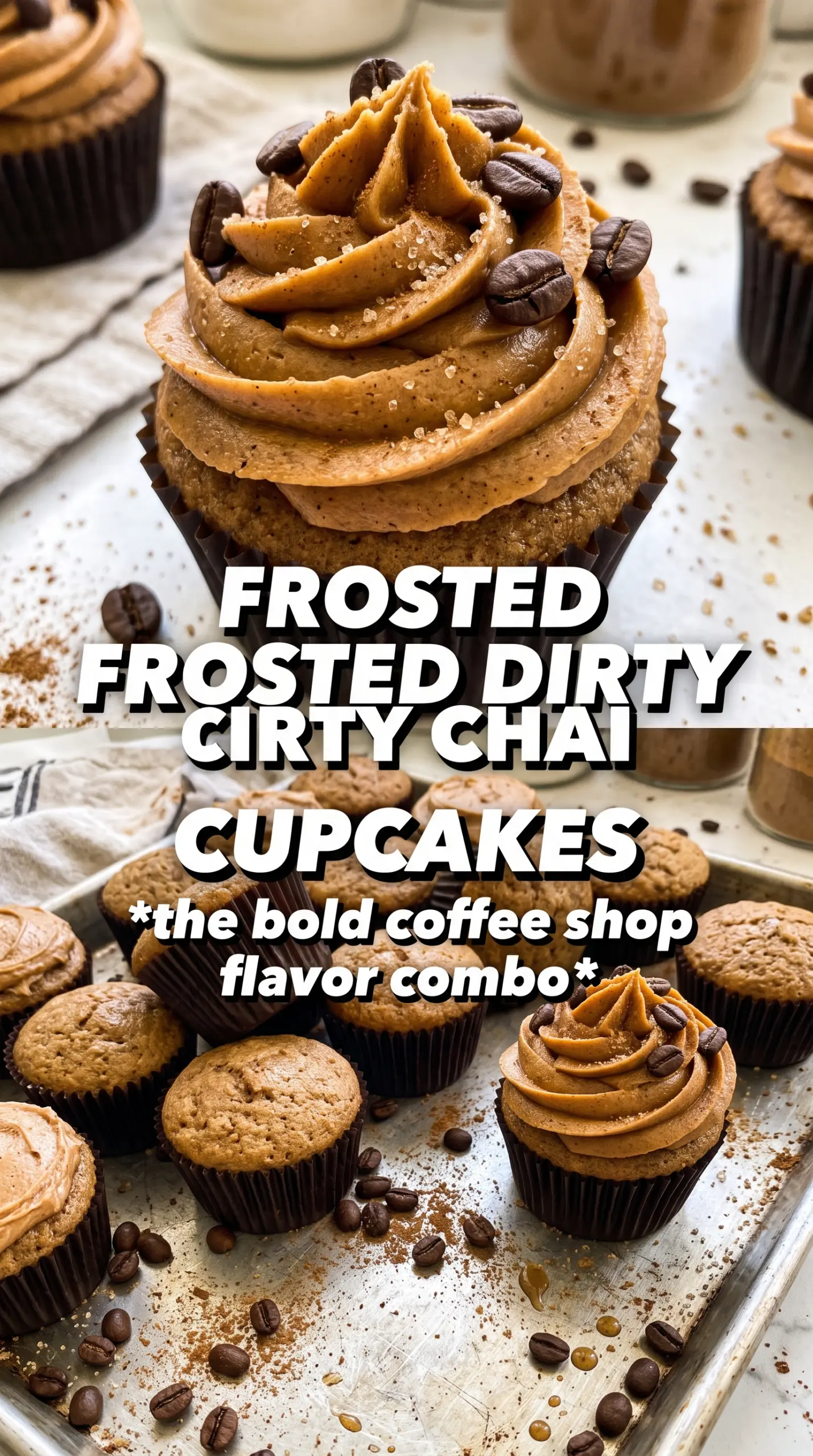
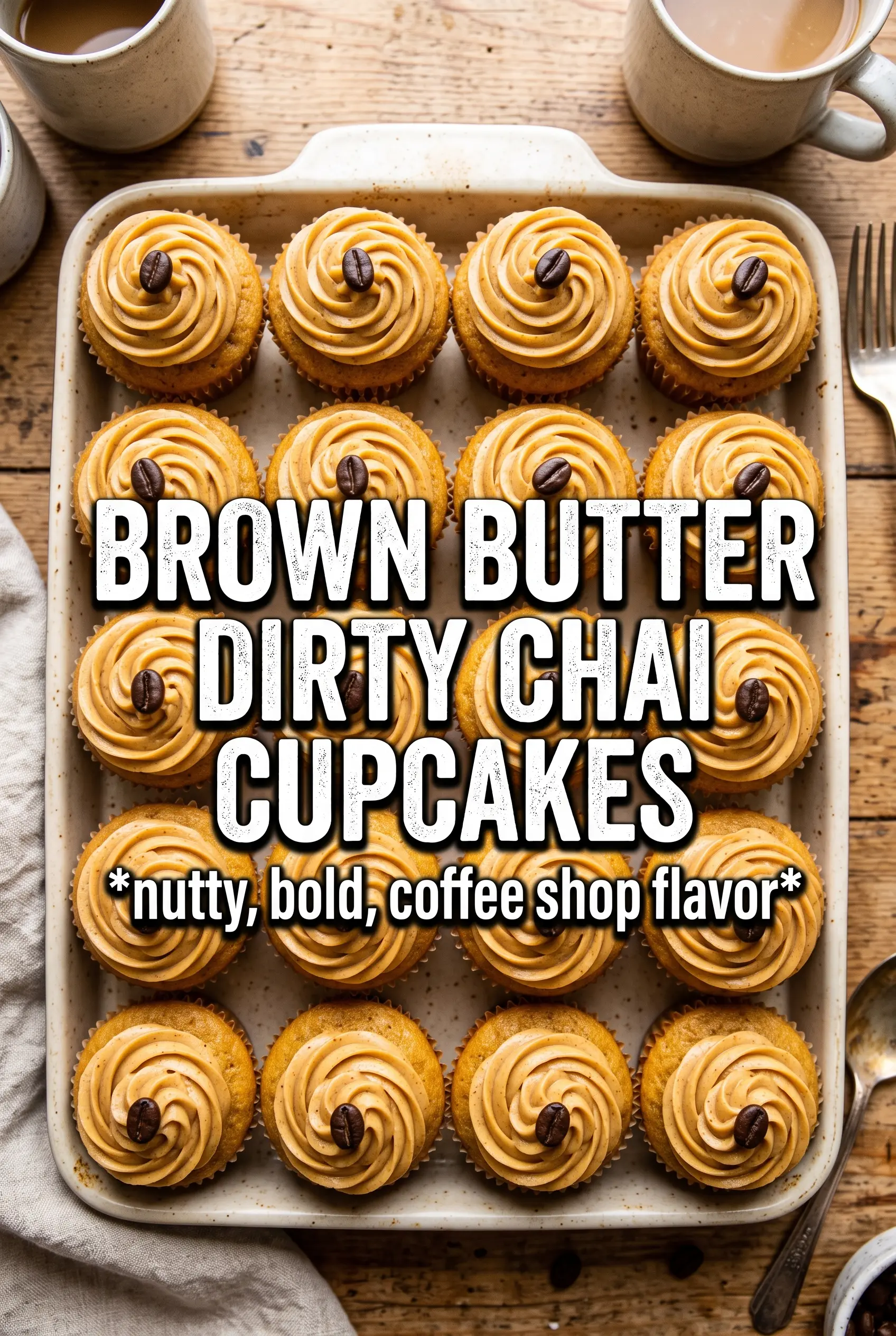
Brown butter dirty chai cupcakes bake up with a tender crumb, warm spice, and just enough espresso to make the chai taste deeper and more grown-up. The brown butter gives the cake a toasty, nutty edge that plain melted butter never could, and the frosting carries that same flavor all the way through each bite.
What makes these cupcakes work is balance. The batter uses strong brewed espresso and a measured chai spice blend, so the spice reads as chai instead of drifting into pumpkin-pie territory. Cooling the brown butter before you beat it with the sugar matters too; if it’s too warm, the batter can turn greasy and the cupcakes won’t rise as evenly.
Below, I’m breaking down the one step that keeps the texture light, the ingredient swaps that actually hold up, and how to keep the frosting fluffy instead of heavy. If you’ve ever had spice cupcakes that tasted flat, this version fixes that.
The cupcakes came out incredibly soft, and the brown butter frosting had that caramelized edge that made the espresso and chai taste even richer. I was nervous the coffee would overpower everything, but it just deepened the spice flavor and the crumb stayed moist for two days.
Save these brown butter dirty chai cupcakes for when you want a spiced cupcake with espresso depth and a fluffy brown butter frosting.
The Trick to Keeping Brown Butter Cupcakes Soft Instead of Dense
Brown butter adds flavor, but it also changes the texture game. Once butter is browned, some of the water has cooked off, so the batter can lean a little tighter if you rush the mixing or overbake it. That’s why the butter needs to be cooled before it goes into the bowl and why the cupcakes come out best when you stop baking as soon as the tops spring back and a toothpick comes out with a few moist crumbs.
The other thing that keeps these cupcakes from turning heavy is the order. Sugar gets beaten into the cooled brown butter first, which helps loosen it and build a little structure before the eggs and liquid go in. If you dump everything together at once, you lose that lightness and the crumb turns more compact than it should.
- Brown butter — This is the flavor anchor. Let it cool until it’s opaque and soft, not warm and runny, or the batter won’t emulsify properly.
- Espresso powder — A small amount sharpens the chai and makes the cupcakes taste deeper, not coffee-forward. Instant espresso powder works better than brewed coffee here because it doesn’t water down the batter.
- Buttermilk — It adds tang and tenderness, and it reacts with the baking soda for a better rise. If you don’t have it, use milk plus a teaspoon of vinegar, then let it sit for 5 minutes.
- Chai spice blend — This is where the cupcake gets its personality. Use a blend you like on its own, since the frosting carries that spice all the way through.
What Each Ingredient Is Actually Doing in This Recipe
- Primary ingredient (the star) — Quality matters most. Choose the best you can find.
- Cooking medium (oil, butter, or broth) — This carries flavors and prevents dryness.
- Seasonings (salt, pepper, spices, herbs) — Layer flavors so nothing overpowers. Build depth gradually.
- Aromatics (garlic, onion, herbs) — Cook with fat to bloom flavors. Become the foundation.
- Supporting ingredients — Complement the main ingredient without overpowering it.
- Sauce or liquid (if applicable) — Brings flavors together. Balance richness with acid.
- Acid (lemon, vinegar, wine, or other) — Brightens and prevents flat-tasting results.
- Final finish (garnish, glaze, or sauce) — Prevents one-dimensional taste and adds visual appeal.
Building the Batter and Frosting Without Losing the Spice
Start with the brown butter and give it time to cool
Brown the butter for both the cupcakes and the frosting until the milk solids turn golden and smell nutty, then pour it into a bowl and let it cool fully. For the cupcakes, it should be cool enough that it doesn’t melt the brown sugar into a slick paste. If it’s still warm, the eggs can start to scramble at the edges and the batter won’t hold together cleanly.
Whisk the dry ingredients before the liquids go in
Flour, baking powder, baking soda, chai spice, espresso powder, and salt need to be combined first so the spice and leavening spread evenly through the batter. This matters more than it seems, because chai spice can clump and espresso powder can streak if it’s added later. You want the batter to smell evenly spiced before it ever goes into the pan.
Mix just until the flour disappears
Beat the cooled brown butter with the brown sugar until it looks sandy and a little lighter, then add the eggs, espresso, buttermilk, and vanilla. Once the dry ingredients go in, fold only until you don’t see streaks of flour. Overmixing at this point turns the crumb gummy, especially with the extra richness from the butter.
Pipe the frosting when the cupcakes are completely cool
The frosting should be fluffy and spreadable, not loose. Beat the browned butter with powdered sugar, milk, espresso powder, and chai spice until it looks pale and airy. If the cupcakes are even slightly warm, the frosting will slide instead of sitting in tall swirls, so let the cakes cool all the way to the center before you decorate them.
How to Adjust These Cupcakes for Different Kitchens and Different Crowds
Dairy-Free Swap
Use plant-based butter in place of the butter and a dairy-free milk with a teaspoon of vinegar instead of buttermilk. You’ll lose a little of the nutty depth from true brown butter, but the chai and espresso still carry the flavor well. Choose a stick-style vegan butter for the frosting so it whips up more like the original.
Make the Spice More or Less Assertive
If your chai blend is bold, keep it at the written amount. If it’s mild, add another 1/2 teaspoon to the batter and a pinch more to the frosting. The spice should taste warm and fragrant, not dusty, so adjust in small amounts.
Caffeinated but Less Strong
Cut the espresso powder in half if you want a softer coffee note, then keep the brewed espresso in the batter. That still gives the cupcakes depth without pushing them into mocha territory. The frosting will taste a little gentler too, which works well if these are for a mixed crowd.
Storage and Reheating
- Refrigerator: Store frosted cupcakes in an airtight container for up to 4 days. The frosting firms up a bit, but the cake stays moist.
- Freezer: Freeze unfrosted cupcakes tightly wrapped for up to 2 months. Thaw at room temperature before frosting so the tops don’t trap condensation.
- Reheating: These are best served at room temperature. If they’ve been chilled, let them sit out for 30 to 45 minutes so the butter in the frosting softens; microwaving can melt the frosting and make the cake greasy.
Answers to the Questions Worth Asking
Brown Butter Dirty Chai Cupcakes
Ingredients
Equipment
Method
- Brown the 3/4 cup portion of butter for the dirty chai cupcakes and cool it to room temperature.
- Brown the remaining butter for the frosting, then cool it completely.
- Preheat the oven to 350F and line cupcake tins with liners.
- Whisk together all-purpose flour, baking powder, baking soda, chai spice blend, espresso powder, and salt in a mixing bowl.
- Beat the cooled browned butter and packed brown sugar until smooth, then beat in the eggs one at a time.
- Add the cooled strongly brewed espresso, buttermilk, and vanilla, and mix until combined.
- Fold the flour mixture into the wet ingredients until no dry streaks remain.
- Fill liners about 2/3 full with batter and bake for 18-20 minutes, until a toothpick comes out clean or with a few moist crumbs.
- Cool the cupcakes completely before frosting.
- Beat the browned butter until creamy, then beat in powdered sugar gradually until thick and smooth.
- Beat in the milk until the frosting is fluffy and pipeable.
- Pipe frosting onto cooled cupcakes and dust the tops with espresso powder and chai spice.