Baked mac and cheese earns its place at the table when the sauce clings to every noodle, the top turns deeply golden, and the first spoonful stretches instead of collapsing into a greasy puddle. The best version has a soft, spoonable center under a lightly crisped crust, with enough sharp cheese to taste bold but enough milk to keep it creamy after baking.
The trick is building a sauce that’s thick before the cheese goes in. A quick roux gives the milk structure, evaporated milk adds body without making the sauce heavy, and the pasta gets pulled from the water early so it finishes cooking in the oven instead of turning mushy. Sharp cheddar brings the punch, while Gruyere or Colby jack smooths out the edges and helps the casserole melt evenly.
Below you’ll find the timing that keeps the sauce silky, the cheese blend that gives you both stretch and flavor, and the small rest at the end that keeps the dish from spilling apart the second you scoop it.
The sauce stayed creamy after baking and the top got that perfect browned crust without drying out the pasta. I used the Gruyere and it gave the whole dish a richer flavor my family noticed right away.
Save this baked mac and cheese for the nights when you want a creamy center, browned cheese crust, and those big stretchy cheese pulls.
The Sauce Has to Be Thicker Than You Think Before It Hits the Oven
If the sauce looks perfect in the pot and then turns loose after baking, it usually never had enough body to begin with. Pasta keeps absorbing liquid in the oven, and a baked mac and cheese that starts thin ends up soupy around the edges and dry in the center by the time the top browns. The roux needs a full minute on the stove so the flour loses its raw taste, then the milk has to simmer until it coats a spoon instead of running off like cream.
The other mistake is adding the cheese over heat that’s too high. Once the milk base thickens, pull the pan down to lower heat before stirring in the cheese so the sauce stays smooth and glossy. That’s what gives you a filling that bakes up creamy instead of grainy or oily.
What the Cheeses Are Actually Doing Here

- Sharp cheddar — This is the flavor backbone. Use a good sharp cheddar if you can, because mild cheddar melts fine but tastes flat after baking. Shred it yourself if possible; pre-shredded cheese is coated with starches that can make the sauce less smooth.
- Gruyere or Colby jack — Gruyere gives a deeper, nuttier melt and helps the casserole taste a little more grown-up. Colby jack is the easier swap if you want a milder, smoother result or if Gruyere is too pricey. Either one helps with stretch and keeps the cheddar from tasting one-note.
- Evaporated milk — This adds body without needing a heavy cream-only sauce. It helps the bake stay creamy after it comes out of the oven, which is why it works better here than regular milk alone. If you don’t have it, half-and-half is the closest substitute, though the final texture will be a touch richer and softer.
- Dry mustard and smoked paprika — These don’t make the dish taste mustardy or smoky in a loud way. They sharpen the cheese flavor and keep the sauce from tasting dull. Don’t skip both, because the whole dish depends on that small layer of seasoning to taste complete.
Building the Pasta Bake So It Stays Creamy After the Oven
Cooking the Pasta Just Short of Done
Boil the macaroni for two minutes less than the box says, then drain it well. The pasta will keep cooking in the oven, and starting it too soft is how you end up with a casserole that turns pasty instead of creamy. You want the noodles still a little firm in the center when they go into the sauce.
Making the Roux and Milk Base
Melt the butter, whisk in the flour, and cook it for about a minute until it smells a little nutty and no longer looks dusty. Slowly whisk in the milk and evaporated milk so the mixture stays smooth; dumping it all in at once can leave you with lumps. Let it simmer until it thickens enough to coat a spoon, because this is the structure that keeps the final bake from leaking liquid.
Melting in the Cheese Without Breaking It
Take the pan off the heat or turn it very low before stirring in the cheese. Add it in handfuls and let each addition melt before adding the next so the sauce stays silky. If the sauce turns grainy, the heat was too high and the cheese tightened up instead of melting cleanly.
Baking Until Bubbling and Resting Before Serving
Pour everything into the buttered dish, top with the remaining cheese, and bake until the edges are bubbling hard and the top has browned in spots. The center should look set but still soft under the crust. Let it rest for 10 minutes before serving so the sauce settles and slices instead of rushing across the pan the moment a spoon goes in.
How to Adapt This Without Losing the Creamy Center
Gluten-Free Version
Use a good 1:1 gluten-free flour blend in the roux and cook it the same way. The texture stays close to the original as long as you whisk until the sauce fully thickens before the cheese goes in. Keep the pasta slightly underdone, since gluten-free noodles can soften fast in the oven.
Extra-Sharp and Bolder
Swap part of the cheddar for extra-sharp cheddar or a little aged white cheddar if you want more bite. The flavor gets louder and the color stays rich, but the sauce can taste a touch less mellow, so keep the Gruyere or Colby jack in the mix for balance.
No Gruyere on Hand
Colby jack, Monterey Jack, or even mozzarella can step in, but each one changes the result. Colby jack keeps the texture smooth and mild, while mozzarella adds stretch with a softer flavor. Avoid using only mozzarella, though, or the dish loses the depth that makes the cheese sauce taste finished.
Make-Ahead for a Crowd
Assemble the dish up to a day ahead, cover it tightly, and refrigerate before baking. Add about 10 extra minutes in the oven if it goes in cold, and keep an eye on the top so it doesn’t overbrown before the center heats through. The sauce may look a little looser before baking, but it tightens as it rests.
Storage and Reheating
- Refrigerator: Store covered for up to 4 days. The sauce will firm up as it chills, but it stays flavorful.
- Freezer: It freezes well if you portion it first and wrap it tightly. Thaw overnight in the fridge before reheating for the best texture.
- Reheating: Reheat covered in a 325F oven with a splash of milk stirred over the top if it looks dry. The common mistake is blasting it in the microwave or oven until the sauce breaks and the pasta turns tough.
Answers to the Questions Worth Asking
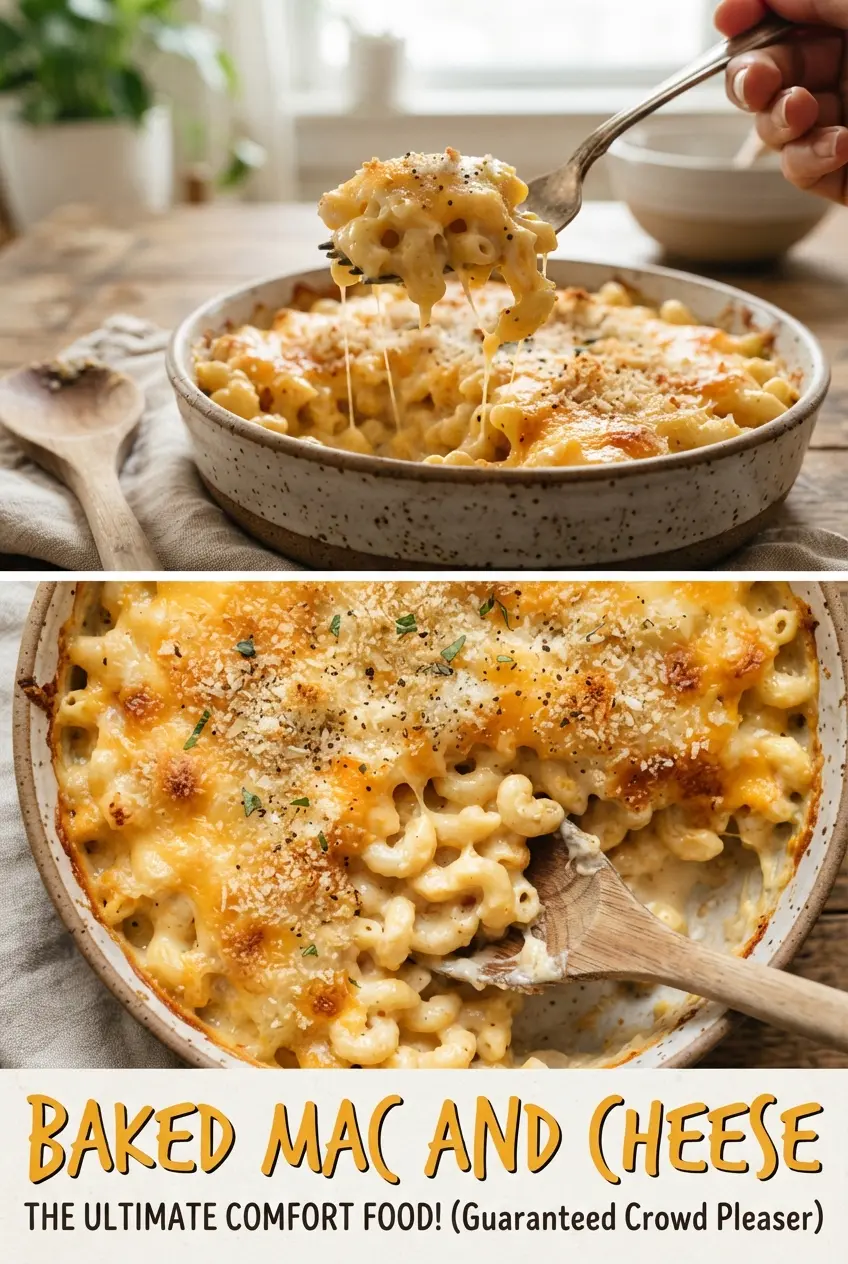
Baked Mac and Cheese
Ingredients
Equipment
Method
- Preheat the oven to 350F and butter a 9x13-inch baking dish so the mac doesn’t stick. Use a light, even coating and set the dish aside.
- Cook the elbow macaroni for 2 minutes less than package directions, then drain well. The pasta should still feel firm in the center.
- Melt the butter in a Dutch oven over medium heat. Keep it moving until fully melted and glossy.
- Whisk in the all-purpose flour and cook for 1 minute. Whisk constantly until it smells lightly toasted.
- Slowly whisk in the whole milk and evaporated milk. Pour gradually to keep the mixture smooth.
- Simmer for 5-6 minutes, whisking, until the sauce thickens enough to coat a spoon. Season with salt, black pepper, dry mustard, and smoked paprika, then whisk again to combine.
- Stir in 3 cups shredded sharp cheddar and 1 1/2 cups shredded Gruyere or Colby jack until melted. The sauce should look smooth and glossy.
- Fold the drained pasta into the sauce until every piece is coated. Make sure no dry pasta remains.
- Pour the mixture into the buttered 9x13-inch baking dish, then top with the remaining cheese. Spread it evenly so it melts into a browned crust.
- Bake at 350F for 25-30 minutes until bubbly around the edges and golden on top. Look for a bubbling center and browned cheese surface.
- Rest the baked mac and cheese for 10 minutes before serving. This sets the sauce so it slices and holds together better.