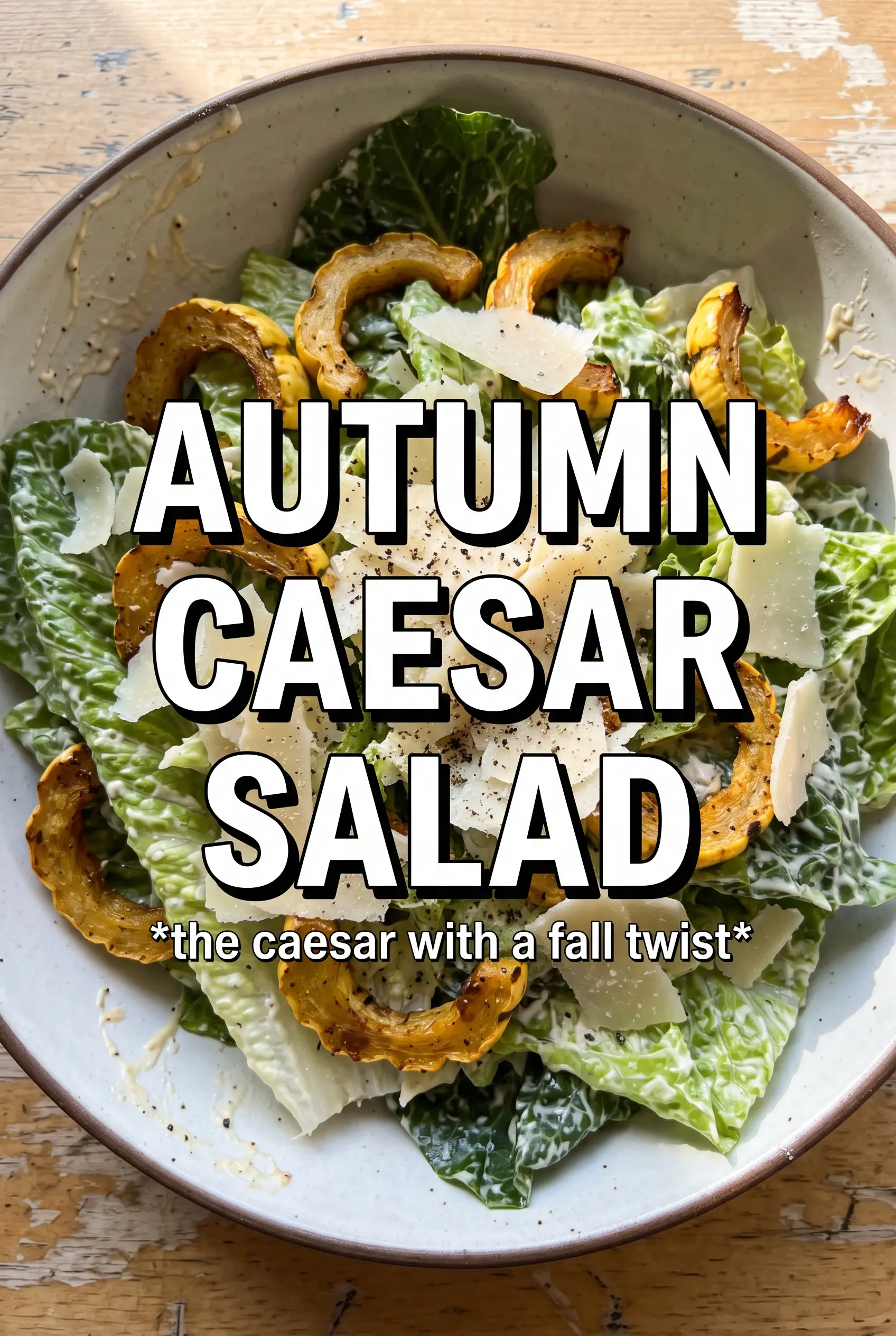
Roasted delicata squash changes Caesar salad from crisp and cold into something with a little more depth and a lot more staying power. The squash turns tender in the middle, caramelized at the edges, and firm enough to stand in for croutons without collapsing into the dressing. That sweet-savory contrast against sharp parmesan, lemony dressing, and crunchy pepitas is what makes this one feel worth repeating.
The key is treating the squash like the crouton element, not a side note. Delicata roasts fast, and because the skin is thin and edible, you get neat little rings with no peeling required. The dressing is built on mayonnaise, which gives you the creamy Caesar texture without the fuss of emulsifying egg and oil from scratch. A little Worcestershire and Dijon bring the backbone; garlic and lemon keep it bright.
Below, I’ve included the small details that keep the squash caramelized instead of soggy, plus a few smart swaps if you want to make this salad work with what’s already in your kitchen.
The delicata roasted up with those caramelized edges and held its shape just like a crouton. I used the leftover dressing on chicken the next day, and it was even better after the garlic had a little time to mellow.
Save this Autumn Caesar Salad With Delicata Squash Croutons for the nights when you want Caesar crunch, roasted squash sweetness, and a salad that eats like a full meal.
The Roast That Keeps Delicata from Going Soft
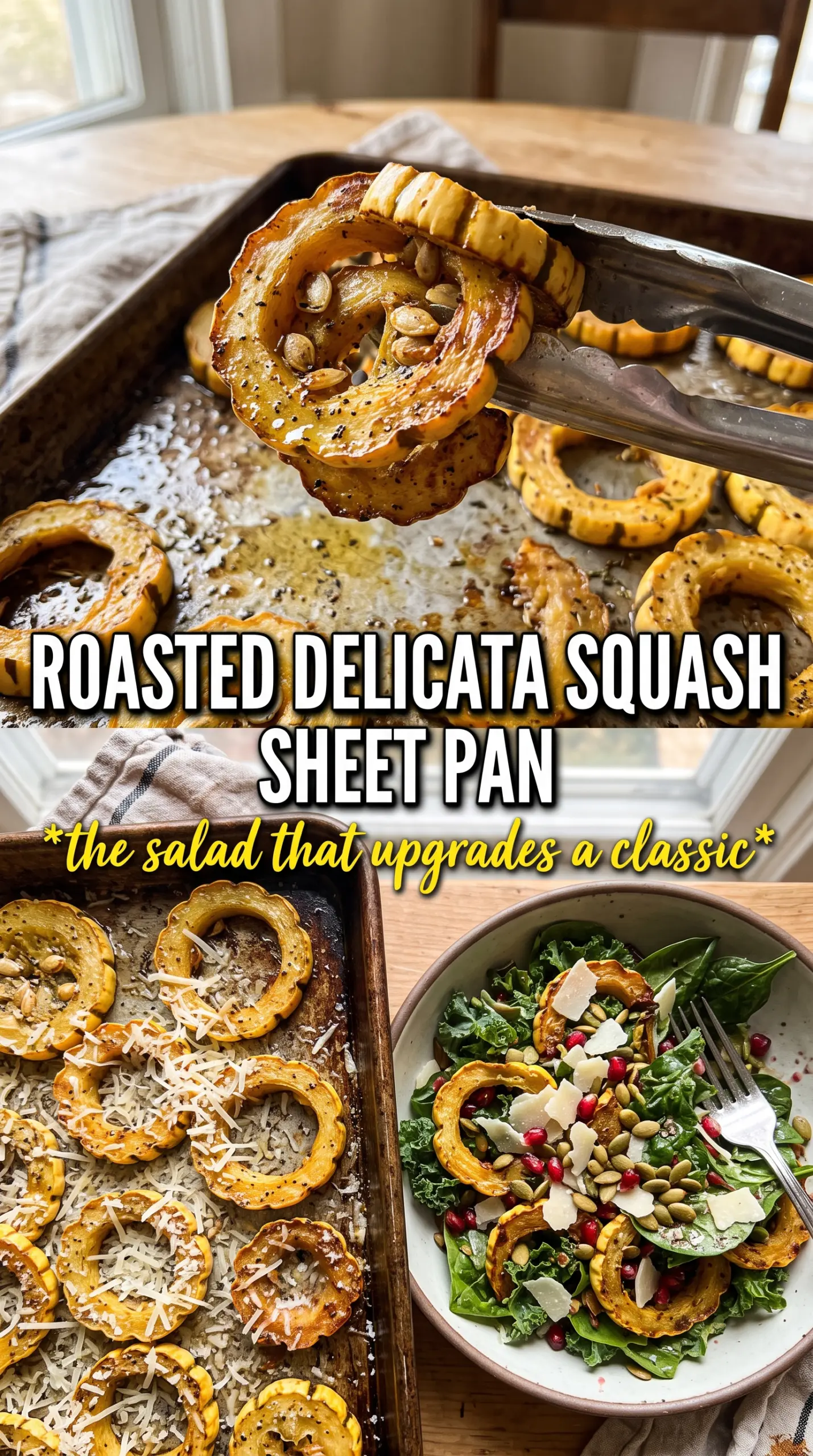
Delicata squash only works as a crouton replacement if it has time and space to caramelize. Crowd the pan and it steams. Roast it in a single layer, cut side down or flat-side down where possible, and leave it alone until the underside takes on real color. That browned edge is what gives the salad its contrast.
The other thing that matters is thickness. Half-inch rings are the sweet spot: thin enough to cook through in about 20 to 25 minutes, thick enough to stay intact when you toss the salad. If the slices are too thin, they shrink and dry out before the centers turn creamy.
- Delicata squash — The thin skin is part of the appeal here. It softens in the oven and saves you from peeling, which also helps the rings keep their shape.
- Olive oil — Just enough to help browning and prevent sticking. Too much oil will make the squash greasy instead of crisp at the edges.
- Pepitas — They bring the crunch you’d normally get from bread croutons, plus a nutty flavor that fits the roasted squash better than croutons would.
What Each Part of This Caesar Is Doing
- Romaine — Use cold, dry lettuce. If it’s wet, the dressing slides right off and the salad turns watery fast.
- Mayo — This is the shortcut that makes the dressing creamy and stable. It stands in for the emulsified base of a classic Caesar and keeps the texture smooth.
- Lemon juice — This keeps the dressing sharp enough to handle the sweet squash. Fresh lemon matters here; bottled juice tastes flat next to the parmesan.
- Worcestershire — It gives the dressing that savory depth Caesar needs. There isn’t a clean substitute that tastes exactly the same, but a little extra parmesan and a pinch of anchovy paste can push it in the same direction if you use anchovy in your kitchen.
- Shaved parmesan — Shaved, not finely grated, gives you little salty ribbons that stand out against the romaine and squash. If you only have grated parmesan, use a lighter hand so it doesn’t disappear into the dressing.
Building the Salad So the Squash Stays Crisp on the Edges
Roast the Squash First
Start with a hot oven at 425°F and get the squash in before anything else. Toss the rings with olive oil, salt, and pepper, then spread them out so they aren’t touching. You want the surfaces to brown, not trap steam. Flip halfway through so both sides get some color, and pull them when the centers are tender and the edges look deeply caramelized.
Whisk the Dressing Until It Turns Smooth
The dressing comes together fast, but the order matters. Stir the mayo, parmesan, lemon juice, Worcestershire, garlic, Dijon, salt, and pepper until no streaks remain. If the garlic seems sharp, that’s normal at first; it mellows once it hits the salad. If the dressing looks too thick to toss, loosen it with a small splash of water or more lemon juice.
Toss the Greens at the Last Minute
Dress the romaine right before serving. Caesar dressing wilts lettuce quickly, and once the leaves lose their snap, the whole salad feels heavy. Toss gently so the leaves get coated without bruising, then add the shaved parmesan. Put the squash on top instead of mixing it in; that keeps the rings intact and makes the plate look intentional.
Finish with Pepitas for the Last Bit of Crunch
Scatter the toasted pepitas over the top right before the salad goes to the table. They add the crunch that keeps each bite interesting after the warm squash softens the texture a little. If the pepitas go on too early, they’ll lose their crispness under the dressing.
How to Adapt This Salad When You Need a Different Setup
Make It Dairy-Free
Swap the parmesan in the dressing for a dairy-free parmesan alternative, and use the same swap for the finishing cheese. You’ll lose a little of the sharp salty edge that real parmesan brings, so add an extra pinch of salt and a touch more lemon to keep the dressing lively.
Turn It Into a Main Dish
Add sliced grilled chicken, shrimp, or roasted salmon on top. The squash already brings sweetness and substance, so the protein just needs to be simply seasoned. This turns the salad from a side into a full dinner without changing the dressing or the roasting method.
Use Another Winter Squash
Acorn squash or butternut can work, but they won’t behave quite the same way. You’ll need to peel them, and the pieces will be softer and more likely to break apart. Delicata is the best choice because it roasts into tidy, edible rings with the least effort.
Storage and Reheating
- Refrigerator: Store the dressed salad and squash separately for up to 2 days. The romaine will soften once dressed, so keep leftovers in mind as a second-day lunch, not a replica of the first serving.
- Freezer: This one doesn’t freeze well. The lettuce turns limp and the dressing separates after thawing.
- Reheating: Rewarm the squash on a sheet pan in a 375°F oven for a few minutes, just until heated through. Don’t microwave it if you want the edges to stay even slightly crisp.
Answers to the Questions Worth Asking
Autumn Caesar Salad With Delicata Squash Croutons
Ingredients
Equipment
Method
- Preheat the oven to 425F, then toss the delicata rings with olive oil, salt, and pepper until evenly coated. You want each ring to look glossy and lightly seasoned.
- Roast for 20-25 minutes on a sheet pan, flipping halfway, until caramelized. Look for browned edges and deep golden surfaces.
- Whisk mayo, parmesan, lemon juice, Worcestershire, minced garlic, Dijon, salt, and pepper until smooth. Stop when the mixture turns creamy and fully combined with no visible garlic bits.
- Toss the chopped romaine with the Caesar dressing and shaved parmesan until the leaves are evenly coated. The salad should look glossy rather than dry.
- Arrange the dressed romaine on plates, then top with the roasted delicata rings as croutons. Place the rings so they’re visible above the greens.
- Scatter toasted pepitas over the salad and finish with extra parmesan. Add a light final shower so every bite gets crunch.