Warm German potato salad lands with a completely different kind of comfort than the mayonnaise-based version most people expect. The potatoes stay tender but hold their shape, and the dressing soaks in while everything is still hot, giving each bite a tangy, savory edge that clings instead of pooling at the bottom of the bowl. Bacon adds the smoky backbone, but it’s the vinegar and broth that keep the whole dish bright.
What makes this version work is timing. The potatoes need to be drained while they’re just tender, then dressed while they’re warm enough to drink in the vinaigrette. If they cool down too much, the flavor sits on the surface instead of settling into the slices. The bacon drippings do more than add richness; they carry the onion flavor and give the dressing a rounded finish that plain oil just doesn’t match.
Below, I’ve included the little details that matter most here: which potatoes hold up best, how to keep the dressing from turning sharp, and what to do if you want the salad a little more tangy or a little more savory. That’s the difference between a decent potato salad and one people hover over with a second spoon.
The dressing soaked right into the warm potatoes and the bacon stayed crisp enough to give every bite texture. I’ve made this twice now, and the tangy vinegar finish is exactly what I was hoping for.
Save this warm German potato salad for the nights when you want bacon, onions, and a tangy vinegar dressing that clings to every slice.
The Trick Is Dressing the Potatoes While They’re Still Warm
The biggest mistake with German potato salad is waiting too long. Warm potatoes absorb the vinegar dressing; cooled potatoes shrug it off. That’s why the broth, vinegar, sugar, and mustard are brought together while the potatoes are still steaming from the pot. The dressing should taste a little bold in the pan because it settles down once it hits the potatoes.
Another thing that trips people up is slicing the potatoes too thin. Thin slices can collapse when you toss them, and mashed edges make the salad heavy. Yukon golds are the right call here because they stay creamy without falling apart, especially once the hot dressing and bacon get folded through.
What the Bacon Drippings Are Actually Doing Here
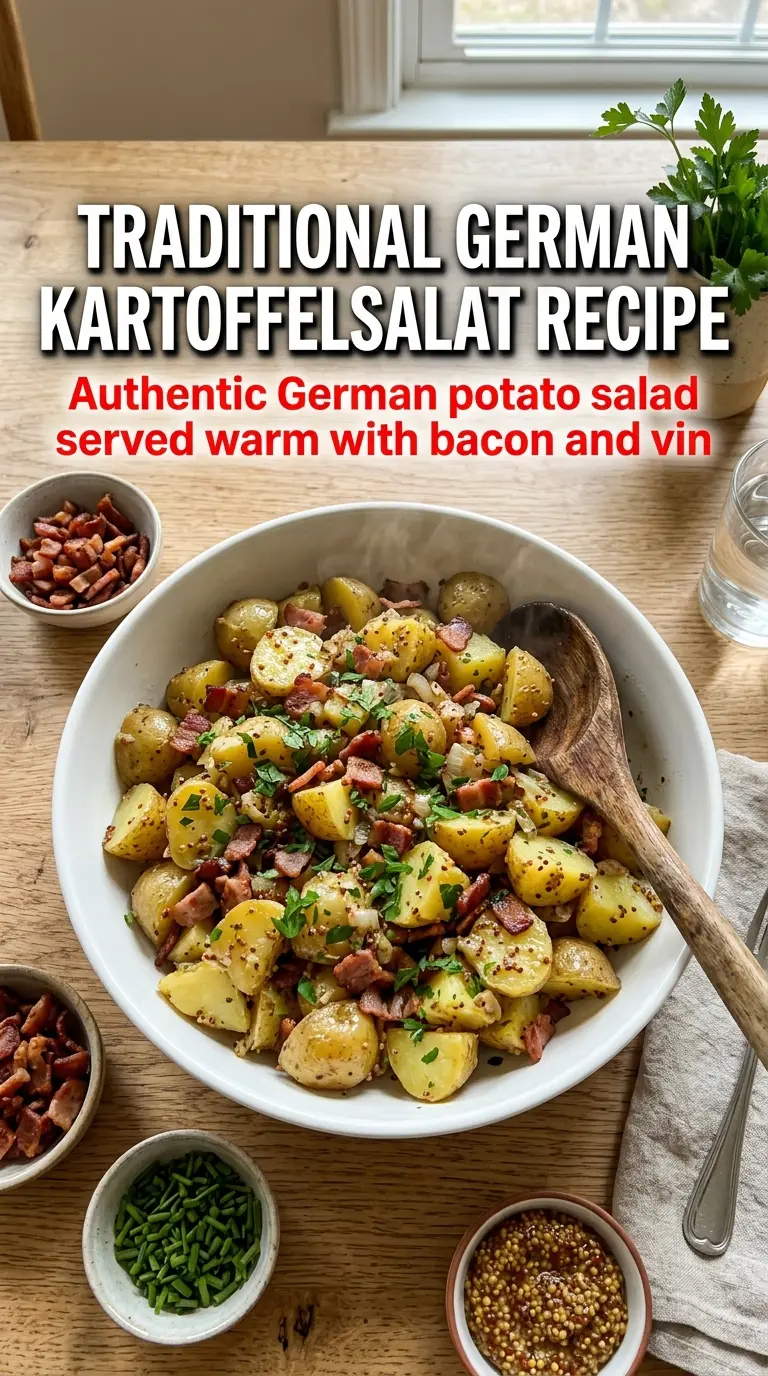
- Yukon gold potatoes — These hold their shape better than russets and have enough natural creaminess to carry the vinaigrette. If you only have red potatoes, they’ll work too, but keep an eye on them because they can go from tender to fragile fast.
- Bacon — This is the salty, smoky anchor of the dish. Thick-cut bacon gives you more drippings and meatier bits, but standard bacon works fine if that’s what you keep on hand.
- Bacon drippings — Don’t skip measuring them. The reserved drippings are what turn the dressing from sharp to round, and they help the onion soften into the sauce instead of tasting separately greasy.
- White wine vinegar — This gives the salad its clean tang. Distilled white vinegar is harsher, and apple cider vinegar brings a fruitier note, so white wine vinegar is the best middle ground for a traditional taste.
- Dijon mustard — A small amount helps the dressing emulsify and adds a quiet depth that plain vinegar can’t provide. If you’re out of Dijon, use a smooth whole-grain mustard, but avoid anything too sweet.
- Chicken broth — It softens the vinegar and gives the potatoes something savory to absorb. Low-sodium broth is smart here because the bacon already brings plenty of salt.
- Caraway seeds — Optional, but they add that unmistakable German bakery-style note. Toast them briefly in the drippings if you want them more aromatic, or leave them out if you prefer a cleaner bacon-vinegar flavor.
Building the Dressing So It Soaks In, Not Sits On Top
Cooking the Potatoes Just to Tender
Boil the sliced potatoes until a knife slips in with only a little resistance, then drain them right away. You want tender slices, not crumbling pieces. If they’re overcooked, they’ll break apart when you toss in the hot dressing, and the salad turns muddy instead of layered. Let them steam off for just a minute after draining so excess water doesn’t dilute the vinaigrette.
Rendering the Bacon and Softening the Onion
Cook the bacon until crisp, then pull it out and reserve three tablespoons of the drippings. That little bit of fat is the flavor base for the onion, and it matters more than people think. Sauté the onion until it turns soft and translucent, not browned; browned onion pushes the salad toward a sweeter, heavier taste than this dish needs.
Bringing the Dressing Together
Add the broth, vinegar, sugar, mustard, and caraway seeds to the pan and bring it to a gentle simmer. You’re looking for the sugar to dissolve and the dressing to smell sharp but balanced, not aggressively sour. If it tastes too tangy in the pan, don’t panic — the potatoes will mellow it. Crumble the bacon and add it to the warm potatoes, then pour the dressing over while everything is still hot and toss gently so the slices stay intact.
The Final Toss and Serve
Finish with parsley, then season with salt and pepper after tasting. Bacon and broth can already bring a lot of salt, so the final seasoning should sharpen the flavor rather than announce itself. Serve it warm, not piping hot, so the dressing can settle and the potatoes keep their texture.
How to Make This Salad Work for Different Tables
Make It a Little More Tangy
Increase the vinegar by 1 to 2 tablespoons and keep the sugar as written. That gives you a sharper, more classic German-style finish, but going much farther can overpower the potatoes and make the dressing taste thin.
Skip the Bacon Without Losing the Structure
Use 3 tablespoons butter or a neutral oil to cook the onion, then add an extra pinch of salt and a little smoked paprika for depth. The flavor changes, but the salad still gets the same warm-vinaigrette texture and it stays fully vegetarian.
Use Red Potatoes for a Firmer Bite
Red potatoes hold their shape well and give the salad a slightly firmer, more rustic texture. They don’t soak up quite as much dressing as Yukon golds, so toss and let the salad sit for a few minutes before serving.
Storage and Reheating
- Refrigerator: Store for up to 3 days. The potatoes will absorb more dressing as they sit, so the salad tastes a little more seasoned on day two.
- Freezer: I don’t recommend freezing it. Potatoes turn grainy after thawing, and the bacon-vinegar dressing loses the clean texture that makes this dish work.
- Reheating: Warm it gently in a skillet over low heat with a splash of broth to loosen the dressing. Don’t blast it in the microwave on high or the potatoes can split and get dry at the edges.
Questions I Get Asked About This Recipe
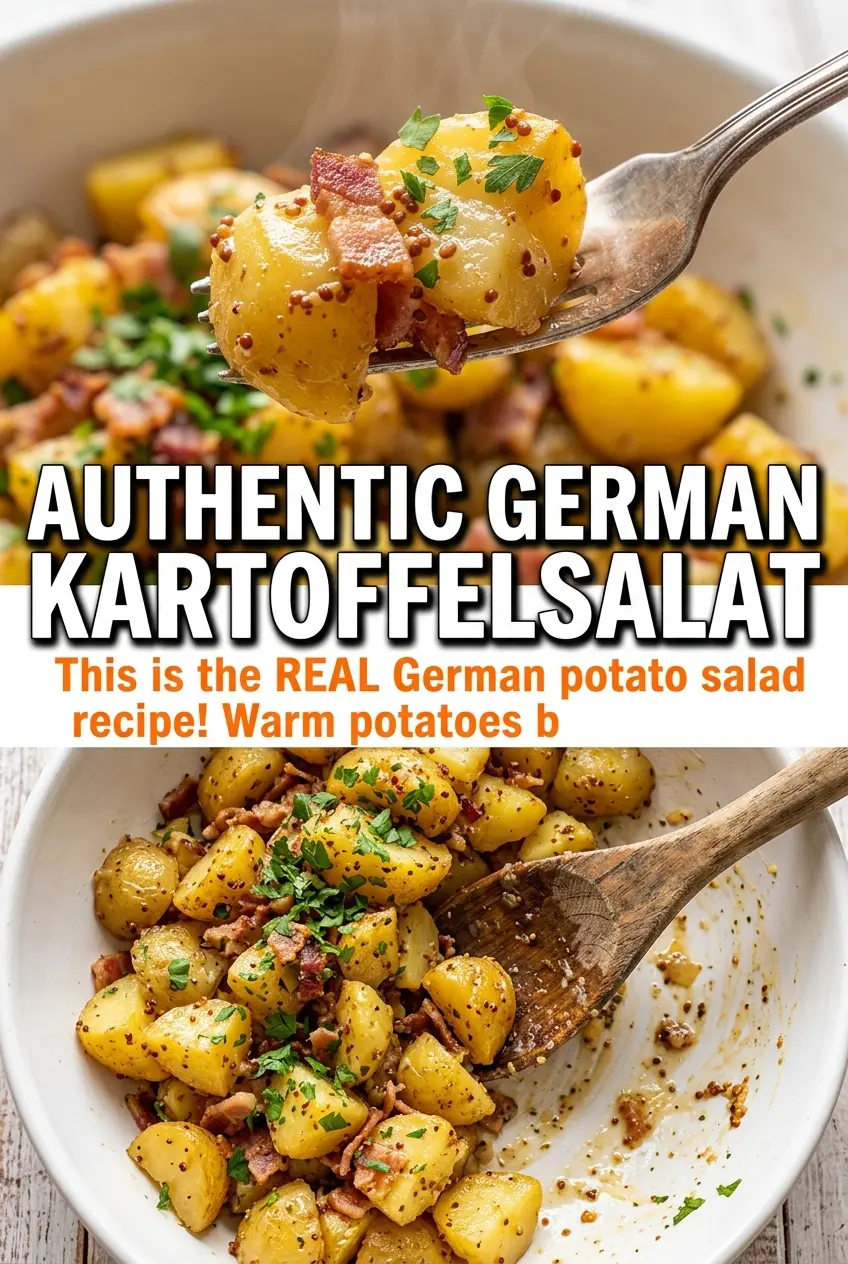
Authentic German Potato Salad
Ingredients
Equipment
Method
- Bring a Dutch oven of water to a boil, then boil the Yukon gold potatoes sliced until tender, about 15 minutes, with a visible simmer and occasional bubbling around the edges.
- Drain the potatoes and set them aside while you cook the bacon and dressing, keeping them warm for best texture.
- In a cast iron skillet, cook the bacon until crispy, about 8 to 10 minutes, until the fat is rendered and the bacon looks browned.
- Transfer bacon to a plate, reserve 3 tablespoons drippings in the skillet, and leave any browned bits for flavor.
- Sauté the onion in the bacon drippings until soft, about 5 to 7 minutes, until it turns translucent and smells sweet.
- Stir in the chicken broth, white wine vinegar, sugar, and Dijon mustard, then add the caraway seeds if using, scraping up any browned flavor from the pan.
- Bring the mixture to a simmer over medium heat, then simmer until lightly cohesive, about 3 to 5 minutes, with small bubbles breaking the surface.
- Crumble the crispy bacon and add it to the potatoes, distributing evenly so each bite has pieces.
- Pour the hot dressing over the potatoes and bacon and toss gently until everything is glossy and coated.
- Add the chopped fresh parsley, then season with salt and pepper to taste, mixing just until the parsley is evenly speckled.
- Serve warm, aiming for a sheen on the potatoes and a tangy vinegar aroma.