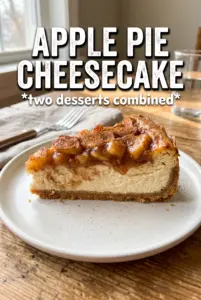
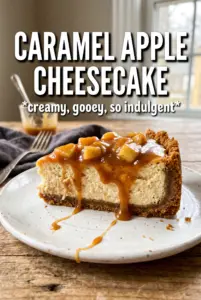
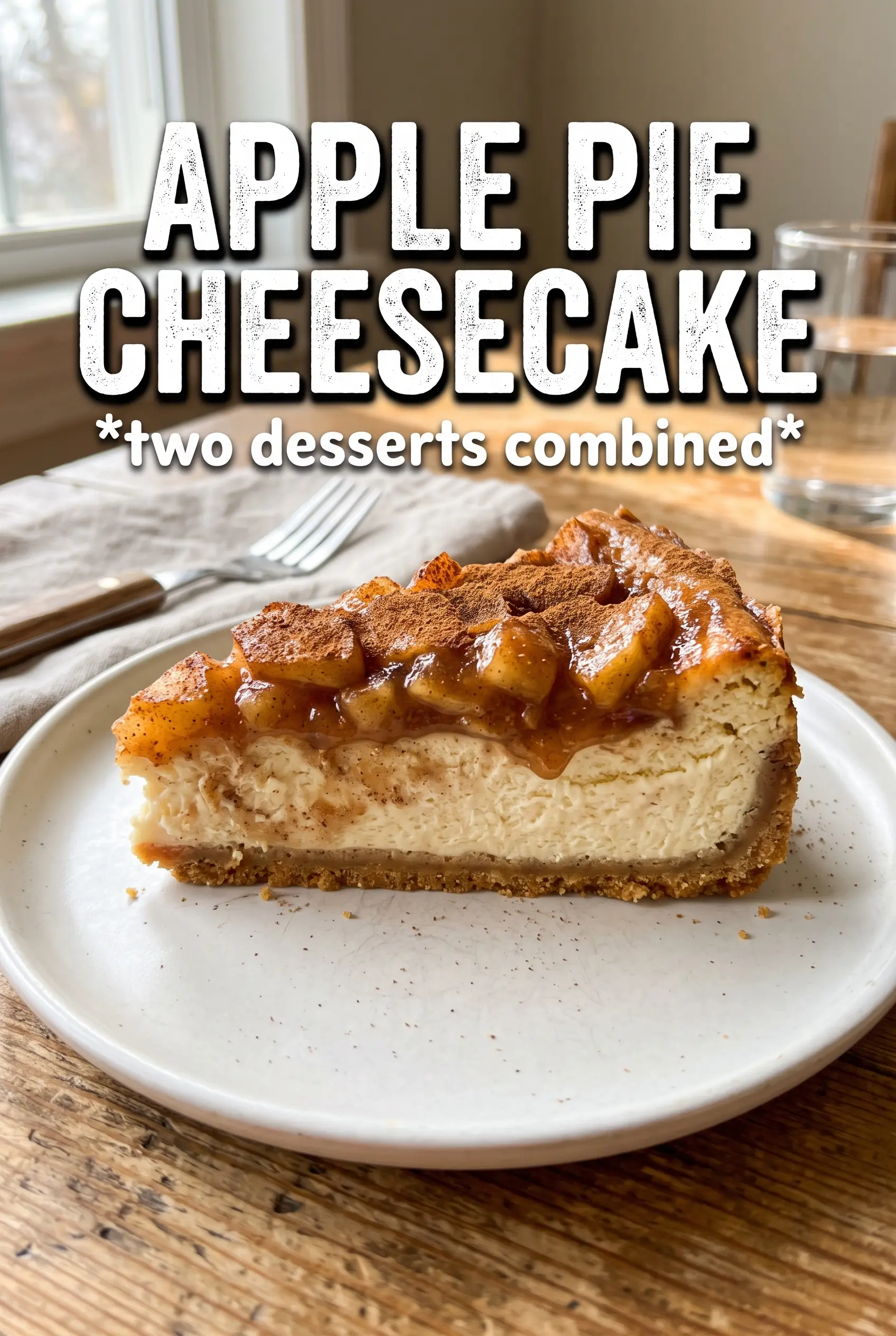
Apple pie cheesecake gives you the best parts of two classics in one slice: a cinnamon graham crust that stays crisp, a dense but creamy cheesecake layer, and a spiced apple topping that tastes cooked down and warm instead of watery. The streusel on top brings the last bit of crunch, and the caramel drizzle pulls everything together without making the dessert feel heavy.
The trick here is treating each layer like it has its own job. The apples get cooked first so they soften and thicken before they go anywhere near the cheesecake, which keeps the filling from turning loose in the oven. The water bath matters too. It gives the cheesecake gentle heat so the center sets without cracking, and that matters even more once you stack fruit and streusel on top. You’re building height and contrast, not just mixing things together.
Below, I’ve laid out the small details that keep the layers distinct, plus a few swaps and storage notes for the slices that disappear fast and the ones you want to save for later.
The cheesecake baked up smooth with no cracks, and the apple layer stayed nicely thick instead of running into the filling. I chilled it overnight and the slices came out clean with all those layers holding together.
Save this Apple Pie Cheesecake for the dessert table when you want creamy layers, spiced apples, and a caramel finish in every slice.
The Secret to Keeping the Apple Layer Thick Instead of Soggy
The apple layer needs to be cooked before it goes into the cheesecake. Raw apples release too much juice in the oven, and that juice works its way down into the filling and crust. Cooking them first with brown sugar, cinnamon, nutmeg, cornstarch, and butter lets the fruit soften and the juices turn syrupy before they ever hit the pan.
The cornstarch is doing the heavy lifting here. If the mixture looks loose in the skillet, keep cooking until it turns glossy and mounds slightly on the spoon. That’s your signal it will stay put in the cheesecake instead of sliding around when you slice it. Cool it completely before layering, or it can melt the cheesecake batter on contact.
What Each Layer Is Doing in This Apple Pie Cheesecake
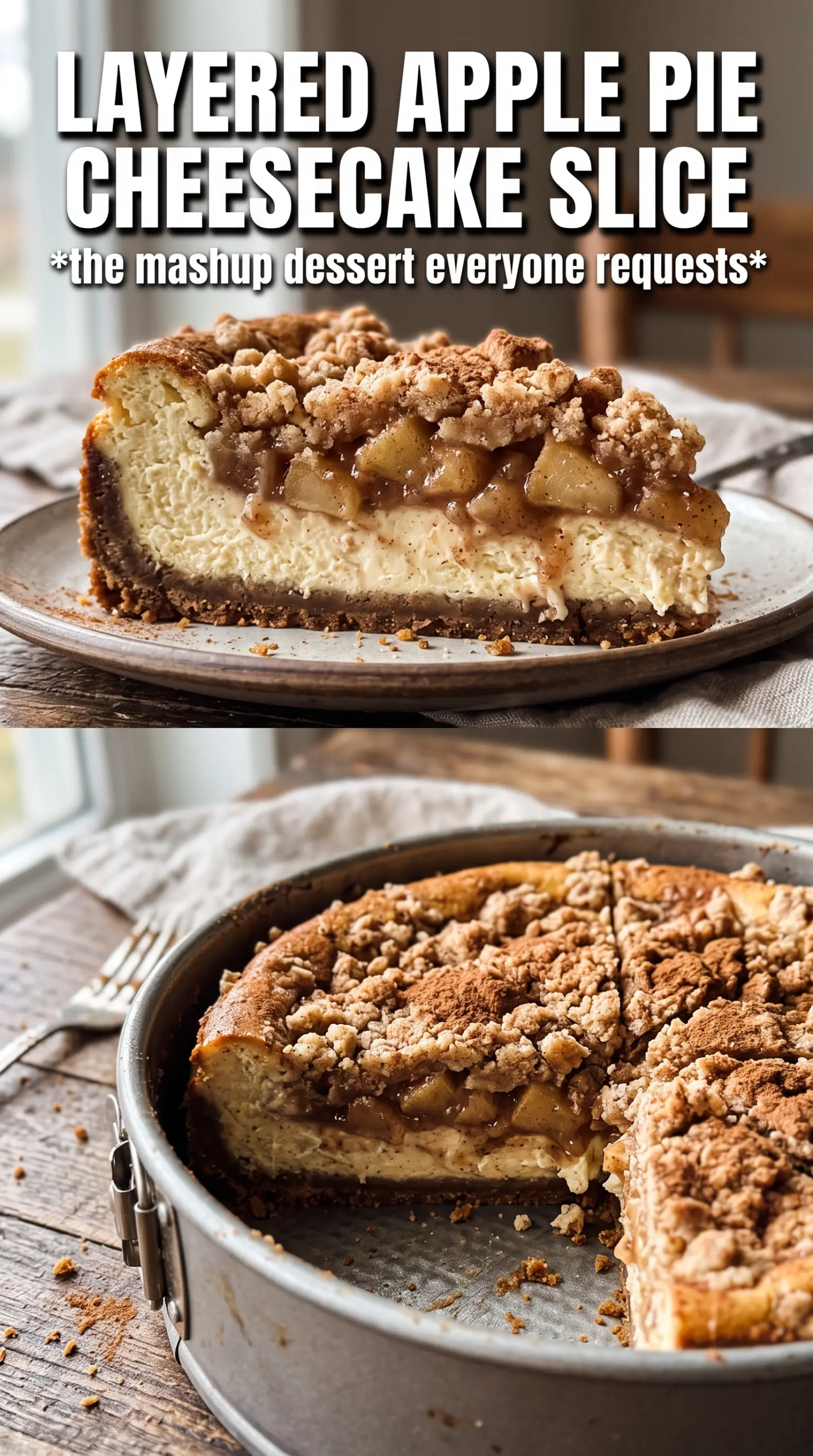
- Cinnamon graham cracker crumbs — These bring the pie-crust flavor without needing to roll out pastry. The cinnamon in the crumbs gives the base a warmer, deeper taste than plain graham crackers. If all you have is plain crumbs, add an extra 1/2 teaspoon cinnamon.
- Cream cheese — Use full-fat blocks, not tub cream cheese. Blocks beat smooth and set properly; spreadable cream cheese can make the filling soft and slightly grainy. Bring it to room temperature so it blends without lumps.
- Sour cream — This keeps the cheesecake tangy and helps the texture stay silky. Greek yogurt can work in a pinch, but it brings a sharper flavor and sometimes a looser set. Use full-fat if you can.
- Apples — A firm baking apple matters here because the fruit needs to hold some shape after cooking. Granny Smith gives you more tartness, while Honeycrisp or Pink Lady lean sweeter and softer. Dice them evenly so the layer cooks at the same rate.
- Streusel — Cold butter is nonnegotiable. It creates those crumbly bits that brown on top instead of melting into a paste. Work it in just until clumps form; overmixing turns it sandy and dry.
Building the Layers So the Cheesecake Sets Cleanly
Pressing and Par-Baking the Crust
Mix the cinnamon graham crumbs, sugar, and melted butter until the texture looks like damp sand, then press it firmly into the springform pan. You want an even layer on the bottom and a slight rise up the sides so the filling has a clean edge to sit against. Bake it for 10 minutes until it smells toasty and the surface looks set. If you skip the par-bake, the crust can turn soft once the cheesecake batter goes in.
Cooking the Apple Filling Until It Mounds
Cook the diced apples with the brown sugar, cinnamon, nutmeg, cornstarch, and butter over medium heat until the fruit softens and the liquid turns thick and glossy. Stir often so the cornstarch doesn’t clump on the bottom of the pan. The filling should hold together on a spoon instead of running off in a puddle. Cool it completely before layering, or it will warm the cheesecake batter and throw off the bake.
Mixing the Cheesecake Without Whipping in Too Much Air
Beat the cream cheese and sugar until smooth first, then add the eggs one at a time. Stop mixing as soon as the batter looks uniform. Too much air is what leads to cracks and a puffy center that falls as it cools. The sour cream, vanilla, and cinnamon go in last and should disappear into the batter without making it fluffy.
Baking in a Water Bath Until the Center Just Wobbles
Pour the cheesecake filling over the crust, spread the cooled apples over the top, then finish with the streusel. Set the pan in a water bath and bake until the edges are set and the center still has a small wobble when you gently nudge the pan. If the middle looks fully firm in the oven, it’s already overbaked. The cheesecake finishes setting as it cools, and that slow set is what gives you neat slices later.
Three Ways to Adjust This Dessert Without Losing the Point
Gluten-Free Version
Swap the cinnamon graham crumbs for gluten-free graham crumbs and use a cup-for-cup gluten-free flour blend in the streusel. The texture stays close to the original, but the topping may brown a little faster, so start checking it near the end of the bake.
Lighter Apple Flavor
Use half Granny Smith and half Honeycrisp for a filling that tastes brighter and less sweet. Granny Smith keeps the apples from going mushy, while the sweeter apples soften the tart edge. This version still slices well, but the fruit layer reads a little fresher and less bakery-style rich.
No Sour Cream
Full-fat plain Greek yogurt works if you’re out of sour cream. The filling will be slightly tangier and a touch less plush, but the cheesecake still sets properly. Don’t use low-fat yogurt here; it can make the batter looser and less stable.
Storage and Reheating
- Refrigerator: Store covered for up to 5 days. The streusel softens a little, but the flavor stays excellent.
- Freezer: Freeze individual slices tightly wrapped for up to 2 months. Thaw overnight in the refrigerator for the cleanest texture.
- Reheating: Serve chilled or let a slice sit at room temperature for 20 to 30 minutes. Don’t microwave it; that turns the cheesecake soft and can make the caramel and apple layer slide.
Questions I Get Asked About This Recipe
Apple Pie Cheesecake
Ingredients
Equipment
Method
- Preheat the oven to 325F, then press the cinnamon graham cracker crumbs mixture firmly into a 9-inch springform pan. Bake for 10 minutes until set and lightly fragrant.
- Prepare the crust mixture before pressing by combining cinnamon graham cracker crumbs, sugar, and melted butter until evenly moistened. Press it into the pan so the crust layer is compact.
- Cook the peeled and diced apples with brown sugar, cinnamon, nutmeg, and cornstarch until the mixture thickens. Stir frequently until it looks glossy and holds together.
- Remove from heat and stir in the butter, then cool the apple layer completely. Set aside until room temperature so it won’t melt the cheesecake batter.
- Beat the cream cheese with sugar until smooth, then add eggs one at a time and mix just until blended. Stop when the batter is creamy without streaks.
- Mix in sour cream, vanilla, and cinnamon until the cheesecake batter is uniform. Keep mixing brief to avoid incorporating too much air.
- Pour the cheesecake batter over the baked crust and spread it into an even layer. Gently tap the pan to settle the surface.
- Spread the cooled apple layer over the cheesecake, covering the top evenly. Scatter the streusel over the apples so it forms a crunchy mound.
- Bake the cheesecake in a water bath at 65-70 minutes at 325F until the center is just set. The edges should look set while the middle still shows a slight wobble.
- Cool the cheesecake completely, then refrigerate for 6 hours to fully firm up. Chill until the slice holds distinct layers.
- Drizzle caramel sauce over the cheesecake right before serving. Finish with a generous ribbon so it pools slightly on the apple layer.