Apple cider donut bread brings the whole bakery feeling into a loaf pan: tender, warmly spiced crumb inside, then that unmistakable buttery cinnamon-sugar crust outside. The top bakes up like the best part of an old-fashioned cider donut, but the inside stays soft and sliceable instead of frying-dough dense. It’s the kind of loaf that disappears one warm piece at a time.
The cider reduction matters here. Simmering it down concentrates the apple flavor and keeps the bread from tasting flat, while sour cream adds moisture and gives the crumb a little tang that keeps the sweetness in check. The melted butter topping goes on while the loaf is still warm, so the cinnamon sugar grabs instead of sliding off.
Below, you’ll find the exact point when the cider is reduced enough, how to keep the loaf from turning heavy, and a few swaps that still keep the donut-shop feel intact.
The cider flavor came through beautifully, and the cinnamon sugar crust stayed crunchy even the next day. My loaf rose evenly and sliced cleanly after cooling for 10 minutes.
Save this apple cider donut bread for the day you want a soft cider loaf with a crunchy cinnamon sugar top.
The cider reduction is what keeps this loaf from tasting flat
A lot of apple cider breads rely on cider for name only, which leaves the loaf tasting like sweet spice cake with a whisper of apple. Reducing the cider first changes that completely. You concentrate the fruit flavor and drive off excess liquid at the same time, so the batter stays balanced and bakes up with a tighter, more tender crumb instead of a wet, gummy center.
The other place people go wrong is overmixing after the flour goes in. This is a quick bread, not a cake batter that needs full development. Stir only until the streaks disappear, then stop. If the batter looks a little rough, that’s fine; it will settle in the oven and keep the loaf soft.
What the cider, sour cream, and cinnamon sugar are each doing here
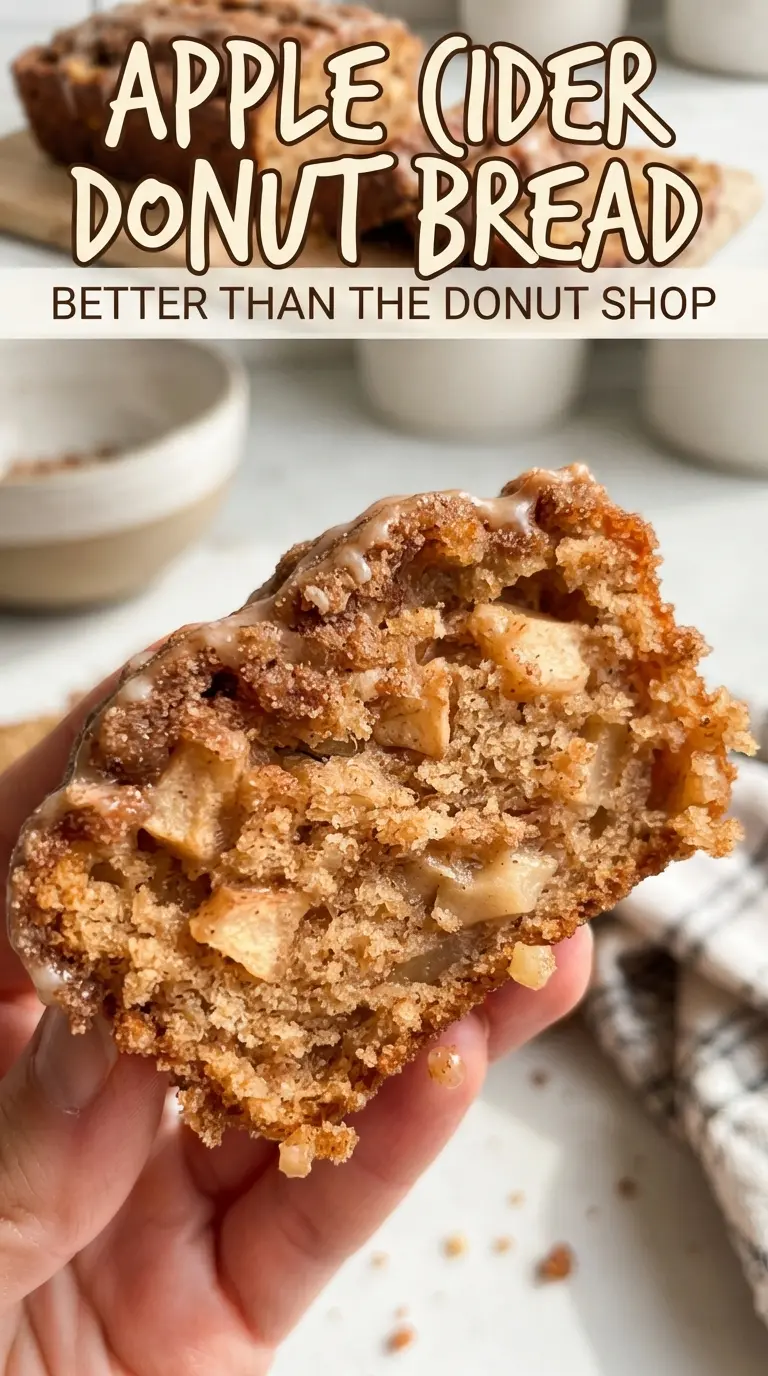
- Apple cider — Reducing it is nonnegotiable if you want real cider flavor. Apple juice won’t give you the same depth, and un-reduced cider adds too much moisture. If you’re short on time, you can reduce it earlier in the day and cool it completely before mixing.
- Sour cream — This is what keeps the crumb plush without making the loaf greasy. Plain Greek yogurt works in a pinch, but use full-fat yogurt for the closest texture. Low-fat dairy can make the bread a little tighter and less rich.
- Brown sugar — It brings molasses warmth that plain white sugar can’t match. That deeper sweetness helps the cinnamon, nutmeg, and cider taste more like a bakery donut than a standard spice loaf.
- Butter topping and cinnamon sugar — Brush the loaf while it’s still warm so the sugar sticks in an even crust. If the bread is completely cool, the butter just sits on top and the coating turns patchy instead of sandy and crunchy.
Building the loaf so the crumb stays tender and the top stays crunchy
Reducing the cider
Pour the cider into a small saucepan and simmer until it measures about 1/2 cup. The color darkens a bit and the aroma turns sharper and more apple-forward when it’s ready. Let it cool before adding it to the batter, because hot cider can melt the butter mixture and change the texture of the finished loaf.
Mixing the base
Beat the softened butter and brown sugar until the mixture looks fluffy and lighter in color. That step traps air, which helps the loaf rise without turning heavy. Add the eggs, sour cream, vanilla, and reduced cider after that; if the mixture looks a little curdled, it will smooth out once the dry ingredients go in.
Folding in the flour
Whisk the dry ingredients first so the baking powder, baking soda, salt, cinnamon, and nutmeg are evenly distributed. Then fold them into the wet mixture just until no dry streaks remain. Overmixing here is what gives you tunnels and a bready, tight loaf instead of a soft slice that pulls apart cleanly.
The butter-and-sugar finish
Let the baked loaf rest for about 10 minutes, then lift it from the pan and brush the warm surface with melted butter. Press the cinnamon sugar over every side while the loaf is still warm enough to grab the coating. If you wait too long, the crust won’t cling, and you’ll lose the signature donut-style finish.
How to adapt this loaf without losing the cider donut feel
Dairy-free version with the same soft crumb
Use a dairy-free butter substitute for the batter and topping, then swap the sour cream for unsweetened dairy-free yogurt. The loaf still bakes up tender, but the flavor will lean a little less rich and a little more cider-forward. Choose a yogurt with some thickness so the batter doesn’t loosen too much.
Gluten-free loaf that still slices cleanly
Use a 1:1 gluten-free baking flour blend that includes xanthan gum. The texture will be slightly more delicate, so let it cool fully before slicing. If your blend is very starchy, the loaf may brown a little faster on the edges, so start checking early.
Extra-spiced version for a stronger donut-shop taste
Add another 1/4 teaspoon cinnamon and a pinch more nutmeg to the dry ingredients. That pushes the loaf closer to a classic cider donut without making it taste like pumpkin spice cake. Don’t add more liquid spice extracts; they throw off the balance and can make the batter taste sharp.
Make-ahead storage that keeps the crust intact
For the best texture, keep the loaf unsliced and store it at room temperature under a cake dome or wrapped loosely in foil for up to 2 days. The coating stays crisper that way than it does in the fridge. If you need longer storage, refrigerate it, but expect the sugar crust to soften a bit.
Answers to the questions worth asking
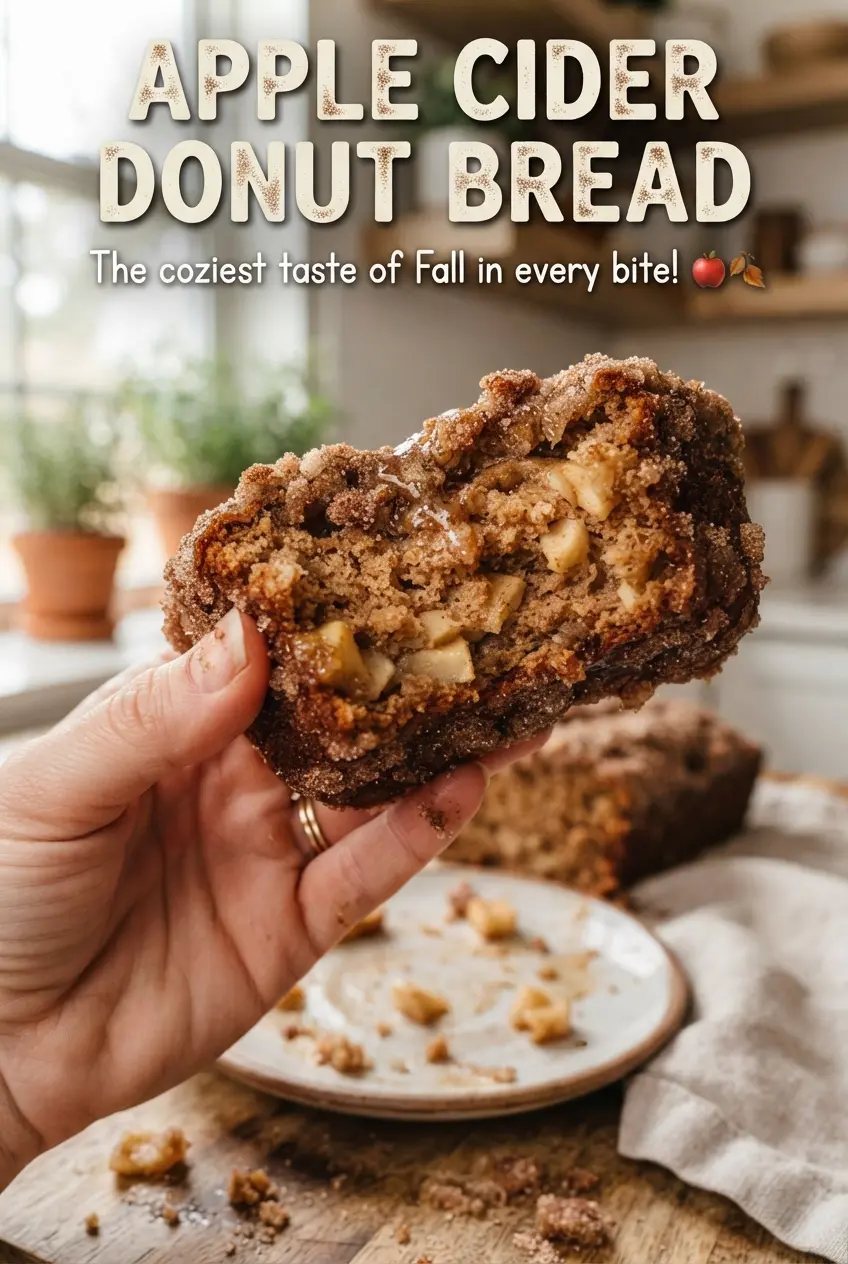
Apple Cider Donut Bread
Ingredients
Equipment
Method
- Simmer apple cider for 15-20 minutes, stirring occasionally, until reduced to 1/2 cup, then cool.
- Preheat the oven to 350F, and grease and line a 9x5-inch loaf pan.
- Whisk together all-purpose flour, baking powder, baking soda, salt, ground cinnamon, and nutmeg.
- Beat softened butter and packed brown sugar until fluffy, then beat in eggs, sour cream, vanilla extract, and the reduced cider.
- Fold the dry ingredients into the wet ingredients just until combined, then spread the batter into the loaf pan.
- Bake at 350F for 50-55 minutes, until a toothpick comes out clean, then cool the loaf for 10 minutes.
- Brush the warm loaf all over with melted butter, then press on the cinnamon sugar topping.