Apple cider braised pork shoulder lands on the table with meat that pulls apart in big, tender pieces and a sauce that tastes deep, savory, and just bright enough to keep each bite from feeling heavy. The apples soften into the braising liquid without disappearing completely, and the onions melt down until they practically become part of the sauce. It’s the kind of dinner that looks like it took all day, because in a way it did, but most of that time is hands-off while the oven does the work.
What makes this version work is the balance between browning and braising. The pork gets a hard sear first, which builds flavor you can’t get from the oven alone, then the cider, broth, Dijon, vinegar, and brown sugar come together to make a sauce that’s rich but not flat. The vinegar keeps the cider from turning sweet, and the mustard gives the liquid a little backbone so it clings to the meat instead of just pooling in the pot.
Below, I’ve included the small details that matter most: when to add the apples so they hold their shape, how to know when the pork is actually ready to shred, and what to do if you want the sauce a little thicker at the end.
The pork was fall-apart tender and the cider sauce reduced into something I wanted to spoon over everything. Adding the apples near the end kept them from turning to mush.
Save this apple cider braised pork shoulder for a slow Sunday dinner with tender pork, soft apples, and a rich pan sauce.
The Browning Step That Gives the Sauce Its Depth
The biggest mistake with braised pork is skipping the sear or rushing it. Pale pork makes a pale sauce, and braising alone won’t build the same depth. Let the meat sit in the hot oil until it releases easily from the pot and has a deep brown crust on both sides; that’s where the real flavor starts.
Once the onions go in, scrape the bottom of the Dutch oven well. Those browned bits dissolve into the cider and broth and carry most of the savory flavor in the finished sauce. If the pot feels too dry at any point, the onions will start catching before they soften, so keep them moving until they turn translucent and fragrant.
What Each Ingredient Is Doing in the Pot
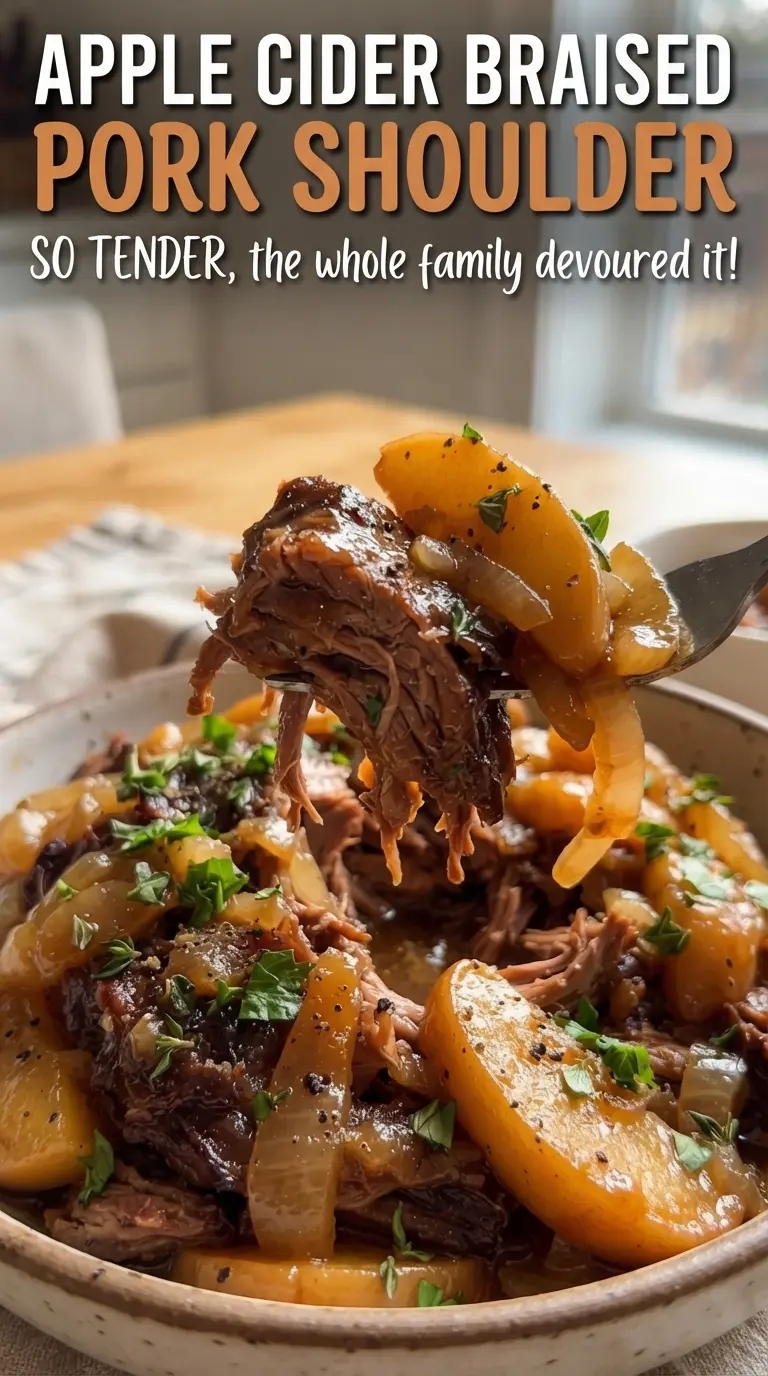
- Pork shoulder — This cut is built for long braising because the fat and connective tissue melt slowly and turn the meat tender. A lean cut won’t give you the same shreddable texture, and it can dry out before the sauce is ready.
- Apple cider — Use fresh, unfiltered cider if you can find it. It gives the sauce a fuller apple flavor than clear apple juice, which can taste thin and one-note after three hours in the oven.
- Dijon mustard and apple cider vinegar — These keep the braise from leaning too sweet. Dijon adds body and a little sharpness, while the vinegar wakes up the sauce right before it goes into the oven.
- Apples — Choose a firm apple that holds its shape, like Honeycrisp, Granny Smith, or Fuji. Softer apples will break down too fast and disappear into the sauce before the pork finishes cooking.
- Fresh thyme and rosemary — Dried herbs can work in a pinch, but the fresh sprigs perfume the sauce in a cleaner, more woodsy way. Pull out the stems before serving so the herbs don’t distract from the meat.
How to Braise It So the Pork Stays Succulent
Seasoning and Searing
Pat the pork dry before it hits the pot, then season it well with salt, pepper, and paprika. Moisture on the surface turns into steam, and steam is the enemy of a good crust. Sear the pork over medium-high heat until it lifts with resistance and the outside is a deep brown, not just tan. If the pieces crowd the pot, work in batches; crowded pork steams instead of browning.
Building the Braising Liquid
Cook the onion until it softens and picks up a little color, then add the garlic for just a minute so it doesn’t burn. Stir in the cider, broth, vinegar, Dijon, and brown sugar, and use a wooden spoon to release every browned bit from the bottom. The liquid should smell sharp, sweet, and savory at the same time before the pork goes back in. That’s the point where the sauce starts tasting like more than the sum of its parts.
Long Oven Time, Late Apple Addition
Return the pork to the pot with the herbs, cover it tightly, and braise until the meat starts to give when pressed with a spoon. Add the apples only for the last 45 minutes so they soften without collapsing. If they go in too early, they’ll melt away and the braise loses its texture contrast. When the pork is ready, it should shred with almost no effort and the liquid should taste concentrated rather than watery.
Finishing the Sauce
Shred the pork into large pieces, not tiny threads, so it stays juicy in the sauce. Then simmer the liquid on the stove for about 10 minutes to reduce it a bit and concentrate the flavor. If the sauce tastes a little flat at the end, a pinch more salt or a splash of vinegar usually fixes it faster than more sugar. Spoon the sauce and apples over the pork while everything is still hot.
How to Adapt This for Different Tables and Leftovers
Use boneless pork butt if that’s what you have
Pork butt and pork shoulder are close cousins, and either one works here. The texture and cooking time stay nearly the same, so use the cut that looks best at the store. The key is still long, gentle braising until the meat pulls apart easily.
Make it dairy-free and gluten-free without changing the method
This recipe is naturally dairy-free and gluten-free as written, which makes it an easy dinner for mixed tables. Just check that your broth and Dijon are certified gluten-free if that matters for your kitchen. Nothing else needs to change.
Swap the apples to change the finish
Honeycrisp gives a sweeter, softer finish, while Granny Smith keeps the sauce a little brighter and sharper. Just stick with apples that hold their shape in the oven. Mealy apples turn mushy and blend into the liquid before the pork is done.
Storage and Reheating
- Refrigerator: Store the pork, apples, and sauce in an airtight container for up to 4 days. The flavor deepens overnight, and the sauce thickens as it chills.
- Freezer: This freezes well for up to 3 months. Cool it completely, pack it with plenty of sauce, and leave a little room for expansion.
- Reheating: Reheat gently on the stove over low heat with a splash of broth or water if needed. High heat can dry out the pork and make the sauce taste greasy before the center is hot.
Answers to the Questions Worth Asking
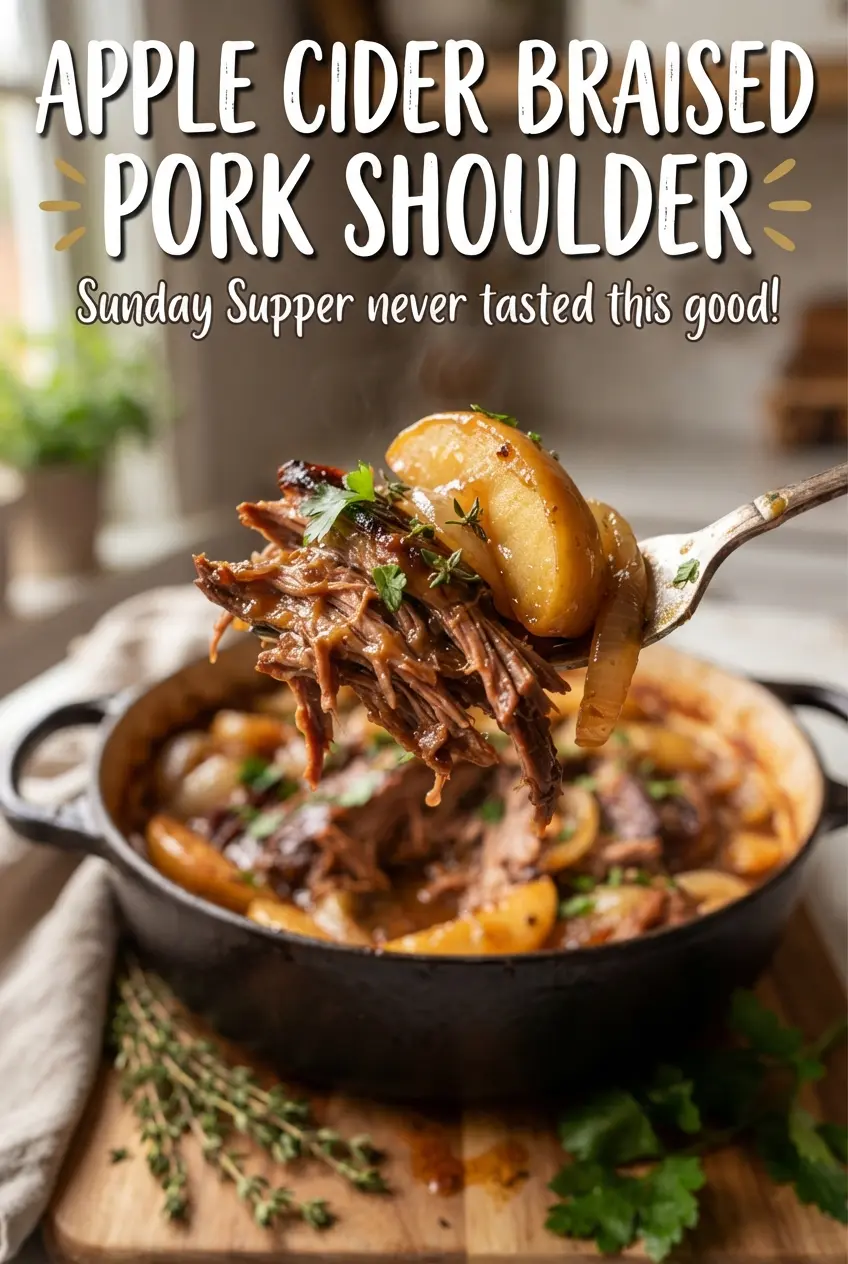
Apple Cider Braised Pork Shoulder
Ingredients
Equipment
Method
- Preheat oven to 325°F, then season pork with salt, black pepper, and smoked paprika. Use a Dutch oven-ready cut size so it browns evenly.
- Heat olive oil in a Dutch oven until hot, then sear pork 4-5 minutes per side until well browned and browned bits form. Remove pork to a plate.
- Cook sliced onion for 5 minutes in the same Dutch oven. Add smashed garlic for 1 minute, stirring so it doesn’t burn.
- Stir in apple cider, chicken broth, apple cider vinegar, Dijon mustard, and brown sugar. Scrape up the browned bits from the bottom until the sauce looks cohesive.
- Return pork to the Dutch oven with fresh thyme and fresh rosemary, then cover and braise at 325°F for 2 1/2 hours. The pork should look tender around the edges.
- Add apple wedges and braise, covered, at 325°F for 45 minutes more until the pork is fork-tender. The apples should turn soft and slightly translucent.
- Shred the pork into large pieces, then return it to the Dutch oven. Simmer the liquid on the stove for 10 minutes to reduce until it coats a spoon.
- Serve the pork with the sauce and apples. Spoon generously so each bite has cider sauce, softened onions, and fruit.